
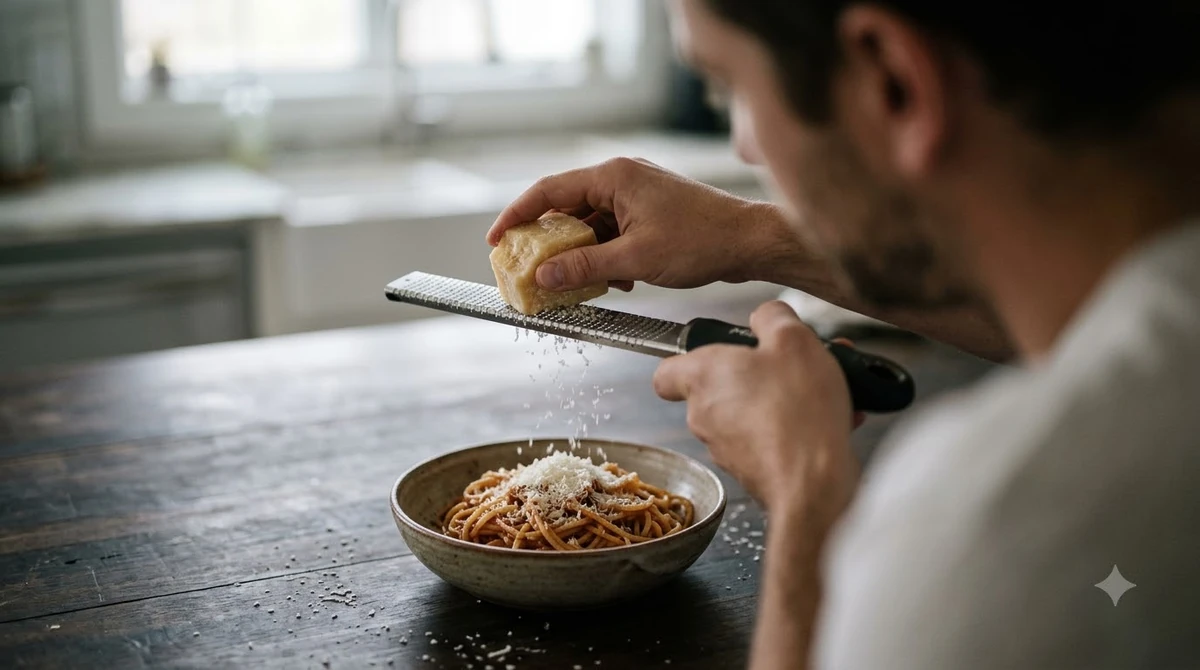

A parmesan cheese grater is a kitchen tool with sharp, fine blades that turns hard, aged cheese into light shreds or powder. Parmigiano Reggiano is aged at least 12 months, so it is dense and needs a sharp blade to grate cleanly.
Choosing a good parmesan cheese grater comes down to blade sharpness, a stable base and easy cleaning. Grater style, grating technique and storage all affect how good the result is.
Parmesan Cheese Grater Styles: Rasp, Box and Rotary
A rasp-style grater gives the finest shreds for Parmesan, a box grater is the most common style, and a rotary model uses mechanical leverage to turn its drum over the cheese.
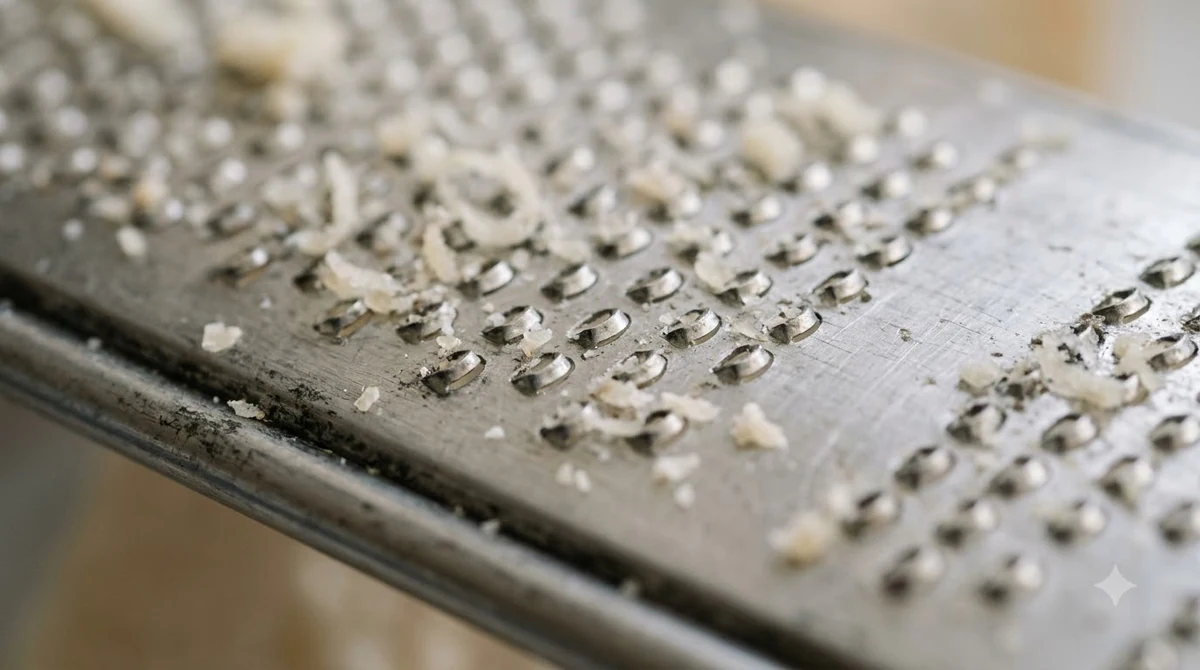
Wikipedia notes that box graters are the most common type and that rotary graters are more efficient than other graters because of mechanical leverage. Rotary drums come in several fineness levels, so a rotary parmesan cheese grater is only as good as its drum for your cheese. Our guide to rotary cheese graters compares that style in more detail. Our rotary cheese grater step-by-step guide shows how to load and turn the drum.
| Style | Strength | Limit |
|---|---|---|
| Rasp (microplane) | Finest shreds; the style America’s Test Kitchen prefers | Small working area, so grate in batches |
| Box | Most common type; small holes are adequate for fine grating | Bulkier to store, and it takes up more counter space |
| Rotary | More efficient than other graters because of mechanical leverage | Fineness depends on the drum, so check it before buying |
America’s Test Kitchen says a box grater’s small holes are adequate for fine grating, but its preference is a rasp-style grater, and its favorite is the Microplane. For most home cooks, a rasp is the simplest single tool for a parmesan cheese grater job, while a box grater still earns its place for shredding softer cheeses.

What to Look for in a Parmesan Cheese Grater
Look for sharp blades, a base that keeps the grater steady, and a design you can take apart for cleaning. These three points matter more than any single feature when you compare each parmesan cheese grater on the shelf.
- Blade sharpness. A sharp parmesan cheese grater takes fine slivers off dense aged cheese with less effort, so the grater does the work instead of your wrist.
- Blade category. Microplane sorts its graters into coarse or medium, fine, ribbon and zester blade types, so match the category to the job.
- Base and handle. A stable base stops the grater from sliding on the counter when you press down on a wedge.
- Cleaning access. Check whether the blade section lifts out or washes easily. A reviewer quoted on the Microplane site says the grater fits on the top rack of a dishwasher; this is a user report, not an official instruction.
- Blade material. Another user report on the same site describes a surgical stainless steel blade that never seems to dull. Treat it as one buyer’s experience.
The cheese matters as much as the tool. Wikipedia notes that Parmigiano Reggiano is aged at least 12 months, while some generic “Parmesan” sold grated in the United States is aged for less than 12 months. The grater cannot fix a young, soft cheese, so read the label before you buy the wedge.
How to Grate Parmesan at Home
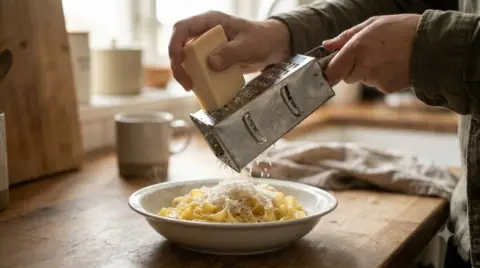
Every parmesan cheese grater works best when you grate from a wedge with light, even pressure over a plate, and use a vegetable peeler when you want curls instead of shreds.
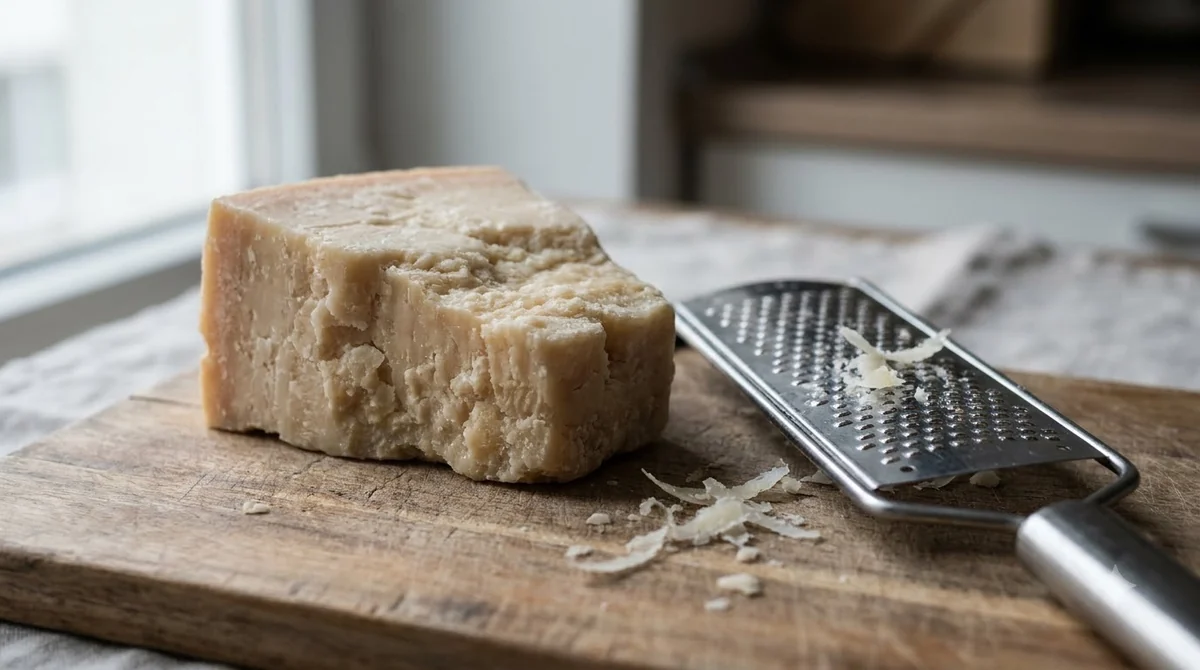
- Start with a wedge rather than pregrated cheese. America’s Test Kitchen says grating it yourself gives the best results.
- Hold the grater over a plate or board so the falling cheese lands where you want it.
- Press the wedge against the blade with light, even pressure, and work in short, steady strokes.
- For curls, run a vegetable peeler along the face of the wedge. America’s Test Kitchen says a simple peeler works well for shaving curls of Parmesan.
- Keep the rind. It adds body and flavor to soups and stews, so store it with the wedge and drop it into the pot later.
Stop grating before your knuckles reach the blade. A parmesan cheese grater with a small working surface rewards shorter batches, so grate what the dish needs and stop there. If you grate for a crowd, plan two or three short batches rather than one long session.
Fresh Wedge or Pregrated Cheese
Grating your own wedge with a parmesan cheese grater gives the best result, and pregrated cheese declines after about 3 weeks, losing flavor and texture, according to America’s Test Kitchen.
The same source found little difference in cooking when pregrated cheese was handled well. That makes pregrated cheese acceptable for sauces and baked dishes such as homemade lasagna, but when the cheese is the finish of a plate, such as pasta tossed at the table with a pasta fork, freshly grated wedge cheese is the safer choice.
Parmigiano Reggiano is a protected designation of origin cheese aged at least 12 months. Wikipedia also notes that outside the EU, the word “Parmesan” is used for imitations, so the full Italian name is the clearest label to look for.
How to Store Parmesan and Grated Cheese
Keep a cut wedge in the refrigerator at 4 to 8°C, wrapped in food-grade film or a container, and use it within about 15 days if it is 12 to 18 months old.
The Consorzio Parmigiano Reggiano gives the storage guidance below for cut or opened pieces. America’s Test Kitchen adds advice for wedges and grated cheese.
| Situation | Guidance | Source |
|---|---|---|
| Cut piece, 12 to 18 months aged | Keep about 15 days | Consorzio Parmigiano Reggiano |
| Cut piece, 24 months or more | Keep about 1 month | Consorzio Parmigiano Reggiano |
| Whole wedge wrapping | Butcher’s paper, waxed paper or plastic wrap, in the refrigerator drawer | America’s Test Kitchen |
| Grated cheese | Airtight container for about 3 weeks | America’s Test Kitchen |
| Freezing | The producer advises never to freeze the cheese | Consorzio Parmigiano Reggiano |
| Mould on the surface | Remove it with a knife | Consorzio Parmigiano Reggiano |
The two sources do not agree on freezing. America’s Test Kitchen’s 3-week figure for grated cheese covers the freezer or the fridge, but the producer advises against freezing its cheese. Keep grated cheese chilled and use it within about 3 weeks, and do not freeze a wedge.
Cleaning and Caring for Your Grater
The manufacturer pages we could read did not publish full cleaning steps, so the use-and-care sheet that comes with your model is the reference to follow.
Clean your parmesan cheese grater soon after grating, because dried cheese is harder to remove from the teeth. Brush out the cheese, rinse, and dry every part before you put the grater away. The dishwasher claim above comes from a single reviewer, so check your model’s instructions before you put it in the machine.
Common Mistakes With a Parmesan Cheese Grater
The most common errors with a parmesan cheese grater are using pregrated cheese as a finish, grating too much cheese at once, and throwing away the rind.
- Buying pregrated cheese for finishing. Pregrated cheese declines after about 3 weeks.
- Storing a wedge loosely wrapped. Wrap it tightly in butcher’s paper, waxed paper or plastic wrap.
- Freezing a wedge out of habit. The producer advises against freezing its cheese.
- Throwing away the rind. America’s Test Kitchen says rinds add body and flavor to soups and stews.
- Pressing too hard on the blade. Let the sharp teeth do the work and keep your fingers well back from the edge.
Frequently Asked Questions
Is a rotary parmesan cheese grater good for hard cheese?
Rotary graters are more efficient than other types because of mechanical leverage, according to Wikipedia. Drum fineness varies by model, so check the drum before you buy one for Parmesan.
Can you use a box grater for Parmesan?
Yes. A box-style parmesan cheese grater is common, and America’s Test Kitchen says its small holes are adequate for fine grating, although it prefers a rasp-style grater for this job.
How long does Parmesan keep after cutting?
The producer says a cut piece keeps about 15 days if it is 12 to 18 months old, and about 1 month if it is aged 24 months or more.
Can you freeze Parmesan?
The producer advises never freezing its cheese. America’s Test Kitchen’s 3-week figure for grated cheese covers freezer or fridge, so keep grated cheese chilled.
What is the difference between Parmesan and Parmigiano Reggiano?
Parmigiano Reggiano is a protected designation of origin cheese from northern Italy, aged at least 12 months. Outside the EU, the word “Parmesan” can refer to imitations, so the full Italian name is the clearest label.
How old should Parmesan be for grating?
Parmigiano Reggiano is aged a minimum of 12 months. Some generic “Parmesan” sold grated in the United States is aged for less than 12 months, according to Wikipedia.
Choose a parmesan cheese grater with a sharp, fine blade, a base that stays put, and parts you can reach for cleaning. Grate from a wedge when the cheese is the finish of a dish, and store it cold and wrapped so the flavor lasts. Serve the pasta in wide pasta bowls so the cheese lands where you want it.
 7 min readGear & PantryRotary Cheese Grater: How It Works, How to Choose One and Use ItUpdated Nov 16, 2026
 8 min readGear & PantryHow to Use a Rotary Cheese GraterUpdated Nov 10, 2026
 7 min readGear & PantryBest Capers: How to Choose Good Capers at the StoreUpdated Nov 16, 2026
 8 min readGear & PantryGnocchi Board: How to Choose and Use OneUpdated Nov 16, 2026
 8 min readGear & PantryCavatelli Maker: What It Does and How to Choose and Use OneUpdated Nov 17, 2026
 9 min readGear & PantryPasta Drying Rack: How to Choose and Use One at HomeUpdated Nov 16, 2026