
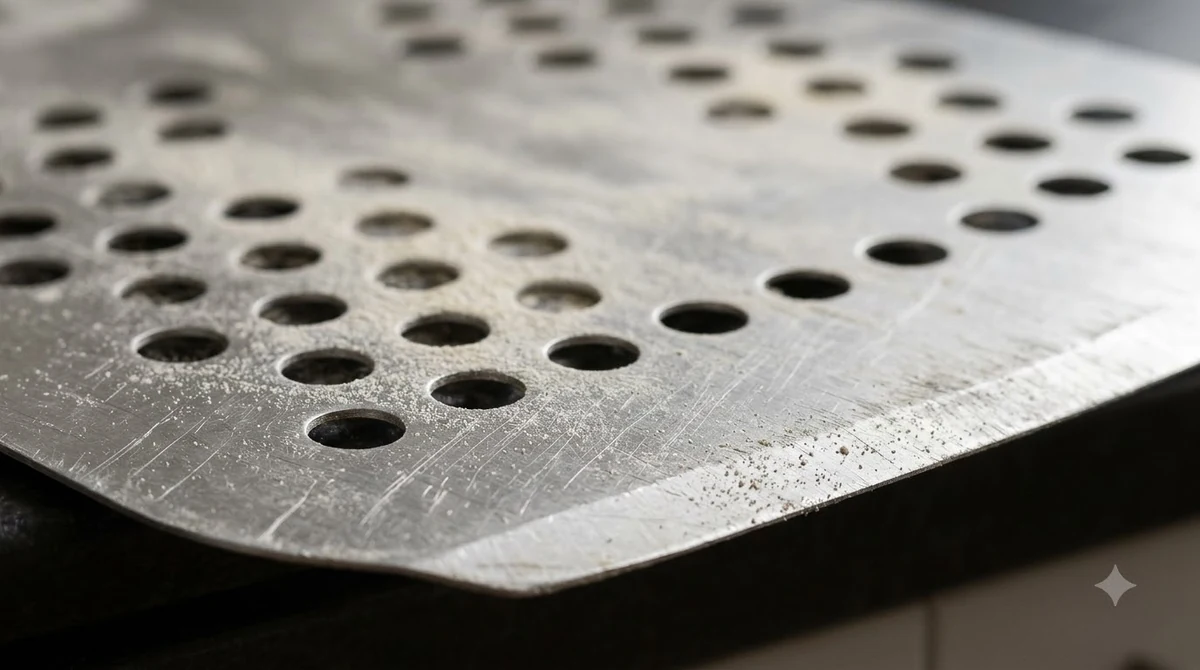

Learning how to use a metal pizza peel comes down to three steps: dust it lightly, check that the pizza moves freely, and launch it onto a hot stone at a downward angle. Metal peels are thin enough to slide under a finished pizza, but the smooth surface gives raw dough more to grip than wood does. This guide covers when metal is the right tool, and how to use a metal pizza peel to prepare the dough, slide the pie on, turn it, remove it and clean the peel afterward.
Metal Peel vs Wood Peel
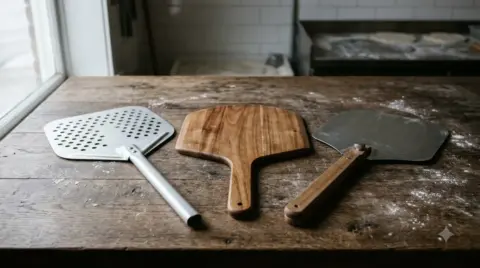
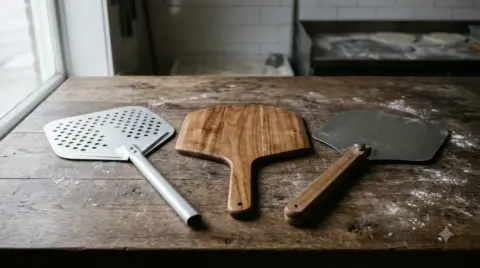
A metal peel is thin and flexible, so it suits turning and removing a pizza, while a wooden peel is the better tool for loading raw dough.
According to America’s Test Kitchen’s guide to pizza peels, each material suits a different job. A wooden peel has a rough, porous texture that holds a dusting of flour and makes dough less likely to bond, but it is too thick to slide easily under a baked pizza.
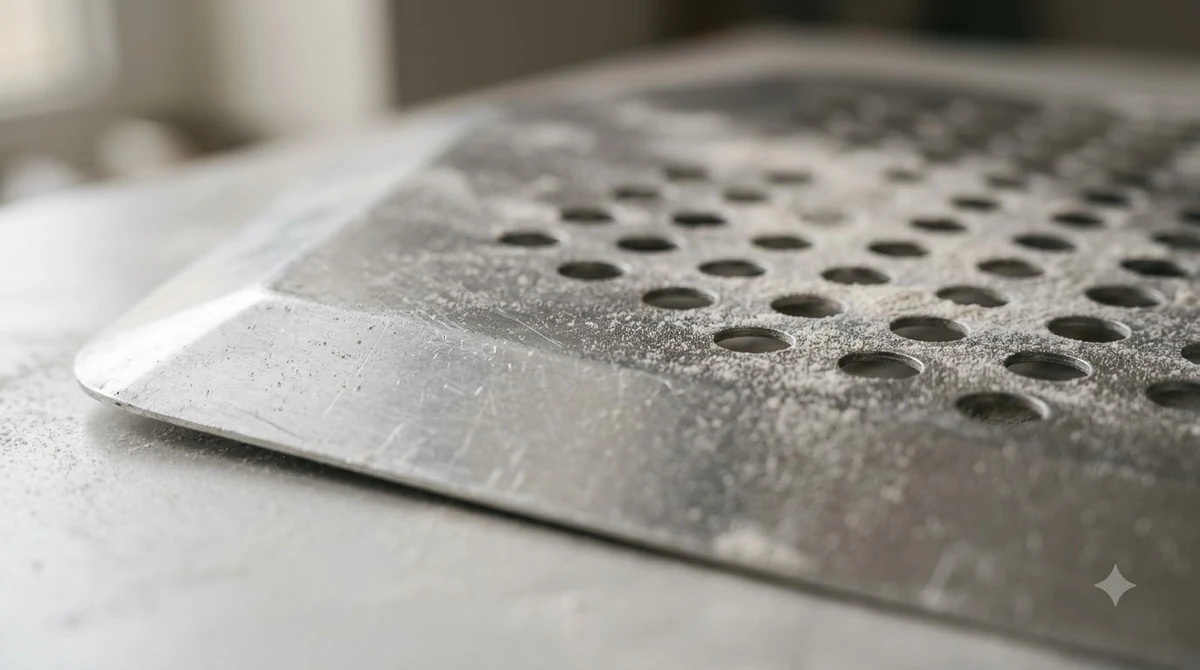
The metal peel reverses that trade-off. Its thin, smooth blade slides under the crust for turning and removing, but its smooth, nonporous surface makes raw dough more likely to stick. If you own only one metal peel, plan to dust it well and keep the pizza moving from the first second. Our guide to choosing an aluminum or steel peel covers the buying side.
That choice shapes everything else. If your routine involves a lot of raw dough, a wooden peel may be easier to load, and a metal peel becomes the better second tool for pulling the finished pie out of the oven.
| Feature | Metal peel | Wooden peel |
|---|---|---|
| Thickness | Thin, slides easily under a pizza | Thick, with a blunt edge |
| Sticking | Raw dough sticks more easily | Rough surface resists sticking |
| Best task | Turning and removing a finished pizza | Loading raw dough |
| Cleaning | Mild soap and hot water | Not covered in the sources read |
A perforated metal peel is a middle option. Its holes let excess flour fall through during launching and turning, although it still sticks more than wood, according to Thursday Night Pizza’s guide to pizza peels.
How to Use a Metal Pizza Peel: Prepare the Peel and Dough
Knowing how to use a metal pizza peel starts here: dust the peel lightly with semolina or flour, dust the underside of the dough, and check that the pie moves freely before you add toppings.
King Arthur Baking’s guide to loading pizza recommends semolina for dusting because it burns less easily. Spread it with your flat hand and aim for a light, even layer. Flour is the usual backup, but it turns sticky when it gets wet, so use it sparingly.
Work quickly. If dough keeps bonding, see why a pizza sticks to the peel. Dough sticks more the longer it rests on the peel, so stretch, top and load in one smooth run. Lacademie’s guide to using a pizza peel also advises letting cold dough come to room temperature before it goes into the oven, which helps reduce moisture.
A good routine starts before you stretch the dough. Set the peel next to your topping station so you can slide the dough onto it within seconds. The less time raw dough sits on smooth metal, the less chance it has to bond, and that matters more with metal than with wood.
- Dust the peel with a thin layer of semolina or flour.
- Stretch the dough and dust its underside lightly.
- Lay the dough on the peel and add toppings quickly.
- Jiggle the peel gently. The pizza should move on its own. If it does not, lift the stuck edge with an offset spatula and add a little flour underneath.

How to Slide the Pizza onto the Stone
When you learn how to use a metal pizza peel for loading, place the tip of the peel where you want the pizza to land, hold it at a downward angle, and keep it moving so the pie slides off the edge.
King Arthur describes a slow method: set the peel on the hot steel, stone or hearth at a downward angle, then move it back gradually while you keep jiggling it. The pie slides down the edge of the peel as the peel moves.
Keep your hands steady while you load. Move slowly and let the dough follow the peel, as the King Arthur method does.
Check the size before you start. Metal peels come in sizes from about 7 to 16 inches, so choose one that fits your oven opening and the pizzas you make most often.
Repetition builds the feel for the jiggle check. Practice with plain dough first, and add sauce and cheese once the pie slides freely. Most of the skill is judging when the dough is ready to move, not the motion itself.
Turning and Removing the Pizza
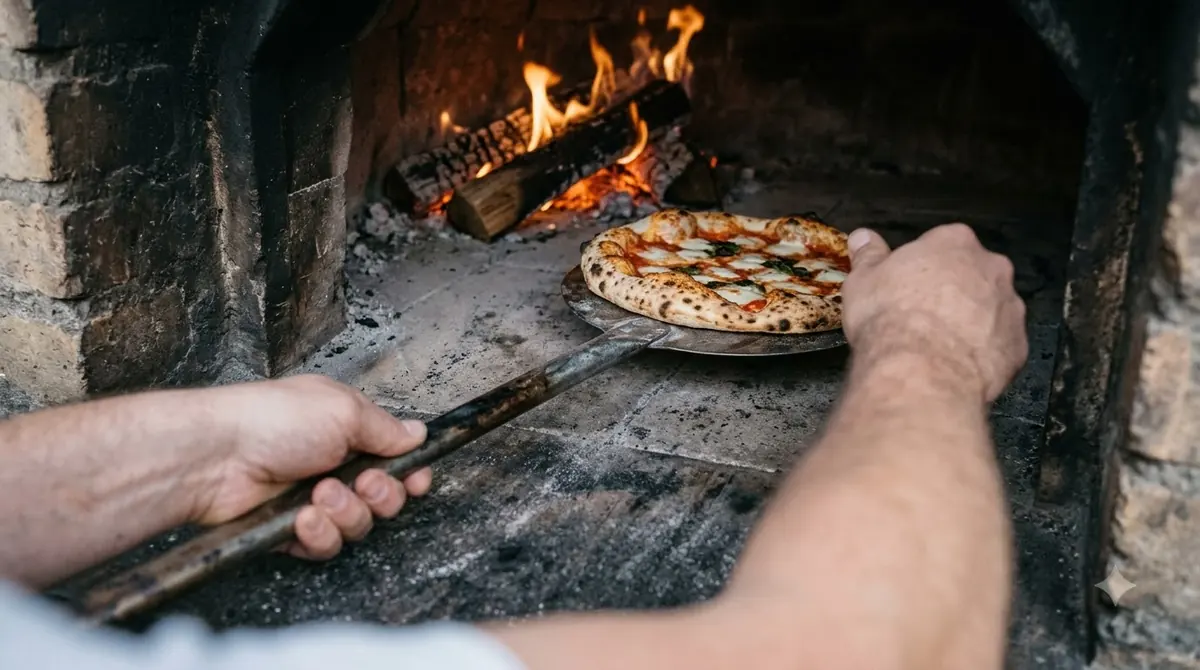
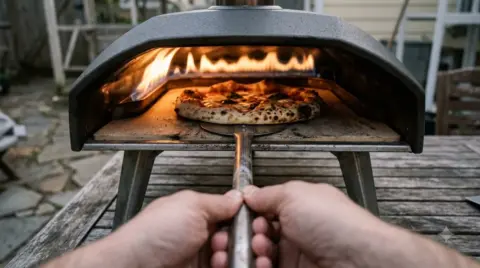
After about a minute or two in the oven, slip the thin metal peel under the pizza and rotate it, then slide the finished pie out with a quick backward snap.
Thursday Night Pizza suggests rotating the pizza after about a minute or two of baking so it cooks evenly. A thin metal blade makes this easy because it slips under the crust on a hot stone or steel.
To remove the pizza, King Arthur suggests a slow forward motion followed by a quick backward snap. The thin blade slides under the crust more easily than the blunt edge of a wooden peel, so keep your moves short and controlled.
The turning step is where a metal peel shines. Its thin blade reaches under the crust without disturbing the toppings, so it is the right tool once the pie is already cooking. In practice, timing matters as much as technique.
- Rotate once the crust has set, about a minute or two in.
- Keep the peel flat under the crust while you lift.
- Pull back with one quick snap when the pizza is ready.
Common Mistakes and How to Fix Them
Most sticking comes from three causes: a thin spot from stretching, sauce leaking onto the peel, and too little dusting flour. Each one has a simple fix.
| Problem | Likely cause | Fix |
|---|---|---|
| Pizza sticks to the peel | Not enough dusting flour | Lift the edge with a spatula and add flour underneath |
| Thin spot tears or sticks | Dough stretched too thin in one place | Stretch evenly and patch thin areas before topping |
| Dough bonds to the peel | Sauce leaking onto the peel | Use a light layer of sauce and keep it off the edges |
| Pie will not move on its own | Dough is bonded to the peel | Stop, repeat the jiggle check and fix it before loading |
Most problems come from rushing. If the pizza will not move, stop, lift the edge and check the dough again rather than forcing it onto the stone.
Parchment is a useful backup. King Arthur notes that heat-rated parchment starts to char between 450 and 500 degrees Fahrenheit, so watch it closely on upper racks. At very high heat, skip the parchment and work directly on the peel. The peel still does the sliding.
How to Clean a Metal Pizza Peel
Wash a metal pizza peel with mild soap and hot water, and avoid steel wool, which can scratch the surface.
Lacademie recommends a nylon brush or sponge instead of abrasives. The same guide treats a metal peel as simple to clean.
Brush off leftover semolina or flour before each use so it does not build up under fresh dough. Store the peel dry, so it is ready the next time you bake. Read more on launching a pizza without sticking and compare with a wooden pizza peel.
Frequently Asked Questions
How do I use a metal pizza peel for the first time?
Start with plain dough and a light dusting. Practice the jiggle check, slide the dough onto the stone at a low angle, and pull back with one smooth snap. Once the pie moves freely, add toppings and repeat the same steps.
Can I use flour instead of semolina on a metal peel?
Yes. King Arthur names semolina or cornmeal for dusting, and flour is the usual backup. Use flour lightly, because it turns sticky when it gets wet.
Should I buy a metal or wooden peel?
America’s Test Kitchen says each material suits a different task, so keeping both can help. If you can own only one, choose based on whether you mostly load raw dough or mostly turn and remove finished pizzas.
What if my pizza sticks halfway onto the stone?
Stop, separate the stuck edge with a knife or spatula, add a little flour underneath, and try again. Do not force the peel, because a forced slide tends to pull the dough out of shape.
How big should a metal peel be?
Thursday Night Pizza notes that metal peels range from about 7 to 16 inches or larger. Pick a size that fits your oven opening and the pizzas you make most often.
Is a metal peel good for loading raw dough?
Less so. America’s Test Kitchen says the smooth, nonporous surface makes raw dough more likely to stick, so metal works best for turning and removing. If you do load with metal, dust well and move quickly.
Mastering how to use a metal pizza peel takes a few practice pies. Start with a light dusting and the jiggle check on plain dough, then add toppings once the pie slides smoothly. More tool guides are in the gear and pantry section.
 9 min readGear & PantryHow to Use a Pizza Peel Without Sticking or SpillingUpdated Nov 10, 2026
 8 min readGear & PantryHow to Use a Pizza Turning Peel Without Tearing Your PizzaUpdated Nov 10, 2026
 9 min readGear & PantryMetal Pizza Peel: How to Choose Aluminum or SteelUpdated Nov 17, 2026
 8 min readGear & PantryHow to Use a Wooden Pizza Peel: Step-by-Step GuideUpdated Nov 10, 2026
 8 min readGear & PantryHow to Clean Pizza Stone (Safely, Without Soap)Updated Nov 10, 2026
 8 min readGear & PantryBest Pizza Peel for Ooni Koda 12: 4 Types ComparedUpdated Nov 17, 2026