
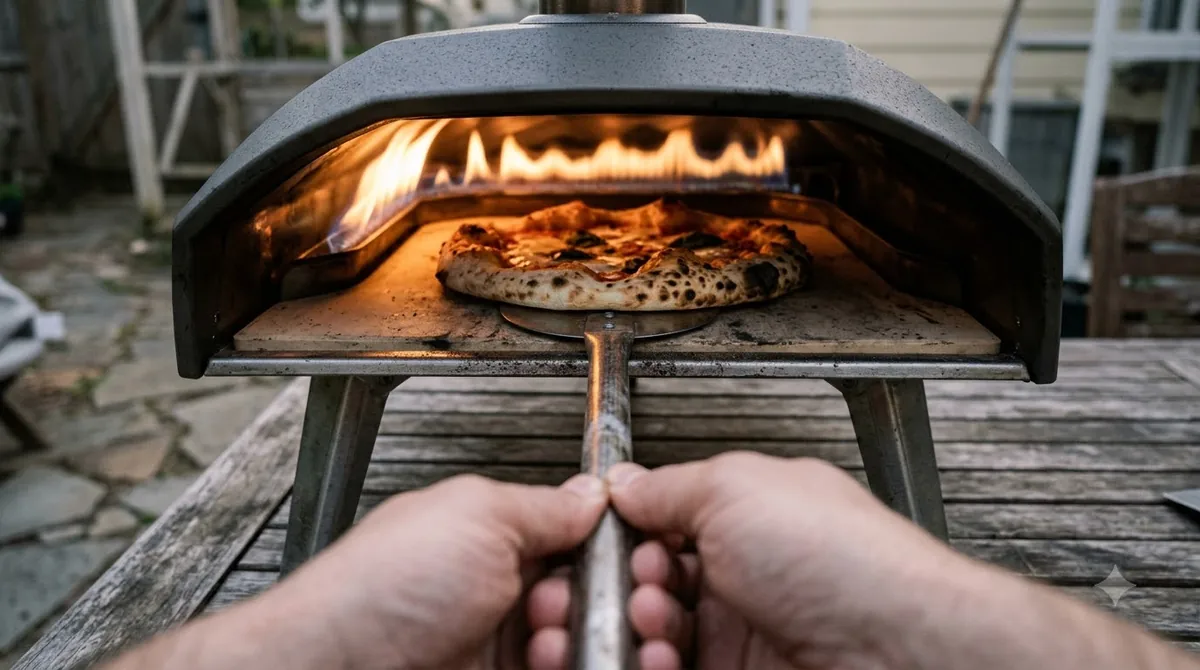

Learning how to use a pizza turning peel means sliding it under a pizza that is already in the oven, then rotating the pizza for an even bake. The tool is for turning and removing a pizza mid-bake, not for launching raw dough. Timing matters most, because turning too early is the mistake the sources name first.
Turning Peel vs Launch Peel
A turning peel rotates a pizza that is already on the stone, while a launch peel slides a shaped, raw pizza into the oven. Gozney’s guidance treats these as two separate jobs, so most home cooks keep one peel for each.
| Feature | Turning peel | Launch peel |
|---|---|---|
| Main job | Rotate and remove a pizza during the bake | Slide a raw pizza into the hot oven |
| When you use it | After the pizza is on the stone | Before the pizza goes in the oven |
| Head size | Not stated on the page read | Largest head of Gozney’s peels |
| Handle options | Smaller and larger handled versions in Gozney’s range | Not stated on the pages read |
The Glowen Oven academy describes the turning peel as used for rotating pizza, shielding crusts and handling wood, and says it helps prevent burning when the flames are strong. That role explains why it belongs at the back of the oven, not at the start of the bake. If you launch with it, you are using a tool built for a later step. For a closer look at the tool itself, see this guide to how a pizza turning peel works.
When to Turn the Pizza
When you use a pizza turning peel, turn the pizza when the crust at the back of the oven starts to color and rise, not before. Gozney’s turning peel tutorial gives this as its main timing rule and warns against turning too early.
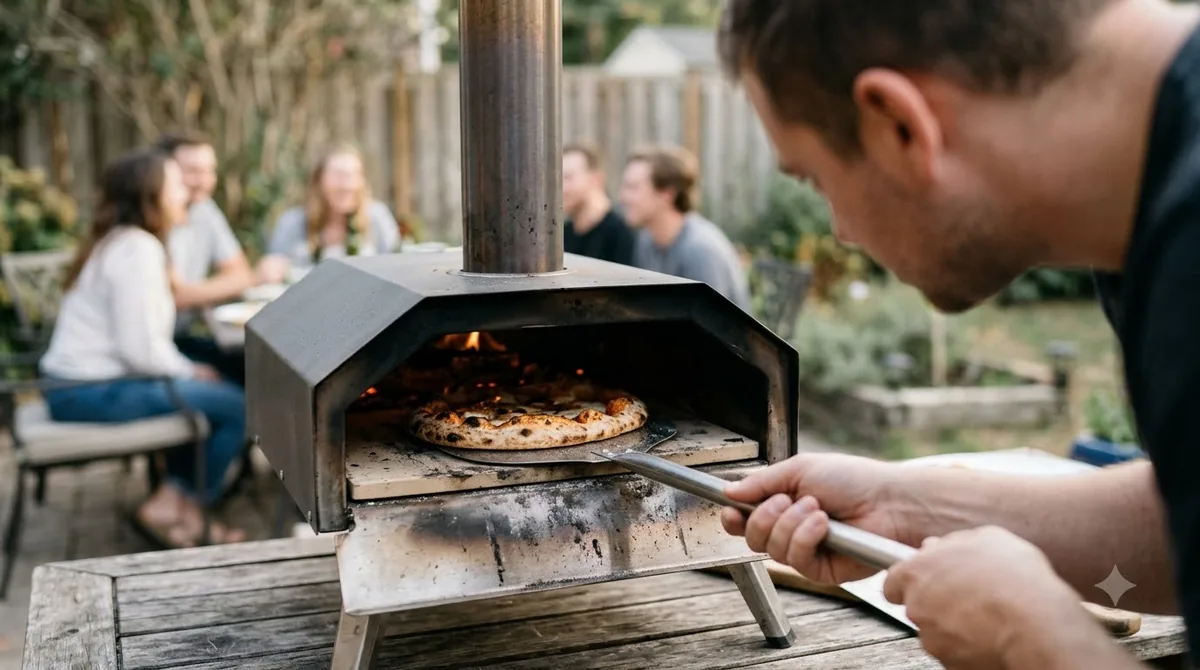
Turning too early is the only mistake Gozney’s tutorial names, and it matters because the crust needs to set enough to move without folding. Look at the back edge of the crust, since that is the part the guidance tells you to watch. The page read for this guide gives no number of seconds, so the timing is something you learn by looking, not by the clock.
Use your oven’s manual for the heat and timing settings that suit your model. A pizza that has barely colored is not ready, and a pizza that has already burned on the base will not be saved by a turn. The window between those two points is where the turning peel does its work.
How to Use a Pizza Turning Peel: Step by Step
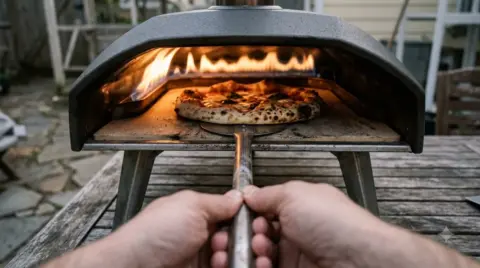
Slide the turning peel under the pizza, twist it gently, and lift the pizza higher when you need more heat from the top of the oven. Gozney describes the motion as “twist and turn,” and Glowen’s video guide covers the same movement.
- Check the back of the crust. Turn only when it is coloring and starting to rise.
- Slide the turning peel under the pizza in one smooth move, keeping the pizza as close to flat on the stone as you can.
- Twist and turn the pizza on the stone, so the side that was furthest from the flame moves toward the heat.
- Lift the pizza a little higher if you want more heat from the top, as Glowen’s guide notes.
- Keep turning in small moves until the crust is even, then check the color on the base before you remove it.
- Remove the pizza with the turning peel once it is fully cooked, and leave the peel out of the flames between turns.
Most of the skill in how to use a pizza turning peel is in the first slide. A slow, flat slide keeps the base in contact with the stone and reduces the chance of tearing a soft crust. If the pizza sticks, lift the edge gently rather than forcing the peel. Forcing it is a common cause of folds and torn dough. If raw dough is the problem, read about pizza sticking to the peel before you bake.
Practice Before the Real Bake
Practice how to use a pizza turning peel with cardboard first, then with a cooked pizza, so the motion is familiar before raw dough is on the peel. Glowen’s guide recommends cardboard practice, and Gozney recommends a cooked pizza as a way to hone your skills.
A cooked pizza is useful because it lets you test the slide and the turn without the risk of tearing raw dough, which is the fastest way to learn how to use a pizza turning peel well. Gozney’s tutorial says practice builds skill when turning pizzas, so repeat the same motion several times before you bake for guests. The sources do not give a number of practice sessions, so stop when the turn feels steady rather than when you reach a set count.
Glowen lists rotating a pizza without removing it from the oven as one of the turning peel’s benefits. Practice that exact motion: keep the pizza on the stone, rotate it, and check the color before you lift. That habit saves you from pulling the pizza out too early. Our guide to launching a pizza without sticking covers the step that comes before the first turn.
Care, Flour and Common Mistakes
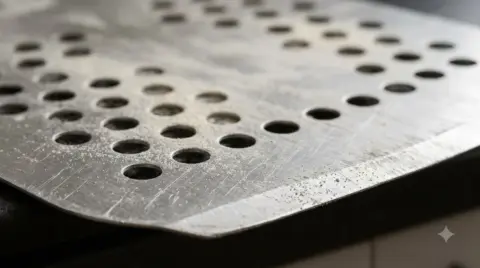
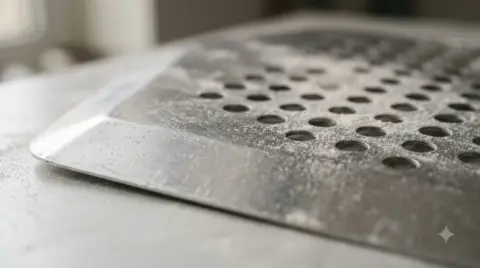
Keep the peel clean and dry, and use only enough flour to stop sticking, because too much flour can burn the base. Gozney says its peels have perforated gaps so excess flour can fall through.
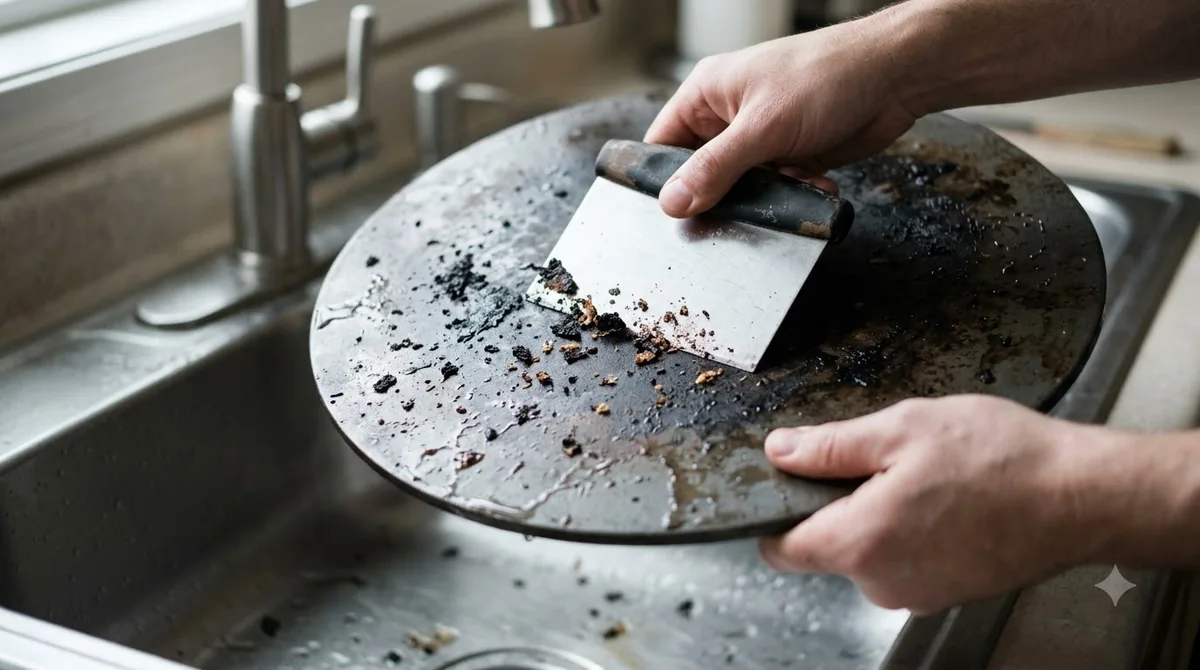
Most problems when you use a pizza turning peel come from timing, flour or heat handling. These are the mistakes the sources point to, and the fixes that follow from them:
- Turning too early, before the back crust colors and rises. Wait for the color.
- Too much flour on the peel or the stone, which can burn the base. Brush off the excess before the slide.
- Leaving the peel in the flames for long periods. Gozney’s peel care tips warn against extended time in the oven.
- Putting the peel in the dishwasher. Gozney says its peels are not dishwasher safe, so clean yours by hand.
- Using a dirty or wet peel. Keep it clean, dry and free of debris before each bake.
Cleaning is simple but easy to skip. Brush off flour and food debris after each use, let the peel dry fully, and store it somewhere dry. Gozney’s care tips ask for a peel that is clean, dry and free of debris before use, so treat that as the standard for every bake.
What the Sources Do Not Confirm
The pages read for this guide do not give exact seconds before turning, oven temperatures, how far to turn, or the head size of a turning peel. Gozney’s tutorial points to a video for technique, and the video’s content was not included in the text read. An Ooni help page on turning peels redirected and could not be read, so its step-by-step advice is not used here. Check your oven manual for heat and timing, and check the product listing for dimensions and weight before you buy. More tool guides sit in the gear and pantry guides.
Frequently Asked Questions
Can I use a turning peel to launch pizza?
No. A turning peel is for rotating and removing a pizza once it is in the oven. Gozney and Glowen both describe a separate launch or placement peel for sliding raw pizza in. Keeping one peel for each job protects the dough and makes learning how to use a pizza turning peel much easier.
How do I know when to turn my pizza?
Turn the pizza when the crust at the back of the oven starts to color and rise. Gozney warns against turning too early. The pages read do not give a set number of seconds, so check your oven manual and learn the timing through practice.
Should I put flour on a turning peel?
Use only enough flour to stop the pizza from sticking. Gozney says too much flour can burn the base, and its perforated peels let excess flour fall through. Brush off loose flour and keep the peel clean and dry before each bake.
Is a wooden or metal turning peel better?
The pages read do not state the material of a turning peel, so there is no source-backed winner. Glowen describes wooden peels as ideal for preparing and launching. Choose based on how you plan to handle the peel and what your oven allows.
How much should I practice before baking for guests?
Practice with cardboard first, then with a cooked pizza, as Glowen and Gozney suggest. Keep going until the slide and turn feel steady and the pizza stays together. The sources do not give a set number of sessions, so judge by how controlled the motion feels.
Before your next bake, practice how to use a pizza turning peel with cardboard and a cooked pizza, then turn only when the back crust is coloring and rising. Keep a separate launch peel for sliding raw dough in, and check your oven manual for the timing your model needs.
 9 min readGear & PantryHow to Use a Metal Pizza Peel Without StickingUpdated Nov 10, 2026
 9 min readGear & PantryHow to Use a Pizza Peel Without Sticking or SpillingUpdated Nov 10, 2026
 8 min readGear & PantryPizza Turning Peel: How It Works and How to Choose OneUpdated Nov 16, 2026
 8 min readGear & PantryBest Gozney Roccbox Peel Options: Placement and Turning Peels ComparedUpdated Nov 10, 2026
 8 min readGear & PantryHow to Use a Wooden Pizza Peel: Step-by-Step GuideUpdated Nov 10, 2026
 8 min readGear & PantryHow to Clean Pizza Stone (Safely, Without Soap)Updated Nov 10, 2026