
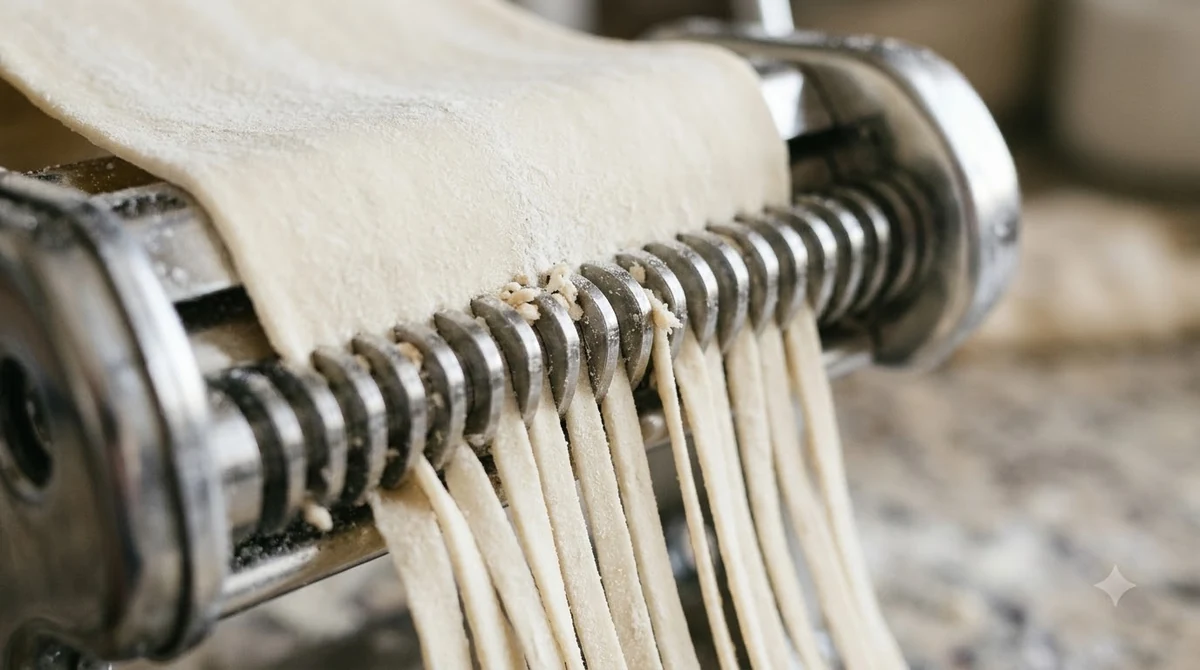

A KitchenAid pasta roller not working problem is most often a power, speed, attachment-fit, dough or cleaning issue, and the official owner manual lists the checks to run before you suspect the part itself. The guidance below covers the Pasta Roller and Cutter Set sold with models 5KSMPRA, 5KSMPSA and 5KSMPCA. Check your own model number on the box or the mixer label, because the set you own may differ.
KitchenAid pasta roller not working: seven checks in the owner manual
The KitchenAid owner manual for the Pasta Roller and Cutter Set asks seven questions in order, and the first ones concern power because they are the quickest to rule out.
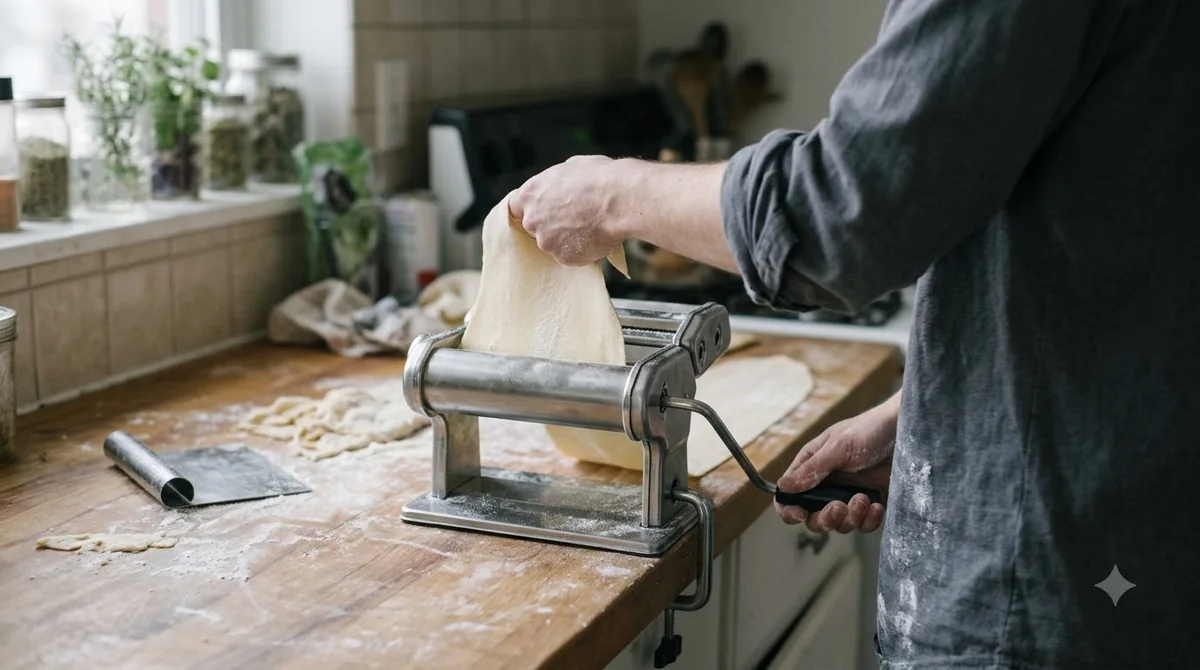
- Is the stand mixer plugged in? The manual asks for a plug in an earthed outlet, with no adapter and no extension cord.
- Is the fuse in the circuit to the mixer in working order? If the outlet is on a circuit breaker box, make sure that circuit is closed.
- Turn the mixer off for 10 to 15 seconds, then turn it back on. If it still does not start, let it cool for 30 minutes before trying again.
- Did you use the correct speed for the roller or cutter, as listed in the roller settings chart?
- Is the roller or cutter attached properly, as shown in the product usage section?
- Did you follow the usage instructions in the product usage section?
- Is the dough prepared according to the recipe?
If none of these items explains the problem, the manual points to the Terms of KitchenAid Guarantee. It also says not to return the attachments or the mixer to the retailer, because retailers do not provide service.
How to seat the roller on the mixer correctly
When a KitchenAid pasta roller not working complaint comes down to item 5, the attachment fit, follow the manual’s attaching steps in order. Each step assumes the mixer is off and unplugged. For the full routine once it seats, see how to use the KitchenAid pasta roller.
- Turn the stand mixer OFF (0) and unplug it.
- On a hinged hub cover, flip it up. On a removable cover, turn the attachment knob counterclockwise to remove the cover.
- Insert the attachment shaft housing into the hub, making sure the power shaft fits into the square hub socket. If needed, rotate the roller back and forth. The pin on the housing should sit in the notch of the hub rim.
- Tighten the attachment hub knob until the attachment is completely secured to the mixer.
The KitchenAid UK product tips page gives the same sequence and repeats that you may have to rotate the attachment slightly to get the shaft into the socket. If the roller still does not seat, do not force it, because the fit is what the manual asks you to check before anything else.
Speed and roller settings to use
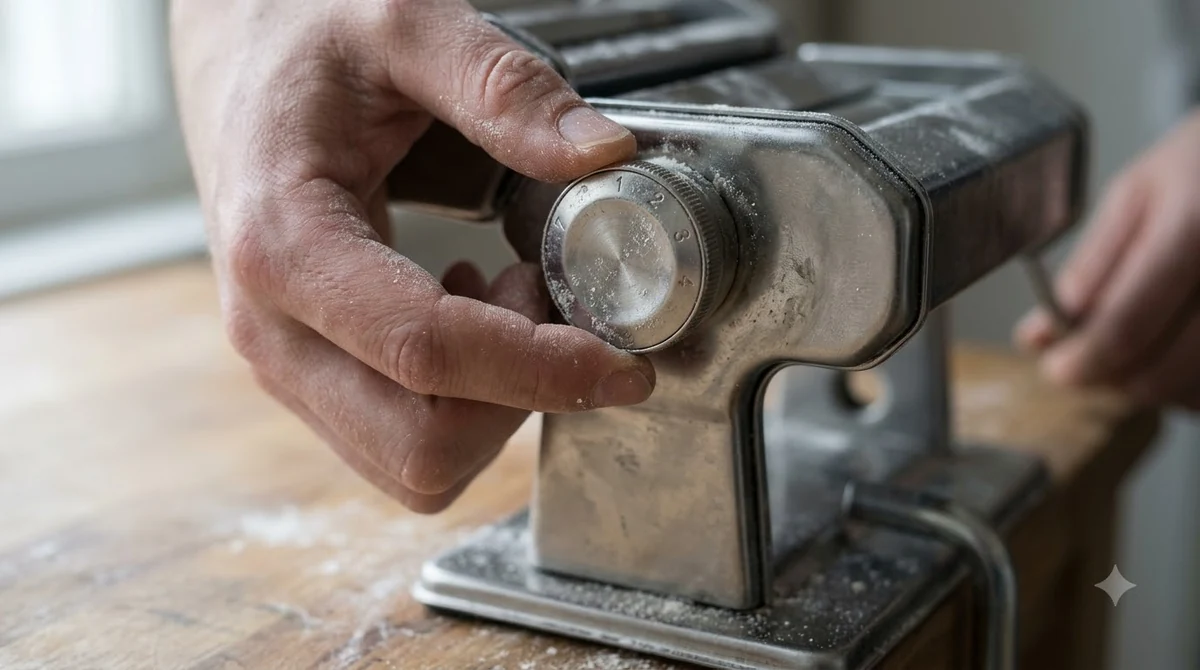
The pasta roller runs at speed 2, and the roller knob sets how thin the sheet gets. The wrong speed can leave you with a KitchenAid pasta roller not working as expected, and it is one of the listed checks, so compare your settings with the tables below.
| Attachment | Speed | Noodle width | Suggested use |
|---|---|---|---|
| Pasta roller | 2 | Up to 140 mm | Roller settings chart |
| Lasagnette cutter | 3 | 12 mm | Thick noodles |
| Fettuccine cutter | 5 | 6.5 mm | Egg noodles, fettuccine |
| Spaghetti cutter | 7 | 2 mm | Spaghetti |
| Roller setting | Suggested use |
|---|---|
| 1 or 2 | Kneading and thinning dough |
| 3 | Thick “kluski”-type noodles |
| 4 | Egg noodles |
| 4 or 5 | Lasagna noodles, fettuccine, spaghetti, ravioli |
| 6 or 7 | Tortellini, thin fettuccine, linguine fini |
| 7 or 8 | Very thin “angel-hair” pasta or capellini |
The manual says the roller and cutters are designed for pasta dough only. Do not cut or roll anything else, because that can damage the attachment. If you are unsure which setting suits a dish, how thin to roll pasta explains the thickness for each shape, and rolling lasagna sheets with the KitchenAid roller covers one common case.
Dough and dried residue problems
Dough that does not match the recipe is one of the seven listed checks, and the manual also says to clean off dried dough, so rule out both when you have a KitchenAid pasta roller not working smoothly or a roller that sticks or jams.
The manual’s basic egg noodle dough uses 4 large eggs, 830 mL (3½ cups) sifted all-purpose flour, 15 mL (1 tbs) water and 2 mL (½ tsp) salt. Break the eggs into a glass measuring cup and check that they measure 207 mL (7/8 cup). If they are short, add water 2 mL (½ tsp) at a time until you reach that volume.
- Place the flour and salt in the mixer bowl, attach the flat beater, and turn to speed 2. Gradually add the eggs and water, then mix for 30 seconds.
- Stop the mixer, switch the flat beater for the dough hook, and knead at speed 2 for 2 minutes.
- Let the dough rest for 20 minutes, then divide it into 4 pieces before rolling.
- Feed the dough through the roller at setting 1 to knead, fold it in half and roll again until it is smooth, pliable and as wide as the roller. Then increase the setting step by step, without folding, until you reach the thickness you want.
The manual also says to dust the pasta lightly with flour while rolling and cutting, which helps it dry and separate. The UK product tips page gives the same advice. If the dough does not look or feel like the recipe describes, compare it with this recipe or with a fresh pasta dough recipe before you suspect the machine.
Cleaning and lubrication that prevent problems
The manual’s cleaning steps are meant to remove dried dough before it builds up, so clean the roller after every session rather than waiting for a KitchenAid pasta roller not working again. Our guide to cleaning the KitchenAid pasta roller goes deeper on the routine.
- After cutting, let the roller and cutters air dry for one hour.
- Remove the dried dough with the cleaning brush included with the set.
- If dough is hard to remove, tap the attachment with your hand. Use a toothpick only if necessary.
- Polish the parts with a soft, dry cloth and store them in a dry place at room temperature.
The manual gives strict limits. Do not wash the roller in the dishwasher or immerse it in water or other liquid, and do not use metal objects or any knife or other sharp object to clean it. Do not run a dish towel or other cloth through the rollers. KitchenAid’s product help page on cleaning and lubricating the roller also says not to insert knives or screwdrivers to clean the unit.
For lubrication, the manual recommends light mineral oil. Add one drop to each of the four corners of the roller or cutters, either once a year or after about 50 uses. The product help page gives the same interval and says to clean the parts properly before oiling.
What the official sources do not confirm
The owner manual and the product help pages checked for this guide do not contain a fault-code table, repair prices, or replacement part numbers for a KitchenAid pasta roller not working, so this article does not give any of them. If the attachment cannot be fixed, the KitchenAid pasta roller warranty terms explain how a claim works.
- Error codes and what each one means: not found in the sources read. Check the mixer’s own manual and the label on the unit.
- Repair cost and replacement parts: not found. Ask KitchenAid or an authorized service facility, using your model number.
- Warranty outside the UK, Ireland, South Africa and the UAE: the guarantee section read covers those countries, with two years from purchase for the three model numbers. Check the terms that came with your purchase for your country.
Frequently Asked Questions
Why is my KitchenAid pasta roller not working?
Start with the power checks in the manual: confirm the mixer is plugged into an earthed outlet, check the fuse or circuit breaker, then turn the mixer off for 10 to 15 seconds and back on. If it still will not start, let it cool for 30 minutes.
What speed should the pasta roller use?
The manual sets speed 2 for the pasta roller. Cutters use higher speeds: speed 3 for the lasagnette, speed 5 for the fettuccine cutter and speed 7 for the spaghetti cutter.
Can I put the roller in the dishwasher?
No. The manual says not to wash the roller or cutters in the dishwasher and not to immerse them in water or other liquids.
How often should I oil the gears?
Use light mineral oil, one drop in each of the four corners, once a year or after about 50 uses, according to the manual.
Should I return the roller to the store if it fails?
The manual says not to return the attachments or the mixer to the retailer, because retailers do not provide service. Follow the guarantee section and contact KitchenAid or an authorized service facility for your region.
Run the checks in the order the manual lists them before you decide a KitchenAid pasta roller not working means a faulty part. If power, speed, seating, dough and cleaning all pass and the roller still fails, contact KitchenAid with your model number and your region’s guarantee terms.
 6 min readBy Use & ModelKitchenAid Pasta Roller Lasagna: How to Roll Sheets for LayersUpdated Nov 7, 2026
 9 min readBy Use & ModelHow to Use KitchenAid Pasta Roller: Step-by-Step GuideUpdated Nov 7, 2026
 9 min readBy Use & ModelHow to Clean KitchenAid Pasta RollerUpdated Nov 10, 2026
 8 min readBy Use & ModelKitchenAid Pasta Roller Parts: What Comes With Each ModelUpdated Nov 11, 2026
 8 min readBy Use & ModelPasta Machine for Lasagna: Roller Width, Settings and StepsUpdated Nov 16, 2026
 8 min readBy Use & ModelKitchenAid Pro 600 Attachments: What Fits and What to CheckUpdated Nov 8, 2026