


Asking what is durum wheat leads to one answer: a hard, high-protein species of wheat that supplies the semolina for dry pasta. It differs from common wheat in chromosome count, gluten strength and the way it mills.
What Is Durum Wheat, Exactly?
Durum wheat, known scientifically as Triticum durum, is a tetraploid species of wheat with 28 chromosomes. It is also called pasta wheat or macaroni wheat.
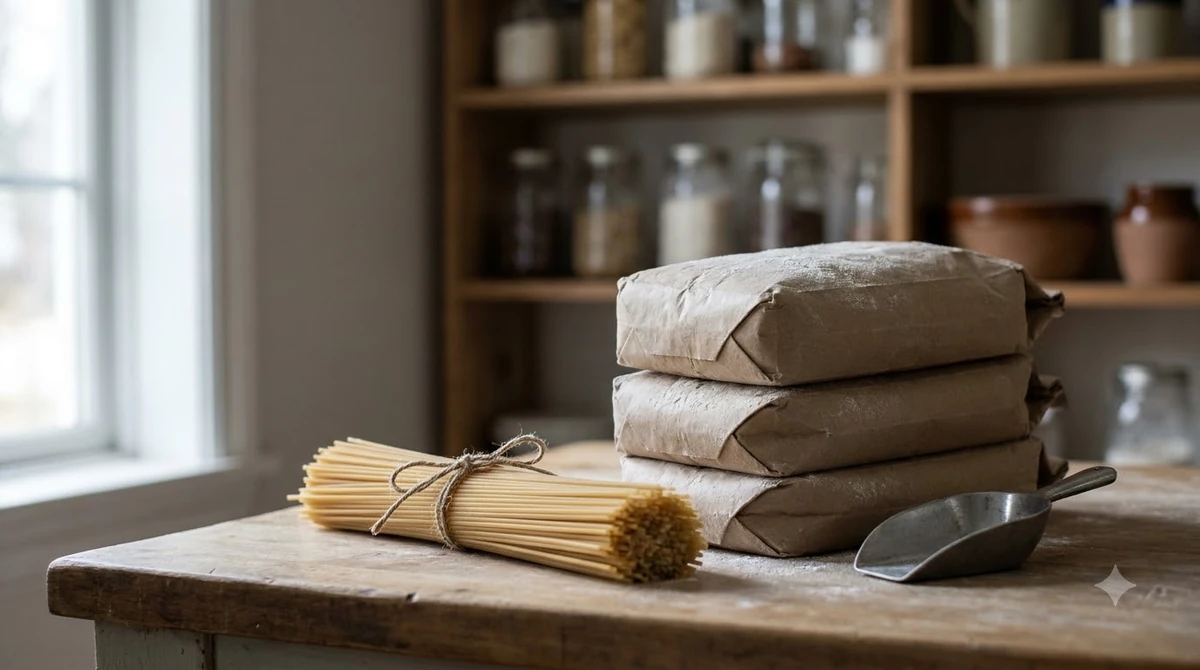
The short answer to what is durum wheat is that it is the grain behind most dry pasta. Think of durum as the plant and semolina as the milled product, so the two terms describe different stages of the same grain.
The name comes from Latin, where “durum” means hard. Wikipedia’s durum wheat entry describes it as the second most cultivated wheat after common wheat, though it makes up only 5 to 8% of global wheat production.
Common wheat is hexaploid, with 42 chromosomes. That difference puts durum in a separate group from the wheats used for everyday bread, so the two are not interchangeable in the kitchen.
The grain also has a yellow endosperm, which is why dry pasta made from durum looks golden. Wikipedia’s semolina article notes that semolina from hard durum wheat is pale yellow, while semolina from common wheat is beige.
From Wheat to Semolina
Durum is milled so that its endosperm turns into semolina, a coarse, purified granular product that is the basic ingredient of most dry pasta.
Milling grinds the endosperm into coarse granules, and that product is called semolina. Wikipedia’s semolina article cites the Codex Alimentarius, an international food standard, which sets a sieve limit for durum semolina: no more than 79% of its grains may pass through a 315-micron sieve.
Durum is also the hardest of all wheats to mill, because its grain resists milling. When it is ground as fine as flour, it can be used for making bread.
So is durum a flour? Not exactly. The plant is durum, and the coarse milled product is semolina. Fine-ground durum is sometimes sold as durum flour, which has a finer texture than semolina.
How Durum Compares With Common Wheat
Durum has about 12% total protein in defatted flour, against 11% for common wheat, yet it is not a strong wheat for dough.
| Attribute | Durum wheat | Common wheat |
|---|---|---|
| Chromosomes | 28 (tetraploid) | 42 (hexaploid) |
| Total protein in defatted flour | About 12% | About 11% |
| Extractable wet gluten | 27% | 24% |
| Strength for dough | Weak, despite high protein | Stronger, the usual choice for bread |
| Typical use | Dry pasta, couscous, noodles | Bread and baking |
Cooks’ Info notes that durum is not generally favoured for bread, although durum flour is used for some baked goods in Sicily. Its protein is high, but the gluten is not as strong as in regular wheat.
Semolina still shows up in bread and pizza. Wikipedia’s semolina article says the high gluten content of semolina adds firmness and chewiness to the crust. Follow the recipe’s ratio closely (our guide to semolina flour vs all purpose flour shows how the two behave), since a dough that includes durum will not behave like one made only with common wheat flour.
The comparison is about the wheat itself, not the bag on your shelf. Semolina, durum flour and whole durum meal are all made from the same grain, but they differ in how finely the grain is ground and how it is processed.
Where Durum Is Used
Durum is used almost exclusively for commercial dry pasta, and it also supplies the semolina in North African couscous.
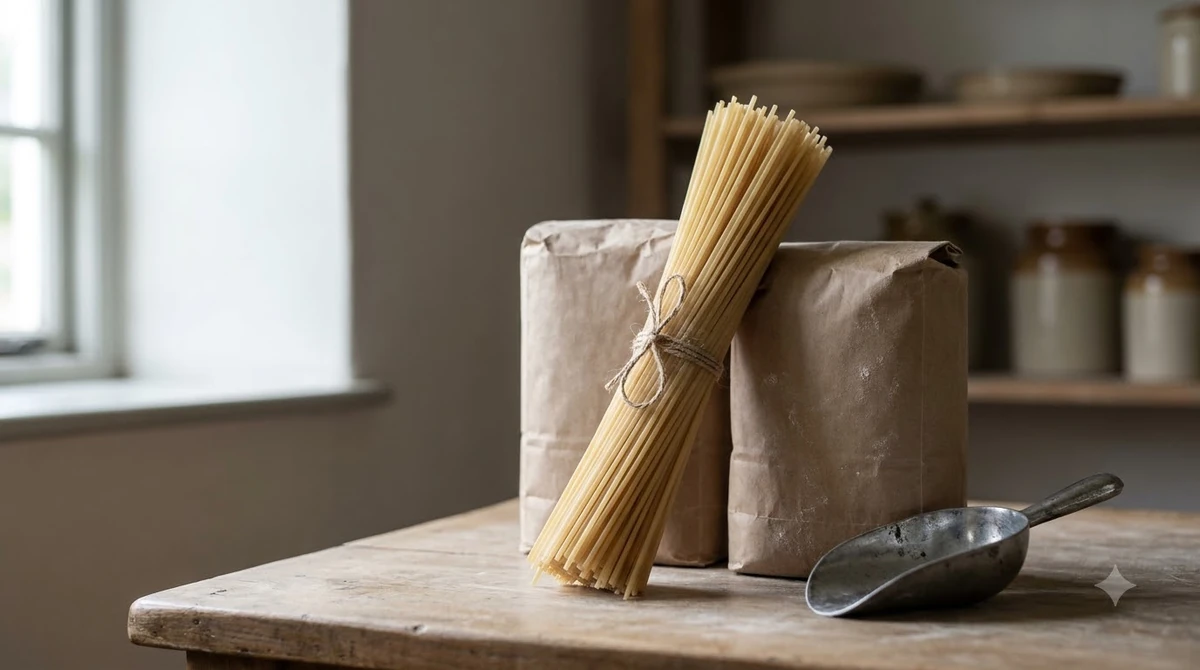
Commercially produced dry pasta is made almost exclusively from durum semolina. According to Wikipedia’s semolina article, its high protein and gluten content make it especially suitable for pasta. Knowing what is durum wheat helps you read pasta packages and understand why the ingredient list matters.
- Dry pasta: almost all commercial dry pasta is made from durum semolina.
- Couscous: coarsely ground durum is the semolina used for North African couscous.
- Noodles: durum flour and meal are generally used for pasta, couscous and noodles.
- Bread and pizza: fine-ground durum or semolina adds firmness and chewiness to the crust.
- Sweet dishes: semolina also goes into desserts such as halwa, according to the same article.
If you want the firm bite of traditional dry pasta, look for durum or semolina on the ingredient list. Pasta labeled only as flour does not tell you which wheat was used.
Where Durum Grows and Why It Matters
Durum yields better than other wheats in dry areas, and Italy is one of its predominant production areas.
Wikipedia’s durum article also notes that many countries in Europe produce durum in commercially significant quantities. So what is durum wheat’s place in world supply? It is a small share by volume, but it is central to pasta.
Durum gives greater yields than other wheats where rainfall is low. Good yields can also come from irrigation, but irrigation is rarely used for durum.
Canada grows west amber durum, and in the United States, North Dakota produces 70% of the durum grown there, according to Cooks’ Info. Growing regions explain why durum pasta is more common in some countries than others, which matters if you shop for imported brands, and our notes on bronze cut pasta explain another label term worth knowing.
How to Read a Durum Label
A package that says 100 per cent durum does not necessarily mean whole grain, because most durum is processed into white flour for pasta.
- “100 per cent durum” describes the wheat, not the milling.
- “Whole grain” is a separate claim and must be stated on the label.
- Most durum is refined into white semolina for pasta.
Cooks’ Info states that durum wheat is no more or less healthy for you than other wheat. Whether a pasta is whole grain depends on the milling, so check the package for that claim and the nutrition facts.
Read the ingredient list first, as the pizza and pasta guides here often suggest. If it names durum wheat semolina, the pasta is made from that milled durum product. If it names only wheat flour, the label does not say the pasta is made from durum.
When you compare two packages, look at both the ingredient list and the nutrition panel. The first ingredient shows the main grain, and the panel gives the nutrition facts for the portion size printed on the package.
Frequently Asked Questions
What is durum wheat used for?
Durum wheat is used mainly for commercial dry pasta. Its milled semolina also goes into North African couscous and noodles, and it adds firmness and chewiness to some bread and pizza crusts.
Is durum wheat the same as semolina?
No. Durum is the wheat plant, while semolina is the coarse granular product milled from its endosperm. The two terms describe different stages of the same grain, from the plant to the milled product.
Is durum wheat gluten free?
No. Durum is a wheat and contains gluten, so people with celiac disease or wheat allergy should avoid it. Anyone with a gluten-related condition should ask a doctor for advice before eating durum-based foods.
Is durum healthier than regular wheat?
Cooks’ Info states that durum wheat is no more or less healthy than other wheat. Whole-grain status depends on milling, so the label tells you more than the wheat type alone. Check the package for the exact nutrition facts.
Can you use durum wheat for bread?
Yes, but it is not the usual choice. Durum is not generally favoured for bread because its gluten is not as strong as that of regular wheat, although fine-ground durum can be used in some bread recipes.
Why is pasta yellow?
The color comes from the yellow endosperm of durum wheat, which gives pasta its color. This is a property of the grain, so it shows most clearly in plain pasta made only with durum semolina and water.
If you are buying dry pasta, look for durum or semolina on the ingredient list if you want the traditional texture, and see the best semolina flour guide if you make pasta at home. If you also want whole grain, check the label for that claim separately, because the durum wording alone does not confirm it.
 8 min readLearnWhat Is Semolina Flour? A Clear Guide to Durum Wheat FlourUpdated Nov 10, 2026
 5 min readLearnWhy Is Italian Pasta Better? Durum, Bronze Dies and Drying ExplainedUpdated Nov 13, 2026
 9 min readLearnWhat Is Grana Padano? A Simple Guide to This Italian Hard CheeseUpdated Nov 11, 2026
 8 min readLearnWhy Is My Pizza Crust Hard? Causes and FixesUpdated Nov 10, 2026
 9 min readLearnWhole Wheat Pizza Dough: Easy Home Recipe and TipsUpdated Nov 10, 2026
 6 min readLearnEggless Pasta Dough: Semolina, Water and Resting TimeUpdated Nov 13, 2026