

Paglia e fieno pasta is an Italian pasta made by combining yellow egg pasta with green pasta, usually colored with spinach. The name means “straw and hay,” a nod to the two colors of the noodles.
The classic version is a light cream sauce with peas and prosciutto. Sources disagree on which Italian region created the dish, so treat its origin as a claim rather than settled history.
What paglia e fieno pasta means
Paglia e fieno pasta means “straw and hay,” the two colors of the noodles. The Encyclopedia of Pasta entry describes it as white pasta combined with green pasta, with the green usually coming from spinach, and it notes that the name is literally “straw and hay.”
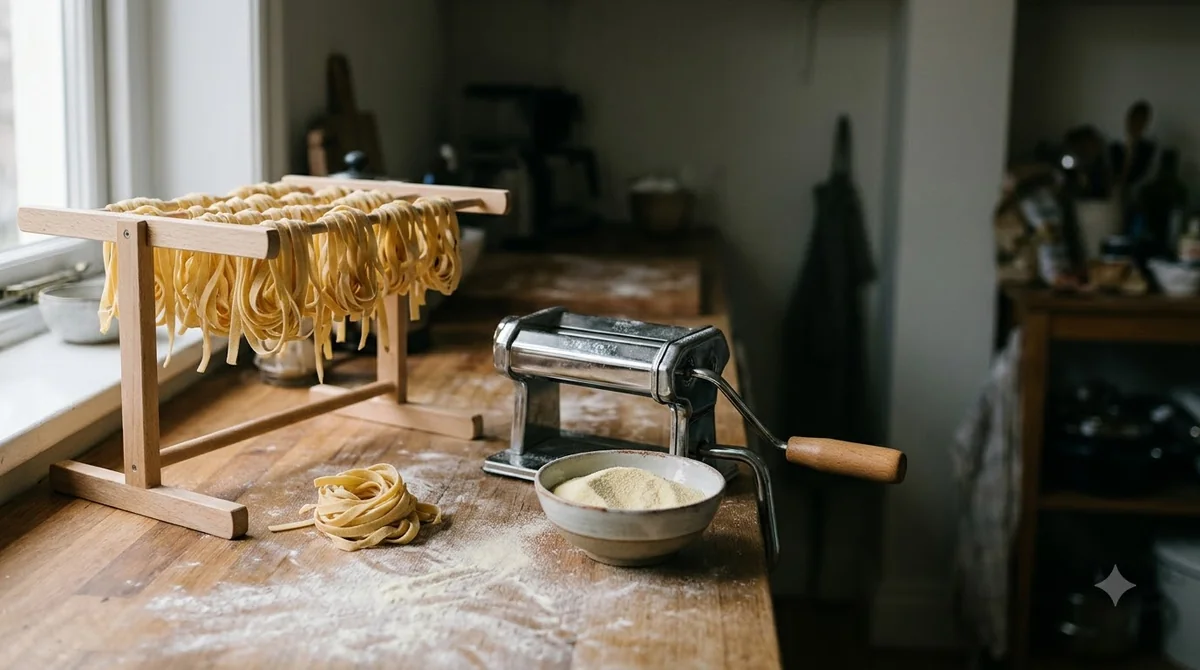
The yellow strands are plain egg pasta. The green strands are the same kind of dough with spinach worked in, so the color comes from the vegetable rather than from a separate pasta.
Knowing the name helps when you read a recipe. A paglia e fieno pasta recipe lists the yellow and green doughs separately, so check that both colors are measured before you start.
The encyclopedia entry does not limit the term to one shape. The name describes yellow and green pasta served together, which is why the same name can cover several ribbon shapes.
Where paglia e fieno pasta comes from
Sources give two different origins for paglia e fieno pasta: Lazio, the district around Rome, and the Tuscan province of Siena. The encyclopedia entry does not name a region at all.
One recipe presents the dish as a spring pasta from Lazio, with fresh peas and prosciutto in a Pecorino cream sauce. Its author describes the dish as a spring pasta from Lazio, Rome’s district.
The recipes read for this guide share the same core list: eggs, flour, cream, cheese, peas and prosciutto. That short list is why a paglia e fieno pasta dinner is easy to plan around what you already have.
A second recipe places the dish in the Tuscan province of Siena and uses butter, shallot and Parmesan with Pecorino in the sauce. Until one origin is documented, read the origin as a regional claim, not a fact about one town.
Which pasta shape works best
Fettuccine is the shape both recipes call for, and linguine, tagliatelle or pappardelle are accepted substitutes. The encyclopedia entry says the shape is not specified, so the choice is yours. If you are unsure, a paglia e fieno pasta made with fettuccine is the closest match to both recipes and the safest first attempt.
| Shape | Fit | Source note |
|---|---|---|
| Fettuccine | Standard choice, a flat ribbon that holds cream well | Called for in both recipes |
| Tagliatelle | Close in width to fettuccine | Substitute named in the Lazio recipe |
| Linguine | Flat ribbon, thinner than fettuccine | Substitute named in the Lazio recipe |
| Pappardelle | Wider ribbon for a heavier sauce | Substitute named in the Lazio recipe |
| Penne or rigatoni | Tube shape, a different texture from ribbons | Substitute named in the Siena recipe |
| Spaghetti | Too thin for this sauce | The Siena recipe author finds it too thin |
How to make the two-color dough
The green half is made by adding a couple of tablespoons of cooked, chopped spinach to the eggs before they go into the flour. The yellow half is a plain egg dough, and the two halves are then shaped the same way.
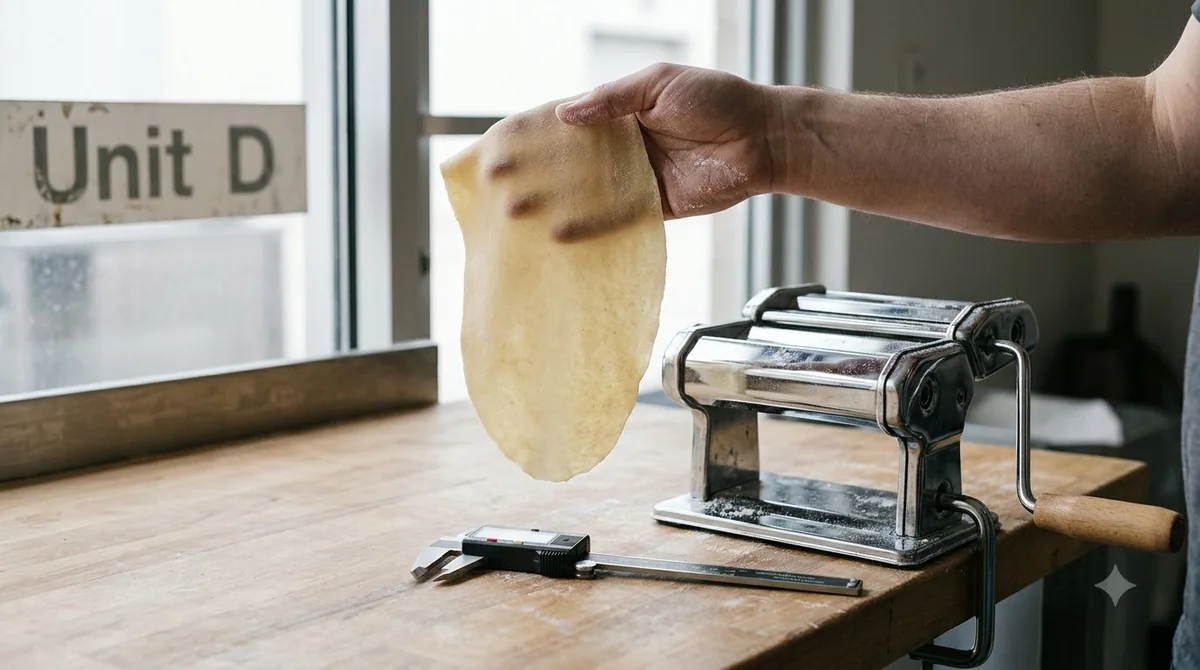
- Make a plain egg pasta dough for the yellow half. The Lazio recipe links to a separate dough recipe rather than giving one.
- Cook a small amount of spinach, squeeze out the water, and chop it finely.
- Add a couple of tablespoons of the chopped spinach to the eggs for the green dough before mixing in the flour.
- Weigh both doughs so they match. The Lazio recipe uses 1/2 lb of each color.
- Roll and cut both doughs into the same shape so the yellow and green strands cook evenly.
A paglia e fieno pasta with homemade green dough looks best when both colors are cut to the same width, so the ribbons sit side by side on the plate.
No exact spinach-to-dough ratio appears in the sources read. For a tested method, see our guide to making spinach pasta dough, or adjust by feel, and compare the dough against a tested egg pasta recipe before you shape it.
The classic cream and pea sauce
The classic sauce combines heavy cream, peas, prosciutto and Pecorino Romano, and it is loosened with reserved pasta water when it tightens. Both recipes use a cream base, and the Siena-style version uses less cream than a standard Alfredo.
The Lazio recipe uses the following for a paglia e fieno pasta dinner:
- 1/2 lb yellow pasta and 1/2 lb green pasta
- 3 tbsp butter and 1 tbsp olive oil
- 1 small onion and 3 garlic cloves
- 1 cup heavy cream
- 1 cup fresh peas
- 4 to 6 oz prosciutto
- 1/2 cup grated Pecorino Romano
In the sauce, the cheese and the reserved pasta water bind the cream to the strands, so the sauce coats each ribbon of paglia e fieno pasta rather than pooling at the bottom of the bowl.
The Siena-style recipe uses frozen baby peas in place of fresh and finishes with Parmesan and Pecorino. Its author describes the sauce as about 3/4 cup less cream than her Alfredo, so it reads lighter. Frozen peas are a practical swap when fresh ones are out of season.

How to cook paglia e fieno pasta
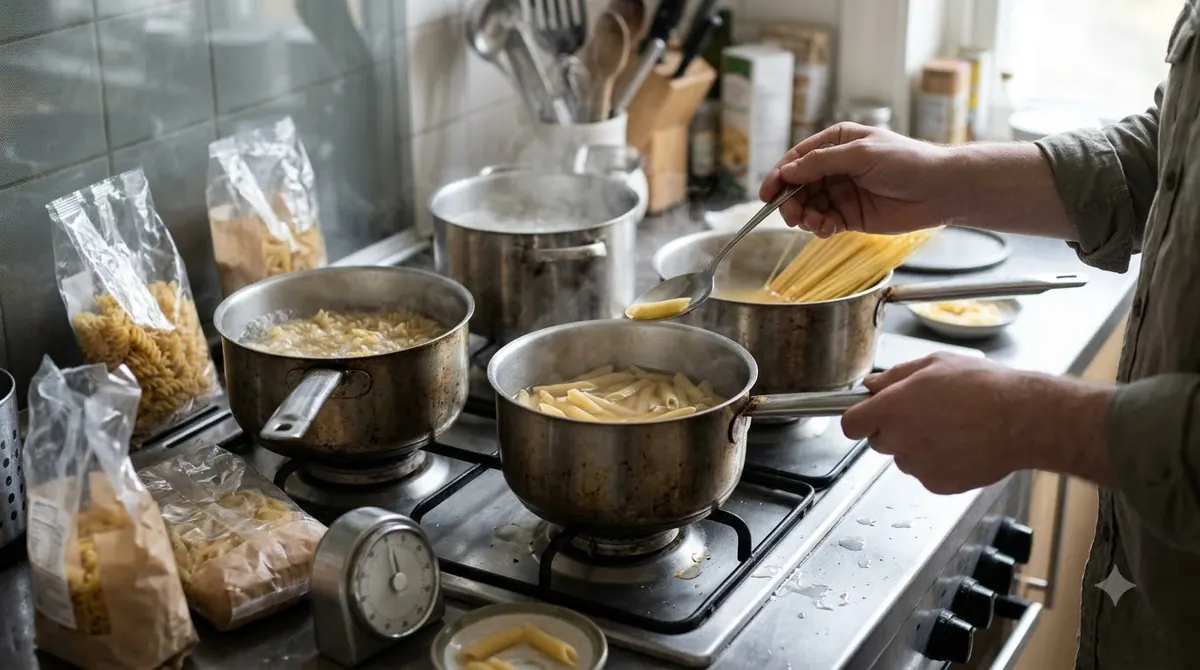
Cook the pasta until it is just shy of al dente, then finish it in the sauce with about 1 cup of pasta water reserved. The pasta keeps cooking in the warm sauce, so it should not be fully tender when you drain it.
- Bring a large pot of salted water to the boil and cook the pasta, starting it so it finishes when the sauce is ready.
- Sauté the chopped onion in the butter and olive oil for about 5 to 8 minutes, then add the garlic for about 1 more minute.
- Add the cream and simmer a few minutes until it is slightly reduced.
- Add the prosciutto and peas and cook until the peas are tender.
- Drain the pasta just shy of al dente and reserve 1 cup of the pasta water.
- Toss the pasta into the sauce, add the cheese, and loosen with pasta water as needed.
The Lazio recipe gives no exact boil time for the pasta or the peas, so judge by texture. Dried pasta prints its own cooking time on the package, so check the package instead of relying on a guess.
Common mistakes with paglia e fieno pasta
The most common mistakes are draining the pasta fully cooked, boiling the cream hard, and forgetting the reserved pasta water. Each one changes the texture of the finished paglia e fieno pasta, and each is easy to avoid with a timer and a spoon of pasta water.
- Draining the pasta fully cooked, since it keeps softening in the sauce.
- Boiling the cream hard. The Lazio recipe simmers it only a few minutes until slightly reduced.
- Skipping the pasta water. The Lazio recipe reserves 1 cup to loosen the sauce as it thickens.
- Using spaghetti, which the Siena recipe author finds too thin for this sauce.
Substitutes when you cannot find it
If you cannot find two-color ribbons, plain dried fettuccine works for paglia e fieno pasta, and the Siena recipe says so directly. The two colors mainly change the look, while the sauce carries most of the flavor.
| Option | What changes | Source note |
|---|---|---|
| Plain dried fettuccine | Single color, same shape and sauce | Siena recipe says it works |
| Tagliatelle or linguine | Ribbon shape close to fettuccine | Lazio recipe lists them |
| Penne or rigatoni | Tube shape instead of ribbon | Siena recipe lists them |
Frequently Asked Questions
Is paglia e fieno pasta the same as tagliatelle?
No. Paglia e fieno describes the two-color noodles, and the encyclopedia says the term applies regardless of shape. Tagliatelle is a ribbon one recipe lists as a substitute for fettuccine, not a separate dish.
Where does paglia e fieno pasta come from?
Sources disagree. One recipe links the dish to Lazio, the district around Rome, and another to the Tuscan province of Siena. The Encyclopedia of Pasta does not name a region, so treat the origin as unsettled.
Can I use plain dried pasta?
Yes. The Siena recipe states that plain dried fettuccine works, which helps when two-color pasta is hard to find. Check the package for cooking time and drain just shy of al dente.
Does paglia e fieno always need peas and prosciutto?
Not by rule. Both recipes read here use peas and prosciutto, but the encyclopedia entry does not list a required sauce. Peas and prosciutto are the common choice, not a fixed requirement.
How much cream does the sauce need?
The Lazio recipe uses 1 cup of heavy cream for 1 pound of pasta. The Siena-style recipe uses about 3/4 cup less cream than a standard Alfredo, so it reads lighter. Simmer the cream a few minutes until it is slightly reduced.
If you want the dish without making dough, buy fettuccine and build the sauce around peas, prosciutto and Pecorino. Make the green half only if you enjoy homemade dough, since the flavor comes mostly from the sauce. Check dried pasta packages for cook times before you start.
 7 min readLearnSalsiccia e Friarielli Pizza Recipe: How to Make It at HomeUpdated Nov 11, 2026
 6 min readLearnHow to Make Cacio e Pepe Without ClumpingUpdated Nov 13, 2026
 9 min readLearnPasta e Patate Recipe: Neapolitan Pasta and PotatoesUpdated Nov 11, 2026
 8 min readLearnPasta e Lenticchie Recipe: A Simple Neapolitan Pasta with LentilsUpdated Nov 11, 2026
 8 min readLearnPasta e Piselli Recipe: Italian Pasta and Peas in About 30 MinutesUpdated Nov 11, 2026
 8 min readLearnPasta e Ceci Recipe: Creamy Pasta with ChickpeasUpdated Nov 10, 2026