
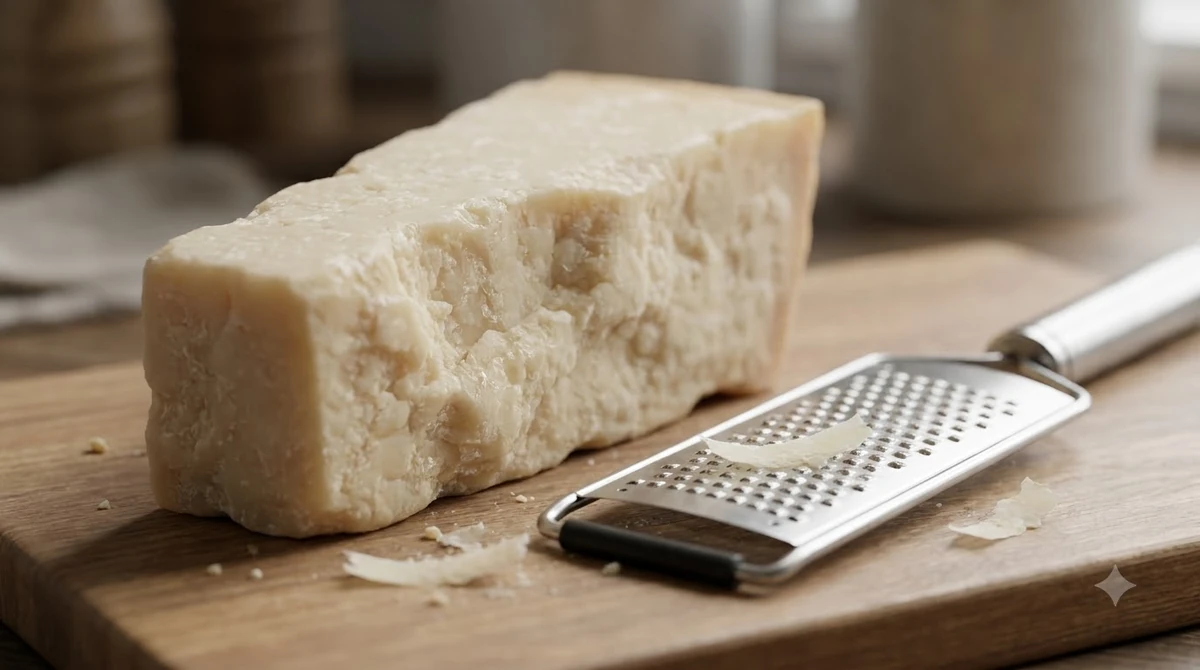

What is Pecorino Romano? It is a hard, salty Italian cheese made only from sheep’s milk, with a long history around Rome and a protected production area in Lazio and Sardinia. Cooks grate it over pasta, soups and vegetables for a sharp, savory finish. This guide explains what the cheese is, how it is made, where it comes from, and what the sources used here do and do not confirm.
What Is Pecorino Romano and Why It Matters
Pecorino Romano is a hard grating cheese. The name tells you two things: “pecorino” refers to sheep’s milk, and “Romano” refers to the countryside around Rome where the cheese was first made. Unlike many grating cheeses made from cow’s milk, Pecorino Romano is produced exclusively from sheep’s milk, and the rennet used to set the curd must come from sheep raised in the same production area, according to the Wikipedia entry on Pecorino Romano.
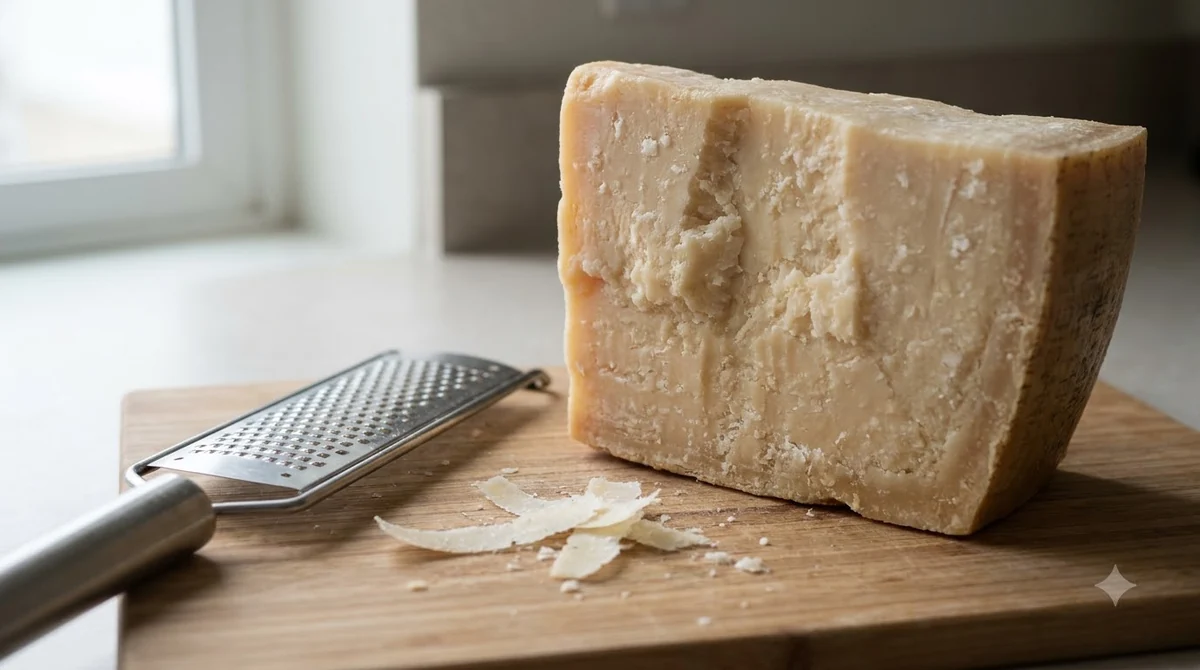
In practical terms, a wedge of Pecorino Romano is firm, with a thin ivory-colored rind and a sharp, salty flavor. The consortium that promotes the cheese notes that its taste changes with the aging stage, so a younger piece and an older piece of the same cheese can taste quite different. That is why many cooks buy a whole wedge and grate it fresh instead of buying pre-grated packs. If you have ever wondered what is Pecorino Romano compared with other Italian grating cheeses, the short answer is its sheep’s-milk base and its protected production rules, which together shape the flavor you taste in the finished dish.
So what is Pecorino Romano under the law? The Wikipedia entry says the name is protected by European Union law as a protected designation of origin, meaning all manufacturing must take place within Sardinia, Lazio or the province of Grosseto. The name describes the cheese rather than a brand: formaggio pecorino romano means sheep’s cheese of Rome. Because the rennet comes from sheep, the entry also notes that the cheese is not suitable for vegetarians.
A Short History of the Cheese
Pecorino Romano has a long record. According to the Wikipedia article, the earliest form was made in the countryside around Rome, and Latin writers Varro and Pliny the Elder described its production about 2,000 years ago. The same article says Roman legionaries received a daily ration of roughly 27 grams of the cheese, in addition to bread and farro soup. Its long-term storage capacity is given as the reason it was used to feed the legions, and the article calls it a high-energy food that was easy to digest.
Production later changed location. As demand grew beyond what the flocks of Lazio could supply, much of the making moved to Sardinia. The Wikipedia article links this shift to an 1884 Rome ordinance on salting cheese in city shops. The article adds that production stayed mainly around Rome until the end of the 19th century, and that the Consortium for the Protection of Pecorino Romano Cheese was established in 1979. Today the consortium describes sheep grazing freely in the countryside of Lazio and Sardinia, which are the two areas named on its site.
How Pecorino Romano Is Made, Step by Step
The main steps are set out in the Wikipedia article. The milk is coagulated with rennet at 38 to 40 °C. The curd is then cut into pieces about the size of rice and cooked at no higher than 48 °C. The cheese is shaped into wheels that are 25 to 40 cm tall, 25 to 35 cm in diameter and weigh 20 to 35 kg. The article describes the wheels as cylindrical with flat faces and a thin ivory-colored rind that is sometimes covered with a substance for food protection. Each wheel is stamped with the logo of geographical distinction and the province of origin.
Aging is the final step that gives the cheese its character. The infobox of the Wikipedia article gives a minimum of 5 months. Because the article does not describe the salting method, the salt content of finished wheels is one of the details we could not confirm from the sources used here. If you need that number for a recipe or a diet, check the label or ask the producer.
- Heat the sheep’s milk and add rennet, keeping the temperature between 38 and 40 °C.
- Cut the set curd into rice-sized grains and cook it at no more than 48 °C.
- Shape the curd into wheels of about 20 to 35 kg.
- Age the wheels for at least 5 months.

Where Pecorino Romano Is Made and Sold
Pecorino Romano is most used in central and southern Italy, and the Wikipedia article notes it is often grated over pasta or other dishes.
The article reports that about 40 percent of production is eaten in Italy and that more than half of exports go to the United States. It also ranks the cheese as the fourth most exported Italian cheese, at about 22,000 tons a year as of 2024. These trade figures come from a single source and should be read as approximate. For a shopper, the practical question is simple: what is Pecorino Romano in a store? It is the wedge or pre-grated pack labeled Pecorino Romano, and the label, not the shape of the wedge, tells you whether the cheese was made from sheep’s milk.
How to Use Pecorino Romano in the Kitchen
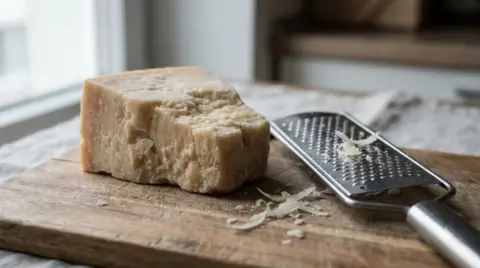
Grate Pecorino Romano just before you serve, so the flavor stays sharp. A fine rasp grater gives a light, fluffy pile that melts into hot pasta. A coarser grater gives bigger flakes that stay visible on top of a dish.
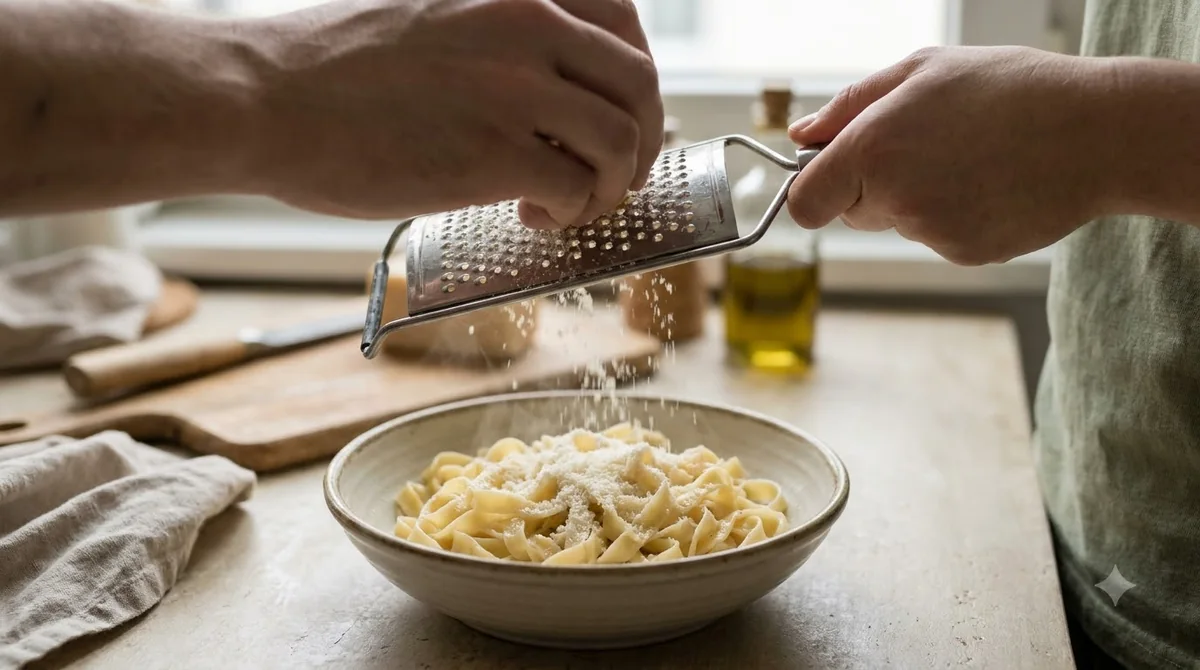
If you are wondering what is Pecorino Romano best for in everyday cooking, the answer is finishing a dish: its sharp, salty edge works as a topping more than as a bulk ingredient. The Wikipedia entry also records a seasonal tradition, since on May Day Roman families eat pecorino with fresh fava beans during an excursion in the Roman Campagna.
Because the cheese is salty and sharp, add it at the end of cooking and taste before adding more salt. Start with a small amount, then add more after tasting. The consortium site names amatriciana among its recipes, but we did not check a recipe with measured amounts against a second source, so no quantities are given here.
- Finish amatriciana-style dishes with freshly grated cheese, one of the uses the consortium site lists.
- Sprinkle over roasted vegetables or a simple bean soup.
- Keep a wedge wrapped and grate only what you need.
What Is Still Unverified About Pecorino Romano
Some useful facts did not appear in the pages we could read, so we have not stated them. The USDA nutrition page we tried returned an error, and the consortium pages we fetched did not give protein, fat, calorie or sodium figures. The sources also disagree on the exact year the cheese received protected status: the Wikipedia infobox gives 1996, while the article’s history section mentions 1951, 1955 and 2002 for related steps.
For nutrition, storage time and allergen details, check the package label or the manufacturer’s data sheet. Check the label for the exact aging time and salt level, since those vary by producer.
Frequently Asked Questions
What is Pecorino Romano made from?
It is made exclusively from sheep’s milk, according to the Wikipedia article on the cheese.
Where does the name come from?
“Pecorino” refers to sheep’s milk, and “Romano” refers to the countryside around Rome where the cheese was first made.
How long is Pecorino Romano aged?
The Wikipedia infobox gives 5 months or more. Check the label of the wedge you buy for its exact age.
Is Pecorino Romano the same as parmesan?
No. Both are hard grating cheeses from Italy, but Pecorino Romano is made from sheep’s milk, while many parmesans are made from cow’s milk. Taste and grating behavior differ, as the Parmigiano Reggiano vs Pecorino Romano comparison shows, so use the one a recipe calls for when you can. Ask yourself what is Pecorino Romano adding to the dish: a sharper, saltier edge that a milder cheese does not give.
Is Pecorino Romano vegetarian?
No, according to the Wikipedia entry. The cheese must be made with rennet from sheep raised in the same production area, so it is not suitable for vegetarians.
How much salt is in Pecorino Romano?
We could not verify a salt figure from the sources used here. Check the nutrition label on the package.
What is Pecorino Romano used for?
Mainly grating over pasta and other dishes, especially in central and southern Italy, according to the Wikipedia article. Classic uses include carbonara and cacio e pepe. Grate it fresh just before serving so the flavor stays sharp.
Pecorino Romano is a simple, strong ingredient: sheep’s milk, a long Roman history, and a sharp flavor that works best grated fresh. Buy a wedge when you can, grate it just before serving, and check the label for aging time and salt. Those two steps will do more for your pasta than any other change.
 8 min readLearnWhat Is Pecorino Toscano? A Mild Sheep’s Milk Cheese GuideUpdated Nov 11, 2026
 7 min readLearnWhat Is Mozzarella di Bufala? Italy’s Buffalo Milk CheeseUpdated Nov 11, 2026
 9 min readLearnParmigiano Reggiano vs Pecorino Romano: Key DifferencesUpdated Nov 10, 2026
 7 min readLearnWhat Is Fior di Latte? A Simple Guide to Italy’s Cow’s Milk MozzarellaUpdated Nov 10, 2026
 7 min readLearnWhat Is Ricotta? An Easy Guide to Italy’s Whey CheeseUpdated Nov 10, 2026
 7 min readLearnWhat Is Fontina? A Simple Guide to Italy’s Alpine Melting CheeseUpdated Nov 11, 2026