
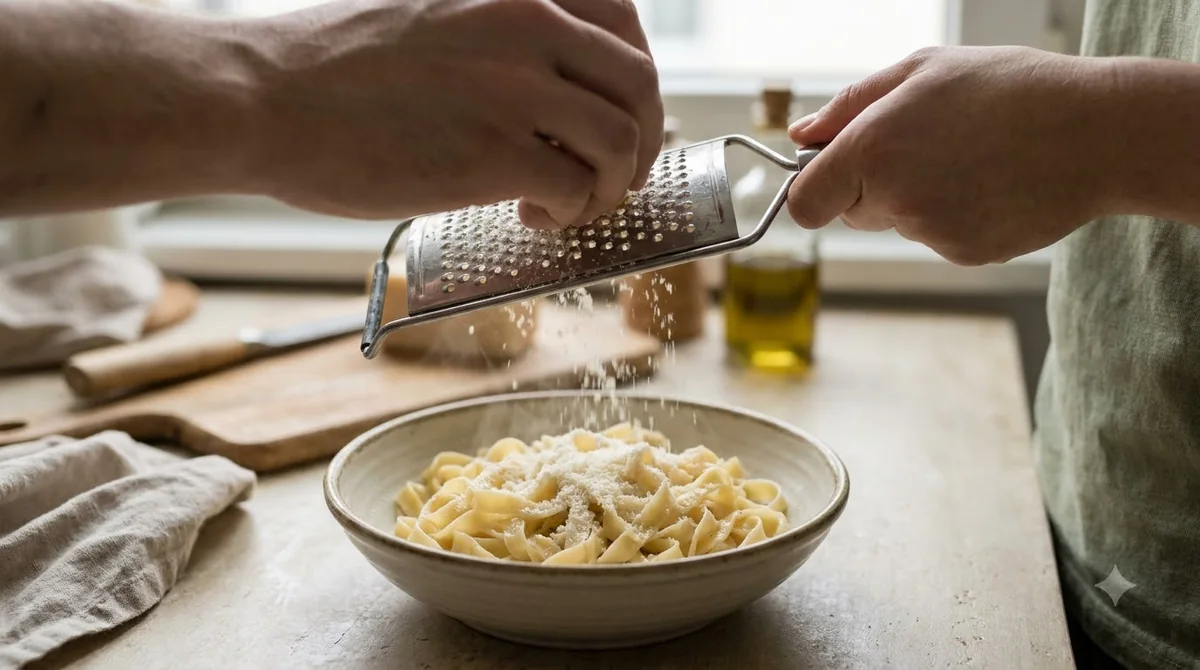

An alfredo sauce recipe melts butter and grated Parmesan into one smooth cheese sauce, the way the dish was first made in Rome. Most American versions add heavy cream for body. The version below serves four and takes about 30 minutes.
The cheese and the cream decide the result of any alfredo sauce recipe. Check whether a Parmesan is labeled Parmigiano-Reggiano before you buy it, since that name marks a protected product.
What Is Alfredo Sauce?
Alfredo sauce is a butter and Parmesan cheese sauce that Alfredo di Lelio made famous in Rome in the early 20th century.
Family lore dates the first version to 1907 or 1908, when he cooked it to tempt his wife after childbirth. Knowing that origin helps you judge any alfredo sauce recipe, because the original version relied on only butter and cheese. The original formula used only three ingredients: fettuccine, young Parmesan and butter. Italians still usually call the dish fettuccine al burro, and they make it without cream.
American cooks later added heavy cream or half-and-half to thicken and enrich the sauce. A 1966 packaged noodle recipe went further and included Swiss cheese along with the cream. You can read the full history in Wikipedia’s fettuccine Alfredo entry.
Alfredo Sauce Recipe Ingredients
This alfredo sauce recipe uses 6 tablespoons of butter, 2 cups of heavy whipping cream and 3/4 cup of grated Parmigiano Reggiano for 4 servings.
The amounts below come from the Taste of Home recipe, which makes four servings with 8 ounces of dry fettuccine.
| Ingredient | Amount | Role in the sauce |
|---|---|---|
| Dry fettuccine | 8 oz | The pasta the sauce coats |
| Butter, cubed | 6 tbsp | Fat base that the cheese is emulsified into |
| Garlic, minced | 2 cloves | Cooked for 1 minute in the butter before the cream goes in |
| Heavy whipping cream | 2 cups | Body of the sauce |
| Grated Parmigiano Reggiano | 3/4 cup | 1/2 cup goes in the sauce and 1/4 cup is kept for topping |
| Grated Romano | 1/2 cup | A second hard cheese added with the Parmigiano |
| Salt | 1/4 tsp | Seasoning, added after the cheese |
| Black pepper | 1/8 tsp | Seasoning, added at the end |
| Ground nutmeg | Dash | Warm background note listed in the recipe |
| Fresh parsley | Optional | Garnish |
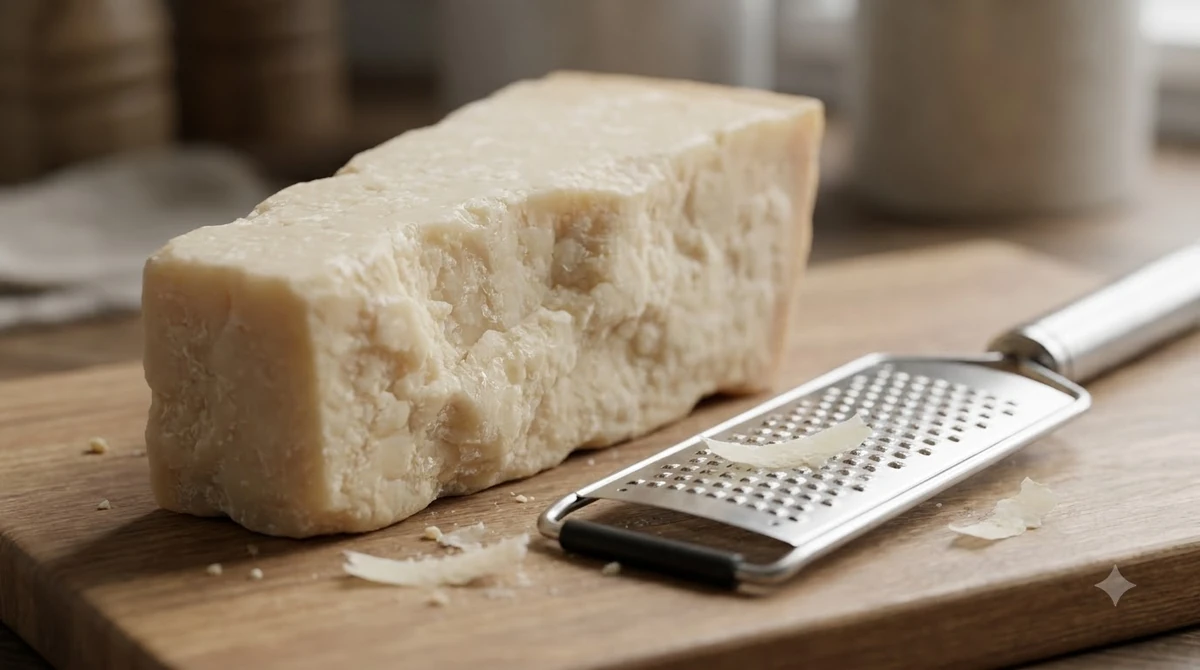
Parmigiano Reggiano and Romano are both hard, grated cheeses, and this alfredo sauce recipe uses them together rather than picking one. Every alfredo sauce recipe depends on its cheese, so measure the grated amounts carefully. Measure the grated cheese by volume as the recipe does, then keep the extra 1/4 cup aside for the finish.
Step-by-Step Alfredo Sauce Recipe
Plan on 10 minutes of prep and 20 minutes of cooking for four servings, with the sauce built over medium heat and finished on low. This alfredo sauce recipe uses one saucepan, so keep an eye on the heat throughout.
Follow the Taste of Home fettuccine Alfredo recipe in this order.
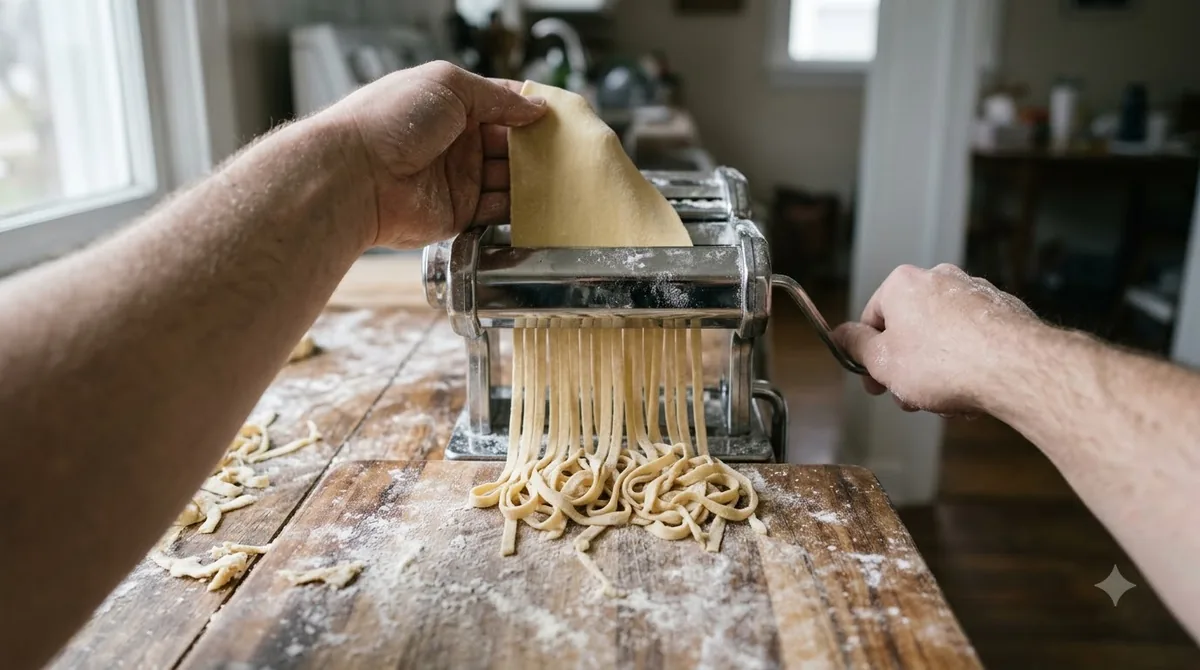
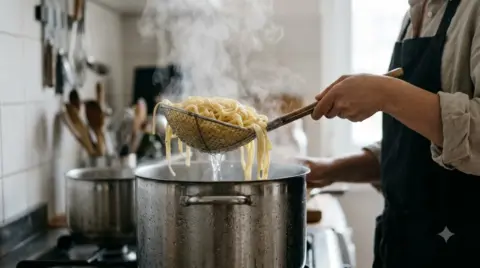
- Cook the 8 ounces of fettuccine according to the package directions, and keep a little of the cooking water, as explained in starchy pasta water for sauce.
- Melt the 6 tablespoons of butter in a large saucepan over medium heat. Add the minced garlic and cook, stirring, for 1 minute.
- Gradually stir in the 2 cups of heavy cream and bring the mixture to a gentle boil.
- Reduce the heat and simmer uncovered, stirring constantly, for 3 to 5 minutes until the sauce is slightly thickened.
- Reduce the heat to low. Gradually whisk in 1/2 cup each of the Parmigiano Reggiano and the Romano.
- Return the sauce to a simmer and cook, stirring, until it is just thick enough to coat a metal spoon. Stir in the salt, pepper and nutmeg.
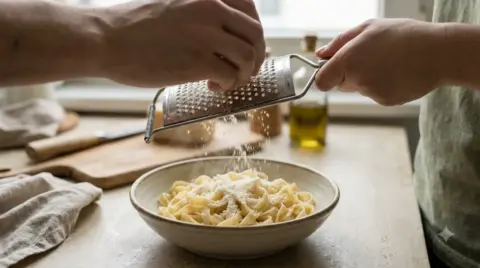
- Drain the fettuccine, add it to the sauce and toss to coat. Top with the remaining 1/4 cup of Parmigiano Reggiano and the parsley, if using.
The coating test matters more than the clock. A sauce that clings to a metal spoon is ready for the pasta, while a sauce that runs straight off the spoon needs more simmering.
Why Alfredo Sauce Turns Grainy or Splits
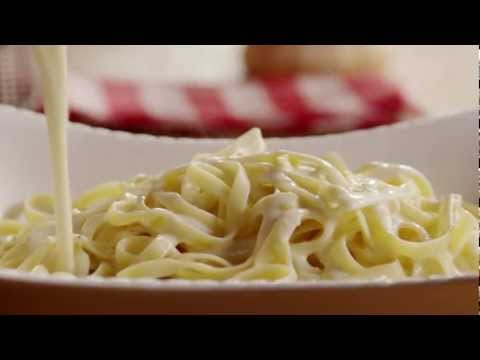
Alfredo sauce splits when fat separates from the liquid, so the heat and the order of the ingredients both matter in this alfredo sauce recipe. Each step in the method protects the sauce from that split.
In plain terms, an emulsion is a blend of liquids that normally separate, held together by an emulsifier. The Wikipedia article on fettuccine Alfredo describes the butter and Parmesan as melted and emulsified into one cheese sauce.
Heavy cream is the stable base here. In the United States it must contain 36 percent or more butterfat, and Canada sets the same 36 percent minimum. If you want a creamy sauce with more going on, try our creamy Tuscan pasta recipe, which adds spinach and sun-dried tomatoes.
- Simmer until slightly thickened. The recipe stops the cream at that point before any cheese goes in.
- Lower the heat before the cheese. Lowering it first keeps the sauce from boiling as the cheese goes in.
- Add the cheese gradually. The recipe whisks in each half cup a little at a time.
- Know your cream. The Heavy cream article notes that double cream is often used in hot sauces to prevent splitting.
The sources used for this article do not cover reheating or freezing, so this page gives no rules for leftover sauce; for the pasta itself, see how to reheat pasta.
Choosing the Right Cheese
Parmigiano-Reggiano is a protected Italian cheese, and the name identifies only the product made in a defined region of Italy.
Italy granted the cheese DOP status in 1955, which matters for any alfredo sauce recipe that calls for it, and the European Union granted it PDO status in 1992. The production area covers the provinces of Parma, Reggio Emilia and Modena, plus parts of Bologna and Mantua.
The cheese is made from unpasteurized cow’s milk, salt, calf rennet and a natural whey starter. It ages at least 12 months, and about two years on average. Wikipedia’s Parmigiano-Reggiano entry lists these rules.
Outside the EU, the word Parmesan is often used for imitations. Look for the full name on the label (the Parmigiano-Reggiano vs Pecorino Romano guide shows how the two differ), since that is the only term that clearly points to the protected product. The cheese label is the first thing to check in any alfredo sauce recipe.
Homemade vs Jarred Alfredo Sauce
A homemade alfredo sauce recipe takes about 30 minutes for four servings, while jarred and tubbed versions trade that effort for shelf life and convenience.
| Type | Main ingredients | Storage or preparation |
|---|---|---|
| Homemade, Taste of Home style | Butter, heavy cream, Parmigiano Reggiano, Romano | Cooked fresh in about 30 minutes |
| Shelf-stable jar, such as Ragu, Trader Joe’s or Whole Foods | Varies by brand; read the label | Shelf-stable jar |
| Fresh tub, such as Giovanni Rana or Buitoni | Varies by brand; read the label | Must be refrigerated |
| Powder mix from Alaska Seasoning Company | Seasoning powder, with cream added by the cook | Add cream before serving |
| Alfredo alla Scrofa jar, Italy (2020) | Parmesan 43 percent, water, butter, rice flour, sunflower seed oil, no cream | Jar; check the label |
Store-bought versions save time, but the label decides what is inside. Compare the cream and cheese lines before you buy, because the Italian jar lists no cream at all.
Common Mistakes When Making This Sauce
Adding cheese to hot cream without lowering the heat is the mistake this alfredo sauce recipe is built to avoid.
- Skipping the 3 to 5 minute simmer. The cream needs that time to slightly thicken before the cheese goes in.
- Whisking all the cheese in at once. The recipe adds each half cup gradually.
- Stopping by the clock alone. Use the metal spoon test to judge when the sauce is ready.
- Salting before tasting. Parmigiano-Reggiano is salted in brine during aging, so taste the sauce before adding more salt.
Frequently Asked Questions
Is alfredo sauce the same as fettuccine alfredo?
No. Alfredo sauce is the butter and cheese sauce, while fettuccine alfredo is the finished dish of pasta tossed in that sauce. In Italy the dish is usually called fettuccine al burro and is made without cream, so the cream version is an American adaptation.
What cheese should I use in an alfredo sauce recipe?
Parmigiano-Reggiano is the cheese this recipe calls for, and the Taste of Home version also adds Romano. Look for the full name, since the protected Italian product is aged at least 12 months, while imitation Parmesan is common outside the EU.
Can alfredo sauce be made without cream?
Yes, and that is the original Italian style. Italians usually make the dish as fettuccine al burro, with butter and Parmesan only. Cream is an American addition that thickens and enriches the sauce.
How many servings does this alfredo sauce recipe make?
The Taste of Home version makes four servings. It uses 8 ounces of dry fettuccine, 2 cups of heavy whipping cream and 3/4 cup of Parmigiano Reggiano for the sauce, plus 1/4 cup more for topping. Prep takes about 10 minutes and cooking about 20 minutes.
Do jarred alfredo sauces need refrigeration?
It depends on the product. Shelf-stable jars from brands such as Ragu and Trader Joe’s do not need the fridge, but fresh refrigerated tubs must be kept cold. Check the label of any jar before you buy, since ingredients vary by brand.
Start with a Parmigiano-Reggiano label you trust, and bring the cream to a gentle boil before you lower the heat. Any alfredo sauce recipe rewards that patience with a smoother result. Judge the sauce by whether it coats a metal spoon, not by the clock. If you prefer no cream, a Roman sauce such as the carbonara recipe or the Italian fettuccine al burro method shows what butter and cheese can do on their own.
 8 min readLearnChicken Alfredo Bake Recipe: Creamy, Cheesy and Easy to Make AheadUpdated Nov 11, 2026
 10 min readLearnVodka Sauce Recipe: How to Make Creamy Pasta Sauce at HomeUpdated Nov 10, 2026
 8 min readLearnPink Sauce Recipe: How to Make Creamy Tomato Pasta Sauce at HomeUpdated Nov 11, 2026
 7 min readLearnCarbonara vs Alfredo: Ingredients, Origins and Which Sauce to ChooseUpdated Nov 10, 2026
 8 min readLearnCacio e Pepe Recipe: Simple Method for a Creamy SauceUpdated Nov 10, 2026
 8 min readLearnWalnut Sauce for Pasta Recipe: A Creamy Ligurian Sauce Made at HomeUpdated Nov 11, 2026