
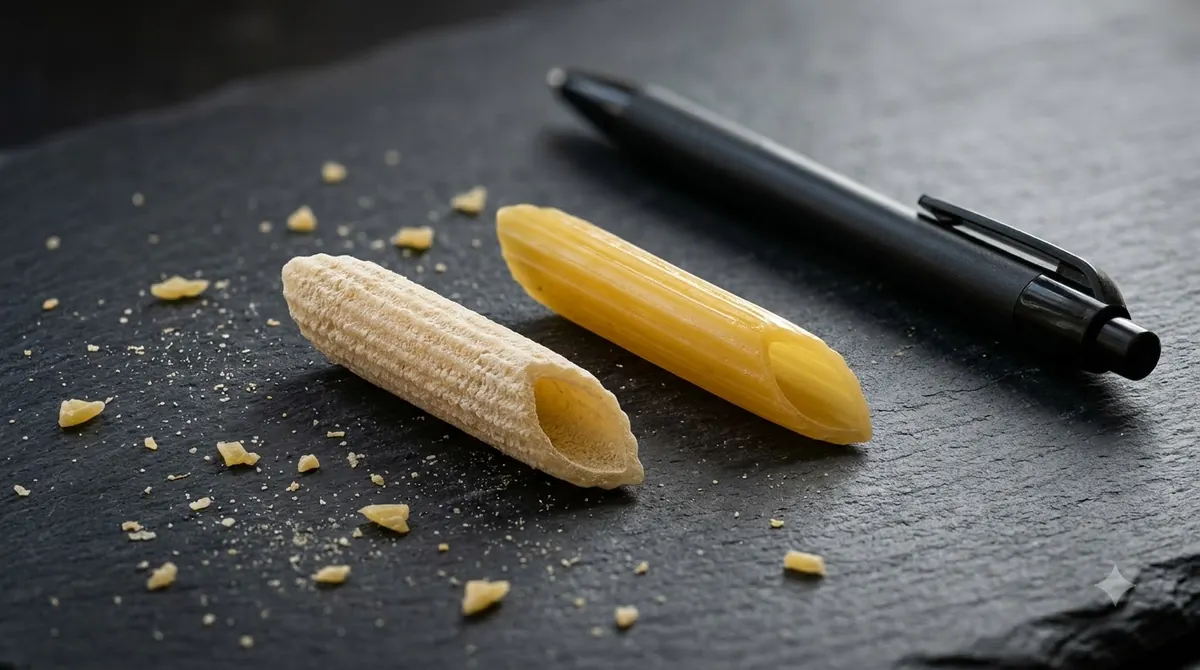

Penne rigate vs penne lisce comes down to one thing: the surface. Both are penne pasta tubes cut at an angle at each end, but penne rigate has ridges running along its length while penne lisce is smooth. The choice in penne rigate vs penne lisce matters less than the myths suggest, so pick by sauce and taste, then follow the cooking time on your package.
What Separates Penne Rigate From Penne Lisce
Penne rigate vs penne lisce is a comparison of two surfaces on one shape. Both share the same angled tube and differ only in whether the outer surface has grooves. Wikipedia describes penne lisce as “smooth” and penne rigate as “ridged,” with grooves running along the length of the piece.
The Italian names describe the outside of the pasta, not its size or cut. Lisce means smooth and rigate means ridged, so the label on the box tells you the surface and nothing else. When you compare penne rigate vs penne lisce, both versions are penne, and a recipe written for one works with the other if you keep the same weight of dried pasta.
The angled cut is the same too. Penne ends are cut diagonally, and Wikipedia credits Giovanni Battista Capurro, a pasta maker from Genoa, with a machine patented in 1865 that cut fresh pasta this way while keeping the dough intact. That shared shape is why you can treat the two as one family when you shop.
Do the Ridges Really Hold More Sauce?
The ridges were added to help penne absorb sauce, but the pasta maker Pastafabbri says the idea that penne rigate holds sauce better is “not entirely accurate.” The grooves are the usual reason people choose rigate, so it is worth knowing what makers actually say about penne rigate vs penne lisce.
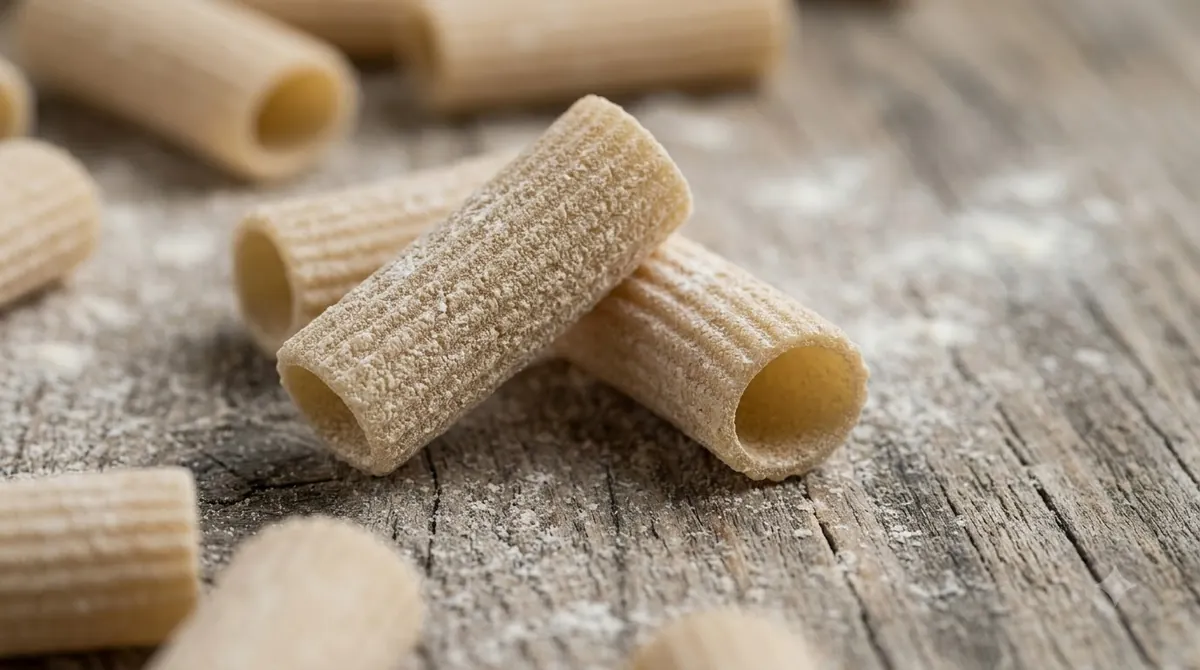
According to Pastafabbri’s penne guide, the ridged version came later than the smooth one, and the change was made to enhance the ability of penne to absorb sauces. The same source links the change to higher drying temperatures, which it says damaged the elasticity of the gluten.
A pasta brand’s own blog, DeLallo’s penne guide, goes further and describes the grooves of penne rigate as perfect for capturing sauces. That is a brand’s description of its product, not a comparison that measures how much sauce each shape keeps, so treat it as marketing rather than proof.
Pastafabbri’s position is that smooth penne can perform just as well, and that both smooth and ridged penne can deliver an excellent result when the gluten is intact and production is well controlled. In other words, the surface is a small factor next to the quality of the dough and the drying.
The practical logic in penne rigate vs penne lisce still favors rigate in one case. A chunky sauce has pieces of meat or vegetable that can lodge in the grooves, so the ridged version gives them more places to sit. This is reasoning from the shape, not a tested result, and it is the one situation where most cooks will notice a difference.
Penne Rigate vs Penne Lisce at a Glance
On the shelf, penne rigate vs penne lisce differ on surface, on the sauce grip that brands advertise, and on how evenly they cook, while the tube and the angled ends stay the same. The table below sets out what each source says so you can see where the claims stand.
| Feature | Penne rigate | Penne lisce |
|---|---|---|
| Outer surface | Ridged, grooves along the length | Smooth, no grooves |
| Cut ends | Angled | Angled |
| Sauce grip | Brand view: grooves capture sauce well | Maker view: can perform just as well |
| Even cooking | Grooves can develop overcooked spots | Cooks more evenly, per the same maker |
| Best known use | Chunky sauces that can lodge in grooves | Even batches, delicate or smooth sauces |
The table shows that the sources agree on the shape and disagree only on how much the surface changes the result. When you weigh penne rigate vs penne lisce, keep the sauce-grip line marked as a view, not a rule, when you decide what to buy.
Which Sauces Suit Each Shape
Wikipedia lists pesto, marinara and arrabbiata as typical penne sauces, and that list is a safe starting point for either surface. You do not need a different sauce for each version of penne rigate vs penne lisce to cook a good dinner.
A simple way to choose between penne rigate vs penne lisce is to look at the sauce itself and the setting you cook in:
- Pick penne rigate for a thick, chunky meat ragù where pieces can settle into the grooves.
- Pick penne lisce when you cook for a crowd and want even texture, since the same maker says smooth penne cooks more evenly.
- Either works for a classic marinara, pesto or arrabbiata, where the sauce matters more than the surface.
Thin, delicate sauces are where the surface is hardest to notice. If you are unsure, buy the version your store stocks most reliably and judge the result on your own plate, because the difference is small and depends on the sauce.
How Long to Cook Each Shape
Dried pasta usually takes 9 to 12 minutes, and one brand lists its penne rigate at 10 to 12 minutes, so check the package and taste before draining. Cooking time for penne rigate vs penne lisce depends on the variety and brand, not on the surface alone. The Wikibooks pasta cookbook says that the time depends on the variety, and that an unfamiliar brand needs checking more often. For a shape-specific number, see our how long to boil penne guide.
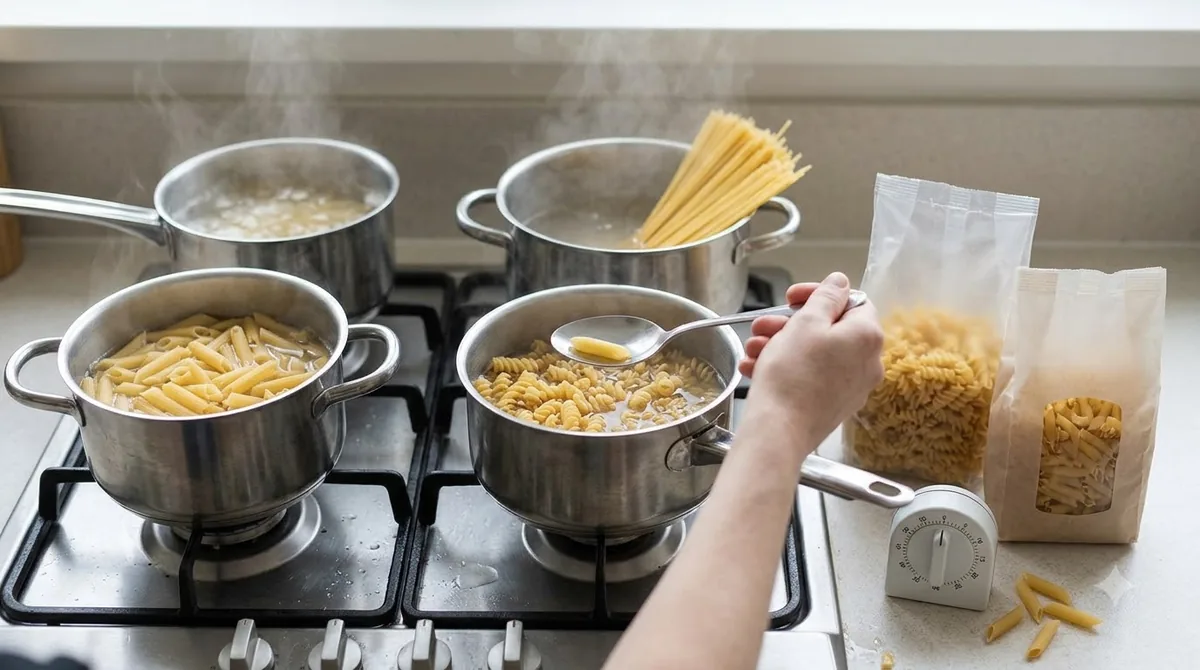
The brand’s guidance is not fully consistent. Its penne rigate page gives 10 to 12 minutes in one place and 10 to 11 minutes in a list of fast facts on the same page, which is a good reason to rely on taste rather than one number.
The water amount also varies between sources. Wikibooks gives about 4 liters for every 200 grams of dried pasta, while the brand recommends 5 quarts for 1 pound. Use a large pot so the pasta has room, and follow the package for the rest.
- Bring a large pot of water to a rolling boil.
- Salt the water to taste, since the brand says this is your chance to season the pasta.
- Add the pasta and never add oil, which the brand advises against.
- Start tasting a few minutes before the lowest time on the package, and drain when the bite is firm but cooked through.
Pastafabbri notes that ridged penne can develop overcooked spots along the grooves, so check the grooved pieces as well as the smooth ones. That is one practical reason some cooks prefer the smooth version for a large batch.
Where Penne Comes From and How It Got Its Ridges
The penne rigate vs penne lisce pair has a documented starting point in 1865, when Giovanni Battista Capurro patented a diagonal cutting machine in Genoa, according to Wikipedia. Pastafabbri adds that the smooth version appeared first in that period near Genoa, and the ridged version came later.
The origin of the name is less settled. One brand notes that some people trace penne to Genoa in Liguria, while others point to Southern Italy, so the sources do not give a single answer. Treat any single origin story with that caution.
Penne is often confused with rigatoni, which is a separate shape (our penne vs rigatoni comparison covers the differences). Wikibooks describes rigatoni as inch-long ridged tubes that are often used in baked dishes, so if your recipe is a baked pasta, rigatoni is the closer match than either penne.
Frequently Asked Questions
Is penne rigate healthier than penne lisce?
The sources used here do not show a nutritional difference between penne rigate vs penne lisce, so this article makes no health claim. Both are dried pasta, and the nutrition panel on each package is the reliable place to compare brands and serving sizes.
Can I swap penne lisce for penne rigate?
Yes, in most recipes. Penne rigate vs penne lisce is a one for one swap because the shape is the same, so swap one for one and keep the same cooking time on the package. The only real difference is that a thick, chunky sauce may suit the ridged version a little better.
Should I add oil to the cooking water?
No. The brand that sells penne rigate says never to add oil to the water, and it recommends seasoning the water with salt instead. Use a large pot and stir the pasta early so the pieces do not stick together.
Which should a beginner buy first?
Start with the shape your store stocks reliably, since penne rigate vs penne lisce gives a similar result for most home sauces. If you want to test the ridges, make a thick meat sauce with each version and compare how much sauce stays on the pasta. Keep notes on the time and water you used so the next batch is easy to repeat.
How do I know when penne is done?
Taste a piece a few minutes before the lowest time on the package, as our how to cook pasta al dente guide explains. Wikibooks advises checking often when you cook an unfamiliar brand or variety, because cooking time depends on the variety.
If you cook a thick ragù, the penne rigate vs penne lisce choice matters most, because penne rigate gives the sauce more grooves to grip, and if you want an even cook across a large batch, penne lisce has the maker’s support. For a weeknight marinara or pesto, pick whichever shape your store carries and follow the package time.
 8 min readLearnPipe Rigate Pasta: What It Is and How to Cook ItUpdated Nov 11, 2026
 8 min readLearnMostaccioli Pasta: What It Is and How It Differs From PenneUpdated Nov 10, 2026
 6 min readLearnPenne Substitute: 5 Pasta Shapes That Work WellUpdated Nov 13, 2026
 7 min readLearnHow Long to Boil Penne: Package Timing, Water and DonenessUpdated Nov 10, 2026
 5 min readLearnBest Sauce for Penne: Pairings That Cling to TubesUpdated Nov 13, 2026
 5 min readLearnHomemade Penne: Dough, Shaping and Cooking TipsUpdated Nov 13, 2026