

Mostaccioli pasta is a smooth, tube-shaped pasta with diagonally cut ends, and it is essentially penne without the ridges. The name means “little moustaches” in Italian, a reference to those angled ends. Cooks use it for light sauces and baked dishes, and it is easy to find in most US grocery stores.
Because brands label their shapes differently, the same box may read mostaccioli, penne lisce or penne mostaccioli. Check the shape on the package before you cook.
What Mostaccioli Pasta Is
A mostaccioli pasta is a straight, hollow tube with a smooth outer surface and ends cut at a slant. According to the Share the Pasta pasta dictionary, it has the exact same shape as penne but does not have a ridged surface. That single difference is the main thing to remember when you shop.
The angled cut gives each piece a pointed, slightly conical end. Tasting Table describes the ends as cut off at an angle, which gives the tube a shape that helps it scoop up sauce. Unlike rigatoni, which may curve slightly, mostaccioli is always straight.
Mostaccioli is often grouped with other short tube shapes such as penne rigate, rigatoni and ziti. The main differences are surface texture and whether the tube is straight or curved. Because the tube is hollow, a sauce fills the inside as well as coating the outside, which is why cooks reach for it when they want a sauce to reach every bite.
The shape also sits in the middle of the short pasta family. It is shorter and more compact than long shapes like spaghetti, so a forkful or spoonful carries a mix of pasta and sauce rather than long strands that twist around the fork.
How Mostaccioli Differs From Penne
Mostaccioli is the smooth version of penne, so the two are nearly the same shape. Italy sells penne in two surface types: penne lisce, which is smooth, and penne rigate, which has lengthwise grooves. Wikipedia’s penne entry notes that mostaccioli may be either smooth or ridged depending on the manufacturer.
| Feature | Mostaccioli pasta | Penne rigate |
|---|---|---|
| Tube shape | Straight hollow tube, same as penne | Straight hollow tube |
| Outer surface | Smooth (usually) | Ridged with lengthwise grooves |
| Ends | Cut at an angle | Cut at an angle |
| Best for | Thin sauces and oil-based dishes | Thicker sauces that cling to ridges |
Shopping tip: Italian labels use “lisce” for smooth and “rigate” for ridged, so look for those words on the box before you buy. Some labels use the English name mostaccioli, while others use penne lisce or penne mostaccioli for the same smooth tube.
The smooth surface is the reason many cooks pick penne rigate for chunky sauces. Ridges catch small pieces of meat, vegetables and cheese, while the smooth surface of mostaccioli lets a thinner sauce slide off more easily. Choose mostaccioli when the sauce is light, and penne rigate when the sauce is thick. For a wider comparison, see penne vs rigatoni.
Best Sauces for Mostaccioli Pasta
Mostaccioli pasta works best with thin sauces that can coat both the inside and outside of the tube. Tasting Table recommends lighter tomato sauces and oil-based sauces such as fresh pesto for mostaccioli pasta.
Pair mostaccioli with sauces that have a loose, pourable texture. A sauce that is too thick will sit on the surface of each tube instead of soaking in, so thin it with a splash of the reserved pasta water before tossing (here is how starchy pasta water helps a sauce).
Good matches include:
- A simple tomato and garlic sauce with olive oil
- Fresh basil pesto with a little pasta water to loosen it
- Light cream or butter sauces with grated cheese
- Olive oil dressings with vegetables, such as zucchini or peas
If a recipe calls for penne, mostaccioli is a reasonable swap for a light sauce. For a thick ragù, use penne rigate so the sauce has grooves to grip.
Heavy meat ragùs and very chunky sauces tend to slide off the smooth surface of mostaccioli pasta. If you want a thick sauce, a ridged shape is the better choice. The best sauce for mostaccioli is usually the one that stays fluid enough to fill the tube.
Using Mostaccioli in Baked Dishes
Mostaccioli pasta works well in pasta bakes, where the tubes hold pieces of sauce, cheese and filling inside the dish. Because the shape is sturdy enough to hold its form in the oven, it suits dishes you can cut into squares and serve.
Mostaccioli pasta bakes are a good way to use leftover sauce, since the baked dish blends the sauce and cheese into the tubes. Tasting Table lists baked dishes among the common uses for the shape.
For a baked mostaccioli, follow these steps:
- Cook the pasta a few minutes short of the package time, since it will cook again in the oven.
- Toss the drained pasta with a sauce that is a little looser than you would serve straight from the pot.
- Layer the pasta with cheese in an oven-safe dish, then bake until the top is golden and the sauce bubbles.
- Let the dish rest for a few minutes so the sauce settles before you serve it.
The oven temperature and bake time depend on the dish and the size of the pan. Check your recipe source for those numbers, because they were not confirmed for this page.
How to Cook Mostaccioli Pasta
Cook mostaccioli pasta in a large pot of boiling salted water until it is al dente, and follow the cooking time printed on the package. Wikipedia’s penne entry notes that penne is usually cooked al dente, and the same guidance applies to mostaccioli because the shape is nearly identical.
- Bring a large pot of water to a rolling boil and salt it generously.
- Add the mostaccioli and stir once so the tubes do not stick together.
- Start tasting at the early end of the package range and stop when the center has a slight bite.
- Drain the pasta and reserve a cup of the cooking water before you add the sauce.
Al dente means “to the tooth” in Italian (see how to cook pasta al dente), so the pasta should feel firm at the center rather than soft all the way through. Because mostaccioli is a hollow tube, bite a piece from the middle of the batch rather than judging only the first piece you pull from the pot.
The exact cooking time is not confirmed for mostaccioli in this article, so check the package for the time printed by the brand you bought. Brands differ in wall thickness and dryness, which changes how long the tubes need.
Where Mostaccioli Comes From and What Is Not Verified
Tasting Table links mostaccioli to Campania in southern Italy, though it notes that other regions also claim the shape. Its name may come from an older biscuit cut into a rhombus, which looks similar to the angled tube in profile. Wikipedia’s disambiguation page also links the name to a pastry from the Naples region, so the word has a history beyond the pasta aisle.
Some points on this page could not be confirmed from the sources read for it:
- The exact length of mostaccioli compared with penne
- Standard cooking times for any specific brand
- Calorie or nutrition figures per serving
For these details, read the package or the brand’s product page. Those sources are the most reliable guide for your specific box.
Frequently Asked Questions
Is mostaccioli the same as penne?
Mostaccioli is very close to penne. It has the same tube shape and angled ends, but it is usually smooth, while penne rigate has ridges. Some sources call mostaccioli penne lisce, which means smooth penne in Italian.
Is mostaccioli smooth or ridged?
Mostaccioli pasta is usually smooth. Wikipedia notes that some manufacturers make it smooth or ridged, so read the package if the surface matters for your recipe.
What sauce is best for mostaccioli pasta?
Thin tomato sauces, light cream or butter sauces and fresh pesto work best. The smooth surface does not hold heavy, chunky sauces as well as ridged pasta does.
Can you bake mostaccioli pasta?
Yes. Mostaccioli works in pasta bakes because the tubes hold sauce and cheese. Cook it slightly short of the package time before baking, since it will cook further in the oven.
How long do you cook mostaccioli pasta?
Follow the cooking time printed on your package and taste near the end of that range for al dente texture. This article did not confirm a standard time for every brand.
If you like short tubes, sedani pasta is another shape to try, and more shapes are covered in the pizza and pasta guides. If you cook mostaccioli pasta often, buy one smooth brand and learn its timing. Once you know how it behaves in your pot and sauce, the time on the box becomes easy to adjust.
 6 min readLearnPenne Substitute: 5 Pasta Shapes That Work WellUpdated Nov 13, 2026
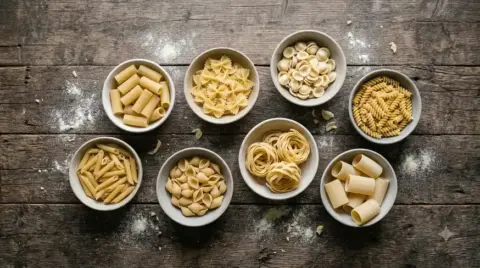 8 min readLearnPenne Pasta: What It Is, Shapes and How to Cook ItUpdated Nov 10, 2026
 7 min readLearnTagliarini Pasta: What It Is, How It Differs and How to Cook ItUpdated Nov 10, 2026
 9 min readLearnPizza Sauce vs Pasta Sauce: What Actually DiffersUpdated Nov 12, 2026
 9 min readLearnFresh Pasta vs Dried Pasta: How They Differ in Cooking, Storage and SauceUpdated Nov 12, 2026
 8 min readLearnBucatini Pasta: What It Is, How It Differs and How to Cook ItUpdated Nov 10, 2026