
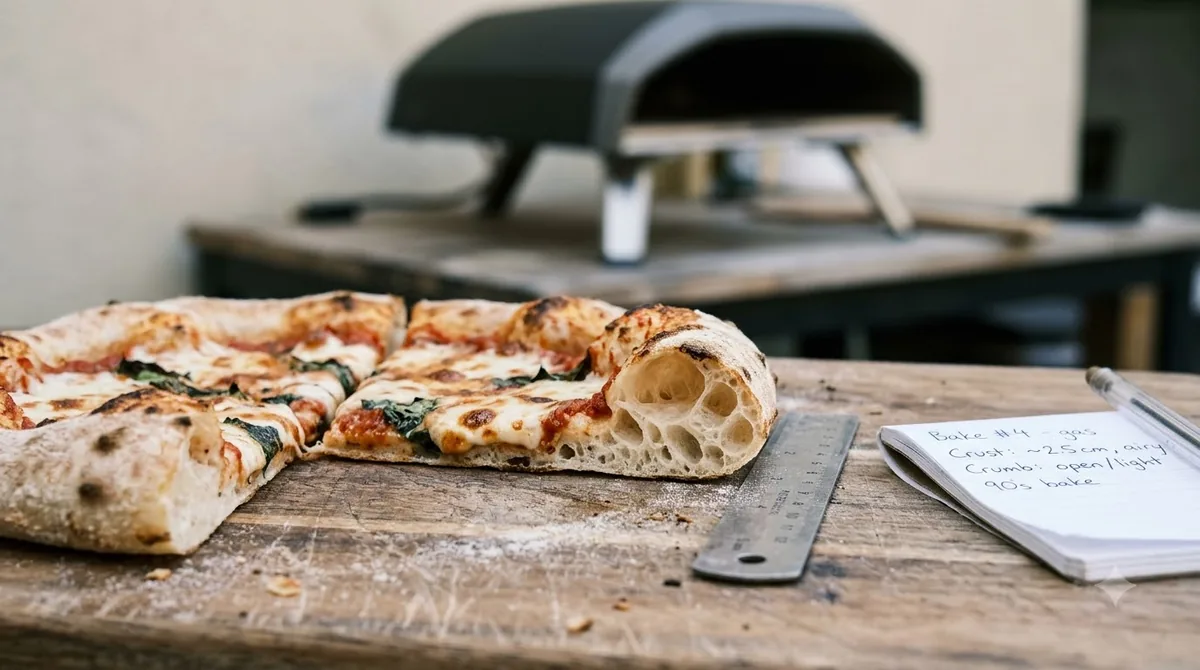

Pizza crust too chewy usually means the dough holds too much gluten structure for the water and heat it gets. The usual culprits are dough that is too stiff, too much kneading, too little fermentation, and a bake that is not hot or fast enough. Most fixes are small changes to hydration, handling and bake time.
What Makes Pizza Crust Too Chewy at Home?
A chewy crust usually means the gluten network is tight and the crumb holds little moisture. Gluten forms as flour is mixed with water and worked, and a stiff dough with a lot of structure bakes into a tough, rubbery bite rather than an open, tender one.
Troubleshooting guides for pizza dough list the same four causes again and again: low hydration, very strong flour, over-kneading and short fermentation. Start by checking which of these applies to your last batch, because each one has a different fix.
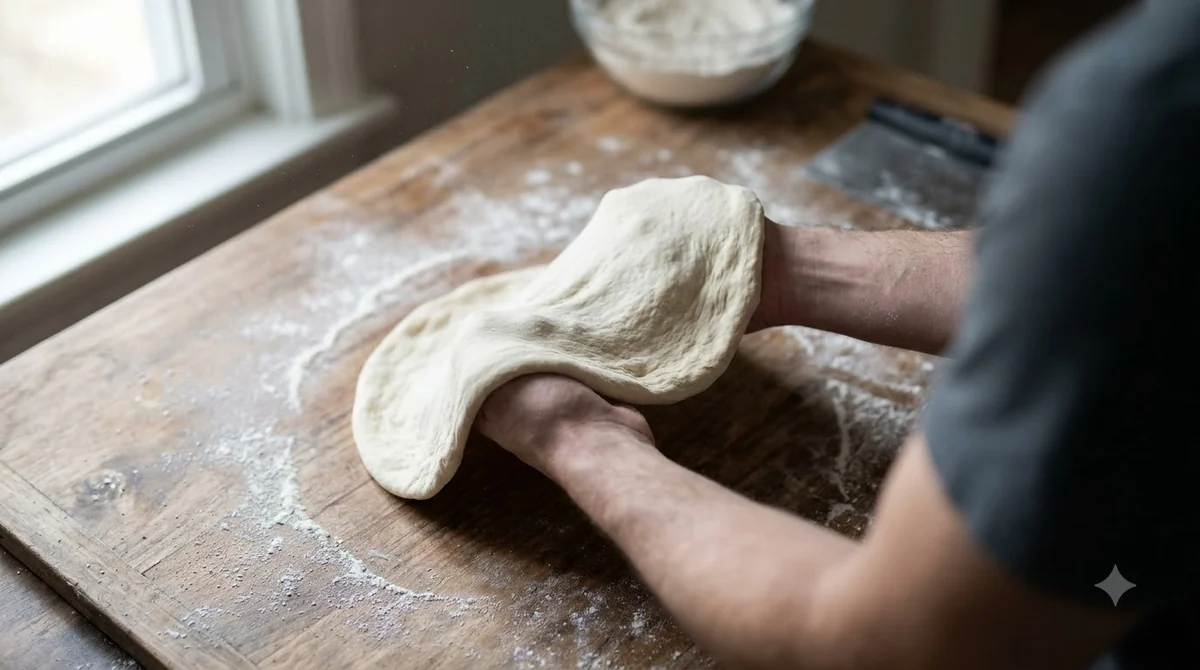
Is the Dough Too Stiff for Your Flour?
Hydration is the first thing to check. A dough with too little water is stiff, and it bakes into a tough crust even when the flour is good. The pizza dough troubleshooting guide from Fond gives 62 to 65 percent hydration as a starting range for most home ovens.
Flour strength matters as much as water. The same guide warns that very high-protein bread flour, around 14 percent protein and above, needs more water to avoid an excessively chewy texture. Its suggested fixes are to add 2 to 3 percent more water or switch to a flour in the 11 to 13 percent protein range.
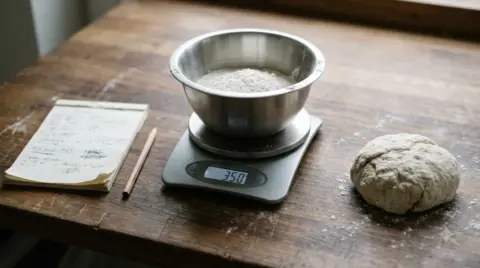
- Weigh the flour and water instead of using cups, so the hydration is consistent between batches.
- If the dough feels tight and springs back hard, add a small amount of water and mix until it comes together.
- If you use bread flour, expect a chewier result and adjust the water to suit it.
How Kneading and Fermentation Change the Bite
Over-kneading is a common reason for a tough crust. Working the dough hard builds a very tight gluten network, which is hard to stretch and bakes firm. The same troubleshooting guide advises a low mixer speed and stopping once the dough is smooth and pulls away from the sides of the bowl.
Fermentation gives the gluten time to relax. A dough that rests long enough is easier to stretch and bakes into a more tender crust. A dough that is shaped too early, or that is rolled roughly and loses its gas, tends to bake dense and chewy.
Fond’s guide also notes that a short fermentation leaves the gluten tight. If your dough is only rested for a short time, a longer rest in the fridge or on the counter often gives a noticeably softer crust.
Oven Heat, Shaping and Cooling Also Matter
A bake that is too slow dries the surface while the inside stays firm. The guide from Pizzai notes that a pizza can feel firm when hot and then turn chewy as it cools, especially when it is closed in a box. Eat the pizza soon after it comes out of the oven, and avoid leaving it covered.
Shaping gently also helps. Pushing the air out of the dough when you stretch it makes a denser crumb. Stretch by hand from the centre outward and leave a slightly thicker edge.
Oven heat works together with the dough. Pizzai’s guide makes the point that each flour strength and bake condition has its own matching hydration range. Its example is a strong flour baked in a home oven at 55 percent hydration, which can bake into a tough crust even when the mixing was correct. Test one change at a time to find the range that suits your flour and oven.
The table below sums up the main causes of a chewy crust and the change that usually fixes each one.
| Likely cause | What to change |
|---|---|
| Dough too stiff for the flour | Add water in small steps, aiming for the 62 to 65 percent range |
| Very high-protein flour | Add 2 to 3 percent more water or use a flour with 11 to 13 percent protein |
| Over-kneaded dough | Mix on low speed and stop when the dough is smooth |
| Short fermentation | Let the dough rest longer so the gluten relaxes |
| Pizza left closed to cool | Serve right away and do not seal it in a box |
Fixes for Your Next Batch
Change one variable at a time so you can tell which fix worked. Keep a short note of the water weight, flour brand, rest time and oven temperature for each batch.
- Weigh the dough and adjust hydration by 2 to 3 percent at a time.
- Mix only until the dough is smooth, then let it rest.
- Ferment the dough longer before shaping. Pizzai’s guide suggests proofing to about one times its size before baking.
- Add a small amount of fat, such as olive oil, at 2 to 5 percent of the flour weight to soften the crumb.
- Bake hotter and shorter if your oven allows. A long bake at low heat dries the crust.
Raising the water helps only up to the point that suits your flour. Past that, the dough becomes too soft to hold its shape, so make changes in small steps.
Frequently Asked Questions
Why is my pizza crust too chewy?
A pizza crust too chewy is usually dough that is too stiff or over-kneaded. Adding a little water and mixing on low speed often softens it.
Does bread flour always make a chewy crust?
Bread flour has higher protein, so it tends to be chewier. Very high-protein flour needs more water to avoid a rubbery texture, so adjust the hydration when you switch.
Will a longer rest make my pizza dough softer?
Yes, in most cases. Time lets the gluten relax, so the dough stretches more easily and bakes into a more tender crust.
Can I fix a pizza that is already chewy?
You cannot change the dough once it is baked, but a short, very hot reheat can soften a slice a little. For the next batch, use the hydration, rest and bake changes above.
Fixing a pizza crust too chewy problem is usually a matter of small changes. Start by weighing your flour and water, rest the dough longer, and bake hot. Track one change per batch so you can see what makes your crust softer.
 9 min readLearnPizza Dough Too Sticky? Causes and Fixes That WorkUpdated Nov 10, 2026
 10 min readLearnWhy Is My Pizza Crust Gummy? Causes and FixesUpdated Nov 10, 2026
 8 min readLearnWhy Is My Pizza Crust Hard? Causes and FixesUpdated Nov 10, 2026
 6 min readLearnWhy Is My Pizza Greasy? Causes and Easy FixesUpdated Nov 13, 2026
 9 min readLearnWhy Is My Pizza Dough Tough? Causes and Easy FixesUpdated Nov 12, 2026
 8 min readLearnPizza Dough With Bread Flour: How to Make a Chewy Crust at HomeUpdated Nov 6, 2026