
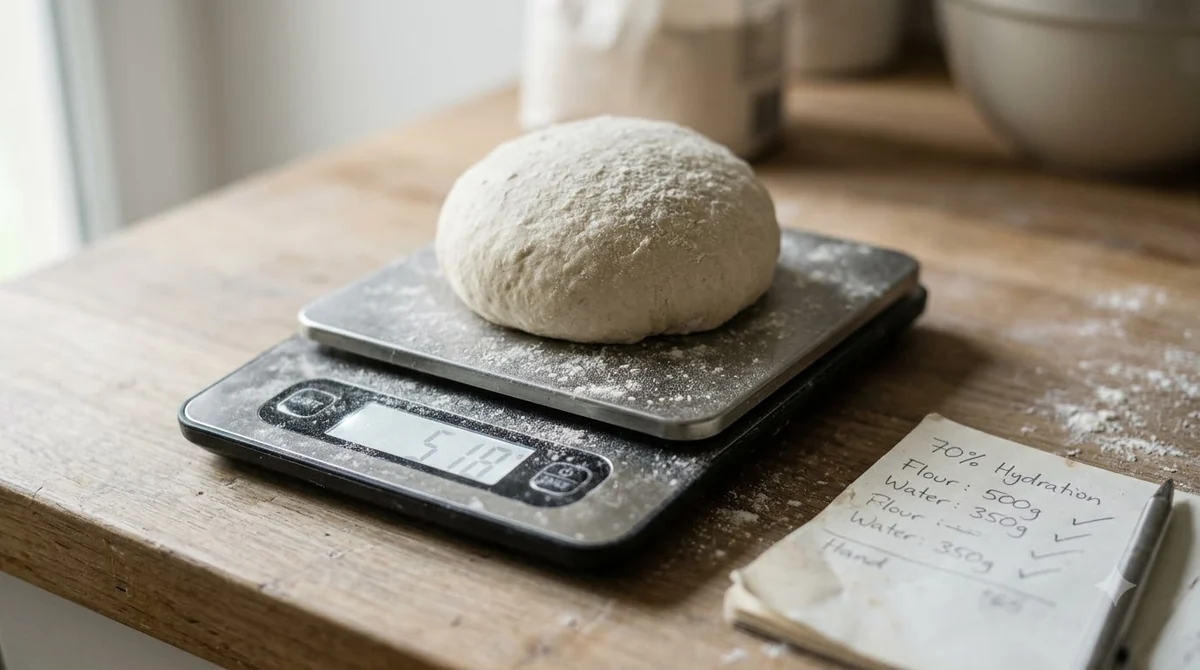

The dough ball weight for 14 inch pizza is usually between 300 and 370 grams for a thin to medium crust, and about 460 grams for a thick crust. The exact number depends on how much dough you spread across the 154 square inches of the pizza, so thickness matters more than the diameter alone. A kitchen scale and a simple formula are enough to get a repeatable result.
Most home cooks start from a published figure and then adjust after one or two bakes. Sources do not agree on one number, so this guide shows where the common figures come from, how they change with crust style, and how to weigh the dough so each ball is close to the target.
How Much Dough Does a 14 Inch Pizza Need?
The dough ball weight for 14 inch pizza typically falls between 300 and 370 grams for a standard home crust, with the higher end suited to a fuller, more bready base.
The Prepa Pizza dough weight guide lists 354 grams for a 14 inch pizza in its size table, and the same article describes typical values as 2 to 3 grams of dough per square inch, depending on crust thickness. That single range explains most of the spread you will see online.
Dough Ball Weight for 14 Inch Pizza by Crust Thickness
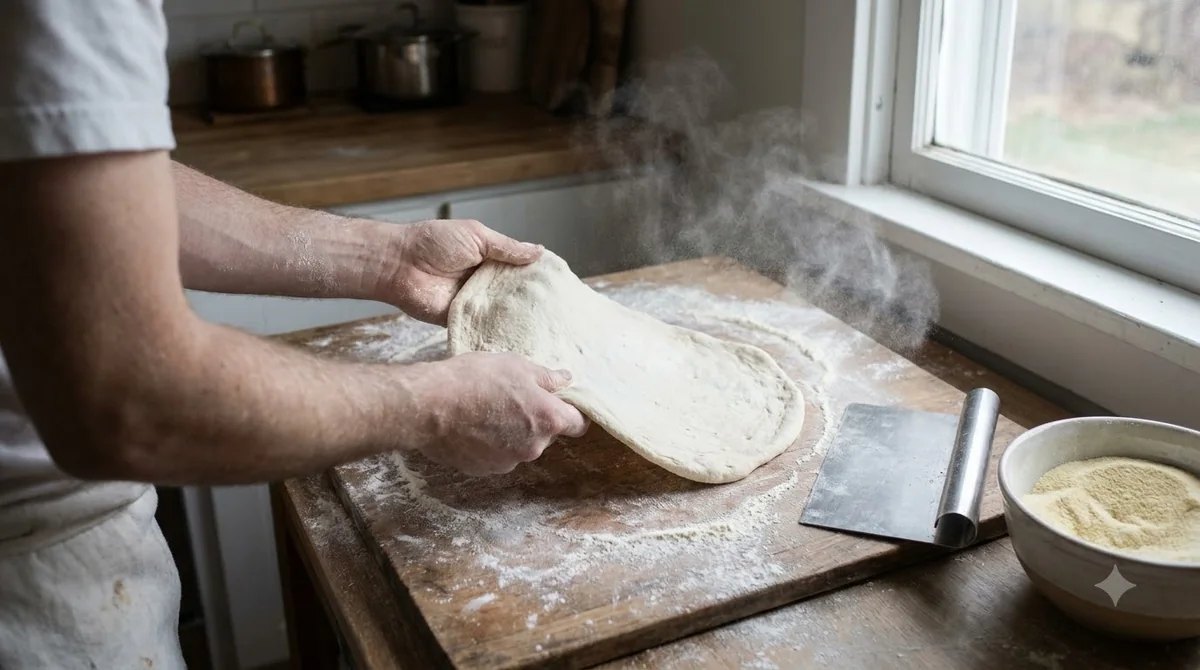
Crust thickness changes the weight more than the diameter does, so the table below lists three common styles at the same 14 inch size. If you bake smaller pies too, compare the dough needed for a 12 inch pizza.
| Crust style | Grams of dough per sq in | Dough ball for 14 inch | Feel of the crust |
|---|---|---|---|
| Thin | About 2 | About 308 g | Crisp, light, stretched very thin |
| Medium (NY-style range) | About 2.3 | About 354 g | Foldable slice with a little chew |
| Thick | About 3 | About 462 g | Airy, bready, holds more toppings |
The weights in the table are calculated from the 2 to 3 grams per square inch range and the 154 square inch area of a 14 inch pizza. They are a starting point, not a standard, and the flour type and hydration will also shift the result.
How the Area Formula Gives the Dough Weight
Multiply the grams per square inch by the pizza’s area, and you have the dough ball weight. Once you have your weight, our steps for forming tight dough balls before proofing keep the surface tight.
A 14 inch pizza has a radius of 7 inches, so the area is π × 7², which is about 154 square inches. At 2 grams per square inch that comes to roughly 308 grams, and at 2.3 grams it comes to roughly 354 grams. At 3 grams per square inch it is about 462 grams for a thick style.
The same formula works for any size. Measure the diameter, halve it for the radius, square it, multiply by π, and then multiply by the grams per square inch you want for your crust. Check the result against the table before you weigh the dough.
- Measure the pizza diameter you plan to stretch, in inches.
- Calculate the area as π times the radius squared.
- Multiply the area by 2 for thin, about 2.3 for medium, or 3 for thick.
Why Published Dough Weights Disagree
Published figures for the same pizza can differ by more than 50 grams because each author has a different crust style in mind. Rest time changes how the ball stretches, so read about pizza dough fermentation timing.
The Baking Steel Rule of 22 multiplies the diameter in inches by 22 grams, which gives 308 grams for a 14 inch pizza. The author notes that thicker styles need more, and suggests 26 to 28 grams per inch for Detroit or Sicilian-style pies. That is a simple rule, but it ignores how thick you stretch the dough.
Prepa Pizza’s 354 grams sits near the middle of the range, which makes a medium crust a sensible starting target for a 14 inch pie.
10 Inch Pizza Dough Ball Weight for Comparison
A 10 inch pizza uses a much smaller ball, around 180 grams for a medium crust, because its area is only about 78.5 square inches. For a larger pie, see dough weight for a 16 inch pizza.
The same two-to-three grams per square inch logic applies. A 10 inch thin crust lands near 157 grams, while a thick 10 inch base needs about 236 grams. The Rule of 22 gives 220 grams for 10 inches, which is higher than the medium estimate, so the thickness you choose matters more than the rule you follow.
If you are cooking both sizes in one session, weigh each ball separately rather than scaling one from the other. At the same crust style, the 14 inch ball is roughly twice the weight of a 10 inch ball, because the area grows with the square of the radius.
How to Weigh and Divide the Dough for a 14 Inch Pizza
Weigh the whole dough batch first, then divide it so each ball matches your target weight.
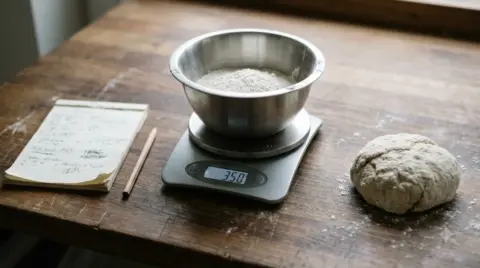
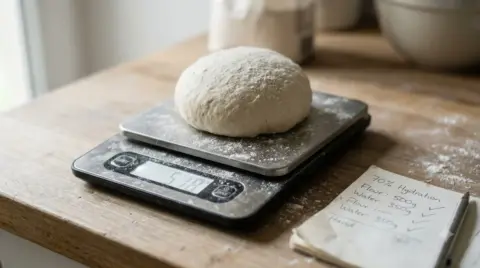
Set a digital scale to grams and place a bowl on it, zero the scale, and add the dough. Cut the dough into equal pieces with a bench scraper, weigh each piece, and adjust with small pinches until each ball is within about 5 grams of the target. Cover the balls while you work so the surface does not dry out.
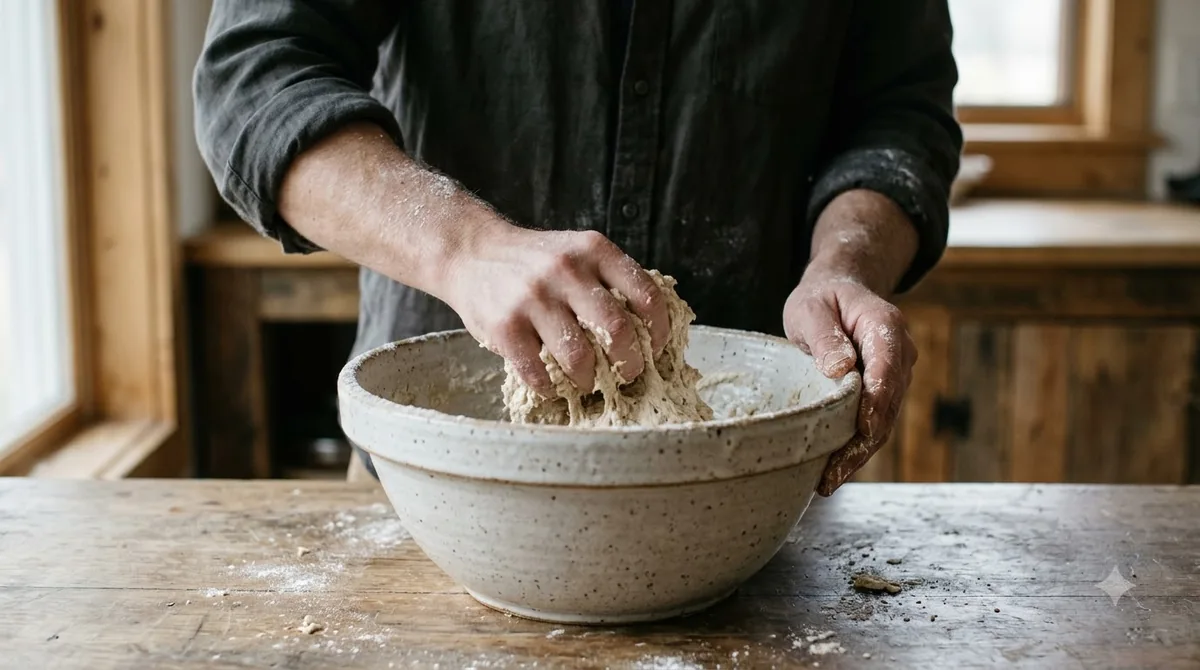
Let the balls rest before stretching. A rested ball is easier to open to 14 inches without tearing, and it keeps the weight you measured.
Frequently Asked Questions
How many grams of dough do I need for a 14 inch pizza?
For a medium crust, aim for about 354 grams. A thin crust uses about 308 grams, and a thick crust uses about 460 grams.
What is the 10 inch pizza dough ball weight?
A medium 10 inch pizza usually uses about 180 grams of dough. Thin styles go lower and thick styles go higher, following the same grams per square inch approach.
Can I use the Rule of 22 for a 14 inch pizza?
The Rule of 22 gives 308 grams for 14 inches, which matches a thin to medium crust. For a thicker, pan-style pie, use a higher number, as the Baking Steel author suggests.
Is weighing the dough better than measuring it by eye?
Yes, weighing gives a repeatable result. Balls that look the same size can differ noticeably in weight, and the weight is what the grams-per-square-inch figures are based on.
The dough ball weight for 14 inch pizza works best when it is set by crust style, not by diameter alone. Start with about 354 grams for a medium crust, weigh each ball, and adjust after one bake. Keep a note of the weight and the result so the next batch comes out the same.
 9 min readLearnPizza Dough Without Yeast: A Baking Powder Recipe for One 12-Inch CrustUpdated Nov 10, 2026
 8 min readLearnHow Much Dough for a 12 Inch Pizza by Crust StyleUpdated Nov 10, 2026
 7 min readLearnRoman vs Sicilian Pizza: Dough, Thickness and Pan ComparedUpdated Nov 7, 2026
 8 min readLearnPizza Dough Calculator: How to Get Exact Ingredient WeightsUpdated Nov 10, 2026
 5 min readLearnHow Many Grams of Dough for a 16 Inch Pizza?Updated Nov 13, 2026
 7 min readLearnWhy Pizza Dough Balls Stick Together and How to Stop ItUpdated Nov 11, 2026