
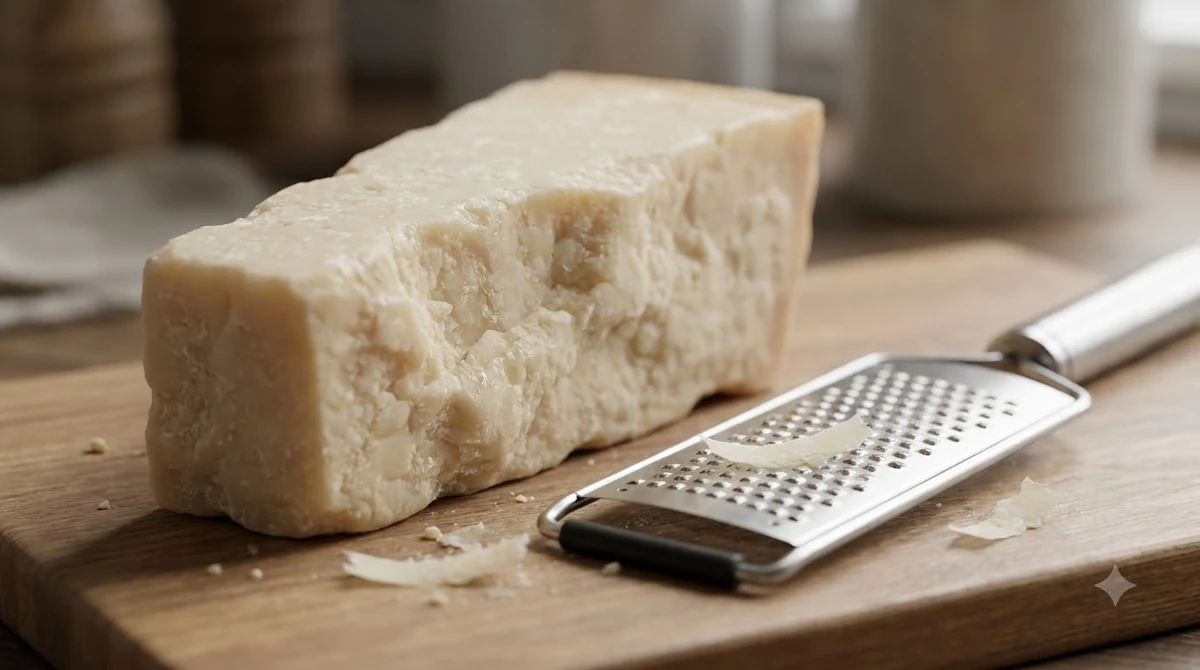

A straightforward answer to what is caciocavallo: it is a semi-hard, stretched-curd cheese from southern Italy, made with cow’s milk under the Caciocavallo Silano DOP. The name translates as “horse cheese,” and the cheese is one of the traditional products of the Italian south.
Its flavor moves from sweet and mild when young to sharp and spicy when mature. Read the DOP name and the age label before you buy if you want a specific taste.
What Is Caciocavallo and Where It Comes From
What is caciocavallo in terms of origin? Caciocavallo is produced across southern Italy, especially in the Apennine mountains and on the Gargano peninsula, according to the Wikipedia entry on caciocavallo.
The name is usually explained by an old practice. Two cheese forms were tied together with rope and left to mature draped over a stick, which is what “a cavallo,” meaning astride a branch, describes. That origin story is a likely explanation rather than a firmly recorded fact, so treat it as the common account.
The protected Silano DOP (see what a DOP label means) is a narrower, legally defined version of the cheese. Its milk, making and aging take place in designated areas of five regions: Basilicata, Calabria, Campania, Molise and Puglia. Those rules are why the DOP name matters when you shop.
The cheese has a long history. Wikipedia notes that Hippocrates is believed to have mentioned a version of it, and that Columella’s De re rustica, written around 35 to 45 CE, described how it was prepared.
How Caciocavallo Is Made
Caciocavallo Silano is made from raw cow’s milk, or from milk heated to 58 degrees Celsius for 30 seconds at the dairy, and its curd is stretched while warm rather than only pressed.
This method is called pasta filata, which means “spun paste.” The curd is kneaded and stretched until it becomes a dense, elastic mass before it is shaped. The main steps follow the production rules set out in the official DOP specification.
- Start with raw cow’s milk, or milk thermized to 58 degrees Celsius for 30 seconds at the dairy, as the DOP allows.
- Stretch the warm curd until the paste is dense and elastic.
- Shape the cheese into an oval or truncated cone and tie it with strings. The strings leave shallow indentations on the surface.
- Age the cheese for at least 30 days under the DOP minimum, and longer for the EXTRA and GRAN RISERVA labels.
The finished paste is homogeneous and compact, with very slight eyes, and it is white or straw yellow. The thin rind is smooth and straw colored. The specification sets the fat in dry matter at no less than 38 percent.
The DOP also allows the cheese to be sold whole, sliced, cubed or grated, so you will see it in several packaging forms. Check which form you are buying before you compare prices, because a whole shape, a slice pack and a grated bag are not priced the same way.
Taste and Texture by Age
Part of what is caciocavallo’s appeal is its range: young caciocavallo is sweet and mild, and it turns piccante, meaning sharp or spicy, as it matures. The texture stays dense and elastic at every stage, because the curd is kneaded and stretched while warm.
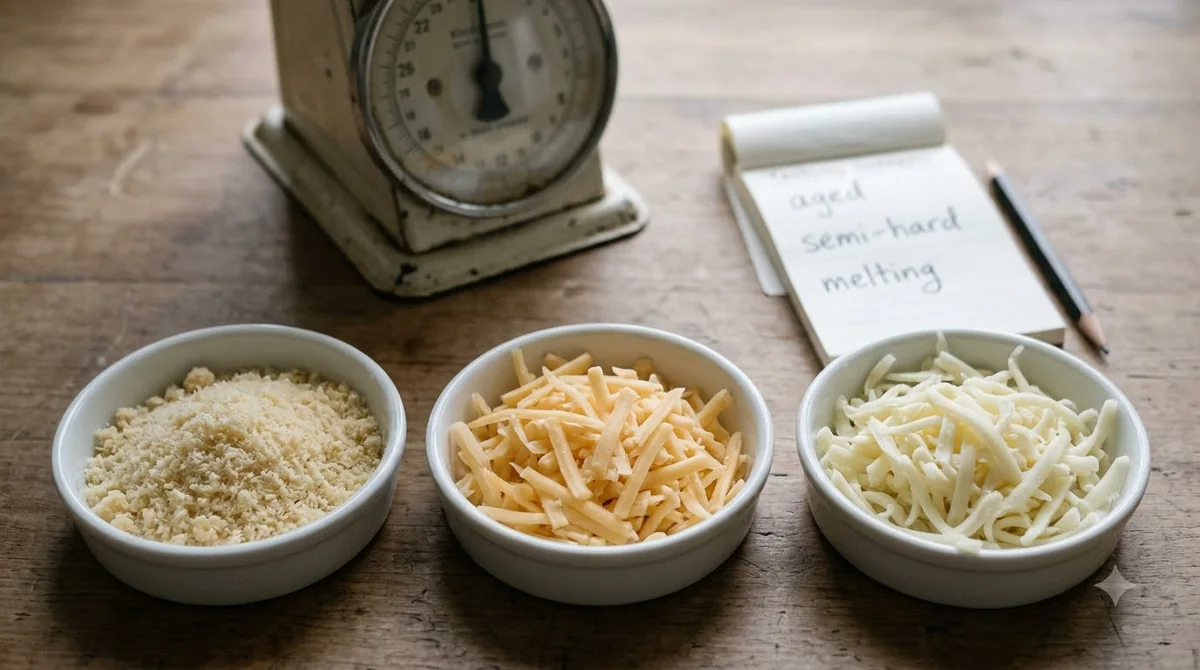
The age labels in the DOP specification give a clear way to compare stages. Use this table to see what each label means.
| Stage | Minimum aging | Taste |
|---|---|---|
| Young (no label) | 30 days, the DOP minimum | Delicate and sweet |
| EXTRA | At least 4 months | Sharper than young cheese |
| GRAN RISERVA | At least 9 months | Piccante, the most mature style |
One specialist guide says caciocavallo is usually aged two to six months before release. That range does not match the DOP label thresholds, so read the label on the pack rather than rely on the general figure.
Caciocavallo Compared With Provolone and Other Types
What is caciocavallo next to provolone? It is close to aged provolone in taste, but Caciocavallo Silano is a protected cheese with its own milk, zone and aging rules.
Several traditional types share the name. The table below shows the main ones and the one fact each source gave.
| Type | Milk | Key point |
|---|---|---|
| Caciocavallo Silano DOP | Cow’s milk only | Protected zone in five regions, 30-day minimum aging |
| Caciocavallo podolico | Podolica cattle only | A traditional product made only from that breed’s milk |
| Caciocavallo di Castelfranco | Check the producer’s label | Recognized traditional product |
| Caciocavallo di Godrano | Check the producer’s label | Often called caciocavallo palermitano |
The clearest sign of the Silano rules is the protected name on the label. Other traditional types follow their own production rules, so check the producer’s label for milk and aging before you compare prices. For another protected Italian cheese to compare, see what pecorino romano is.
The name is not always a reliable guide. Wikipedia notes that Ragusano DOP in Sicily had to drop the “caciocavallo” name to gain DOP status, so a protected cheese does not always carry the word on its label. Read the full name on the pack.
How People Use Caciocavallo
Once you know what is caciocavallo, using it is easy, because it works sliced on a board, grilled over salads or potatoes, or stirred into risotto, and the best choice depends on how mature the cheese is.
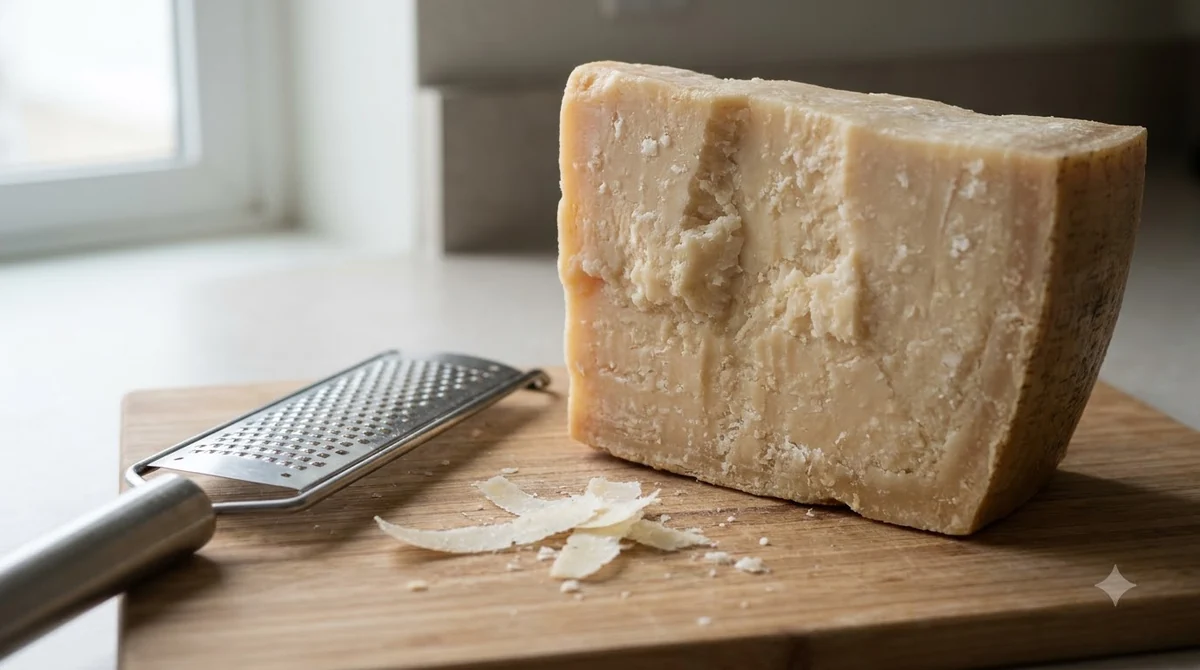
- Serve young slices on a cheese board with bread.
- Grill slices to top salads or potatoes, a use the Culturecheese guide describes.
- Stir it into risotto, another use that guide lists.
- Buy grated or cubed packs for quick cooking, since the DOP allows those forms.
Pairings are a matter of taste. One specialist guide suggests light whites such as Chardonnay or Falanghina with young caciocavallo, and bold reds such as Chianti or Nebbiolo with mature cheese. Mild young slices suit a simple board, while sharper mature cheese holds its own in grilled dishes.
How to Choose and Keep a Piece
Choose by the label first: the protected DOP name confirms the Silano rules, and the EXTRA or GRAN RISERVA label tells you the minimum age.
- Look for the DOP name on the label.
- Pick EXTRA or GRAN RISERVA for a sharper taste.
- Check that the rind is thin, smooth and straw colored.
- Choose a younger piece without an age label for milder, sweeter slices.
The sources used for this guide do not cover storage, so follow the producer’s instructions on the pack and keep cut pieces wrapped.
Some details about what is caciocavallo were not confirmed in the sources reviewed for this guide. These include the milk and aging rules for the Castelfranco and Godrano types, and the storage time after opening. Ask the producer or check the pack for those numbers rather than relying on general figures.
Frequently Asked Questions
Is caciocavallo the same as provolone?
No, but the two are close in taste when aged. Caciocavallo Silano is a protected cheese with its own zone and rules, so the names are not interchangeable on a label.
Is caciocavallo made from cow’s milk?
The Silano DOP is made only from cow’s milk. Wikipedia notes that caciocavallo in general can also be made from sheep’s milk, so check the label.
How long is caciocavallo aged?
The DOP minimum is 30 days. The EXTRA label means at least 4 months, and the GRAN RISERVA label means at least 9 months.
Where is caciocavallo made?
The Silano DOP is made in designated areas of Basilicata, Calabria, Campania, Molise and Puglia.
Does caciocavallo have a DOP label?
Yes, the Silano cheese is protected by the Caciocavallo Silano DOP. Look for that full name on the label, since the DOP name is the sign that the specification’s milk, zone and aging rules apply.
What does caciocavallo taste like?
Young caciocavallo tastes sweet and delicate, and mature cheese becomes piccante, meaning sharp and spicy. The texture is dense and elastic at every stage.
How do you eat caciocavallo?
If you ask what is caciocavallo best for, the answer is flexible: eat young slices on a board, grill it over salads or potatoes, or use it in risotto. Young cheese is milder, and mature cheese is sharper, so pick by the taste you want.
Now that you know what is caciocavallo, the choice is simple. If you want a mild, sweet cheese, choose a younger piece without an EXTRA or GRAN RISERVA label. For a sharper taste, pick a labeled mature piece and check the DOP name first. More cheese explainers are in our Learn guides.
 7 min readLearnWhat Is Provolone? A Practical Guide to This Italian CheeseUpdated Nov 10, 2026
 9 min readLearnWhat Is Grana Padano? A Simple Guide to This Italian Hard CheeseUpdated Nov 11, 2026
 8 min readLearnWhat Is Scamorza? A Guide to This Southern Italian CheeseUpdated Nov 11, 2026
 8 min readLearnTimballo Recipe: How to Bake This Italian Pasta Drum at HomeUpdated Nov 11, 2026
 7 min readLearnWhat Is Stracciatella? A Fresh Italian Cheese ExplainedUpdated Nov 11, 2026
 8 min readLearnHow Much Sauce on Pizza? A Practical Guide for Home OvensUpdated Nov 11, 2026