
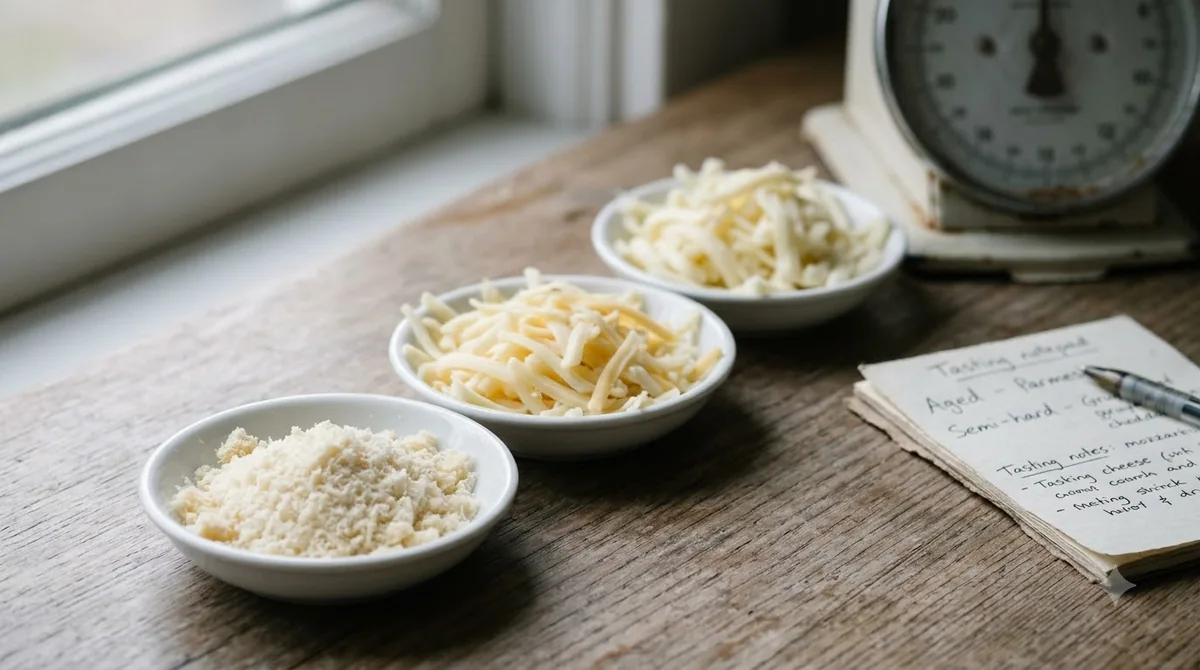

Asking what is scamorza gets a short answer: a semi-soft Italian cheese from southern Italy, usually made from cow’s milk. It belongs to the same stretched-curd family as mozzarella and provolone, but it is shaped and dried differently.
It is firmer, drier and more intense than mozzarella, and it melts well. Choose it when you want more flavor than mozzarella gives on pizza or in a baked dish.
What Is Scamorza and Where Does It Come From?
Scamorza is a pasta filata cheese, a family of cheeses made by stretching the curd, and its main production is in Apulia and Calabria. The cheese is also made in other southern regions and sold across Italy in unsmoked and smoked forms.
According to Wikipedia’s scamorza entry, the cheese is usually made from cow’s milk, although some versions use sheep, goat or buffalo milk. The entry describes fresh scamorza as elastic and stringy, which is why it stretches so well when it melts.
Because it is a stretched-curd cheese, scamorza sits next to mozzarella and provolone in the same family. Another southern Italian stretched-curd cheese is caciocavallo. The difference comes from how the cheese is finished after shaping, which is covered in the next sections.
Other sources list more places where scamorza is made, including Marche, Basilicata, Molise, Campania, Calabria and Puglia, so it is best understood as a southern Italian style rather than one fixed product. If you are asking what is scamorza as a shopper, that regional range explains why labels and recipes vary.
How Scamorza Is Made
Scamorza is shaped, tied and hung to dry, and that drying step is what sets it apart from fresh mozzarella. The process runs in a few clear steps.
- The fresh curd rests in its own whey for several hours, so acidity develops as lactose turns into lactic acid.
- The curd is stretched and formed into a round.
- A string is tied around the cheese about one-third of the way down from the top.
- The cheese is hung to dry for one to two weeks.
The tie is what gives scamorza its pear-like shape. Mozzarella, by contrast, is packaged straight from the brine, so it does not go through the same hanging step, according to Tasting Table’s comparison.
The sources reviewed do not describe the exact order of brining and smoking, or the exact temperatures used in the dairy, so treat those details as unconfirmed.

How Scamorza Differs From Mozzarella
Scamorza is firmer, drier and more intense than mozzarella because it is dried after shaping rather than sold straight from the brine. Tasting Table describes the result as a firmer, saltier cheese with a flavor like mozzarella, but more pronounced.
| Attribute | Scamorza | Mozzarella |
|---|---|---|
| Finishing | Tied and hung to dry for one to two weeks | Packaged straight from the brine |
| Texture | Firmer and drier | Softer and moister |
| Flavor | More intense, saltier | Milder |
| Melting | Melts well, with more flavor | The usual melting cheese in many recipes |
For most home cooks, the practical question is whether the extra flavor is worth it. If you want a mild, soft cheese for a simple dish, mozzarella is the easier choice, and our guide to low-moisture vs fresh mozzarella for pizza explains the common types. If you want a cheese that stands out on a pizza or in a baked dish, scamorza gives more to work with.
Smoked and Unsmoked Scamorza
Smoked scamorza, or scamorza affumicata, is hung over burning straw, which gives it a tawny color and a smoky flavor. The unsmoked version is the usual white. If you are asking what is scamorza affumicata, it is simply the smoked version of the same cheese.
- Unsmoked: white, with a lighter interior and a milder taste.
- Smoked: almond to tawny on the outside, flavored by straw smoke.
- Smoking time: not stated in the sources, and Pasta Evangelists notes that flavor depends on how long the cheese is smoked.
The smoky flavor does not last. Tasting Table advises using smoked scamorza quickly after opening, because the flavor fades fast.
How to Cook With Scamorza
Scamorza melts well on pizza and can replace mozzarella in most dishes, from eggplant parmigiana to grilled slices. Wikipedia notes that it is a common substitute for mozzarella, while Tasting Table lists pizza, baked dishes and cheese boards as good uses. Knowing what is scamorza in cooking terms helps you decide when it is worth choosing over mozzarella.
Pasta Evangelists’ cheese guide lists melting it on pizza, frying slices on their own, and adding it to sandwiches, salads, bruschetta and savoury pasta fillings. Sliced, it partially holds its shape when cooked, which suits layered dishes.
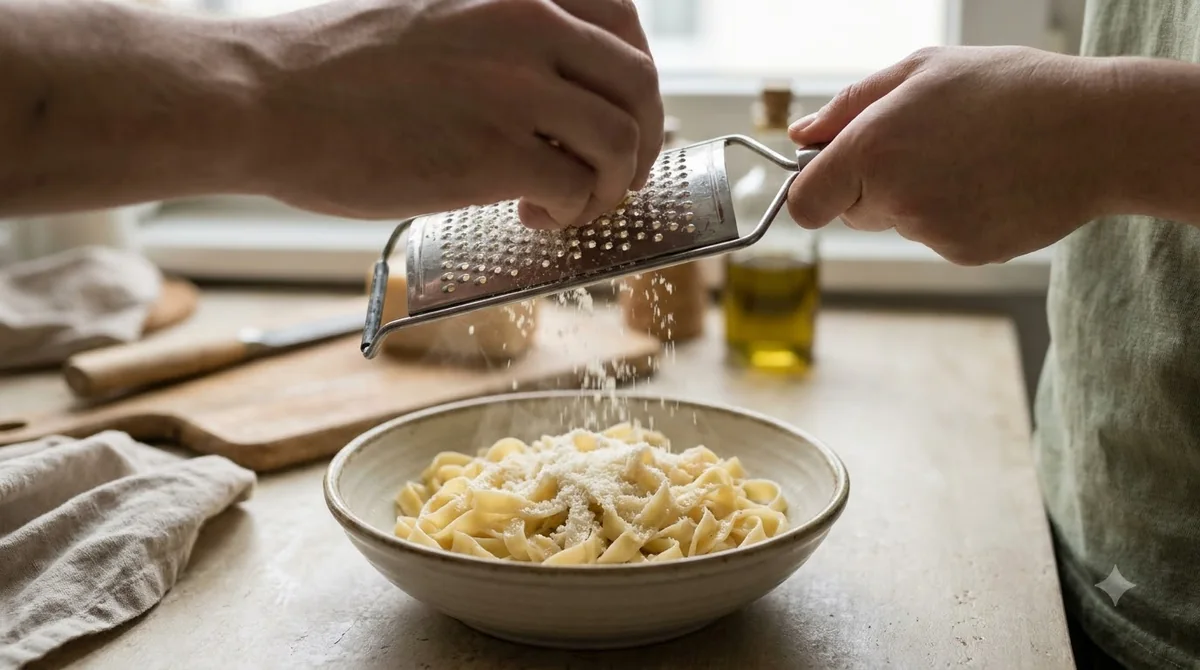
- Pizza: use it in place of the usual cheese in a cheese pizza recipe, with bold toppings.
- Smoked pizza: smoked scamorza suits a BBQ chicken pizza, per Tasting Table.
- Eggplant parmigiana: swap it in for mozzarella, since it melts in a similar way.
- Grilled: scamorza alla griglia is a traditional Neapolitan dish, according to Wikipedia.
The sources do not give oven times or temperatures for scamorza, so follow the timing in your pizza or pasta recipe and watch the cheese as it melts.
Buying and Storing Scamorza
Look for scamorza at a cheese counter or an Italian grocer, and use it soon after opening because its smoky flavor fades quickly. Tasting Table calls scamorza an aged cheese, even though the drying it describes runs one to two weeks.
The sources reviewed do not give a fridge temperature or a shelf life for scamorza. Check the package date and any storage note from the producer before you buy.
Once cut, wrap the cheese tightly so it does not dry out further, since drying is already part of how it is made.
What Sources Do Not Settle and How to Check
The sources agree on the basics, but they leave a few details open. These are the points to check before you rely on them.
- The name: Wikipedia says it may come from Italian phrases for “severed head”, but presents this only as a possibility.
- Smoking time and method: not stated in the sources reviewed.
- Storage and shelf life: only “use quickly after opening” is stated.
- Reliability: Wikipedia carries a “needs more citations” tag, so some of its claims are weakly sourced.
For these details, check the package, the producer’s website, or a specialty cheese shop that can tell you how the cheese was smoked and how long it keeps.
Frequently Asked Questions
Is scamorza the same as mozzarella?
No. Scamorza is in the same stretched-curd family, but it is tied and hung to dry for one to two weeks. That drying makes it firmer, drier and more intense than mozzarella, according to Tasting Table.
Is scamorza always smoked?
No. It comes in unsmoked and smoked (affumicata) versions. The smoked type gets its tawny color and smoky flavor from burning straw, and the sources do not say how long the smoking lasts.
Can you melt scamorza on pizza?
Yes. Sources describe scamorza as a cheese that melts well and gives more flavor than mozzarella. Tasting Table suggests using it in place of the usual pizza cheese, especially with bold toppings.
Can I use scamorza instead of mozzarella?
Usually yes. Wikipedia says it can substitute for mozzarella in most dishes, and Tasting Table says it can be swapped into eggplant parmigiana. Check your recipe for any change in firmness or flavor.
Where does scamorza come from?
Its main production is in Apulia and Calabria, according to Wikipedia. It is also made in other southern regions and sold widely across Italy in unsmoked and smoked forms.
What Is Scamorza Made Of?
It is usually made from cow’s milk, according to Wikipedia. Some versions use sheep, goat or buffalo milk, and the Bari style is made from sheep’s milk. The curd is stretched, shaped, tied and hung to dry.
What does scamorza taste like?
It tastes like mozzarella but more intense, with a salty note from the drying step. The smoked version adds a smoky flavor that fades quickly after opening.
Now you know what is scamorza and when it earns a place in your kitchen. Pick it when you want a firmer, more flavorful cheese than mozzarella, especially on pizza or in baked dishes. Check the label for the smoking method and storage date, since the sources do not settle those details, and use the cheese soon after opening.
 7 min readLearnWhat Is Caciocavallo? A Practical Guide to This Italian CheeseUpdated Nov 11, 2026
 9 min readLearnWhat Is Grana Padano? A Simple Guide to This Italian Hard CheeseUpdated Nov 11, 2026
 7 min readLearnWhat Is Provolone? A Practical Guide to This Italian CheeseUpdated Nov 10, 2026
 8 min readLearnOrecchiette vs Cavatelli: How to Tell These Southern Italian Shapes ApartUpdated Nov 11, 2026
 6 min readLearnItalian Cream Cake Recipe: Southern Classic With Pecans and CoconutUpdated Nov 13, 2026
 8 min readLearnTimballo Recipe: How to Bake This Italian Pasta Drum at HomeUpdated Nov 11, 2026