
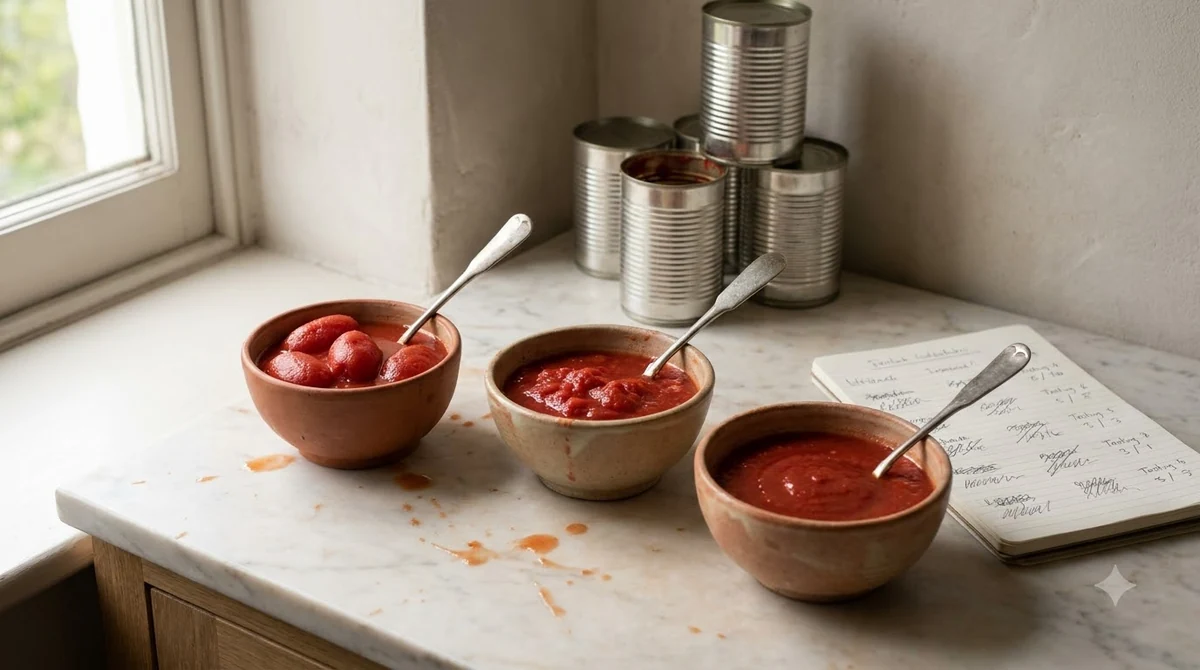

A good answer to how much sauce on pizza is about 2 to 4 ounces, or 1/4 to 1/2 cup, for a 12-inch pie. Recipes disagree on the exact figure, but most agree that less is better than more.
Start near the lower end, check that the dough still shows through the sauce, and adjust next time. The sections below cover the numbers, the soggy-crust risk, and how to spread sauce evenly.
How Much Sauce on Pizza for a 12-Inch Pie
For a 12-inch pizza, most sources land between 2 and 4 ounces of sauce, which is roughly 1/4 to 1/2 cup.
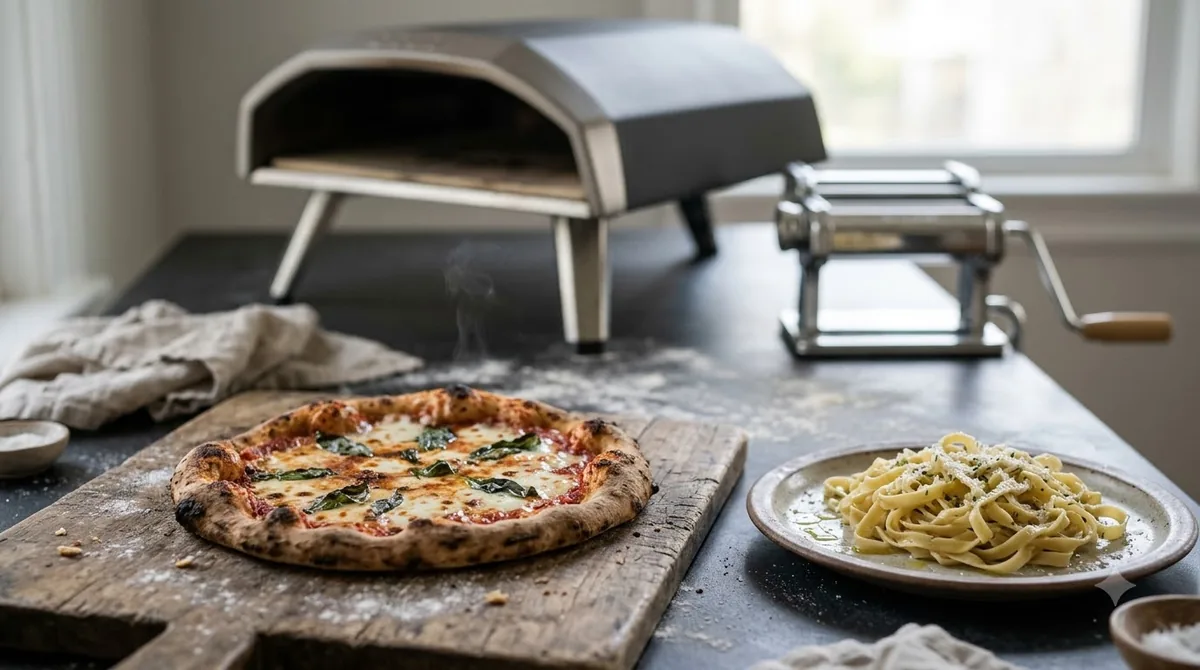
Chowhound’s sauce guide suggests a rough volume of about 4 ounces, or 1/2 cup, for a 12-inch pie, and notes that the amount changes with size. Baking Steel’s recipe is more modest, recommending two to three ounces, or about a quarter cup, which it calls plenty for a 12-inch pizza. A recipe from RecipeTin Eats, which credits Serious Eats, uses 1/4 cup per 30 cm (12-inch) pizza. The range you will see is wide, but the verified sources cluster between 2 and 4 ounces.
A can of tomatoes gives a useful cross-check. A Pizza School NYC recipe, published through Today.com, says one 28-ounce can makes enough sauce for six pizzas, which works out to about 4.7 ounces each. That is above the lower figures, so treat it as an upper reference rather than a target.
| Source | Amount for a 12-inch pie | Note |
|---|---|---|
| Baking Steel recipe | 2 to 3 ounces (about 1/4 cup) | Described as plenty for a 12-inch pizza |
| RecipeTin Eats (credits Serious Eats) | 1/4 cup | Per 30 cm (12-inch) pizza |
| Chowhound sauce guide | About 4 ounces (1/2 cup) | Given as a rough volume |
| Pizza School NYC recipe, via Today.com | One 28-ounce can for 6 pizzas | About 4.7 ounces each, an upper reference |
Why do the figures differ? Each source describes a different style of pie and sauce. Chicago deep dish uses more sauce than a thin crust, as covered in the spreading section below, so check the crust style before you copy a number. When you compare advice on how much sauce on pizza to use, match the thickness of the sauce too, since a thin, watery sauce spreads differently from a thick puree.
Why Too Much Sauce Makes Pizza Soggy
Too much sauce adds water that the dough soaks up, so the crust stays soft instead of crisp. Knowing how much sauce on pizza is too much starts with understanding that moisture is the real problem.
Tasting Table’s thin-layer advice explains the mechanism: excess moisture can stop the dough from becoming nice and crispy. A heavy layer also weighs the pizza down, which can make it droopy and slower to cook.
Consistency matters as much as quantity. Tasting Table warns that a sauce that is too thin will seep into the crust and add more moisture. Baking Steel calls using too much sauce the most common mistake, since the excess water can make the crust soggy. Chowhound adds that dumping sauce onto the dough leaves it sticky and damp.
Thick puree holds its shape on the dough, while thin sauce runs. That is why the prep section below matters as much as the amount, because the right quantity can still fail if the sauce is watery.
- Too much sauce on pizza: extra water keeps the crust from crisping.
- A heavy layer: the pie can droop and take longer to cook.
- Watery sauce: it seeps into the dough and adds moisture.
The Visual Check: Can You Still See the Dough?
A simple test is whether the dough still shows through the sauce. If red sauce covers the dough completely, you have probably used too much.
Tasting Table recommends a thin layer and says the dough should still be visible, which is the simplest way to judge how much sauce on pizza is enough. If it is entirely blocked out by red sauce, you have probably added too much. Use the check as you spread, and stop before the dough disappears.
- Spoon a small amount onto the center of the dough.
- Spread outward, then stop and look at the dough.
- Stop once you can still see patches of dough between the sauce.
Use the same test on every pie in a batch, and check the first one before you sauce the rest. That habit saves you from a whole tray of soggy crusts.
How to Spread Sauce Evenly
Spoon the sauce onto the center of the dough, then work outward in a spiral and stop about half an inch from the edge.
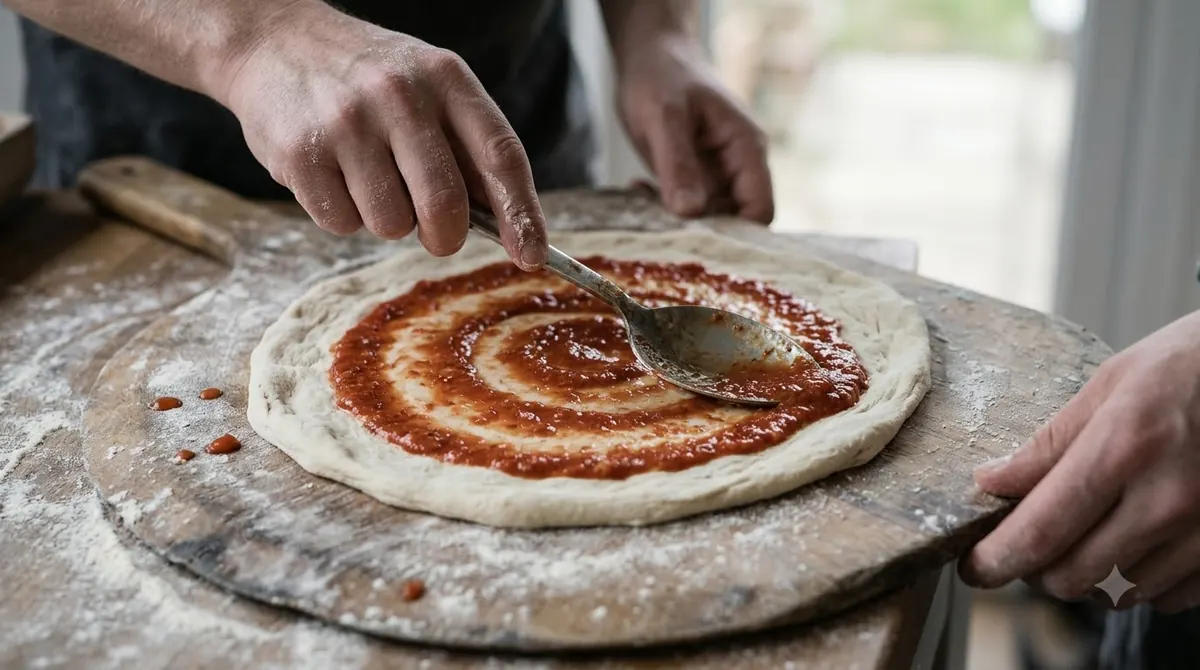
Chowhound describes spooning sauce onto the center and spiraling outward, using the underside of a flat-based spoon or ladle with light pressure. Baking Steel makes the same point with a half-inch margin of bare dough at the rim.
- Spoon the sauce onto the center of the dough.
- Use the back of a ladle or the underside of a spoon, and press lightly.
- Work in a spiral from the center outward so the sauce spreads evenly.
- Stop about a finger’s width or half an inch short of the rim, since sauce that reaches the edge can burn.
- If one spot looks heavy, repeat the spiral over it rather than adding more sauce.
Detroit-style pizza is the exception. Its sauce goes on top of the toppings, so a spiral would disturb them, and it is better to spoon the sauce on evenly. Chicago deep dish uses more sauce and is typically ladled or poured over the top.
Practice on one pie first. Once you see how far a spoonful spreads, you will know how much sauce on pizza fits your dough without guessing. If you want the cheese side of the same decision, see how much cheese on pizza. Once the sauce is down, follow the pizza toppings order for the rest.

Prep the Sauce So It Spreads Right
Thin, watery sauce soaks into the dough, so prep matters as much as the answer to how much sauce on pizza you choose.
- Drain only if the tomatoes are packed in thin juice. Pour off the top layer. Thicker puree does not need draining, according to Baking Steel’s recipe.
- Pulse briefly. A few quick pulses, about a second each, avoid the water release that over-blending causes.
- Bring the sauce to room temperature before spreading. Cold sauce can leave a gummy, undercooked layer under the toppings.
These steps matter because they keep the sauce thick, so a modest amount still spreads evenly and stays on the dough instead of soaking in. If you want a recipe, try our homemade pizza sauce recipe or see how to make marinara sauce for a cooked option.
How Pizza Size Changes the Amount
Use the 12-inch range as your starting point for how much sauce on pizza a bigger pie needs. Larger pies need more sauce, but none of the verified sources here gives a figure for other sizes.
Chowhound notes that the amount changes with the size of the pizza. That makes the 12-inch figure a baseline rather than a rule for every pie. Check the sauce layer on each pizza before you add more, because the dough is the best guide to how much sauce it can carry.
- Start with the 12-inch range for how much sauce on pizza you need.
- Adjust by eye with the visual check.
- Keep the layer thin on a larger pie rather than piling on more sauce.
The visual check works at any size, so it carries over when a recipe lists a different pie size than the one you are making. Start thin, look at the dough, and stop before it disappears. A fixed cup measure cannot always do that job on its own.
Frequently Asked Questions
How much sauce on pizza do I use for a 14-inch pie?
The verified sources here give figures only for a 12-inch pie, so use that as the baseline and add a little for the extra area. Then check that the dough still shows through the sauce before adding more.
Can you put too much sauce on pizza?
Yes. Too much sauce on pizza adds water that the dough absorbs, which can keep the crust from crisping and make a heavy pie droopy. If the dough is hidden under red sauce, cut back the next time.
Should pizza sauce be cold or room temperature before spreading?
Bring it to room temperature first. Baking Steel’s recipe notes that cold sauce can leave a gummy, undercooked layer under the toppings.
Is one 28-ounce can enough for pizza sauce?
A Pizza School NYC recipe, published through Today.com, says one 28-ounce can makes enough sauce for six pizzas, about 4.7 ounces each. That is generous compared with the 12-inch figures, so use it as an upper reference.
Do I need to drain canned tomatoes for pizza?
Only if the tomatoes sit in thin juice. In that case, pour off the top layer. Thicker puree does not need draining, according to Baking Steel’s recipe.
For most home pizzas, the answer to how much sauce on pizza is about 2 to 4 ounces on a 12-inch pie, check that the dough still shows, and adjust on your next bake. Keep the sauce thick and at room temperature, and spread it in a spiral so the crust bakes crisp instead of soggy. Short on time? Compare the best jarred pizza sauce options.
 5 min readLearnHow Long to Cook Pizza at 700 Degrees: A Practical GuideUpdated Nov 13, 2026
 9 min readLearnPizza Crust Types: A Practical Guide to Each StyleUpdated Nov 10, 2026
 8 min readLearnHow Much Cheese on PizzaUpdated Nov 11, 2026
 7 min readLearnDiastatic Malt Powder in Pizza Dough: What It Does and How Much to UseUpdated Nov 11, 2026
 7 min readLearnDoes Pizza Dough Need Sugar? What It Does and How Much to UseUpdated Nov 11, 2026
 10 min readLearnHow Much Yeast for Pizza Dough: A Simple GuideUpdated Nov 10, 2026