

The short answer to what is prosciutto di parma is a dry-cured ham made from pork hind legs in the Parma region of Italy. The name is protected, so only hams made under Consortium specifications can carry it. Knowing those rules helps you judge a label and a price.
What Is Prosciutto di Parma
Prosciutto di Parma is a protected designation for dry-cured ham made from the rear haunch of the pig, produced in the Parma region. According to the Consortium’s own site, the name is reserved for hams produced in Parma under its specifications, and pre-slicing and packaging must also take place in the Parma region.
If you are asking what is prosciutto di parma compared with an ordinary supermarket prosciutto, the main difference is the protected name and the rules that come with it. The Consortium’s page says the ham was already mentioned by Cato the Censor around 100 BC, which shows how long the tradition has been recorded.
The protection matters because “prosciutto” on its own is a general word for dry-cured ham, and many hams in shops use it. Other Italian cured meats, such as speck, bresaola and pancetta, are different products with their own rules and flavors. When you see a product labeled as prosciutto di Parma, the name tells you the ham falls under the Consortium’s production rules. It does not tell you the price or the exact flavor, so read the rest of the label and the seller’s details too.
The Consortium’s official page explains that the ham is made from the pig’s rear haunch, cured with pure sea salt, and aged until it loses moisture. Each stage is controlled, so the ham absorbs only enough salt to keep it from spoiling. Every ham is traced from the breeder to the finished product.
How It Is Made
Prosciutto di Parma is made from pork and sea salt only, with no colouring agents, nitrites or nitrates. The Consortium’s PDO page lists this as the full ingredient list, which is the simplest rule to check on a label.
The main rules the Consortium describes are:
- Raw material: the rear haunch of the pig, not other cuts.
- Salt: pure sea salt, applied to each leg.
- Additives: none. Nitrites and nitrates are not used.
- Weight: a trimmed ham loses more than a quarter of its weight through moisture loss.
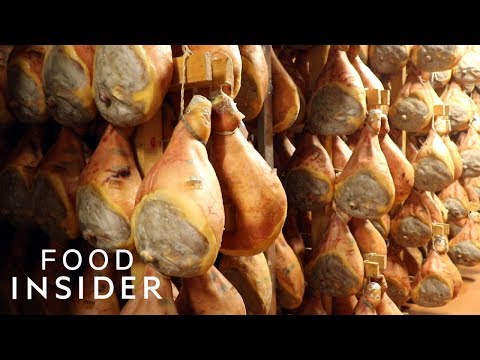
Aging is the longest part of the process. Wikipedia’s article on the ham, which quotes the Consortium, gives a range of at least 14 months and up to three years. Longer aging gives a drier, firmer slice, so the age of a ham affects its texture as much as its flavor. The exact months on a given ham depend on its specification and weight, so check the current specification on the Consortium site if you need the official figure.
The Consortium’s technical specification allows only sodium chloride salt, so the salt on the ingredient list should be plain salt and nothing else.
Traceability is built into the process. The breeder tattoos both legs within 30 days of birth, the slaughterhouse brands each leg with its own identification, and a metal seal shows the date curing began. These marks let inspectors follow a ham from farm to finished product.
How to Recognize the Real Thing
The five-point Ducal Crown is the mark to look for on genuine Parma ham. The Consortium’s page calls the crown the final guarantee of quality, placed only after the ham has finished aging. It is stamped under inspection by CSQA at the end of aging, and it carries the producer’s code, according to the Consortium.
- Look for the Ducal Crown on the ham itself, not only on the packaging.
- On pre-sliced packets, the crown logo sits in a black triangle.
- Check for the “PP” slaughterhouse brand and the “C.P.P.” metal seal on whole legs.
- Be cautious of cheap “prosciutto” with no crown and no Parma production statement.
A ham without the crown may still be a good product, but it is not Prosciutto di Parma under the protected name. Read the label before you assume it is.
Many shoppers learn what is prosciutto di parma only after comparing two packets that look alike. The crown, the production statement and the ingredient list usually settle the question in under a minute, and they tell you more than the picture on the front of the pack.
How to Serve and Slice It
Serve Prosciutto di Parma in paper-thin slices at room temperature, and the band of fat can stay on, according to the Consortium’s serving advice.
- Cut paper-thin slices, the style the Consortium recommends.
- Serve at room temperature, not straight from cold storage.
- For a classic antipasto, plan three to four slices per person.
The fat band does not need to be trimmed away before serving, according to the same serving advice. Thin slices also work on pizza, as in our fig and prosciutto pizza recipe and prosciutto and arugula pizza.
Nutrition Per 100 Grams
Per 100 grams, the Consortium lists 269 kcal (1127 kJ) for the ham as it is, including the fat, and 176 kcal (734 kJ) with the outer fat removed.
| Form (per 100 g) | Energy |
|---|---|
| As is (lean and fat) | 269 kcal / 1127 kJ |
| Outer fat removed | 176 kcal / 734 kJ |
The 269 kcal figure is for the ham as it is, so it includes the fat band that many people eat with each slice. If you want a leaner portion, the 176 kcal figure with the outer fat removed gives the comparison point. The Consortium also gives the fat split: 64.9% unsaturated and 35.1% saturated. Those figures describe the product as sold on that page, so compare them with the nutrition panel on the package you buy.
Storage and Shelf Life
The Consortium’s page does not give storage times, so the safest source is the USDA cold food storage chart, which covers deli meats and cured ham.
- Check the chart for the storage time that matches your product: whole, sliced, or opened.
- Follow the date and storage line on the package.
Pre-sliced packets are the most convenient, but they are also the easiest to over-buy. Buy what you will use within the storage window shown on the chart.
When you compare packets, read the printed date and the storage instructions first, then the price. A lower price on a whole leg may suit a household that eats ham often, while a small pre-sliced packet suits occasional use. Neither choice changes the protected name, so the crown and the ingredient list remain the checks that matter most.
Frequently Asked Questions
Is all prosciutto the same as prosciutto di Parma?
No. The name is protected, so only hams produced in the Parma region under Consortium specifications can use it. Other dry-cured hams sold as prosciutto follow different rules and may taste different.
Does prosciutto di Parma contain preservatives?
According to the Consortium, only pork and sea salt are used, with no colouring agents, nitrites or nitrates. Check the ingredient list on the package to confirm the product matches.
Do you have to remove the fat before eating?
No. The Consortium’s serving advice says the band of fat does not need to be removed before the ham is served.
How many slices are usual in an antipasto?
The Consortium suggests three to four paper-thin slices for a classic antipasto. Serve them at room temperature for the best texture.
How do I know the ham is genuine?
Look for the five-point Ducal Crown. The Consortium says it is stamped under CSQA inspection at the end of aging, and it sits in a black triangle on pre-sliced packets.
Why is it aged so long?
Aging lets the ham lose moisture and develop its flavor and firm texture. Wikipedia, citing the Consortium, gives at least 14 months and up to three years, so the age of a ham affects its taste and price.
If you want to know what is prosciutto di parma before you buy, start with the crown, the ingredient list, and the storage chart. Those three checks answer most questions about quality and safety, and they cost nothing to read on the package.
 7 min readLearnWhat Is Colatura di Alici? Italy’s Anchovy Drip SauceUpdated Nov 11, 2026
 7 min readLearnWhat Is Mozzarella di Bufala? Italy’s Buffalo Milk CheeseUpdated Nov 11, 2026
 7 min readLearnWhat Is Fior di Latte? A Simple Guide to Italy’s Cow’s Milk MozzarellaUpdated Nov 10, 2026
 9 min readLearnProsciutto e Funghi Pizza Recipe: Ham and Mushroom Pizza at HomeUpdated Nov 11, 2026
 8 min readLearnWhat Is Porchetta? A Simple Guide to Italy’s Boneless Pork RoastUpdated Nov 11, 2026
 9 min readLearnWhat Is Gorgonzola? A Guide to Italy’s Blue CheeseUpdated Nov 11, 2026