
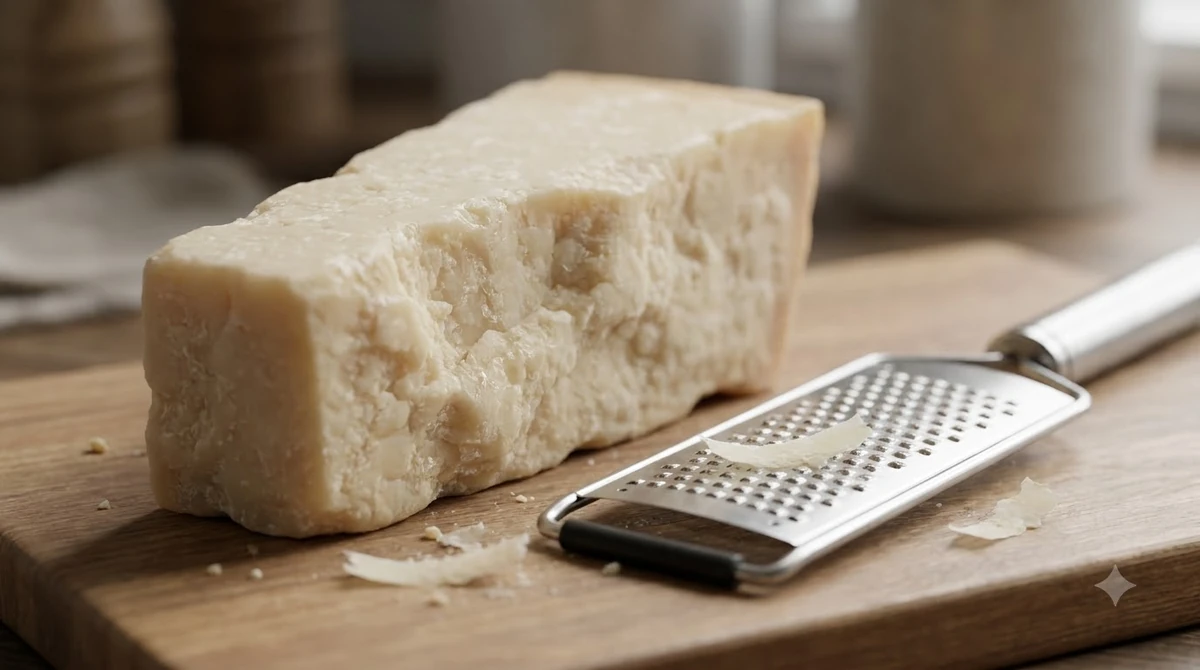

What is Taleggio? It is a semi-soft Italian cow’s milk cheese with a washed rind, named after Val Taleggio, an alpine valley in Lombardy. Its aroma is strong, but its flavor is comparatively mild with a fruity tang. It melts well, which makes it a popular choice for cooking.
What is Taleggio cheese?
Taleggio is a semi-soft Italian cheese made from cow’s milk, named after Val Taleggio in Lombardy. According to the Wikipedia entry on Taleggio cheese, the name can only be used on cheese made in Lombardy or Piedmont under its protected designation.
So what is Taleggio in practical terms? It is a soft, washed-rind cheese that you can eat at the table or melt into a dish, and the label on the wheel tells you where and how it was made.
For a long time, production stayed in the valley itself. Some producers moved to the Lombardy plain to the south in the late 1800s, so the cheese is now made beyond the original valley. The same source notes that cheeses like it were mentioned by Roman writers, including Cicero, Cato the Elder and Pliny the Elder. Cooksinfo adds that the cheese was first documented in 1200 under the older name stracchino, and that the name Taleggio has only been applied to it since the early 1900s.
Because the name is tied to a protected production area, a wheel sold as Taleggio should come from the defined zone. Cooksinfo says the cheese received its PDO in 1996 and lists Bergamo, Brescia, Como, Cremona and Milan in Lombardy, Novara in Piedmont and Treviso in Veneto as places where it can be made. The short Wikipedia summary names only Lombardy and Piedmont, so reading the label for the origin is the simplest way to confirm what you are buying. If the term is new to you, our guide to what DOP means on Italian food labels explains how protected names work.
How does Taleggio taste and what does the rind look like?
What is Taleggio’s flavor like? It has a strong aroma but a comparatively mild flavor, with a fruity tang that most people notice first. What is Taleggio’s rind like? It is what sets the cheese apart, so it helps to know what to expect before you cut into a wheel.
The cheese is washed during ripening, which gives the rind an orange-pink color. Cooksinfo’s Taleggio guide describes the rind as edible but very strong tasting, so whether you eat it is a matter of taste.
Age changes the cheese in a clear way. Younger Taleggio is milder and firmer, and its interior is pale yellow. As it ages, the interior becomes softer and more runny, and the color deepens to a richer yellow. Here is how the two stages compare:
- Young Taleggio: milder flavor, firmer texture, pale yellow interior.
- Aged Taleggio: sharper flavor, softer and runnier interior, deeper yellow color.
- Either stage: the same washed rind and the same fruity tang, with the taste getting stronger over time.
The shape and rind also help you recognize it. Cooksinfo says the cheese is made in square or rectangular blocks, and that the orange-pink rind can show grayish or greenish patches of mold, which it calls bloom. Wikipedia describes the rind as thin, edible and pinkish-brown, with a creamy, pale yellow interior. If you are new to washed-rind cheeses, expect the smell to be stronger than the taste.
How is Taleggio made and aged?
What is Taleggio made from? It is cow’s milk, aged until it is ready to sell. Its aging time is a range rather than one number, because the sources I read do not agree, so treat any single figure with caution.
Wikipedia lists an aging time of 40 days in its infobox, but its production section says the cheese matures within six to ten weeks. Cooksinfo gives a minimum of 35 to 40 days. The two sources also disagree on the milk. Cooksinfo says the cheese is normally made from raw whole cow’s milk, though pasteurized milk is sometimes used. Wikipedia says pasteurized milk is frequently used, and it does not mention raw milk.
Cooksinfo describes the process in some detail. The milk is heated to between 86 and 97 F (30 to 36 C), calf rennet and a bacterial starter are added, and the milk curdles for about 15 minutes. The curd is cut to about the size of nuts and rests in metal molds for 18 hours, then the cheese is soaked in brine and set to age. During aging it is turned several times and washed every week with brine, which encourages the mold on the rind. Wikipedia adds that production takes place every autumn and winter, that the cheese is formed into square blocks, and that each block carries a four-leaf brand from the Consorzio Tutela Taleggio.
Here is what the sources agree on: the cheese is semi-soft, made from cow’s milk, washed during ripening, and protected by its name. Where they disagree, the safest step is to read the label or ask the seller.
Cooksinfo says the cheese used to be aged in caves and is now aged in cellars, while Wikipedia says some producers still use caves as tradition has it. The sources also differ on the milk, so for buying, this means the milk type is not always clear from the name alone. Read the label, and check the producer’s information if you want to know whether the cheese is raw milk or pasteurized.
How do you cook with Taleggio?
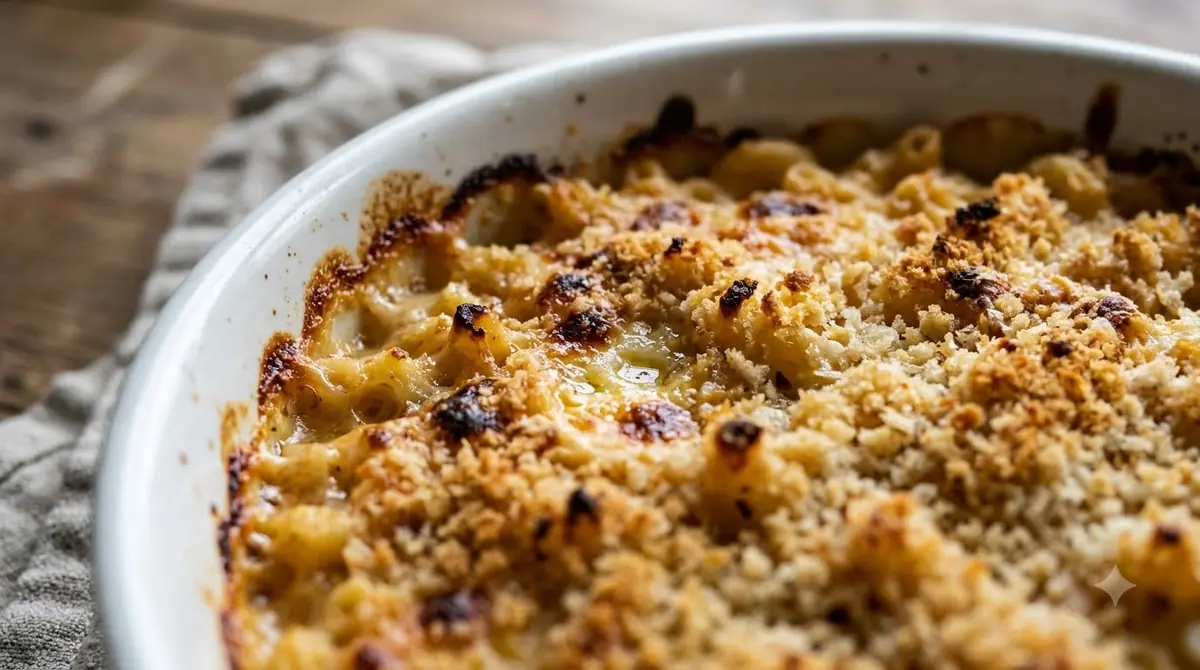
What is Taleggio best used for in the kitchen? Cooksinfo says it melts well and browns nicely, which makes it useful in both simple and rich dishes. The soft interior spreads easily when heated, so it suits recipes where you want the cheese to blend into the food. The ideas below are common ways to use a melting cheese, not tested recipes with measured amounts.
- Polenta: stir in cubes of Taleggio while the polenta is hot so it melts through.
- Gratins: layer slices over vegetables or potatoes and bake until the top browns.
- Pasta sauces: fold the cheese into a warm cream or butter sauce just before serving.
- Desserts: Cooksinfo notes that Italians also use it in desserts.
Filled and baked pasta dishes are another natural home for a cheese that melts this well. If you like creamy cheeses, compare it with provolone for a firmer melting cheese, or with mascarpone when you want something milder and richer in sauces.
Because the cheese has a strong aroma, use it with a light hand at first. Taste the dish and add more only if you want a stronger cheese flavor.
What can you use instead of Taleggio?
If you are asking what is Taleggio’s closest stand-in, Fontina and goat’s cheese are the two substitutes named in Cooksinfo’s Taleggio guide. Each one can stand in for Taleggio in some dishes, though neither tastes exactly the same.
| Substitute | Why it can work | What to watch for |
|---|---|---|
| Fontina | Named as a substitute in Cooksinfo’s Taleggio guide | Taste the dish before serving, since the flavor will differ from Taleggio |
| Goat’s cheese | Named as a substitute in Cooksinfo’s Taleggio guide | Expect a different flavor, so check the result before serving |
Neither substitute is a perfect match for Taleggio’s fruity flavor and washed rind, so taste the finished dish before serving and adjust the amount of cheese to suit your palate.
How should you buy and store Taleggio?
Once you know what is Taleggio and how it ages, check the label for the milk type, the age and the producer before you buy. The sources I read did not give clear storage instructions, so check the package for the exact storage advice from the producer.
Think about what the cheese is going into before you buy. A softer, more mature wheel suits sauces and gratins, while a younger wheel, which Cooksinfo describes as semi-firm, is easier to slice for a plate.
- Look for the milk type on the label, since sources differ on raw and pasteurized milk.
- Choose a younger wheel for a milder taste, or an older one for a sharper taste.
- Expect the interior to soften as it ages, so a very ripe wheel will be runnier.
- Eat the rind only if you like its strong flavor, or trim it before use.
Frequently Asked Questions
Is Taleggio a strong cheese?
Its aroma is strong, but its flavor is comparatively mild with a fruity tang. Younger Taleggio tastes milder than an aged wheel, so the strength depends on how long the cheese has been aged.
What does Taleggio taste like?
Wikipedia describes a strong aroma with a comparatively mild flavor and an unusual fruity tang. Cooksinfo says the taste ranges from mild to sharp depending on how long the cheese has aged, so a young wheel tastes gentler than an older one.
Can you eat the rind of Taleggio?
Yes, the rind is edible, but it is very strong tasting. Many people trim it off, while others leave it on for cooking, where the flavor softens.
What is Taleggio named after?
It is named after Val Taleggio, an alpine valley in Lombardy. Under its protected designation, the name may be used only for cheese made in the defined production area.
What is Taleggio, and is it PDO?
Yes, Taleggio holds a Protected Designation of Origin. According to Cooksinfo it received the PDO in 1996, and Wikipedia says only cheese made in Lombardy or Piedmont may be sold under the name, so the label is a useful check.
What is Taleggio used for?
It is mainly a cooking cheese, used in melted dishes such as polenta, gratins and pasta sauces. It is also eaten on its own or on a cheese board, where the washed rind and fruity tang stand out.
Does Taleggio melt well?
Yes. When heated, it melts well and browns nicely. That makes it useful for polenta, gratins and pasta sauces, where a smooth, creamy texture is the goal.
Can you use Taleggio in desserts?
Cooksinfo notes that Italians use Taleggio in desserts, so it is not limited to savory dishes. Start with a small amount, since its aroma is strong.
If you want to know what is Taleggio in one sentence, it is a melting cheese with a mild, fruity flavor. Pick a young wheel for a gentle taste, and check the label for the milk type before you buy. For more cheeses to try, browse our Learn guides.
 8 min readLearnChifferi Pasta: Shape, Cooking and 1 Simple RecipeUpdated Nov 10, 2026
 7 min readLearnLasagnette Pasta: Shape, Uses and Cooking TipsUpdated Nov 11, 2026
 8 min readLearnRicotta Ravioli Recipe: Egg Dough, Filling and Cooking StepsUpdated Nov 11, 2026
 8 min readLearnOlive Oil Smoke Point: What the Numbers Mean for Your CookingUpdated Nov 10, 2026
 10 min readLearnDo You Rinse Pasta After Cooking It?Updated Nov 10, 2026
 8 min readLearnSpaghetti alla Chitarra: Shape, Sauces and Cooking Time ExplainedUpdated Nov 10, 2026