
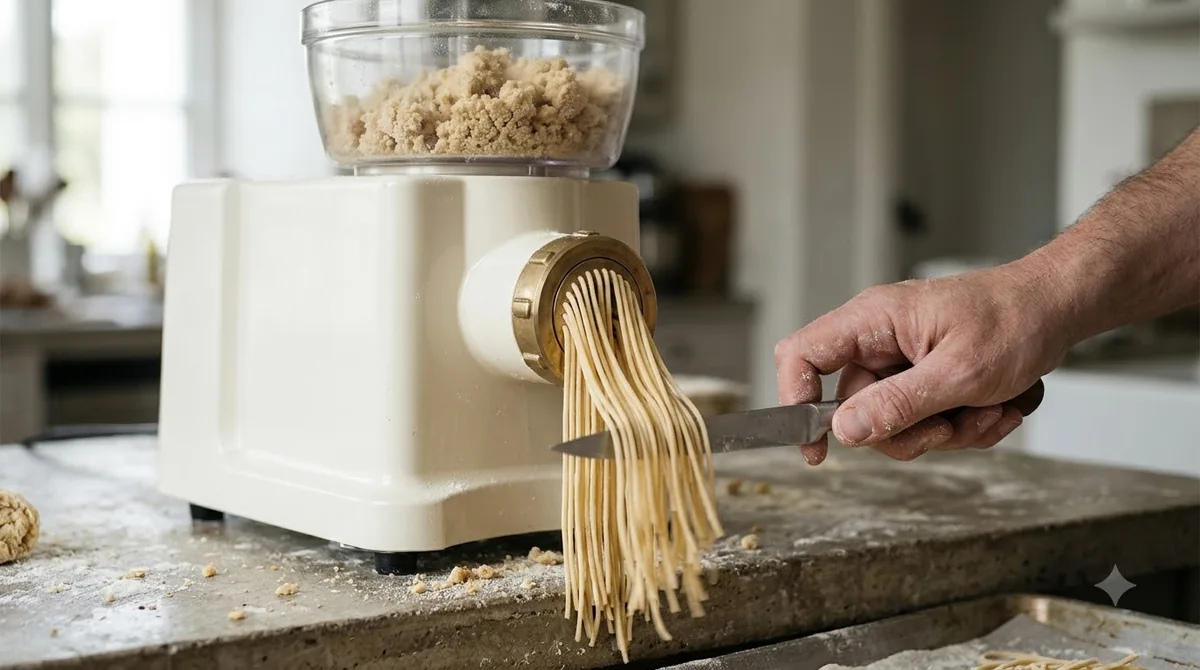

Lasagnette pasta is a narrow ribbon pasta from Italy, a smaller cousin of lasagna. Its edges can be straight, waved, or one of each. Sources describe it in slightly different ways, so the label on the pack is the best guide to what you are buying.
What Is Lasagnette Pasta?
Lasagnette is a ribbon-style pasta from Italy, and it is a shorter version of lasagnotte, according to Wikipedia’s Lasagnette entry. The same entry lists Italy as its place of origin but does not name a specific region.
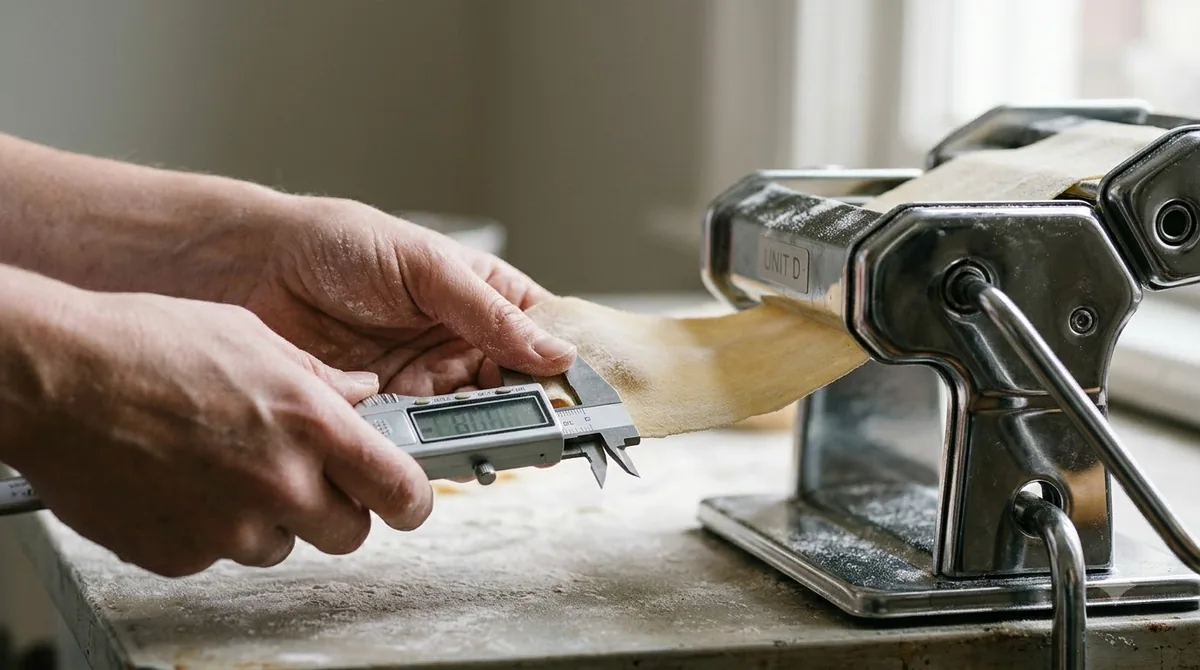
The exact form of lasagnette is not fully agreed on. The Italian food guide Facaros and Pauls notes that sometimes the shape looks like thin cut-up pieces of lasagne, and sometimes it looks more like fettuccine. For that reason, a lasagnette pack from one maker may look different from a pack from another.
If you are new to lasagnette pasta, think of it as lasagna sheets cut into narrow strips. That mental picture explains most of its uses, from layered bakes to simple tossed dishes.
Shape, Size and Edges
Lasagnette pasta strips are narrower than lasagna, and their edges can be straight, waved, or mixed. Wikipedia says the edge form changes from kind to kind, so two packs with the same name can look quite different.
| Edge style | What the sources describe |
|---|---|
| Waved on both sides | Wavy cut along both long edges, as Wikipedia describes |
| Straight on both sides | Clean straight cut along both long edges |
| One straight, one waved | A mixed cut, with a straight edge on one side and a waved edge on the other |
Italian Wikipedia gives a typical strip of about 1 to 2 cm wide and 10 to 15 cm long. That same article notes that its sourcing is limited, so treat these measurements as a starting point and compare them with the size printed on your pack.
Lasagnette Compared With Lasagna Sheets
Lasagnette pasta is narrower than lasagna sheets, and it does not need to be stacked in layers. Lasagna sheets are wide rectangles, usually with straight or curly edges, so the two shapes behave differently in a baking dish.
| Feature | Lasagnette pasta | Lasagna sheets |
|---|---|---|
| Shape | Narrow ribbon, a shorter version of lasagnotte | Wide flat rectangles |
| Edges | Straight, waved or mixed | Straight or curly (lasagna riccia) |
| Layering | Pieces do not need to be layered, according to Italian Wikipedia | Usually stacked with filling in a baked dish |
Can lasagnette pasta replace lasagna in a recipe? Yes, with care. Strip width and edge style differ from pack to pack, so check the printed cooking time and compare it with a standard lasagna noodles recipe before you bake or boil.
How Lasagnette Pasta Is Used
Wikipedia names two common preparations: a thinner version of traditional layered lasagna, and a dish where the sauce ingredients are combined with the pasta and served tossed on a plate.
The layered version works well when you want the flavor of lasagna with less assembly, and it fits the idea behind our how to make lasagna guide. The tossed version suits a quick weeknight plate, where you toss the cooked strips with the sauce the way you would with fettuccine pasta.
Sauce pairings are the least settled part of the topic. A Ligurian pasta maker’s description, which we saw only in search results, suggests herb-based tomato sauces, meat sauces and seafood. We could not open that page in full, so treat it as a lead rather than a rule.
How to Cook Lasagnette Pasta
The cooking time for lasagnette is printed on the pack, and no source we could open gives one time that works for every brand. For comparison, Del Allo’s lasagna guide says dried lasagna noodles typically take 7 to 9 minutes to cook, while fresh and no-boil sheets need no pre-cooking.
- Read the cooking time on the pack and set a timer for the shortest time listed.
- Bring a large pot of salted water to a rolling boil.
- Add the strips and stir gently so they do not stick together.
- Taste a strip near the end of the time, then drain and toss it with sauce while it is still hot.
Narrow strips can soften quickly, so taste early. Aim for a firm bite, often called al dente, rather than a soft finish (our how to cook pasta al dente guide explains how), since the pasta will keep softening once it meets hot sauce.
Buying and Storing Lasagnette Pasta
Check three things on the pack before you buy lasagnette: the shape name, the cooking time and the edge style. Those details tell you more than the marketing text does.
- Shape name and size, so you know whether you are getting narrow strips or a different cut
- Printed cooking time, which is the most reliable guide for your batch
- Edge style, if the photo is not clear
- Storage instructions, which vary by maker
Keep dried pasta in a sealed container away from heat and moisture, and follow any storage advice on the pack. If you cannot find storage guidance on the label, check the maker’s website before you store a large batch.
Common Mistakes With Lasagnette Pasta
The most common mistake with lasagnette pasta is treating every pack as identical. Because the edge style and width vary by kind, a cooking time or portion you used with one brand may not fit another.
- Using a lasagna sheet cooking time for narrow strips, which can leave them soft
- Skipping the taste test before draining
- Choosing a thick sauce without thinking about how it will coat a narrow strip
- Assuming the name tells you the edge style, when the pack photo may show something else
Sauce ideas are easier to borrow from lasagna than from lasagnette itself. Del Allo notes that classic Italian lasagna is made with a simple tomato sauce or Bolognese, while American lasagna often uses a meat sauce such as Bolognese or a marinara. Those choices are a sound starting point, though sources do not give a formal rule for lasagnette.
Frequently Asked Questions
What is lasagnette pasta?
Lasagnette pasta is a ribbon pasta from Italy that is a shorter version of lasagnotte. It is narrower than lasagna, and its edges can be straight, waved or one of each.
Is lasagnette the same as lasagna noodles?
No. Lasagna noodles are wide sheets, while lasagnette are narrow strips. The sources also describe lasagnette as the thinner, layered-style option, so the two are related but not identical.
Where does lasagnette come from?
Wikipedia lists Italy as the place of origin without naming a region. A Ligurian link appears in producer descriptions, but we could not confirm it on a full page, so check the maker’s information for the pack you buy.
Can you use lasagnette in a layered bake?
Yes, since one of the two common preparations is a thinner version of layered lasagna. Check the cooking time printed on the pack before baking, and test one strip first.
How long should you cook lasagnette?
Follow the cooking time printed on your pack. We could not verify one time that applies to every brand, so test a strip near the lower end of the range and taste it before draining.
If you want lasagnette for a layered bake, choose a pack with a clear cooking time and edge style, then test one strip before cooking the full batch. Keep the package nearby so you can match the sauce to the shape.
 8 min readLearnChifferi Pasta: Shape, Cooking and 1 Simple RecipeUpdated Nov 10, 2026
 8 min readLearnManicotti Pasta: Shape, Size, Cooking Times and SubstitutesUpdated Nov 10, 2026
 8 min readLearnCasarecce Pasta: Simple Guide to Shape, Sauce and CookingUpdated Nov 10, 2026
 7 min readLearnMacaroni Pasta: Shapes, Uses and How to Cook ItUpdated Nov 6, 2026
 8 min readLearnRigatoni Pasta: Shape, Uses and Best SaucesUpdated Nov 10, 2026
 5 min readLearnHomemade Macaroni: Dough, Shaping, Drying and Cooking TipsUpdated Nov 13, 2026