
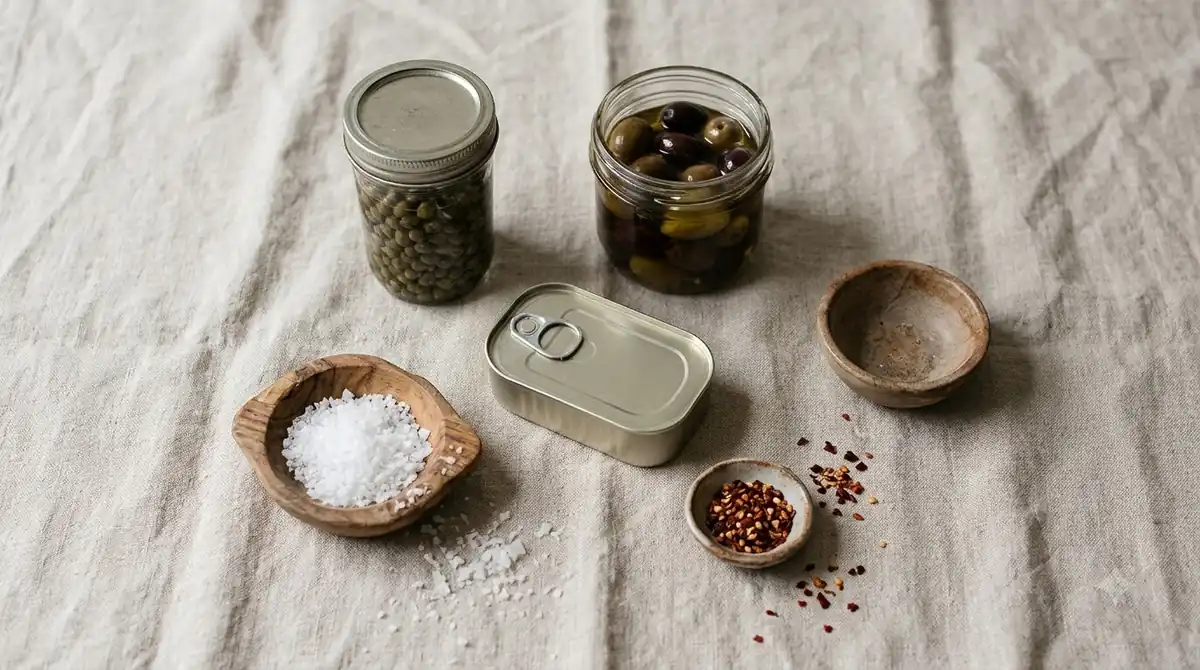

The best canned anchovies depend on how you cook, not on one winning tin. For pasta sauces, pizza and bruschetta, firm oil-packed fillets are the usual starting point, while marinated white anchovies suit eating on their own.
Four details on the label tell you most of what you need to choose the best canned anchovies: the packing medium, sodium per serving, origin wording and the number of bones. Match those details to your dish before you compare brands.
Storage times below are general guidance from a retailer’s shelf-life guide and reference sources. Follow the date printed on the tin and current USDA food safety advice; this is not medical advice.
| Choice | Best for | Key fact |
|---|---|---|
| Oil-packed fillets | Pasta sauces, pizza, bruschetta | Soft, salty and meaty; check sodium per serving |
| Marinated white anchovies | Salads, tapas, eating on bread | Vinegar-pickled, milder, with white flesh |
| Anchovy paste | Dressings, butter, sauces | Dissolves into a dish, so the flavor spreads evenly |

Roland Foods Flat Fillets of Anchovies in Olive
Pros & ConsViewHide
Reasons to buy
- Flat fillets packed in olive oil with salt, per the listing
- Single 2 oz tin is a low-commitment way to try anchovies
- Averages 4.4 stars across about 2.1K Amazon ratings
Reasons to avoid
- A 2 oz tin is small if you cook with anchovies often
- Salt-cured flavor is strong, so it may be too intense for beginners

Agostino Recca Fillet of Anchovies in Olive Oil
Pros & ConsViewHide
Reasons to buy
- Product of Italy, sold as a pack of 3 small tins
- Fillets in olive oil, ready for pizza, pasta or dressings
- Averages 4.2 stars across about 800 Amazon ratings
Reasons to avoid
- Costs more per ounce than supermarket tins
- Pack of 3 may be more than a first-time buyer needs
What Makes the Best Canned Anchovies Worth Buying
A good canned anchovy balances salt, oil and fishiness, and it has few bones. Those two checks separate a tin you will enjoy from one that is hard to use in the kitchen.
The Sporked review of anchovy products judged each tin on the balance of salt, oil and fishiness. It penalized anchovies that were too salty to use as a topping. Reviewers also ate some straight from the can and paired others with bread, sauces or salads. The article does not say whether the tastings were blind, so read its ranking as one reviewer’s opinion.
Bones are a practical quality check. Sporked says good anchovies should not have a distracting number of bones, and a tin with many small bones costs you time when you chop or fillet it for a dish.
Fillet length also changes how you use the fish. Long, intact fillets look better draped over bread or a salad, while short, broken pieces dissolve more easily into a sauce. Neither is a quality rule; it is a trade-off between presentation and convenience.
- Salt: a tin that is salty but still usable on a pizza beats one that is too salty to use as a topping.
- Bones: fewer visible bones means less work before you cook.
- Fillet length: long fillets for serving whole, short pieces for sauces.

Oil-Packed, Water-Packed, or Marinated: Which Style to Choose
Oil-packed fillets suit cooking, marinated white anchovies suit eating as they are, and anchovy paste suits sauces and dressings. The packing medium changes both the texture and how much fat or vinegar you add to the dish, which is why it is the first thing to check when choosing the best canned anchovies.
| Style | Texture and flavor | Best use |
|---|---|---|
| Oil-packed fillets | Soft and salty, with a deep cured flavor | Pasta sauces, pizza, tapenade |
| Water-packed fillets | Less added oil, so the salt and fish flavor come through more | Cooks who want to control the fat in the dish |
| Marinated white anchovies (boquerones) | Firm, tangy and milder, with white flesh | Salads, tapas, toast |
| Anchovy paste | Smooth and concentrated | Dressings, butter, sauces |
The strong taste most people link with anchovies comes from curing. Wikipedia’s anchovy entry notes that vinegar pickling, as with Spanish boquerones, leaves the fish milder with white flesh. Fresh anchovies, called alici in Italy, are much milder again than cured fish.
Anchovy paste is the most concentrated form. Sporked’s review included a Crown Prince paste, which it described as rich, creamy and savory and rated 7 out of 10. Start with a small amount and taste before adding more salt to the dish.
How to Read the Label: Salt, Origin and Bones
The label shows the packing medium and sodium per serving, and sometimes a Cantabrian origin. Use these five checks in the shop, in order, before you put the best canned anchovies for your dish in your basket.
- Find the packing medium. Oil, water, salt or vinegar each changes how you store and cook the fish.
- Compare sodium per serving. Sporked’s anchovy review reported 370 mg of sodium per 85 grams for Wild Planet’s white anchovies in olive oil, and 760 mg per serving for Ortiz’s jarred anchovies.
- Look for “Cantabrian.” Sporked links this wording to a region of Spain known for anchovies, and it counted Cantabrian tins among its top picks.
- Check the fillets. Few bones, intact pieces and enough oil to cover the fish are good signs.
- Read the date. Shelf life depends on the printed date and storage, as the next sections explain.
Sodium figures are per product, so compare the same serving size. A figure per 85 grams and a figure per serving are not directly comparable unless you convert one to the other. Keep the label open on your phone and compare the numbers you can actually see.
Matching Your Dish to the Best Canned Anchovies
Use firm, salty fillets in cooked sauces, and milder marinated or long fillets when the anchovy is the star of the plate. Cooking softens the salt and melts the fish into the base of the dish.
In a garlic and olive oil pasta or a homemade marinara sauce, oil-packed fillets break down in the hot pan and add savoriness rather than a fishy taste. On pizza made at home or bruschetta, add the fillets near the end so they keep some texture. Both anchovies and capers are salty, so check the sodium line on the best capers too if you plan to use them together.
- Pasta with garlic and oil: oil-packed fillets, melted into the pan.
- Pizza or bruschetta: fillets added near the end of cooking.
- Caesar-style dressings: anchovy paste or finely minced fillets.
- Salads or tapas: marinated white anchovies.
Can you eat them straight from the can? Sporked’s reviewers did taste some that way. A fillet that is too salty for a topping is still useful in cooking, so the best canned anchovies for you are the tin you enjoy most; cook with the rest.
How to Store Canned Anchovies Before and After Opening
Keep unopened tins in a cool, dry place at 50 to 70°F (10 to 21°C), and refrigerate opened anchovies at or below 40°F (4°C) for 1 to 2 months.
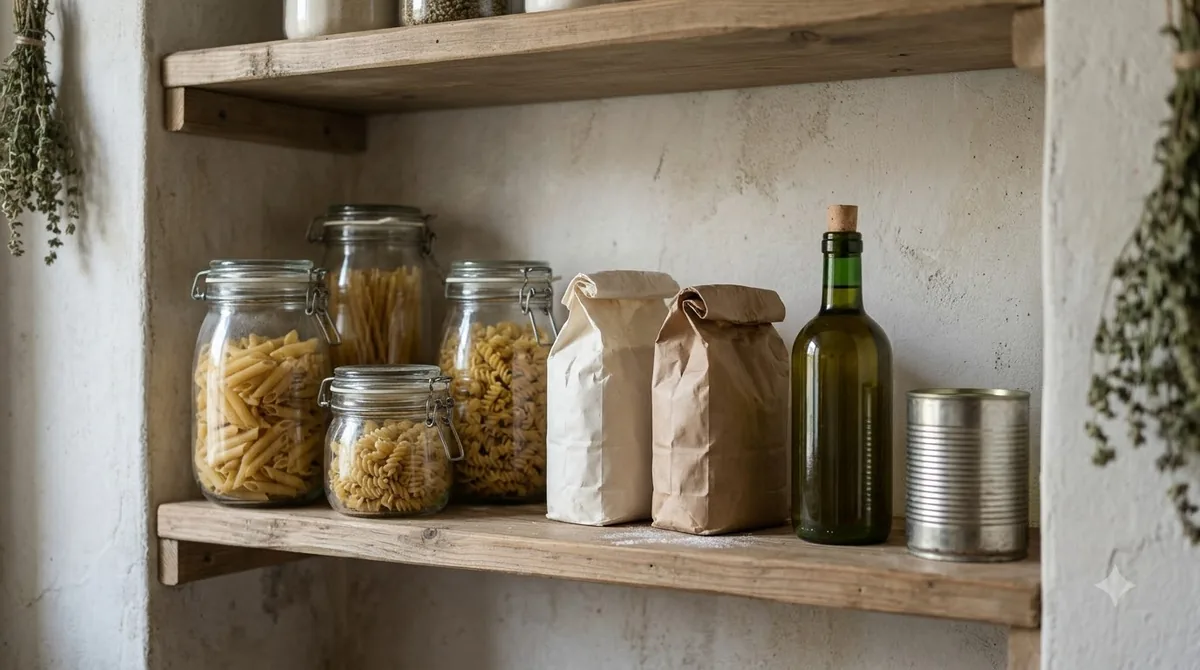
Texas Real Food, a retailer’s shelf-life guide, recommends a pantry away from direct sunlight and the stove for unopened tins. Its figures for unopened tins conflict: it gives 1 to 2 years for best quality, 3 to 5 years under ideal conditions, and up to one year in a cupboard. Because the figures disagree, check the printed date on your tin and treat it as the first guide.
After opening, the same guide gives these steps:
- Move the anchovies to an airtight glass or plastic container. Leaving them in the tin can leave a metallic taste.
- Keep oil-packed fillets fully submerged in their oil.
- Salt-packed anchovies should stay fully covered with salt.
- Refrigerate at or below 40°F (4°C) and use within about 1 to 2 months.
Those storage limits apply to tins that were stored correctly. If a tin was left in a hot car or a sunny cupboard, treat the printed date as less reliable.
Signs an Opened Tin Has Gone Bad
A rancid smell, gray or blue scales, a brown color, a mushy texture or any visible mold means the anchovies should be thrown out. Check these signs before every use, not only when the tin looks odd.
- Odor: a rancid or off smell is a clear sign the anchovies are past their best.
- Color: scales turning gray or blue, or pinkish-gray flesh turning brown.
- Texture: fillets that feel mushy or noticeably changed.
- Mold: any visible mold means the product should not be eaten.
The grainy white residue sometimes seen in oil-packed anchovies is described as normal and not as a sign of spoilage. Do not throw out a tin for that alone.
For unopened tins, a bulging, leaking or badly dented can is a reason to discard it. The official USDA wording on damaged cans could not be checked for this guide, so follow its current advice on can damage before you decide.
What This Guide Could Not Confirm
Current prices, sodium figures for every brand and the official food safety wording were not confirmed for this guide to the best canned anchovies. The sodium numbers above come only from the products named in one review.
Prices and stock change often, so this page does not list them. Check the current price, size and label on the retailer or brand page before you buy, and use the printed date on your tin as the final check on storage.
If you cannot confirm the packing or the sodium on a tin, choose a different one for recipes where the salt level matters, such as a simple pasta sauce with little other seasoning.
Frequently Asked Questions
Are canned anchovies very salty?
Salt varies by brand and style, so the best canned anchovies for one dish may not suit another. Sporked’s reviewers penalized anchovies too salty to use as a topping, and reported 370 mg of sodium per 85 grams for one brand and 760 mg per serving for another. Read the label before you cook with a new tin.
Do canned anchovies need refrigeration before opening?
No. Unopened tins are kept in a cool, dry place away from direct sunlight and heat, at about 50 to 70°F (10 to 21°C), according to Texas Real Food’s shelf-life guide. Refrigerate only after opening, and keep the fish submerged in its oil.
Can you eat canned anchovies without cooking them?
Yes, some reviewers ate anchovies straight from the can. Marinated white anchovies are usually served as they are, while cured oil-packed fillets are often used in cooking. Choose a salt level you enjoy, because a salty fillet can overpower a simple dish.
What is anchovy paste used for?
Anchovy paste dissolves into sauces, dressings and butter, so the flavor spreads without visible pieces. Sporked’s review included one paste that it described as rich, creamy and savory. Start with a small amount and taste before adding salt.
Is the white residue in oil-packed anchovies a sign of spoilage?
No. The grainy white residue is described as normal and not as a sign of spoilage. Discard the tin when you notice a rancid odor, gray or blue scales, a mushy texture or visible mold.
How long do opened canned anchovies last?
Texas Real Food’s guide says opened anchovies last 1 to 2 months when refrigerated at or below 40°F (4°C) in an airtight container, fully submerged in oil. Do not keep them in the open tin, and check the smell and texture before each use.
For most home cooks, the best canned anchovies for pasta and pizza are oil-packed fillets: check sodium per serving on the label, and keep any opened tin in an airtight container in the fridge. Save marinated white anchovies for salads and bread, where their milder flavor is the point.
 9 min readGear & PantryBest Hot Honey: How to Choose the Right Jar for Your KitchenUpdated Nov 16, 2026
 8 min readGear & PantryBest Olive Oil: How to Choose the Right Bottle for Your KitchenUpdated Nov 17, 2026
 8 min readGear & PantryBest Canned Tomatoes: How to Choose Whole, Crushed or DicedUpdated Nov 17, 2026
 8 min readGear & PantryDigital Kitchen Scale: What It Does and How to Choose OneUpdated Nov 16, 2026
 9 min readGear & PantryThe Best Marinated Artichoke Hearts: Jarred, Canned, and HomemadeUpdated Nov 13, 2026
 11 min readGear & PantryBest Yeast for Pizza Dough: How to Choose the Right TypeUpdated Nov 16, 2026