
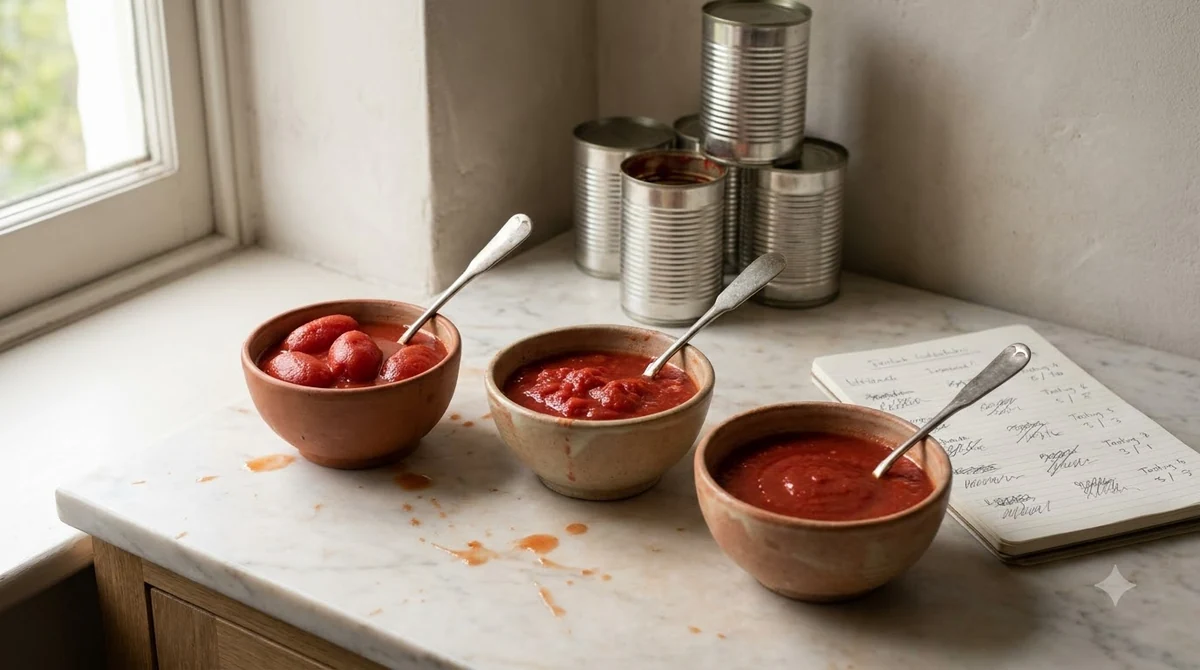

Tomato paste vs tomato puree is mainly a question of concentration. Under the US standard, paste must contain at least 24.0 percent tomato soluble solids, while purée falls between 8.0 percent and under 24.0 percent. That gap sets how thick each one is and where it fits in a recipe.
Tomato paste vs tomato puree is a choice between two cooked tomato products, and paste is the more concentrated of the two. Your choice depends on how much body the dish needs and how long you can let it simmer.
What Is Tomato Paste?
Tomato paste is a thick concentrate made by cooking tomatoes for several hours, straining out seeds and skin, and reducing the liquid into a dense mass.
When you weigh tomato paste vs tomato puree, the process is the first clue, and paste starts with a long simmer. Tomatoes are cooked for several hours to reduce their water content, and that step separates paste from nearly every other tomato product on the shelf. Producers then strain out the seeds and skins and cook the liquid again until it becomes a dense concentrate.
In the United States, the tomato paste vs tomato puree naming is tied to a federal rule in 21 CFR 155.191. It sets paste at not less than 24.0 percent tomato soluble solids and requires the skins and seeds to be strained out, as the federal standard for tomato paste describes.
Commercial producers pick tomatoes with thick walls and lower overall moisture for paste. Most home cooks buy it ready made, so the label on the can or tube matters more than the process behind it.
What Is Tomato Puree?
Tomato purée is a thick liquid made by cooking and straining tomatoes, so it keeps more water than paste and has a looser texture.
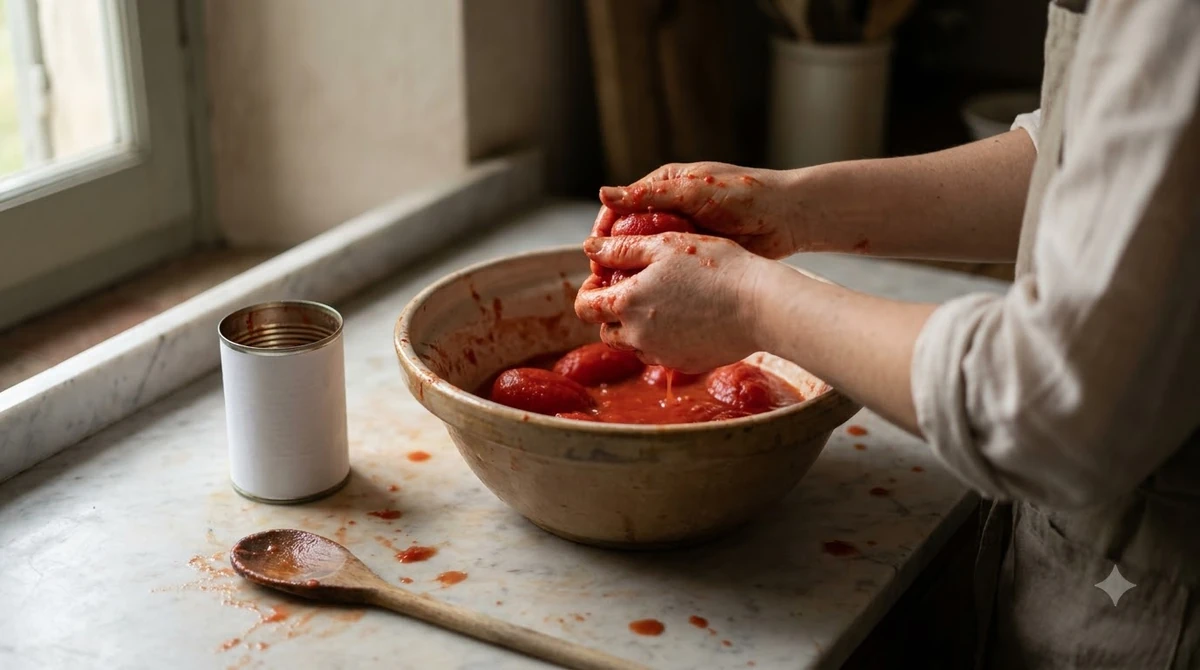
Purée skips the long reduction that paste needs, which is the first big difference in tomato paste vs tomato puree. The tomatoes are cooked, then pushed through a strainer to remove skins and seeds. The result is smooth and thinner, and it works well as a base for a sauce that will cook down on its own in the pot.
In the United States, purée usually contains only tomatoes. It generally lacks the additives common to a complete tomato sauce, and it does not have the thickness of paste. That makes it a plain, flexible ingredient that you season yourself.
For tomato paste vs tomato puree, the solids range is the number that matters most, and it is wider for purée. The US standard sets purée at not less than 8.0 percent and less than 24.0 percent tomato soluble solids. An encyclopedia entry on purée gives a floor of 7 percent, so the lower number depends on the source, but both place the upper limit at 24 percent.
Tomato Paste vs Tomato Puree: Key Differences
The main differences in tomato paste vs tomato puree are solids content, thickness and cooking time, with paste at 24.0 percent or more and purée from 8.0 percent to under 24.0 percent.
| Feature | Tomato paste | Tomato purée |
|---|---|---|
| Minimum tomato soluble solids (US) | 24.0 percent | 8.0 percent, below 24.0 percent |
| Consistency | Thick and dense | Thick liquid, thinner than paste |
| Preparation | Cooked for hours, strained, then reduced further | Cooked, then strained |
| Seeds and skins | Strained out | Strained out |
| Best role | Concentrated flavour and body in small amounts | A smooth base that simmers into a sauce |
Both products in tomato paste vs tomato puree are strained, so neither carries skins or seeds into the pan. The real split is how much water has been removed. That single difference decides the texture of the finished dish and how much extra liquid it can absorb.
A simple rule helps settle tomato paste vs tomato puree in a recipe. If a recipe needs tomato flavour and body in a small amount, reach for paste. If it needs a smooth base that will simmer down into a sauce, purée is often the easier fit.
How Processing Changes Tomato Paste
Manufacturers choose the temperature at which tomatoes are first heated, called the break, and that choice changes the final thickness, colour and flavour of the product.
A hot break heats the tomatoes to about 100 °C (212 °F). This keeps pectin in the product, which gives a thicker result, and it suits ketchup. A warm break at about 79 °C (174 °F) does not preserve colour, but it keeps the flavour.
A cold break at about 66 °C (151 °F) preserves both colour and flavour, so that product can be reconstituted into juice. Home cooks cannot control any of this, but the process explains why two brands in the tomato paste vs tomato puree aisle can look and taste different.
When to Use Tomato Paste
Use tomato paste when you want concentrated tomato flavour and body without adding much liquid, such as in pasta sauces, soups and braised meat.
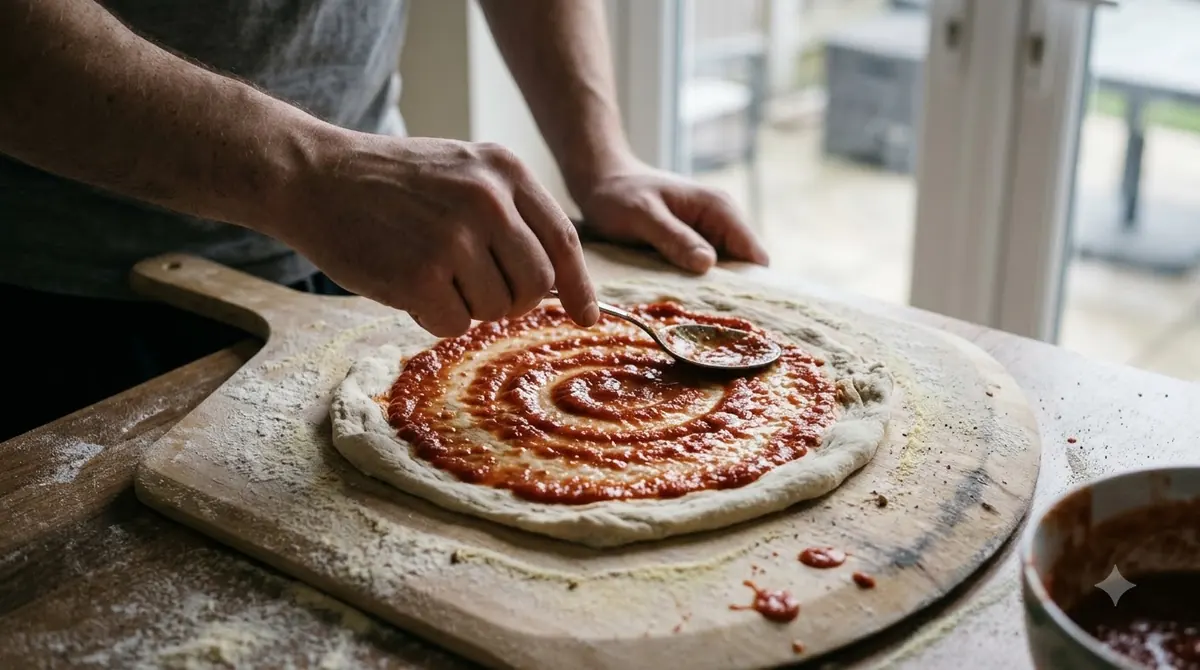
Tomato paste adds intense tomato flavour and the savoury depth that cooks often call umami. A small spoonful goes a long way, which is why it suits sauces such as homemade marinara sauce, soups and braises where you want richness without thinning the dish.
Paste is usually added early in cooking. Sautéing it in oil until it darkens encourages caramelization, which deepens the flavour and softens the raw, sharp edge that uncooked tomato can carry. Stir often so it does not scorch.
A common mistake is stirring paste into liquid straight from the can. The result tastes flat and slightly sour. Cook it in the pan first, then add stock, wine or water. That one step makes more difference than most other choices when you compare tomato paste vs tomato puree in a sauce.
Paste is also used across many world cuisines, so recipes from different traditions often call for it in small amounts to build a savoury base.
When Tomato Puree Makes More Sense
Choose tomato purée when a recipe needs a smooth, pourable base that can simmer into a sauce, soup or stew without a concentrated paste.
Tomato paste vs tomato puree also differs on volume, since purée already holds more water and gives volume quickly. Sauces that simmer for a long time suit it well, since the water cooks off and the texture thickens on its own. Its plain, tomato-only profile also lets you control the seasoning from start to finish.
Passata is a close relative. It is an uncooked purée strained of seeds and skins, as the Wikipedia passata entry explains. Because it is not cooked, it keeps a fresher, less cooked taste, which works well in quick sauces where bright tomato flavour matters more than a long simmer. Shopping notes for jars and cartons are in this guide to tomato passata.
A common mistake is using purée where a recipe depends on the thickness of paste. The sauce turns out loose and needs extra time on the heat. If you have only purée on hand, cook it down longer, or stir in a small amount of paste at the start.
Tomato sauce sits below both in thickness. It is generally thinner than paste and purée and usually carries added seasoning, so it is not a like-for-like swap in most recipes. If you want a ready-made option, see the notes on choosing jarred pizza sauce.
How to Swap Paste and Puree, and Store Leftovers
Swapping tomato paste vs tomato puree works best when you adjust the liquid and cooking time rather than follow a fixed ratio, because paste is more concentrated than purée.
In any tomato paste vs tomato puree swap, paste carries more tomato solids, so a purée swap makes the dish thinner. Simmer the sauce longer to reduce it, or cut back on any added stock or water. A dish built on paste also carries less water overall, so the change shows up in both texture and taste.
Going the other way, start with a spoonful of paste, cook it in oil, then add liquid a little at a time until you reach the texture you want. Taste and adjust the salt at the end, since a concentrate can make a sauce taste stronger than expected.
The sources read for this article do not give a fixed substitution ratio, so none is given here. Read the product label for serving guidance, and let the texture in the pot tell you when the sauce is right.
Once opened, both products should be refrigerated, and the storage time printed on the label is the safest guide. Move leftovers out of the can into a clean, covered container so the sauce stays fresh.
Many cooks freeze leftover paste in spoonfuls or thin layers, so a small amount is ready for the next pot. Check for an off smell, a change in colour or any mould before using a product that has been open for a while, and discard anything that looks or smells wrong.
Frequently Asked Questions
Can I use tomato puree instead of tomato paste?
Yes, in many dishes, since tomato paste vs tomato puree overlap in use, but expect a thinner result. Purée holds less tomato solids than paste, so cook the sauce longer to reduce it or use less added liquid. Start with a small amount, taste as you go, and adjust the texture before serving.
Is tomato sauce the same as tomato paste?
No. Tomato paste is a thick concentrate used as an ingredient. Tomato sauce is thinner and usually includes added seasoning, and it is often made from paste or purée, so the two do not swap cleanly in most recipes. Read the label before you substitute one for the other.
Is passata the same as tomato puree?
Passata is close to a purée, but it is uncooked and strained of seeds and skins. Standard purée is made by cooking and straining tomatoes. For a cooked, thicker base, use purée. For a fresher, lighter sauce, passata works well.
Do I need to fry tomato paste before using it?
Cooking paste first is the standard method, though it is not a strict rule. Sautéing it in oil until it darkens encourages caramelization and deepens the flavour. Keep stirring so it does not burn, then add your liquids.
Which works better for pizza sauce?
Purée usually gives a smooth, pourable sauce that spreads easily, while paste gives a thicker, more intense layer. Many cooks thin paste with water or use purée on its own. Choose based on how thick you want the sauce to be and how much flavour you need. For a full method, try this homemade pizza sauce recipe.
Is tomato paste vs tomato puree better in general?
Neither wins across the board when you compare tomato paste vs tomato puree. Paste suits recipes that need concentrated flavour and body, while purée suits recipes built on a simmered, liquid base. Compare labels, since ingredient lists and solids levels can vary by brand.
For most home cooks, the tomato paste vs tomato puree decision comes down to thickness and cooking time. Keep a jar of paste for flavour and body, and a carton of purée for sauces that will simmer for a long while. When you swap tomato paste vs tomato puree in a recipe, adjust the liquid and taste as you go instead of trusting a fixed ratio.
 8 min readLearnPomodoro vs Marinara: Texture, Simmer Time and When to Use EachUpdated Nov 10, 2026
 9 min readLearnParmigiano Reggiano vs Pecorino Romano: Key DifferencesUpdated Nov 10, 2026
 9 min readLearnPaccheri vs Rigatoni: Key Differences and Which Sauce FitsUpdated Nov 6, 2026
 7 min readLearnFresh Basil vs Dried Basil: When Each Works BestUpdated Nov 10, 2026
 9 min readLearnSemolina Flour vs All Purpose Flour: Which One to Use and WhenUpdated Nov 10, 2026
 10 min readLearnCalabrese Pizza Recipe: Spicy Salami and Calabrian Chile PasteUpdated Nov 11, 2026