
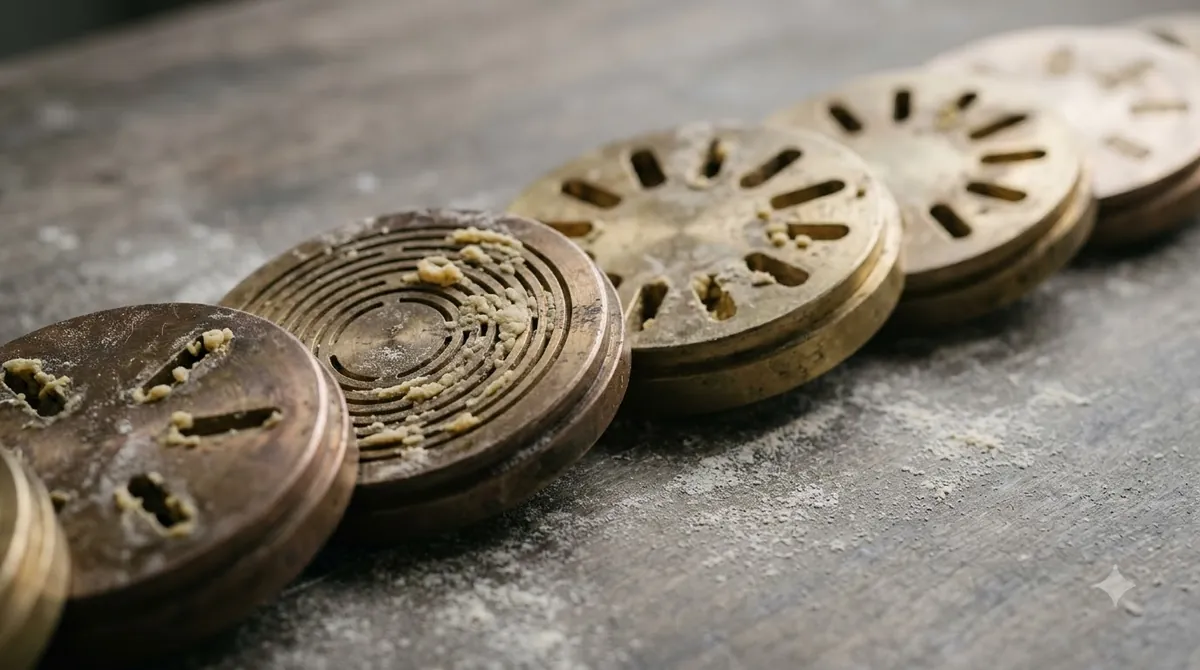

A corzetti stamp is a two-piece wooden or bronze tool that cuts and presses small round Ligurian pasta discs with a raised design. Choose one by material, disc size and design, because those three decide how the pasta looks and how long the stamp lasts.
Wood is the usual material, and both pearwood and beechwood appear in the sources reviewed. Wood needs a food-safe oil finish and gentle cleaning, so check the care rule before you buy.
| Stamp type | Best for | Key fact |
|---|---|---|
| Hand-carved wood | Classic imprint and a traditional look | Beechwood is said to give cleaner chiseling and sharper imprints |
| Two-piece pearwood set with cutter | Everyday home pasta making | The base piece cuts the disc and the handled piece embosses it |
| Bronze die | Shoppers who want a metal alternative to wood | Wikipedia lists a bronze die as a traditional option |

Pros & ConsViewHide
Reasons to buy
- Wooden cutter base plus stamps, made in Italy
- Dry brush cleaning with no soaking needed
- 78% of Amazon ratings are 5-star
Reasons to avoid
- Only around 48 ratings
- Wood needs to be kept dry and never soaked

Corzetti Stamp Traditional Wooden Croxetti Pasta
Pros & ConsViewHide
Reasons to buy
- Solid beech wood stamp with a cutter base and a floral stamp
- Lathe-turned with a hardened cutting edge
- 79% of Amazon ratings are 5-star
Reasons to avoid
- Only around 10 ratings, a very short track record
- Floral design only, with no choice of motif

Traditional Wooden Corzetti Stamp Mould
Pros & ConsViewHide
Reasons to buy
- Handmade solid beech wood cutter base and stamp
- Hardened cutting edge for durability
- No 1-star ratings among its Amazon reviews
Reasons to avoid
- Only around 11 ratings so far
- Single design and care rules are not printed in the listing
How This Guide Compares Corzetti Stamps
This guide compares each corzetti stamp type on material, size, design and care, using an encyclopedia entry on corzetti and a craftsman’s feature. It does not rely on hands-on testing, so check listed dimensions before you order.
Corzetti come from Liguria in northern Italy and were first made in the Middle Ages. According to Wikipedia’s Corzetti entry, the name comes from a 14th-century Genoese coin, which is why many stamps carry coin-style designs.
- Material: wood, bronze or another metal die.
- Size: listed diameter, and whether the cutter is included.
- Design: depth of the imprint and how it looks on both sides.
- Care: whether the maker gives a cleaning and oiling rule.
Wood or Bronze: Which Material Should You Choose?
Wood is the common choice, with pearwood and beechwood the most used, while bronze dies are the other traditional option. Wikipedia describes the combined mold and cutter of a corzetti stamp as either hand-carved wood or a bronze die.
Italy Segreta’s craftsman feature names Casentino beechwood and says it helps with cleaner chiseling and more defined pasta imprints. The same article says each finished wooden stamp is coated in food-safe mineral oil to protect it from humidity and wear, so wood is a maintenance choice as well as a design choice.
The same craftsman says each stamp takes close to two hours from start to finish. That slow process helps explain why handmade wooden stamps sit above a simple mass-produced tool, although the article does not give prices.
| Material | What the sources say | Care to plan for |
|---|---|---|
| Pearwood | Common in retail sets, sold as natural pearwood | Keep dry and oil the wood; the listing gives no care steps |
| Beechwood | Named by a craftsman for clean chiseling | Food-safe mineral oil finish on finished stamps |
| Bronze die | A traditional alternative to hand-carved wood | Check the maker’s cleaning rule before use |
What Size and Design Should You Look For?
A traditional corzetti disc is about 4 cm (1 1/2 inches) across, according to Wikipedia. One fleur de lys set on a retailer listing has a 2-inch diameter, a 2.2-inch handled stamp and a 1.5-inch base cutter, so the listing and the traditional disc size are not the same measure.
Wikipedia gives the traditional disc as “approximately 4 centimetres” across, and the pasta sheet is cut into circles of that size. A stamp listed at 2 inches will therefore make a smaller disc than the traditional size, so match the listed diameter to the shape you want before you buy.
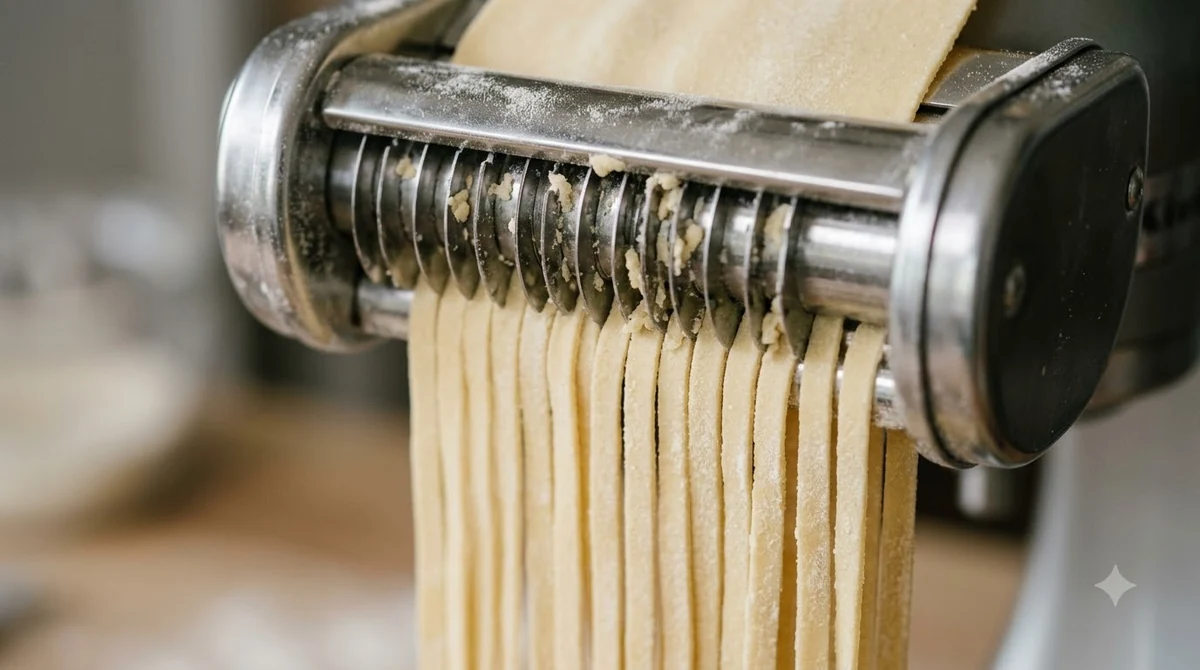
Corzetti stamp designs range from lilies, flowers, stars and spirals to coins, geometric patterns and regional symbols. A Florentine giglio is one example from the craftsman’s shop, and the reverse side of many traditional stamps shows a cross, fruit, initials or a sailboat.
- Check the listed diameter against the disc size you want.
- Look for a design with clear ridges, since the seller says the indentations hold sauce well.
- Prefer a stamp with both a handled piece and a base cutter if you want one tool for the whole job.
What to Check Before You Buy
Check that the corzetti stamp set includes a cutter, the disc size, the wood type and the care rule before you order. Many listings describe the design but say little about cleaning.
Compare the handled piece and the base piece separately. In the fleur de lys listing the handled stamp is 2.2 inches high and the base cutter is 1.5 inches high, so the two parts differ in height and the handled piece is the one that presses the design into each disc.
One pearwood fleur de lys set was listed at $39.99 on the retailer’s page as of 2026-11-10, and that page had no reviews and no care instructions. Prices change, so confirm the current price on the seller’s page.
Search results also show wooden corzetti stamps in a wide price range, but those figures came from snippets and product listings that were not opened in full, so this guide does not quote them.
How to Use and Care for a Wooden Corzetti Stamp
A wooden corzetti stamp needs a food-safe oil finish and dry storage, according to the craftsman’s feature. The stamp cuts the dough into discs and then presses each disc so the design shows on both sides.

- Roll the dough into a thin sheet before you start cutting.
- Press the base piece to cut each disc, then press the handled piece to emboss it.
- Dry the stamp after washing and let it air dry fully before storing.
- Re-oil the wood with a food-safe mineral oil if it looks dry.
Retailer pages did not list washing or dishwasher rules, so follow the maker’s written instructions. If none exist, avoid soaking the wood, since the sources do not describe how it handles water. Once the discs are cut, cook them as in this guide on how to cook fresh pasta.
Common Mistakes When Buying a Corzetti Stamp
The most common mistake is buying a corzetti stamp without checking whether it includes a cutter, since a stamp alone cannot cut the disc. The second is ignoring the listed size. A ravioli stamp is a different tool, and it will not cut or emboss a corzetti disc.
- Buying a corzetti stamp with no listed diameter or with unclear dimensions.
- Skipping the care rule, which matters more for wood than for metal.
- Choosing a design you cannot see on both sides of the pasta.
- Assuming every stamp is the same as a pasta cutter or a pasta machine attachment.
Frequently Asked Questions
Do I need a pasta machine to use a corzetti stamp?
No. The craftsman’s description starts with a large sheet of pasta, which you can roll by hand or with a pasta machine for fresh pasta. The corzetti stamp then cuts that sheet into discs and presses the design into each one.
What sauce goes with corzetti?
Wikipedia lists a simple meat or mushroom sauce, pesto, pine nut or walnut sauce, fish sauce and light cream sauce. The craftsman’s feature also mentions a traditional marjoram and pine nut sauce.
Is a croxetti stamp the same as a corzetti stamp?
Yes. Wikipedia says corzetti are also spelled croxetti or corsetti, and the name croxetti comes from the cross on the reverse side.
Are wooden corzetti stamps food safe?
The craftsman’s feature says finished wooden stamps are coated in food-safe mineral oil. Check the specific product’s label or maker’s instructions for the exact oil and cleaning steps.
What does the reverse side of a corzetti usually show?
Wikipedia describes a cross, fruit, family initials, a mortar and pestle, sailboats or palm trees.
How big is a traditional corzetti disc?
Wikipedia describes circles of approximately 4 centimetres (1 1/2 inches) in diameter. Match the listed diameter of your stamp to that size, since a smaller stamp makes a smaller disc.
Choose a wooden corzetti stamp if you want the classic imprint and are willing to oil it, and choose a bronze die if you prefer metal. Confirm the cutter, the listed diameter and the care rule before you order, and see our list of pasta making tools for the rest of a fresh pasta kit.
 9 min readGear & PantryBest Microwave Pasta Cooker: How to Pick the Right OneUpdated Nov 12, 2026
 8 min readGear & PantryGozney Arc Cover: How to Choose the Right OneUpdated Nov 10, 2026
 9 min readGear & PantryBest Food Mill: How to Choose the Right One in 2026Updated Nov 12, 2026
 8 min readGear & PantryBest Balsamic Glaze: How to Choose One That Tastes RightUpdated Nov 13, 2026
 7 min readGear & PantryBest 00 Flour for Pasta: How to Choose the Right BagUpdated Nov 10, 2026
 9 min readGear & PantryPasta Pot Buying Guide: How to Choose the Right Size and InsertUpdated Nov 16, 2026