
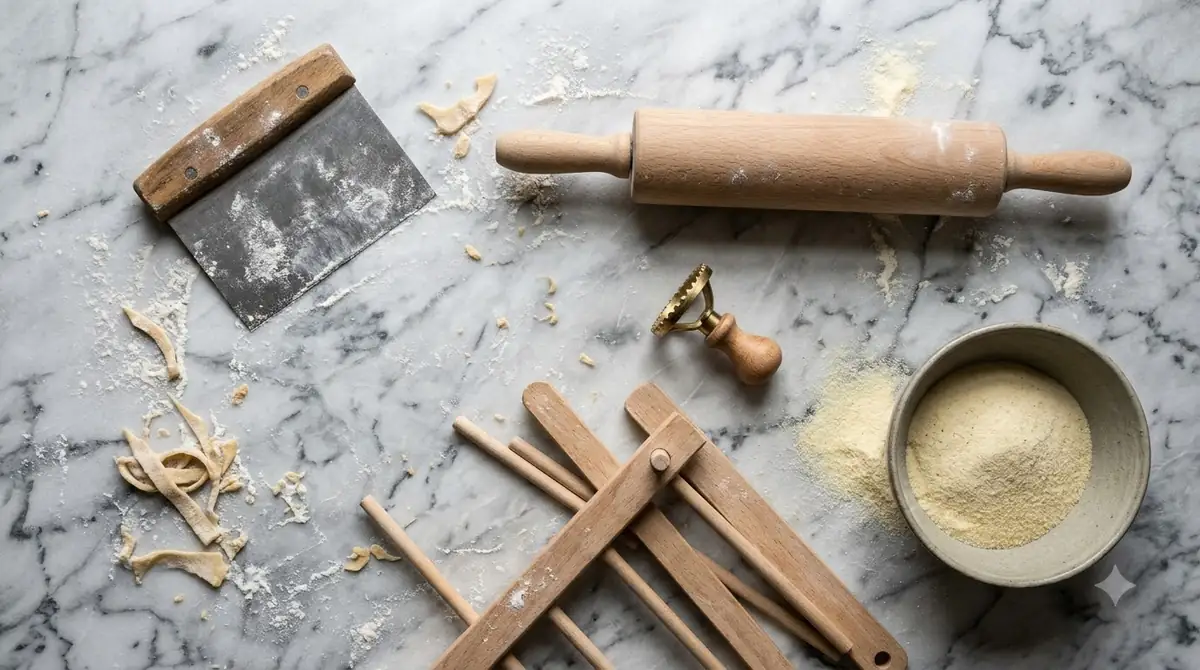

A ravioli stamp is a hand tool that cuts thin pasta sheets into matched rounds or squares so you can fill and seal ravioli at home. Ravioli are stuffed pasta, with a filling enveloped in thin dough.
A stamp suits anyone who wants even, repeatable shapes. If you only make a few ravioli, a knife can also work, but the steps below still apply.
What a Ravioli Stamp Does
A ravioli stamp presses into a thin sheet of dough to cut matched pieces, which you then fill and seal around the filling.
Each press of a ravioli stamp gives you one piece of the same size and shape. The cut edge becomes the border you seal later, so matching pieces make it easier to close every ravioli evenly.
Ravioli stamp versus pastry wheel
A pastry wheel cuts pastry and other doughs and leaves a serrated edge or pattern. Its typical form is a small wheel attached to a handle. The first attested professional use of a pastry wheel dates from 1549 in Italy.
A ravioli stamp is different because it cuts a fixed shape in one press. That gives you a round or square piece instead of a strip, which is why the stamp is the better fit for making individual ravioli. For other cutting tools, see our guide to the best ravioli cutters.
| Feature | Ravioli stamp | Pastry wheel |
|---|---|---|
| Cut | Fixed round or square piece | Straight or curved line |
| Edge | Pressed edge, sealed by hand | Serrated or patterned edge |
| Best for | Making individual ravioli | Trimming sheets and cutting pastry |
Choosing the Right Shape and Size
Choose a ravioli stamp shape that matches the ravioli you want, since square is the most common form and round or semi-circular shapes are also used.
Ravioli are most often square, but they may also be circular or semi-circular, the last shape known as mezzelune. Match the stamp to the shape you plan to serve, not the other way round. If you are still deciding between stuffed shapes, read tortellini vs ravioli.
When you compare stamps, look at four things:
- Shape: square for the classic look, round for filled circles, semi-circular for mezzelune.
- Diameter: one listed round stamp is 2 inches across. Compare the diameter with how much filling you plan to add so the filling fits inside the seal.
- Material: one listed round stamp has a cast aluminum body and a beechwood handle. Pick a handle that feels comfortable, since you press firmly.
- Origin: the same listing says the stamp is made in Italy.
What You Need Before You Start
You need a thin sheet of pasta dough, a filling, an egg yolk for sealing, a floured surface and the stamp itself.
- Fresh pasta dough, rolled into a thin sheet
- A filling of your choice
- One egg yolk for brushing the edges
- A lightly floured surface or tray for the finished pieces
- Your ravioli stamp
Ravioli dough is usually made with water and flour, and sometimes eggs. Fresh egg pasta usually uses eggs and all-purpose or “00” low-gluten flour, so either recipe can work with a stamp if the sheet rolls thin without tearing. Our fresh pasta dough recipe is one place to start.
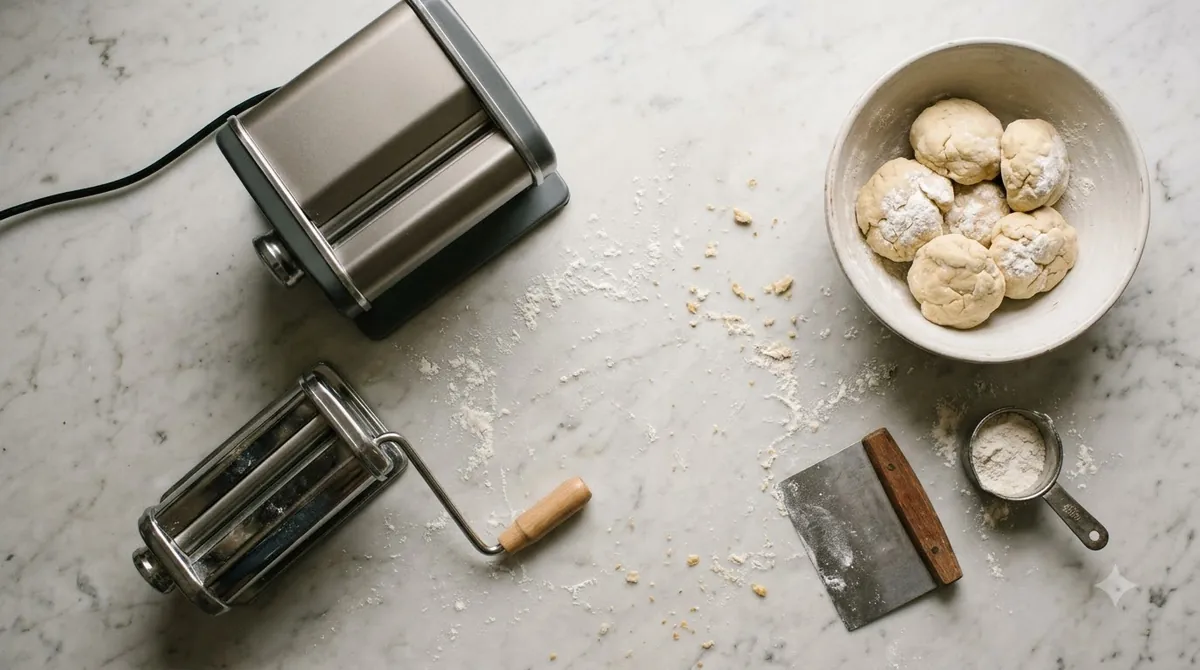
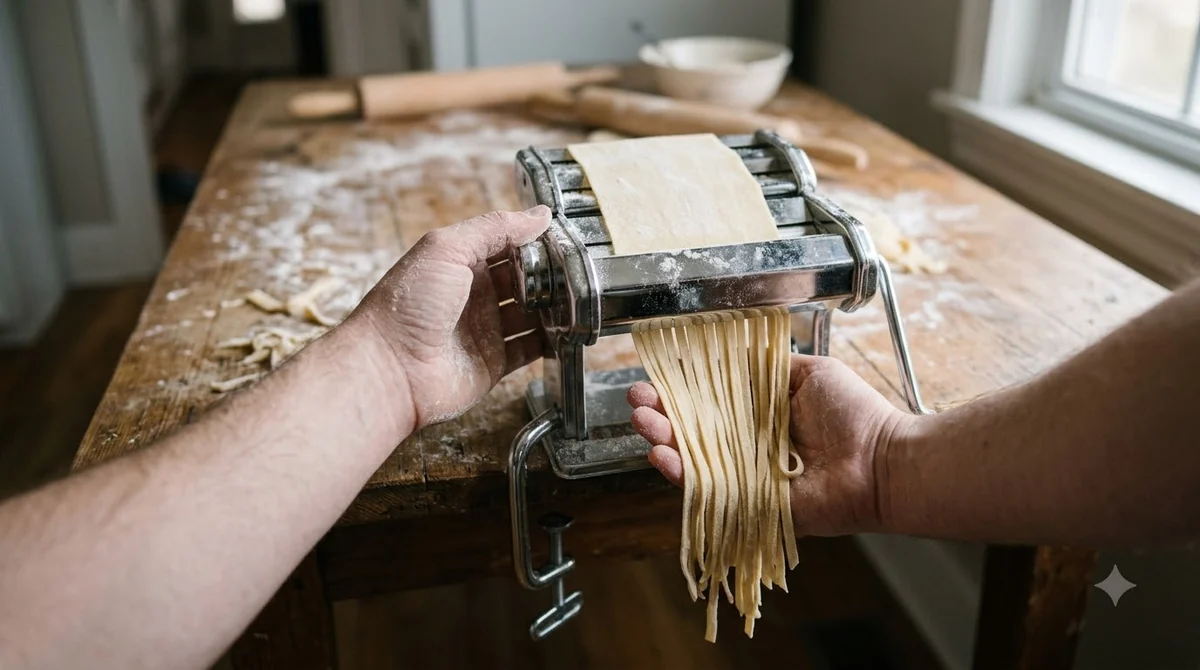
A pasta machine is optional. It feeds sheets through by hand and thins them gradually, which helps you reach an even thickness across the whole sheet. Our guide on how to use a pasta machine explains the rolling steps.
Step-by-Step: Using a Ravioli Stamp
Roll the dough very thin, press the stamp to cut matched rounds, fill one round, seal it under a second round and keep the finished pieces on a floured sheet.
- Roll the dough into a very thin sheet.
- Press the stamp firmly into the dough to cut out the rounds, then gather the leftover scraps into a bowl so you can roll them again.
- Place a small amount of filling on one cut round, keeping it away from the edges.
- Brush egg yolk near the edges of that round.
- Set a second cut round on top.
- Press around the edges to seal the two pieces together.
- Keep the finished ravioli on a floured sheet until you are ready to cook them.
These steps follow the order in a seller’s instructions for a 2-inch round stamp. Work with one sheet at a time, so the dough stays workable while you fill and seal each piece.
Plan the batch before you roll anything. Set out the flour, filling, egg yolk and tray first, then roll only as much dough as you can fill in a few minutes. Dough that sits out too long can dry at the edges, and dry edges are harder to seal. For a full dough and filling walkthrough, see our homemade ravioli guide.
If you make a large batch, cover the rolled sheet you are not using with a clean towel while you work. Keep the cut rounds in a single layer on the floured tray so they do not press into each other before cooking.

Common Mistakes and How to Fix Them
A common problem is ravioli bursting during cooking, and a small toothpick hole in each piece helps prevent it.
Ravioli that burst or leak
Poke a small hole in each ravioli with a toothpick before cooking. The seller’s instructions give this tip to help prevent bursting. Press the edges firmly as well, so the egg yolk bonds the two sheets.
Dough that sticks or tears
Keep finished ravioli on a floured sheet until you cook them, and lift the stamp straight up so you do not drag the dough. Ravioli that you freeze can be cooked without thawing, as explained in how to boil frozen ravioli.
| Problem | Likely cause | Fix |
|---|---|---|
| Edge opens after sealing | Edges were not pressed firmly | Press around the edges again |
| Ravioli burst in the pot | No vent for steam inside the piece | Poke a toothpick hole before cooking |
| Pieces stick to the board | No flour under the finished pieces | Keep them on a floured sheet |
| Dough tears when you lift the stamp | Sheet is uneven or too thin in spots | Roll more evenly, then cut again |
Cooking time depends on the pasta and the package, so check the instructions on your dough or package before you cook.
Caring for Your Ravioli Stamp
Clean your ravioli stamp after each use and dry it fully before storing it, following the care instructions from the seller or brand.
- Check the seller or brand page for care instructions, since materials differ between stamps.
- Do not assume every stamp is built the same. The listed round stamp has a cast aluminum body and a beechwood handle.
- Store the stamp somewhere dry, so the body and handle stay in good condition between batches.
What This Guide Does Not Verify
Prices, exact dough thickness and cooking times were not confirmed on the pages read for this guide, so check the seller and the package before you buy or cook.
- Prices: retailer search results show a wide range, but no figure was confirmed on a verified page. Check the seller page for current prices.
- Dough thickness: the seller listing says “very thin” without a measurement.
- Model sizes: confirm the exact diameter with the seller listing or the manufacturer manual.
- Cooking time: follow the instructions on your dough or package.
Frequently Asked Questions
What is a ravioli stamp used for?
A ravioli stamp cuts round or square pieces from a thin pasta sheet, and you then fill and seal them. It handles the cutting step, so each piece matches the next and the seal lines up evenly.
Is a ravioli stamp the same as a pastry wheel?
No. A ravioli stamp cuts a fixed shape in one press, while a pastry wheel cuts strips or trims dough and leaves a serrated edge. The pastry wheel is a more general kitchen tool for pastry and other doughs.
How do I keep ravioli from bursting?
Press the edges firmly so they seal, and poke a small hole in each piece with a toothpick before cooking. This tip comes from a seller’s instructions, and the cooking time still depends on the package.
What dough works with a ravioli stamp?
Ravioli dough is usually made with water and flour, and sometimes eggs. Fresh egg pasta usually uses eggs and all-purpose or “00” low-gluten flour. Use a dough that rolls thin without tearing.
Do I need a pasta machine for a ravioli stamp?
No. A pasta machine is optional. It feeds sheets through by hand and thins them gradually, which can help you reach an even thickness before you cut.
Does a ravioli stamp make only one shape?
Yes, each stamp makes the shape it is built for, so a round stamp gives round pieces and a square stamp gives squares. Check the listing for the exact shape and diameter before you buy.
Choose a ravioli stamp whose diameter fits your filling, then practise on a small batch before you make a full tray. Check the package for cooking time, and keep the finished ravioli floured until they go into the pot.
 9 min readGear & PantryRavioli Cutter Guide: Types, Sizes and How to Use OneUpdated Nov 10, 2026
 10 min readGear & PantryRavioli Mold: What It Is and How to Use One at HomeUpdated Nov 17, 2026
 9 min readGear & PantryHow to Use a Ravioli Mold: Step-by-Step GuideUpdated Nov 10, 2026
 9 min readGear & PantryHow to Use a Ravioli Maker: Step-by-Step for Dough and FillingUpdated Nov 10, 2026
 8 min readGear & PantryHow to Use a Ravioli Cutter at HomeUpdated Nov 10, 2026
 7 min readGear & PantryCorzetti Stamp: How to Choose the Right One for Home PastaUpdated Nov 10, 2026