
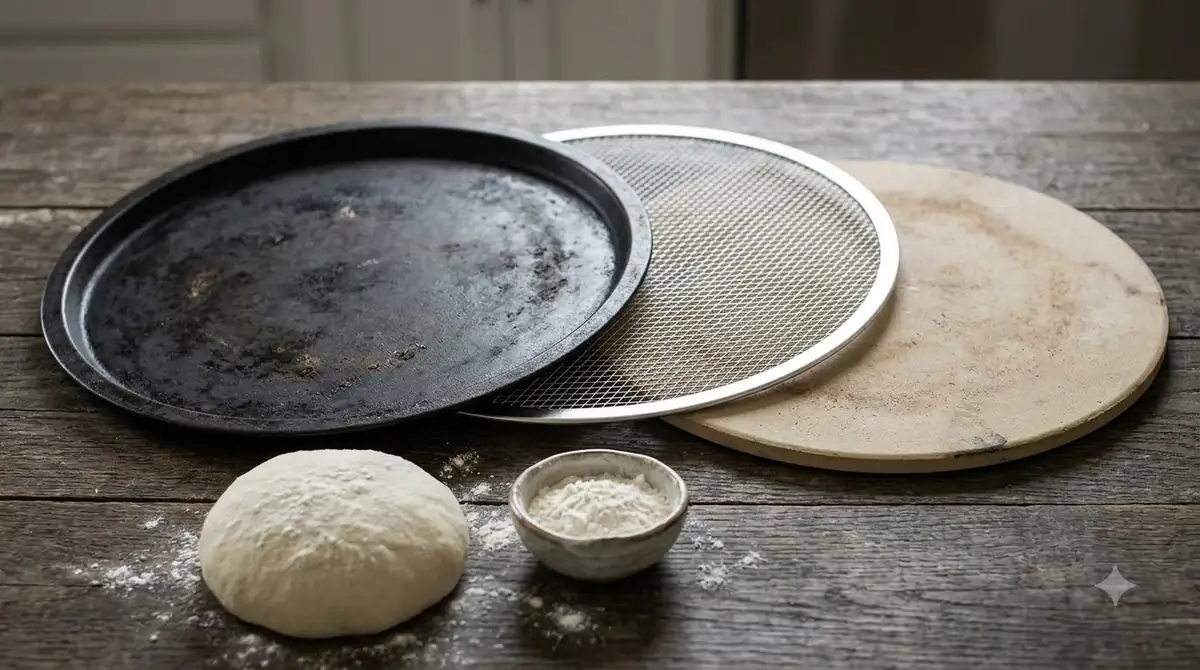

A detroit style pizza pan is a rectangular, heavy metal pan with straight sides that gives Detroit pizza its thick crust and crisp, caramelized cheese edges. You choose one by material, size, and whether it comes seasoned or with a nonstick finish.
The pan matters as much as the dough. Steel and anodized aluminum behave differently, and the right size depends on the space in your oven.
What Makes a Detroit Pan Different
A Detroit style pizza pan is a rectangular steel-style pan developed around 1946 at Buddy’s Rendezvous in Detroit, and its walls are what create the crisp edge.
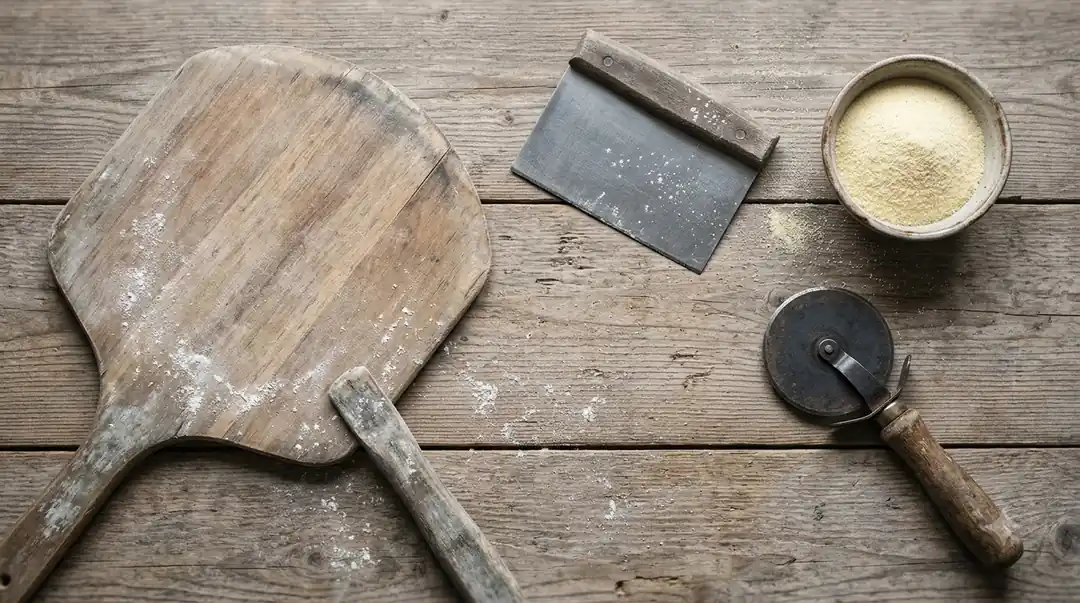
According to the Wikipedia article on Detroit-style pizza, the style was developed in 1946 at Buddy’s Rendezvous, a former speakeasy on Six Mile Road in Detroit. The first pans were not bakeware at all. They were blue steel trays that the restaurant obtained from local automotive suppliers, where they had been used as drip trays or to hold small parts and scrap metal.
Dover Parkersburg made the steel pans in the 1930s and 1940s, and Wikipedia notes that some pans from 50 to 75 years ago are still in use. That history explains why a Detroit pan looks like a shallow industrial tray rather than a typical baking sheet.
The walls do real work. Wisconsin brick cheese is spread out to the edges, where it caramelizes against the pan walls and forms the crisp frico-style rim. Wikipedia notes that brick cheese tolerates high oven heat because of its high butterfat content, which is why it is the traditional choice for this bake.
A detroit style pizza pan also shapes the crust. Shawn Randazzo’s guidance, cited by Wikipedia, puts a true Detroit-style crust at about 1.5 inches (40 mm) thick. The walls of a detroit style pizza pan set the shape of the slab, so the pan is part of the style, not just a container for it. For a full bake, see the Detroit-style pizza recipe.
Detroit Style Pizza Pan Material: Steel vs Anodized Aluminum
Steel is the traditional Detroit pan material, while anodized aluminum is a lighter, dark option that some listings sell with a nonstick interior.
| Feature | Steel | Anodized aluminum |
|---|---|---|
| Tradition | The original material; Tasting Table says most Detroit pans were historically steel | A newer option that Tasting Table describes as a lighter aluminum pan |
| Weight | Heavier by comparison | Lighter by comparison |
| Finish | The original trays were blue steel | Dark, from the anodizing process, which helps browning |
| Release | Builds a seasoned surface over time, as oils from the pizza stay in the pan | Nonstick interior on some listings; an uncoated version needs a lot of oil |
Tasting Table’s pan guide explains the trade-off clearly. Steel pans built up seasoning over time, so the oils from the pizza acted as a nonstick coating. An uncoated aluminum pan, by contrast, needs a lot of oil to prevent sticking. Anodized aluminum is one way to get easier release without a long seasoning routine.
King Arthur Baking’s listing for its Detroit-Style Pizza Pan describes a black anodized aluminum pan with a nonstick interior and easy release. The listing shows an original price of $69.95 as of November 7, 2026. Prices change, so check the current listing before you order.
Steel suits a baker who wants the traditional result from a detroit style pizza pan and does not mind a seasoning step. Anodized aluminum suits a cook who wants a lighter pan and simpler cleanup. Neither choice changes the basic shape of the pizza, but each one changes how much oil you use and how much work the pan asks for before the first bake.

Detroit Style Pizza Pan Size, Depth and Your Oven
A detroit style pizza pan comes in several sizes, so measure your oven rack and choose the pan that fits the space you have.
Detroit Style Pizza’s pan guide says standard pans come in various sizes and recommends choosing one that complements your oven space. Not every product page shows inside dimensions, so the seller’s listing is the place to confirm the length, width and depth before you buy.
- Measure the usable rack space in your oven, front to back and side to side.
- Write down the pan’s inside length, width and depth from the listing.
- Leave clearance so the pan does not touch the oven walls or the heating element.
- Check that the pan will fit your storage, since heavy metal pans take up room.
If a listing does not show dimensions, ask the seller or check the manufacturer’s site. Depth also affects how much dough fits, so compare the depth of each detroit style pizza pan you consider with the dough amount in your recipe before you mix it.
Seasoning and Care
A new unseasoned steel pan is commonly dry-baked with dough before its first real bake, while some pans arrive pre-seasoned.
Detroit Style Pizza’s pan page notes that cast iron pans often come pre-seasoned, and that unseasoned pans need seasoning before use. Wikipedia describes the usual approach for a new steel detroit style pizza pan, which is to dry-bake it with 10 to 18 ounces (280 to 510 grams) of dough per pan. Follow the manufacturer’s instructions first if they differ. If you already own a cast iron pan, you can also bake a round pie in it with our cast iron skillet pizza recipe.
- Read the seller’s seasoning instructions and check whether the pan is pre-seasoned.
- For an unseasoned steel pan, dry-bake dough in it using 10 to 18 ounces (280 to 510 grams) per pan.
- Use oil on the pan as your recipe calls for, especially on uncoated aluminum.
- Clean the pan using the seller’s care section, since the method depends on the finish.
Anodized pans have a different surface from bare steel, so follow the listing’s care section rather than the steel routine. A cook who skips the seasoning step on a steel pan will usually notice more sticking on the first few bakes.
Substitutes Without a Detroit Pan
A metal rectangular pan can stand in for a Detroit pan, but a dark cake pan may run hot and leave the edge less crisp.
Tasting Table says a rectangular metal pan makes a suitable replacement. It also warns that a dark cake pan can attract too much heat, and that without a dark pan the crust may be less crispy at the edge. Those two points are the main trade-off when you do not own a dedicated pan. Other kinds of pizza pans are covered separately.
- A rectangular metal pan close to the size of a Detroit pan, which Tasting Table calls a suitable replacement.
- A dark cake pan, which can attract too much heat, so check the bottom crust sooner than the recipe states.
- A lighter-colored pan, where the edge may stay less crispy than in a dedicated pan.
Common Mistakes When Buying a Detroit Pan
The most common mistake is buying by look alone, without checking size, material and seasoning needs.
- Skipping the size check, so the pan does not fit the oven rack.
- Choosing uncoated aluminum without planning for the oil it needs to prevent sticking.
- Assuming a dark cake pan works the same as a dedicated pan.
- Ignoring the seasoning step on a new steel pan.
- Trusting an old price, since listed prices change and the King Arthur figure is dated.
Frequently Asked Questions
Is a Detroit pan the same as a deep-dish pan?
Not exactly. A Detroit pan is rectangular with straight walls, and its signature is cheese caramelized against those walls. Deep-dish pizza is a separate style with its own pan and dough, so check which recipe you plan to follow before you buy. For how Detroit compares with another thick style, see New York-style vs Detroit-style pizza.
Do I need a special detroit style pizza pan to make Detroit style pizza?
A dedicated detroit style pizza pan gives the most reliable shape and edge. Tasting Table says a rectangular metal pan can work as a replacement, though the crust may be less crispy at the edge without a dark pan.
Why is the cheese placed at the edges?
Brick cheese is spread out to the pan walls, where it caramelizes and forms the crisp rim. Wikipedia notes that brick cheese tolerates high oven heat because of its high butterfat content.
How thick should the crust be?
Shawn Randazzo’s guidance, cited by Wikipedia, is about 1.5 inches (40 mm) for a true Detroit-style crust. Use that as a target, then check the dough amount in your recipe against the depth of your detroit style pizza pan.
Can I use an uncoated aluminum pan?
Yes, but Tasting Table says an uncoated aluminum pan needs a lot of oil to prevent sticking. Plan the oil before you bake, and expect more cleanup than with a nonstick finish.
Should I check the listing before buying?
Yes. Confirm the inside dimensions, material and care instructions for each detroit style pizza pan on the seller’s page. Some product pages in the sources did not show dimensions, so verify them before you order.
If you want the traditional look, start with a steel detroit style pizza pan and plan for seasoning. If you want easier release and less prep, an anodized aluminum pan with a nonstick interior is the simpler route. Measure your oven rack first, then confirm the inside dimensions on the listing before you order. More pan and tool guides are in the Gear & Pantry guides.
 7 min readGear & PantryPizza Pan: What It Is and How to Choose OneUpdated Nov 16, 2026
 9 min readGear & PantryBest Flour for Pizza Dough: How to Choose by Style and OvenUpdated Nov 16, 2026
 9 min readGear & PantryBest Pizza Flour: How to Choose by Type, Style and OvenUpdated Nov 17, 2026
 9 min readGear & PantryLasagna Pan: How to Choose the Right Size, Depth and MaterialUpdated Nov 16, 2026
 10 min readGear & PantryHow to Season a Cast Iron Pizza PanUpdated Nov 11, 2026
 8 min readGear & PantryPizza Turning Peel: How It Works and How to Choose OneUpdated Nov 16, 2026