
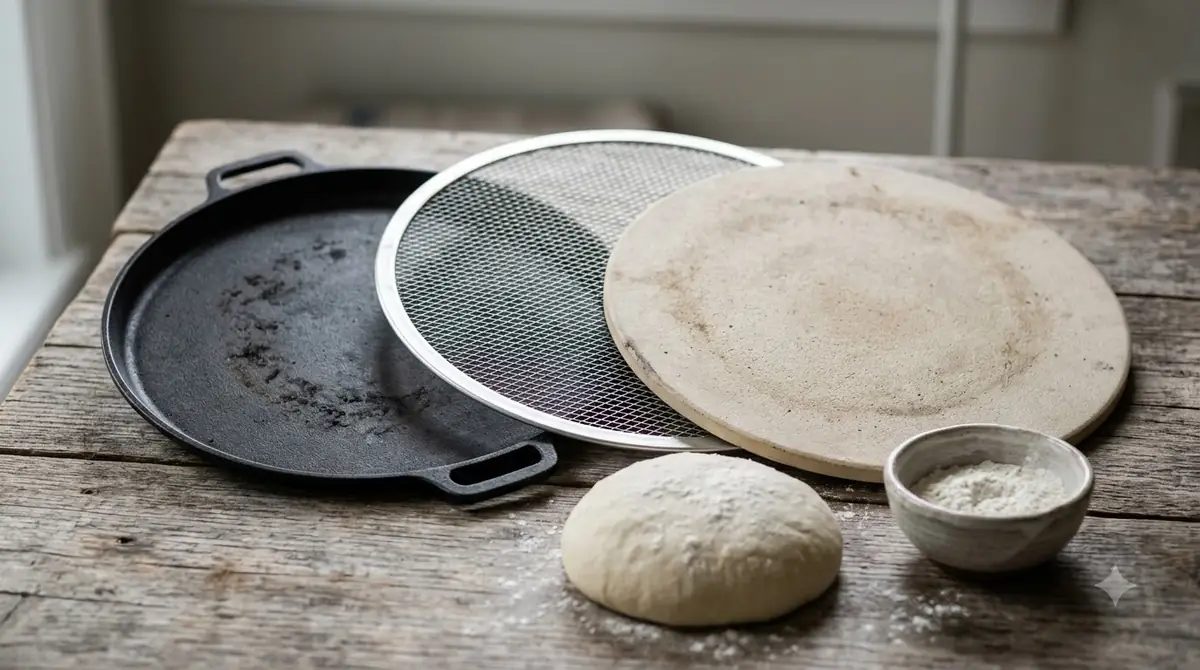

Learning how to season a cast iron pizza pan takes one thin coat of oil and about an hour in a 450 to 500 degree oven. The pan is baked upside down so oil does not pool on the cooking surface. Most of the work is simple, but the details matter for a smooth, durable surface.
Most mistakes in how to season a cast iron pizza pan come from using too much oil or skipping the cooling step. Keep the layer thin, catch the drips, and let the pan cool inside the oven before you cook on it.
Do You Need to Season a Cast Iron Pizza Pan?
Yes, a new or bare cast iron pizza pan benefits from seasoning before its first use, because baked-on oil forms a slick, hardened surface.
According to Lodge’s seasoning science page, seasoning is oil baked onto the pan through a process called polymerization. Heated oil changes from a wet liquid into a hardened film that bonds to the iron, and that film is what protects the metal from sticking and rust. A stone needs a different routine, which we cover in how to season a pizza stone.
The change only happens when the oil is heated, which is why the oven step matters. An oiled pan that never reaches oven heat does not get the same hardened film, so knowing how to season a cast iron pizza pan comes down to baking the oil on properly.
This guide applies the general cast iron method to show how to season a cast iron pizza pan. The sources read for this article do not describe a separate method for pizza pans, so treat the steps below as the standard cast iron routine.
How to Season a Cast Iron Pizza Pan in the Oven
Preheat the oven to 450 to 500 degrees Fahrenheit, rub a thin layer of oil over the pan, and bake it upside down for one hour.
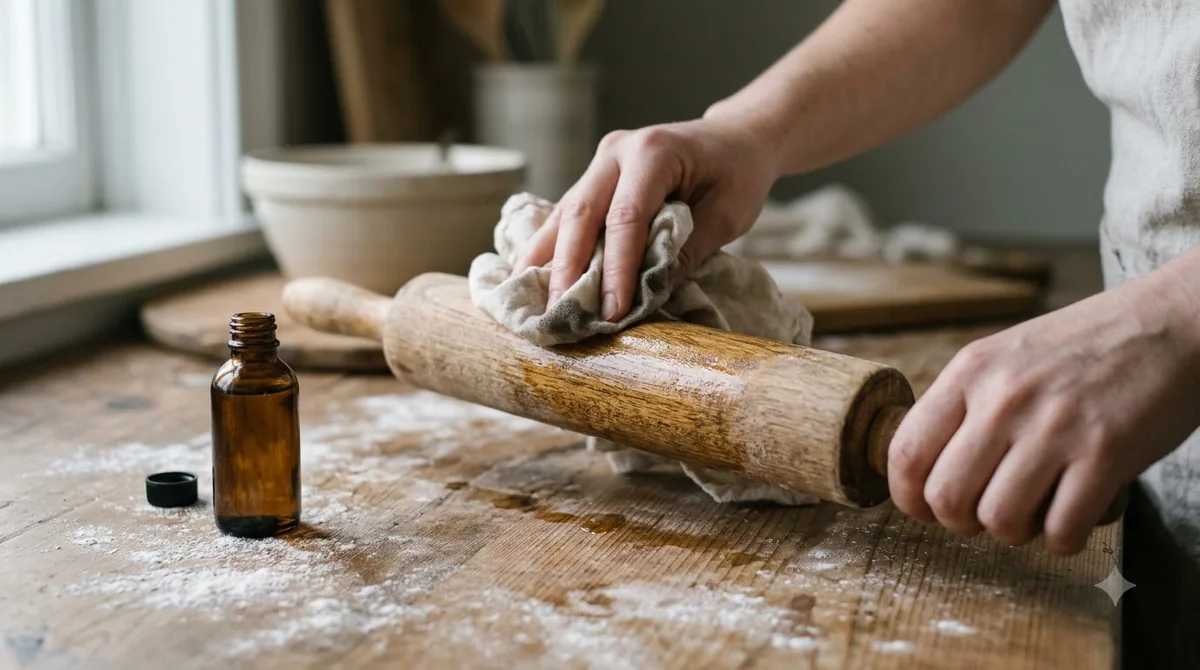
Here is how to season a cast iron pizza pan with Lodge’s oven method: set the pan upside down on the center rack and place foil on the bottom rack to catch drips. Start with a clean, dry pan, then follow these steps.
Preheat the oven before you oil the pan, so the coated surface goes straight into the heat and does not sit while the oven warms up.
- Wash the pan with warm soapy water and dry it completely.
- Preheat the oven to 450 to 500 degrees Fahrenheit.
- Place foil on the bottom rack to catch any drips.
- Rub a very thin layer of oil over the whole pan, inside and out.
- Set the pan upside down on the center rack.
- Bake for one hour, then turn off the heat.
Cooling is part of how to season a cast iron pizza pan correctly. Lodge says to allow the pan to cool in the oven after the heat is off, which Lodge’s guide to seasoning says helps the seasoning adhere further to the iron.
How Much Oil to Use
Use just enough oil for a thin layer that does not drip or run when you tilt the pan, according to Lodge.
Getting the oil right is a key step in how to season a cast iron pizza pan. Lodge’s test kitchen favors oils with a high smoke point for re-seasoning, naming vegetable oil, melted shortening and canola oil. Each one works the same way: a thin film wiped on and baked into the metal.
| Oil | Lodge’s note | How to apply |
|---|---|---|
| Vegetable oil | Named by the test kitchen | Wipe on a thin film with a paper towel |
| Canola oil | Named by the test kitchen | Same thin film, then wipe off any excess |
| Melted shortening | Named by the test kitchen | Melt it first, then spread a thin coat |
Go easy on the oil even when the surface looks worn, since Lodge’s advice for re-seasoning starts with the same rule: an oil with a high smoke point, applied thinly.
Use the drip test as your guide, because it is the simplest check in how to season a cast iron pizza pan. If oil pools or runs when you tilt the pan, wipe it off with a clean towel until only a faint film remains.
How to Clean the Pan Before You Season It
Wash the pan with warm soapy water, scrub it with a nylon brush or salt, and dry it completely before any oil goes on.
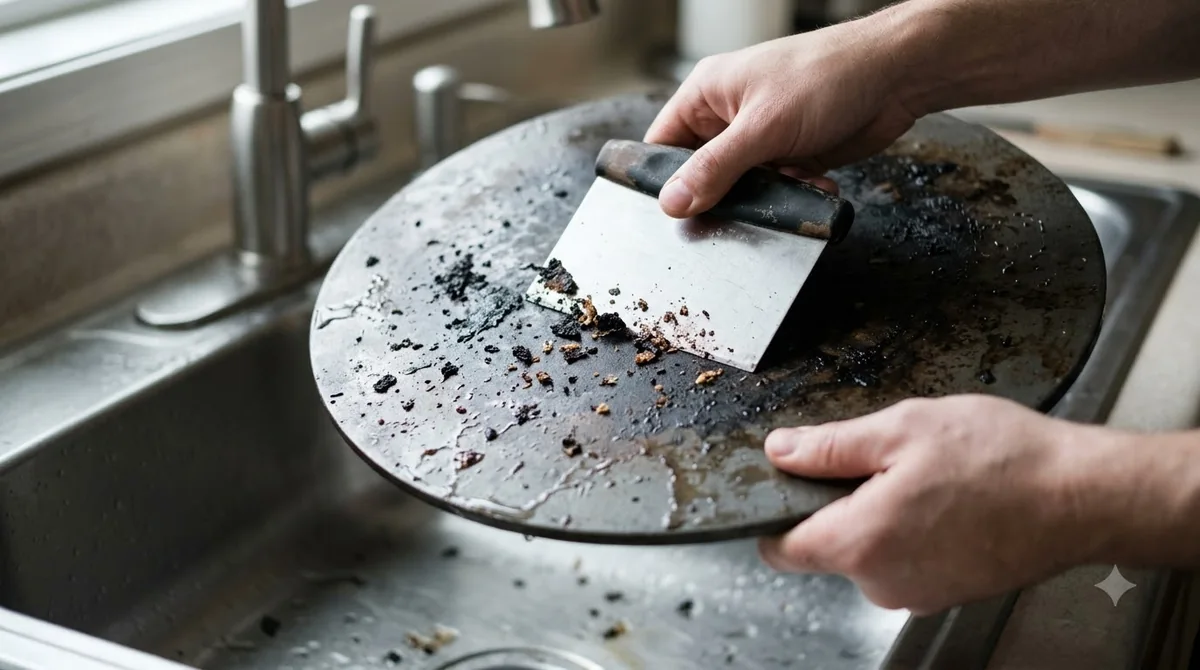
Cleaning comes first in how to season a cast iron pizza pan. Lodge’s care guidance uses warm soapy water to wash the pan, then asks you to dry it completely with a paper towel or lint-free cloth. The pan should be fully dry before any oil goes on.
- Wash with warm soapy water.
- Scrub with a nylon brush or salt (Lodge’s step for flaking seasoning).
- Rinse, then hand dry.
- Rub with oil while the pan is clean and dry.
A dark mark on the towel after drying is normal. Lodge says dark residue on a towel is perfectly normal and safe, and it can also appear on brand new cookware.
Common Mistakes That Lead to Sticky Seasoning
The most common mistake is too much oil, since Lodge says the layer should be thin enough that it does not drip or run when you tilt the pan.
Several habits make the result worse. These four errors undo much of what you learned about how to season a cast iron pizza pan:
- Pouring oil on instead of wiping on a thin film.
- Baking the pan right side up, which lets oil pool on the cooking surface.
- Taking the pan out before it cools in the oven.
- Skipping the foil, so drips land on the oven floor.
Every item on this list comes back to the same routine: keep the layer thin, keep the pan upside down, and let it cool inside the oven. That routine is what helps the seasoning adhere to the iron.
If the surface still feels tacky after a full oven round, note that the Lodge pages read for this guide do not address it.
The sources read for this article do not give a separate fix for sticky seasoning, so check the current Lodge care pages, wipe off any pooled oil next time, and keep each coat thin before you try again.
How to Keep the Seasoning in Good Shape
Dry the pan after every wash and rub a thin film of oil over the cooking surface, then re-season it in the oven when the surface needs it, which Lodge says can happen occasionally.
Keeping a pan seasoned is easier than rebuilding it, so a thin film after each wash is a small step. Once the pan is ready, try a cast iron skillet pizza or a deep dish pizza. When the surface wears thin, the fix is the same oven method that taught you how to season a cast iron pizza pan. Lodge notes that seasoning can look a little dull after acidic cooking or tough cleanups, and that this is okay.
Routine care extends how to season a cast iron pizza pan beyond the first bake and keeps the surface working between full seasonings. Oil the pan after cleaning, store it dry, and keep an eye on the surface over time, since Lodge says a slightly dull look after acidic cooking is okay. Shoppers comparing options can browse the best Detroit style pizza pans and the Gear & Pantry guides.
- Dry the pan completely after each wash.
- Wipe on a thin film of oil after cleaning, which is common practice even though the Lodge pages read for this article do not require it after every wash.
- Re-season in the oven when the surface needs a stronger layer.
- Re-season when the pan has been through tough cleanups and the layer feels thin.
Frequently Asked Questions
Do I need to season a cast iron pizza pan before the first use?
Yes, seasoning builds a slick, hardened surface from oil baked onto the metal. Lodge describes this surface as the protective layer on the pan. Season a new pan before its first pizza, and see our guide to the best pizza pans if you need one.
What temperature should I use to season a cast iron pizza pan?
For how to season a cast iron pizza pan at the right heat, Lodge recommends preheating the oven to 450 to 500 degrees Fahrenheit. Set the pan upside down on the center rack and keep foil on the bottom rack to catch drips.
How long should I bake the pan?
Bake the pan for one hour after it has been oiled. Then turn off the heat and let it cool inside the oven, which Lodge says helps the seasoning adhere to the iron. That hour is the core timing in how to season a cast iron pizza pan.
Can I wash a seasoned cast iron pizza pan with soap?
Washing is part of how to season a cast iron pizza pan, and Lodge’s care guidance uses warm soapy water for washing, followed by thorough drying. Scrub with a nylon brush or salt if food sticks, then dry the pan completely before you oil it again.
What if my cast iron pizza pan looks dull or has rust?
Lodge says seasoning that looks a little dull after acidic cooking is okay, and that you may occasionally need to reseason in the oven. The sources read for this guide do not give a rust fix, so check Lodge’s care pages for rust, then use the same oven steps as a new pan, starting with a clean, dry surface.
What is polymerization in cast iron seasoning?
Polymerization is the process in which heated oil changes from a wet liquid into a slick, hardened surface that bonds to the iron, according to Lodge. It is the reason the oven step matters when you learn how to season a cast iron pizza pan.
Should I oil a cast iron pizza pan after every wash?
Lodge’s steps for a flaking pan end with rubbing the pan with oil, and a thin film after washing is a common habit, though the pages read for this guide do not make it a rule. Wipe off any oil that pools, because the layer should not drip or run when you tilt the pan.
Is the dark residue on my towel a problem?
No. Lodge says dark residue on a towel is perfectly normal and safe, and it can also appear on brand new cookware. It does not mean the seasoning is failing, and you may see it while you practice how to season a cast iron pizza pan.
Knowing how to season a cast iron pizza pan well means keeping the layer thin, keeping the pan dry after each wash, and letting it cool inside the oven. If the surface stays tacky after a proper oven round, check the current care guidance from the maker before you bake on it again.
 9 min readGear & PantryBest Cast Iron Skillet for Pizza: How to Choose the Right SizeUpdated Nov 13, 2026
 8 min readGear & PantryDetroit Style Pizza Pan: What It Is and How to Choose OneUpdated Nov 16, 2026
 7 min readGear & PantryPizza Pan: What It Is and How to Choose OneUpdated Nov 16, 2026
 9 min readGear & PantryHow to Clean a Baking Steel: Scrape, Dry, and Re-SeasonUpdated Nov 11, 2026
 8 min readGear & PantryBest Focaccia Pan for a Crispy Bottom CrustUpdated Nov 12, 2026
 9 min readGear & PantryLasagna Pan: How to Choose the Right Size, Depth and MaterialUpdated Nov 16, 2026