
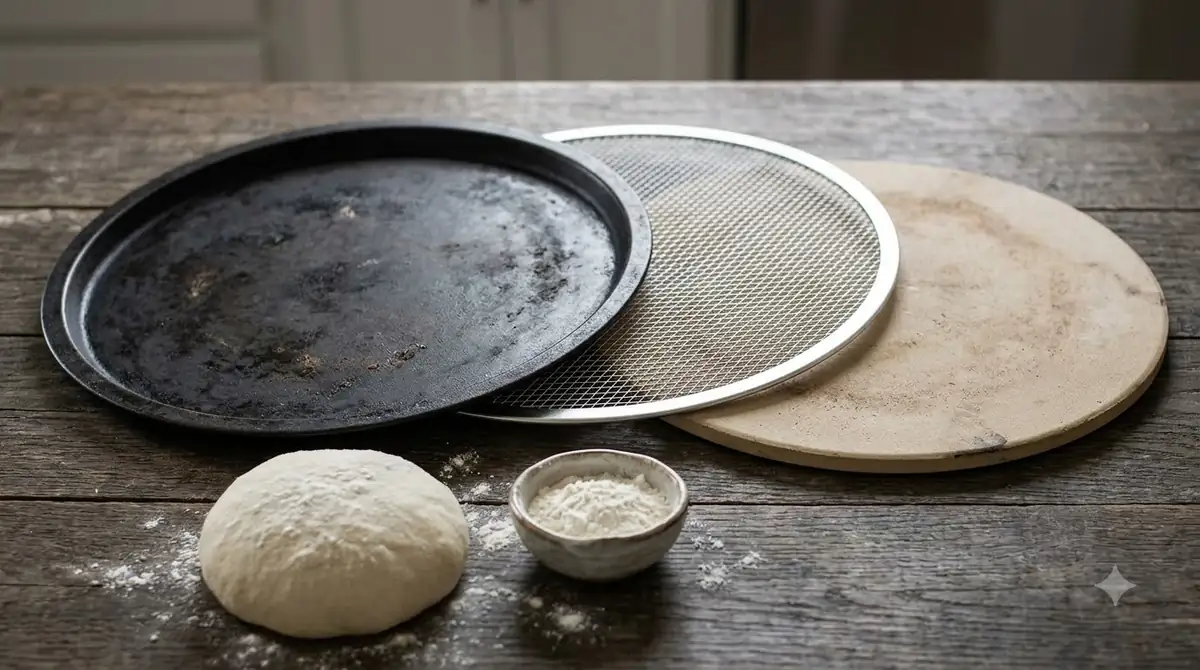

A pizza pan is a flat, round or rectangular metal dish that holds pizza dough while it bakes in the oven. It is the simplest way to control the shape and base of a homemade pie, and it works for thick pan-style crusts as well as thin ones.
Pick the pizza pan by crust style, bottom design and metal. A perforated pan helps the base crisp, while a solid pan suits thicker dough that needs more support.

GoodCook AirPerfect 14 Inch Insulated Nonstick
Pros & ConsViewHide
Reasons to buy
- Air-insulated, perforated 14 in design meant to reduce moisture and crisp the crust, per the listing
- Built-in cutting guides for even slices
- Nonstick carbon steel pan at a low price point
- 4.5-star average rating on Amazon
Reasons to avoid
- Perforated pans suit thin to medium crusts better than thick, deep-dish dough
- Nonstick coating usually needs gentle utensils; check the listing's care notes

Winco 14" Aluminum Seamless Pizza Screen
Pros & ConsViewHide
Reasons to buy
- Seamless aluminum mesh that lets the crust crisp, per the listing
- 14-inch size suits a standard home oven
- 4.6 average Amazon rating
Reasons to avoid
- Plain aluminum with no nonstick coating, so oil the mesh first
- Dough can stick if the screen is not oiled or floured
What is a pizza pan and what is it used for
A pizza pan is a shallow baking dish designed to hold a pizza while it cooks. It keeps the dough in shape, catches toppings that slide off, and lets you move a hot pie from the oven to the counter without losing the base.
The term also covers a style of pizza. According to Wikipedia’s entry on pan pizza, the dish is baked in a deep dish pan or a sheet pan. The article notes that the bottoms and sides of the crust fry in the oil that coats the pan, which gives the edges their crisp, golden finish. Deep, thick versions have their own guide to Detroit style pizza pans. If you want to try the thick style at home, our deep dish pizza recipe shows how to use a deep pan.
The thick style became widely known in the United States. Pizza Hut opened its first parlor in Wichita, Kansas, in 1958 and added a thicker pan-style crust when it franchised in 1959. Domino’s followed in 1989 with its own deep-dish pizza, which needed a new pan design of its own.
Types of pizza pans: solid, perforated and deep-dish
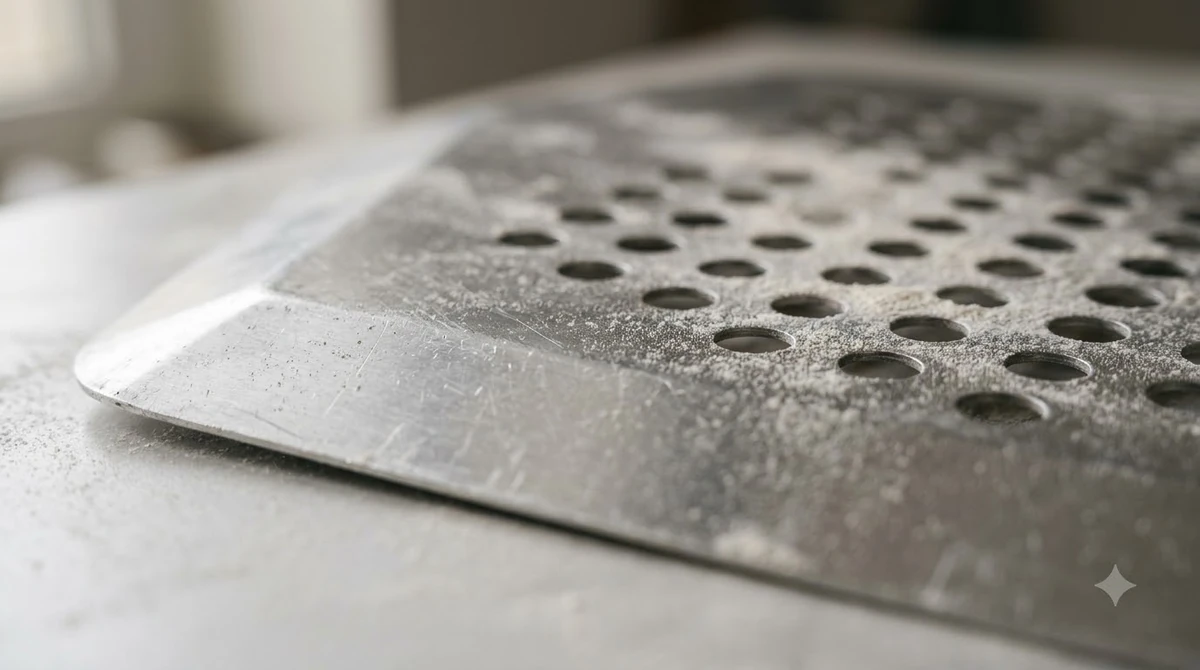
Pizza pans differ mainly by bottom design and depth. A perforated pan lets some heat reach the base through small holes, while a solid pan gives an even, dense surface that suits soft or thick dough.
Domino’s chose sheet-metal pans with perforated bottoms for its deep-dish launch, as described in the same pan pizza entry. The baking sheet entry also lists perforations as a feature meant to speed cooking, which is the idea behind a perforated pizza tray, and our guide to pizza screens covers the lightest version of that idea. That design shows the trade-off clearly: holes help the bottom firm up, but they also mean less contact with the dough, so the crust can look lighter.
| Pan type | Bottom | Best for |
|---|---|---|
| Solid round pan | Flat, no holes | Soft, thin or medium dough with even browning |
| Perforated pan | Small holes | A crisper base on home-style pies |
| Deep-dish or pan-style pan | Solid or perforated, with high sides | Thick dough baked in oil |
| Sheet pan | Flat, rectangular | Rectangular pies and cutting into squares |
Materials: aluminum, steel and what they do
Most home pizza pans are made of aluminum or sheet steel, and some are aluminized steel. The Wikipedia baking sheet entry gives the same common materials for baking trays, and it notes that aluminized steel combines aluminum’s conductive and reflective properties with the strength of a steel core.
Heat behavior depends on more than the metal name. According to the Wikipedia baking sheet article, mass, thermal conductivity and color all play key roles in reaching a uniform cooking temperature. A heavier pan holds heat longer, and a darker surface absorbs more radiant heat than a light one. For aluminized steel, the same article describes the aluminum surface layer as typically 90 percent aluminum and 10 percent silicon.
- Aluminum: light and conducts heat quickly, so it is a common choice for everyday home pans.
- Sheet steel: sturdier and more rigid, and often enameled or coated for release.
- Coated steel: check the label, since some coatings use PFAS, as the baking sheet article notes.
Rims also matter on a pizza pan. A continuous lip on all four sides is called a jelly roll pan, while a pan with at least one flat side is a cookie sheet and slides baked food off more easily. The baking sheet article adds that rims and ridges add rigidity, which helps when the pan sits on a flat heat source. Each rim also costs baking surface: the article says a rimmed edge takes roughly 10 to 20 millimeters of the surface along that side, and commercial aluminum pans typically have a raised lip of about 25 millimeters.
How to choose the right pizza pan for home baking
Choose the pan by the crust you want and the oven it must fit. Measure the inside of your oven before you buy, because a pan that touches the walls can block air flow and heat.
- Crust style: pick a solid pan for soft dough and a perforated pan for a crisper bottom.
- Depth: choose high sides only for deep-dish or pan-style dough that needs room to rise.
- Metal: aluminum heats quickly, steel is sturdier, and a heavier pan holds heat longer.
- Rim: a rimmed pan is stiffer, while a flat-sided pan makes sliding the pie out easier.
- Size: match the diameter to the dough you make, and leave a gap around the edge for airflow.
If you bake on a rectangular sheet pan, the sizes are fairly standard. According to the baking sheet article, a half sheet pan measures 18 by 13 inches and a full sheet is 26 by 18 inches, which the article calls too large for most home ovens. Rectangular pans also appear in pan-style pies such as Roman and Sicilian, and our comparison of Roman vs Sicilian pizza covers the dough, thickness and pan differences.
A pizza pan is not the only option. A pizza stone or steel gives a different base, so read pizza stone vs pizza steel before you commit to a pan if your goal is a thin, blistered crust.

How to clean and care for a pizza pan
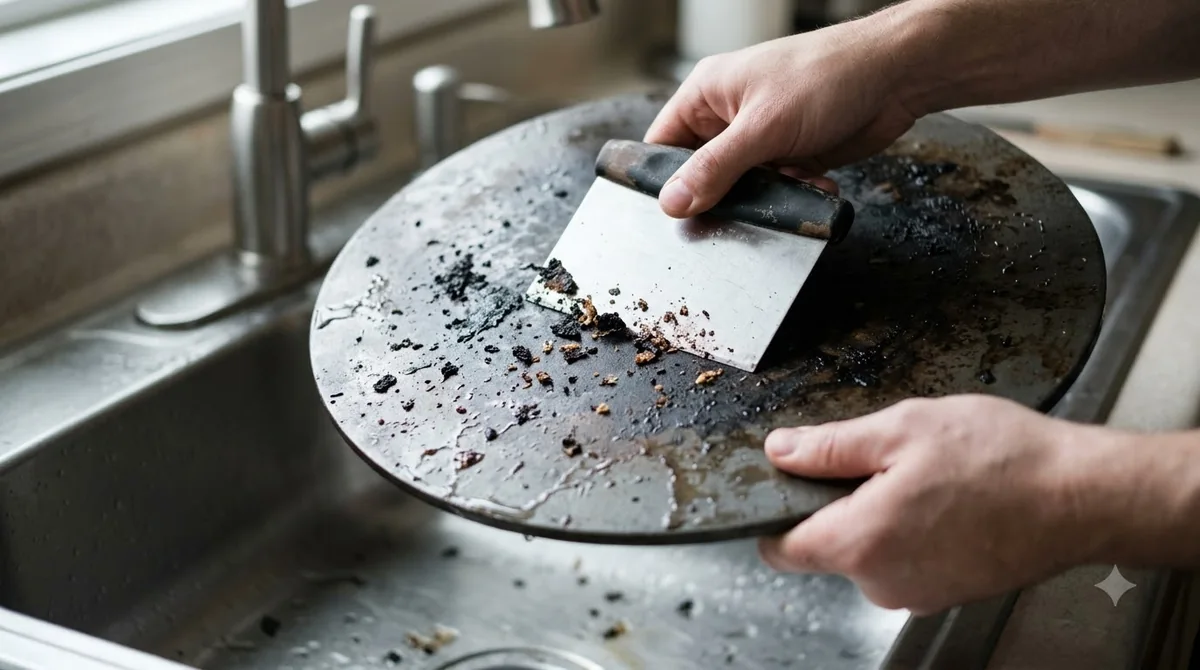
Let the pan cool before washing, and wash it by hand with warm water and a soft sponge. Follow the care instructions from the maker, since coatings differ in how they handle heat and cleaning.
- Let the pan cool to room temperature before you wash it.
- Remove stuck cheese or dough with a plastic scraper rather than metal.
- Dry it fully before storing, so no moisture sits on the metal.
Frequently Asked Questions
What is the difference between a pizza pan and a pizza stone?
A pizza pan is a metal dish that holds the dough in shape and can have sides. A pizza stone is a flat slab that the dough sits on directly. The pan keeps the pie contained, while the stone focuses on the base heat.
Is a perforated pizza pan better than a solid one?
A perforated pan generally gives a crisper base because heat reaches the bottom of the dough through the holes. A solid pan suits softer or thicker dough better. The right choice depends on the crust you like.
Can you use a pizza pan for deep-dish pizza?
Yes, if the pan has high sides and enough room for the dough to rise. Deep-dish and pan-style pizza use a deep pan, so a shallow round pan will not give the same result.
Do pizza pans need oil?
Pan-style pizza is traditionally cooked with oil, because the oil fries the crust edges and bottom. Thin pizza on a solid pan can often be baked with a light coat of oil or parchment. Check your pan’s care guidance for the best approach.
Which pizza pan material is best?
Aluminum and sheet steel are the common choices. Aluminum heats quickly and is light, while steel is sturdier. Mass, conductivity and color all affect how even the heat is, so compare the pan’s weight and finish along with the metal.
A good pizza pan matches the crust you want and fits your oven. Start with the bottom design and depth, then choose the metal. A solid pan is the flexible default, and a perforated pan suits anyone who wants a crisper base. Check the pan’s care guidance before you buy, since coatings and wash rules vary.
 8 min readGear & PantryDetroit Style Pizza Pan: What It Is and How to Choose OneUpdated Nov 16, 2026
 9 min readGear & PantryLasagna Pan: How to Choose the Right Size, Depth and MaterialUpdated Nov 16, 2026
 10 min readGear & PantryHow to Season a Cast Iron Pizza PanUpdated Nov 11, 2026
 8 min readGear & PantryWooden Pizza Peel: What It Is and How to Choose OneUpdated Nov 16, 2026
 9 min readGear & PantryPizza Cutter Guide: 2 Best Types and How to Choose OneUpdated Nov 16, 2026
 8 min readGear & PantryPizza Steel: How to Choose, Preheat and Care for One at HomeUpdated Nov 16, 2026