
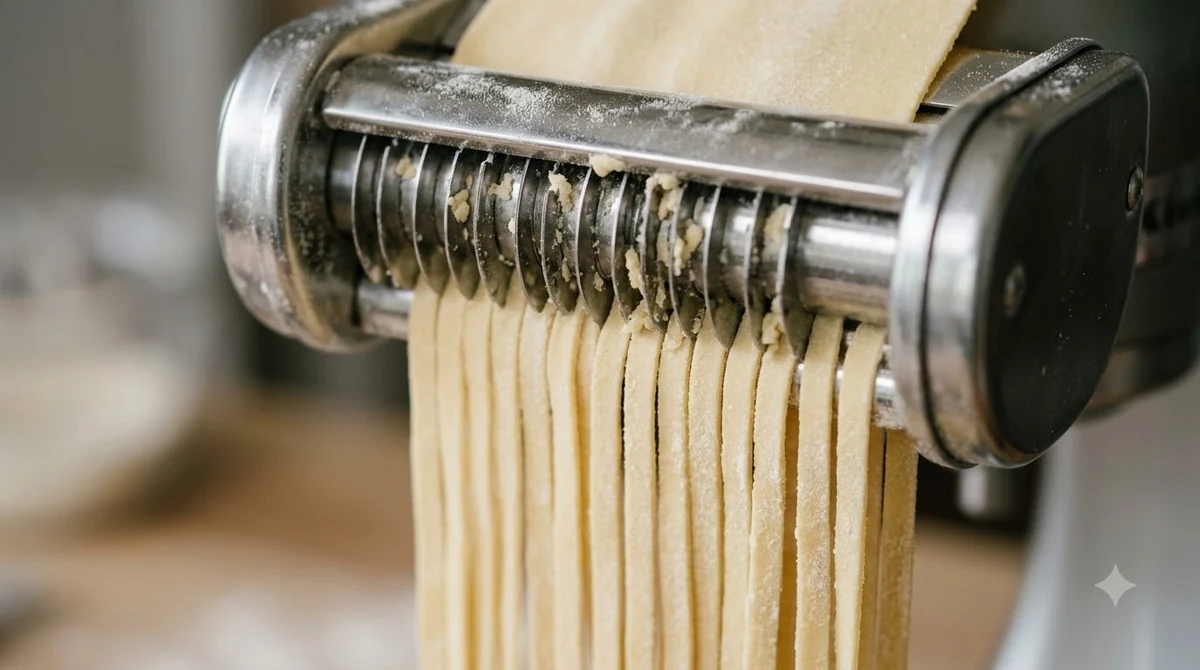

Knowing how to use a pasta cutter takes three steps: roll fresh dough into thin sheets, feed them through the blades or wires, and keep the strands from sticking together. The method is similar for stand mixer attachments and hand tools, with differences in dough size and handling.
A stand mixer attachment suits larger batches, while a chitarra works by hand on one sheet at a time. Learning how to use a pasta cutter is easier with the tool you already own, so choose it and follow the matching steps below.
Types of Pasta Cutter
A pasta cutter is either a roller attachment for a stand mixer or a chitarra, a wooden frame strung with steel wires.
Attachment cutters swap onto a pasta roller (see our guide to the pasta cutter types and blades) and cut flattened sheets into strands of set widths. A chitarra stays fully manual and cuts a rolled sheet in one press of a rolling pin. Both need a rolled sheet first, and both produce long, even strands. Knowing how to use a pasta cutter therefore depends on which tool you own.
| Type | How it works | Best for |
|---|---|---|
| Stand mixer cutter attachment | Feed flattened sheets through a cutter fitted to the roller | Repeated batches with a stand mixer |
| Chitarra | Press a sheet through steel wires with a rolling pin | Single batches cut by hand |
Before You Start: Dough and Safety
Before you learn how to use a pasta cutter, check the dough: use your cutter only with pasta dough, and cut it into sections that fit inside the roller.
KitchenAid’s instructions say not to cut or roll anything other than pasta. The company also says the attachments should never be washed in water or other liquid.
- Use only pasta dough in the cutter.
- Cut the dough into sections that fit in the pasta roller. The manufacturer gives no exact measurement.
- Never immerse the attachment in water or put it in the dishwasher.
- Tie back long hair and avoid ties, scarves, loose clothing, or long necklaces near the mixer.
How to Use a Pasta Cutter With a Stand Mixer
Roll the dough at setting 1 and mixer speed 2 first, then swap the roller for the cutter and feed the flattened sheet through it.
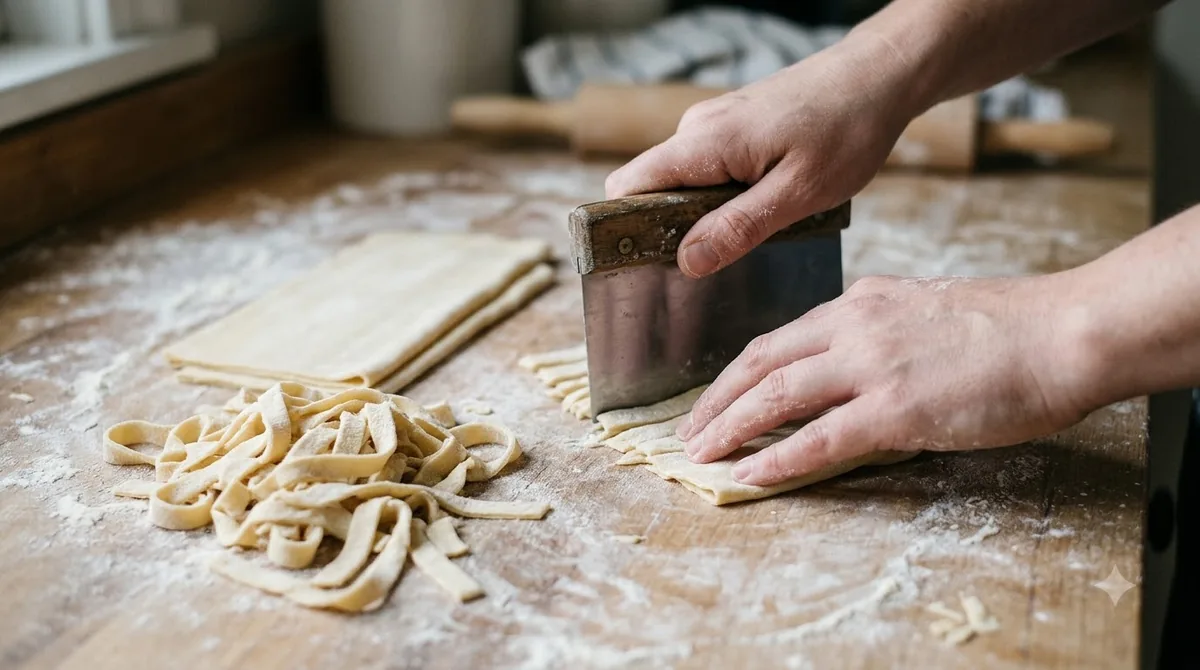
This is the core of how to use a pasta cutter with a mixer, so follow the order exactly. If you own one, our KitchenAid pasta roller walkthrough covers the roller itself. The KitchenAid pasta cutter instructions set out the roller steps in order, and the cutter works on the same sheet you make. Dust the pasta with flour while you roll and cut, so the dough does not stick to the metal.
- Set the roller adjustment knob to setting 1.
- Turn the mixer to speed 2 and feed the flattened dough into the rollers.
- Fold the dough in half and roll it again. Repeat until the dough feels smooth and covers the full width of the roller.
- Change to setting 3 and roll again without folding. Keep raising the setting until the sheet reaches the thickness you want.
- Remove the roller and fit the cutter you want.
- Feed the flattened sheets through the cutter and catch the strands as they come out.
The KitchenAid page does not give a setting or mixer speed for the cutter itself. Check your model’s manual for those numbers before you start. Each cutter has its own limits, so the manual is the final word for your model.
Attaching the cutter
Always turn the mixer off and unplug it before you change any attachment.
- Turn the stand mixer off and unplug it.
- Remove the attachment hub cover, or flip up the hinged cover if your mixer has one.
- Insert the attachment shaft housing into the hub so the power shaft fits the square socket. Rotate it gently if it does not seat.
- Tighten the attachment hub knob until the attachment is fully secured.
How to Use a Pasta Cutter by Hand: The Chitarra
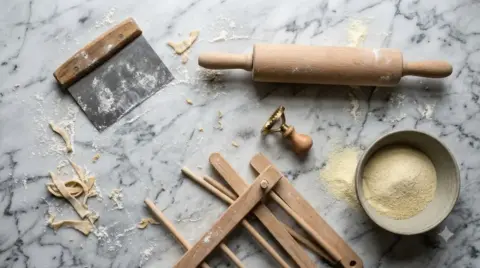
A chitarra cuts a rolled sheet into strands when you press it through steel wires with a rolling pin, as long as the sheet fits within the wire area.
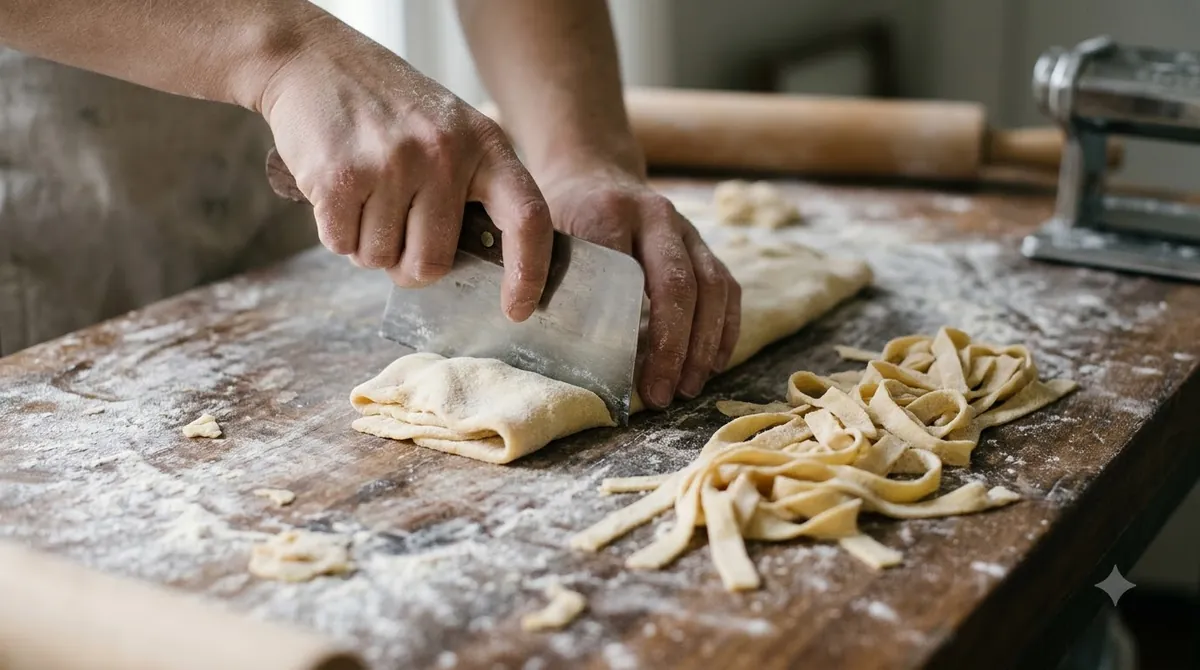
King Arthur Baking’s guide to the chitarra describes a wire area of about 6 by 14 inches, so keep the sheet no larger than that. The cutter is reversible, with one side making 5 mm tagliatelle and the other 3 mm spaghetti.
- Roll fresh dough into a sheet no larger than the wire area.
- Lay the sheet over the wires and press it through with a rolling pin.
- Let the strands fall onto the slanted wooden board.
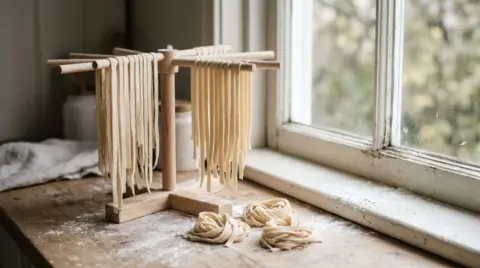
- Twirl the noodles into loose nests to rest, or dry them on a rack for later.
If the strands come out uneven, tighten or loosen the wires with the two screws at the base of the frame. Do not soak the cutter, since water can warp the wood. Matching the sheet to the wires is the key part of how to use a pasta cutter by hand. To compare wire frames, read about the pasta chitarra.
Keeping Strands From Sticking
Part of how to use a pasta cutter well is shaping the cut pasta into a loose mound as it leaves the cutter, then sprinkling it with flour so the strands do not fuse.
James Peterson’s book Cooking (2007) recommends catching the pasta as it exits the machine and shaping it into a mound, sprinkled with flour. KitchenAid also advises dusting with flour while rolling and cutting. Flour keeps the damp surface from tacking to itself, so the strands separate when you lift them. Good handling matters as much as the cut.
- Dust the sheet lightly before each pass through the rollers.
- Catch the strands in a loose heap, not a flat stack.
- Cook fresh strands soon after cutting, or dry them at home on a rack.
Common Mistakes to Avoid
The three most common errors in how to use a pasta cutter are rolling the sheet wider than the cutter can take, letting the strings go loose, and soaking the cutter in water.
A sheet wider than the chitarra wire area will not cut cleanly, so trim it before pressing. Loose strings produce uneven strands, and the screws at the base of the frame let you correct the tension. Water is the other big risk, because it can warp the wood and the attachments should never be immersed.
- Cutting anything other than pasta dough.
- Feeding a sheet too wide for the cutter.
- Skipping the flour, which lets strands clump together.
- Rinsing the attachment under the tap or washing it in the dishwasher.
Cleaning and Storing Your Cutter
Cleaning ends the job: let dough bits dry, then brush them away with a dry pastry brush rather than rinsing the cutter.
King Arthur advises brushing dried dough off the chitarra with a pastry brush. KitchenAid’s instructions say not to wash or immerse attachments in water or other liquid, and not to put them in the dishwasher. Use the same dry approach on a stand mixer cutter, and make sure it is fully dry before you store it.
Cooking What You Cut
Fresh egg pasta cooks in about half the time of dried pasta, so start checking early and follow the package time for your shape.
The Wikipedia article on pasta notes that fresh egg pasta takes about half the time to cook compared with dried pasta. The article gives no minutes, so the time on your package or in your recipe is the reliable guide. For method and timing, see how to cook fresh pasta.
Cooking time is the next variable to control. Fresh pasta also does not expand much when cooked. The same article puts about 0.7 kg (1.5 lb) at four servings, which is a useful measure for the batches you cut.
Frequently Asked Questions
Can I use store-bought dough in a pasta cutter attachment?
Use pasta dough only, because KitchenAid says not to cut or roll anything other than pasta. Check your model manual for specific dough guidance before you buy or make a batch.
Do I need to roll the dough before cutting?
Yes, and that step is part of how to use a pasta cutter correctly. An attachment needs a flattened sheet from the roller, and a chitarra needs a rolled sheet no larger than its wire area. Roll the dough to the thickness you want before you cut.
What setting should I use on the cutter?
Learning how to use a pasta cutter well means checking the cutter setting in your manual, because the KitchenAid page gives roller settings for the sheet but no setting or mixer speed for the cutter itself. Use the roller steps above as your starting point.
How do I stop fresh strands from clumping?
Shape the strands into a loose mound and sprinkle them with flour, as James Peterson recommends in Cooking. Cook them soon after cutting, or dry them on a rack.
Why does my chitarra cut unevenly?
The strings are most likely loose. Tighten them with the two screws at the base of the frame, and keep the sheet within the wire area.
Can I wash the cutter in water?
No. KitchenAid’s instructions say not to wash or immerse attachments in water or other liquid, and soaking can warp a wooden chitarra.
Once you learn how to use a pasta cutter, start with a small batch the first time, so you can see how the sheet feeds and how the strands fall. Once the dough is rolled to the right thickness, the cutter does most of the work, so keep the flour close and the cutter dry.
 8 min readGear & PantryPasta Cutter Guide: 3 Types, Blades and How to Use OneUpdated Nov 10, 2026
 8 min readGear & PantryBest Pasta Cutter Wheel Types for Home CooksUpdated Nov 10, 2026
 8 min readGear & PantryHow to Use a Ravioli Cutter at HomeUpdated Nov 10, 2026
 7 min readGear & PantryHow to Use a Pizza Cutter: Step-by-Step Guide for Clean SlicesUpdated Nov 10, 2026
 9 min readGear & PantryRavioli Cutter Guide: Types, Sizes and How to Use OneUpdated Nov 10, 2026
 8 min readGear & PantryHow to Use a Pasta Drying Rack for Homemade PastaUpdated Nov 10, 2026