
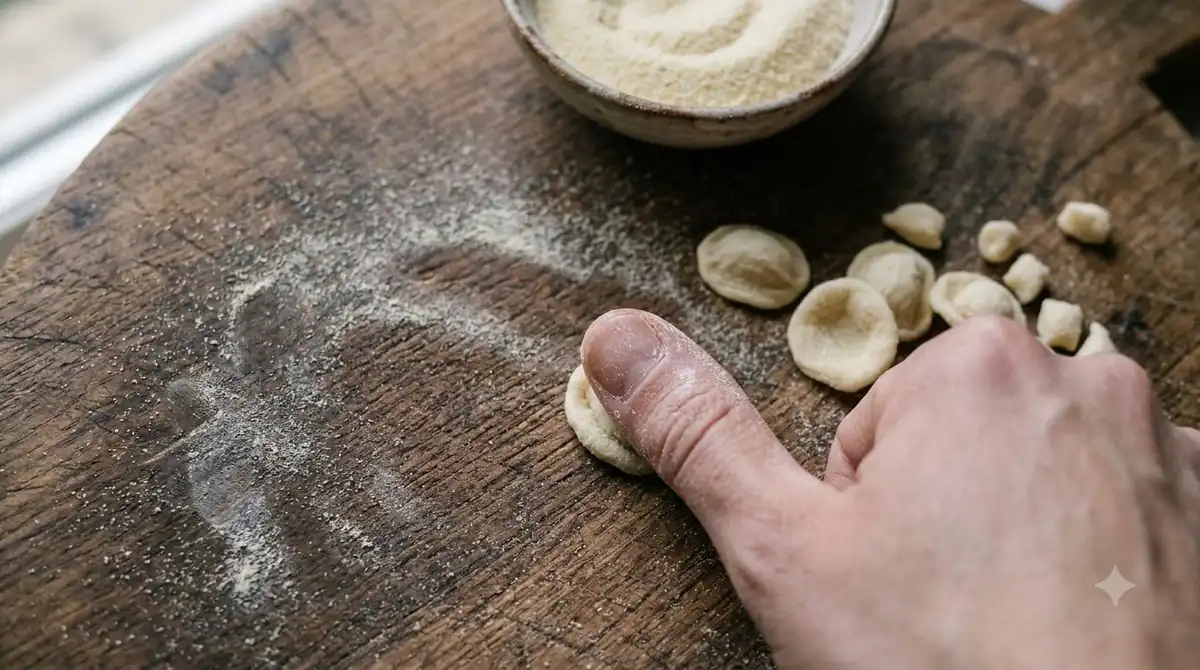

A gnocchi board is a small grooved board used to shape gnocchi by rolling dough across its ridges. The grooves leave a textured surface that gives sauce more places to cling to. Boards come in wood or plastic and several sizes, so the right choice depends on how often you cook. Some sellers list a grooved gnocchi board as a pasta board, and this guide covers both.
Some boards include a handle or an extra roller for other shapes. A fork or cheese grater can also make ridges if you only cook gnocchi now and then.
What a Gnocchi Board Does
A gnocchi board gives each small piece of dough a ridged surface by rolling it along deep grooves. Tasting Table describes these ridges as spots where sauce can cling, which is the main reason cooks use the tool.
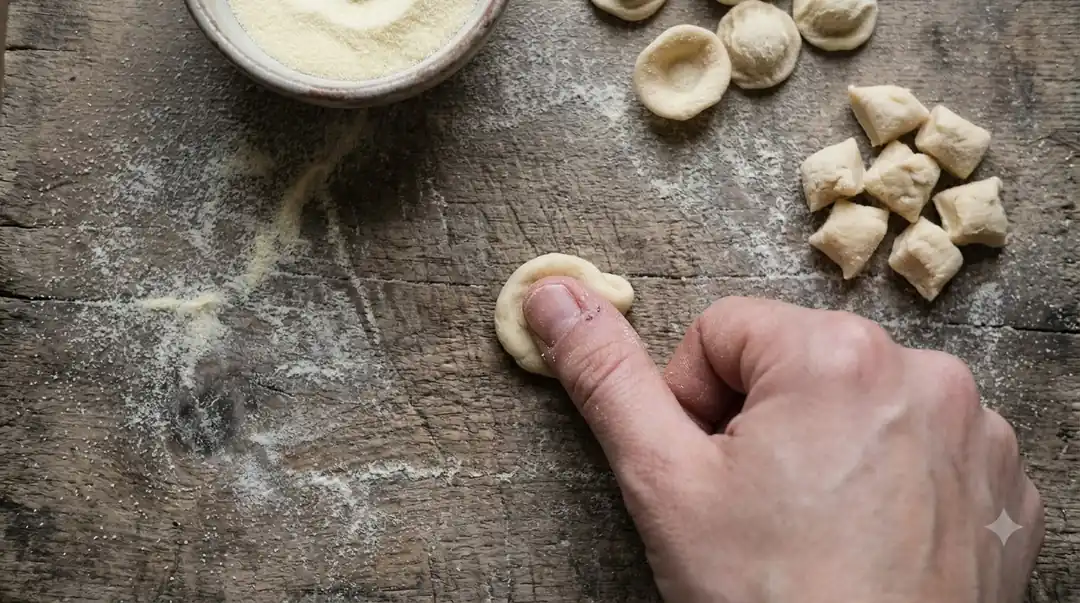
Gnocchi are a family of pasta-like dumplings in Italian cuisine (see what is gnocchi for the basics). According to the Wikipedia gnocchi entry, the base recipe uses wheat flour, potato, egg and salt. The dough is often rolled out and cut into pieces about the size of a wine cork or smaller.
A flat cutting board has no grooves, so it cannot add the ridged surface that the gnocchi board provides. The board does one job, but it does that job directly: each piece leaves the board with a pattern on one side and a smooth base on the other.
How to Use a Gnocchi Board
To use a gnocchi board, hold it upright, press a dough ball against the edge nearest you, and roll it away along the grooves. The method below follows the steps in Tasting Table’s gnocchi board guide.
- Make your dough using your preferred recipe, such as a potato gnocchi recipe.
- Hold the board upright.
- Place a dough ball against the edge nearest you.
- Press gently with your thumb and roll the ball away from you along the grooves.
- The piece is finished when it naturally pops out from under your thumb.
- Repeat until all the pieces are ridged.
Some cooks raise one side of the board slightly to create a gnocchi slide while they work, according to the same source. Keeping the pieces close to the same size helps them ridge in a similar way and cook at a similar pace.

Choosing the Material for Your Board
Wood is the more traditional material for a gnocchi board, while plastic is lighter and more convenient for some cooks, according to Tasting Table. Neither material is named as the only correct choice.
| Material | What the sources say | Who it suits |
|---|---|---|
| Wood | Described as the more traditional option. A beech wood gnocchi board is sold by King Arthur Baking. | Cooks who want the classic feel and a board they can store on the counter |
| Plastic | Described as lighter and more convenient for some cooks. | Cooks who want a lighter tool to move between sink and counter |
The King Arthur beech board also has an angled base that keeps the board steady on the counter. Check whether the base and surface suit your work area before you choose a material.
Size, Handle and Extra Pieces
Gnocchi boards come in several sizes, and some include a handle or an extra roller, so compare the listing details before you order. The sources reviewed for this guide do not give one standard size for every board.
- Size: Tasting Table says boards come in multiple sizes, so check the length and width on the product page.
- Handle: some boards have a handle, which can make the board easier to hold.
- Garganelli roller: one King Arthur listing includes a wooden garganelli roller for a different shape, so confirm whether it is included.
- Base: the King Arthur listing describes an angled base that keeps the board steady on any surface.
Match the board to the batch size you make. A larger board suits a bigger batch, while a smaller board is easier to store in a drawer. Choose based on the space you have and how often you cook gnocchi.
Gnocchi Board, Fork or Grater
A gnocchi board and a fork both put ridges on dough, but the board creates them by rolling, while a fork or grater presses a pattern into each piece. Wikipedia notes that professional tools exist for this purpose, so a board is an option rather than a requirement.
| Tool | How it makes ridges | Source |
|---|---|---|
| Gnocchi board | Dough is rolled across deep grooves | Tasting Table |
| Fork | Dough is pressed with a textured object such as a fork | Wikipedia gnocchi entry |
| Cheese grater | Dough is pressed against the textured side | Wikipedia gnocchi entry |
Choose a board if you make gnocchi often and want the same groove pattern on every piece. A fork or grater is enough if you cook gnocchi only occasionally.
Shapes You Can Make on a Board
A gnocchi board can shape more than gnocchi. King Arthur’s gnocchi board listing names gnocchi, garganelli, cavatelli and gnocchetti sardi as shapes the board is used for, and Wikipedia describes several regional shapes made from dough. For the rolling motion, see our guide on how to use a gnocchi board.
| Shape | Dough type or origin |
|---|---|
| Gnocchi | Potato-based dumplings, especially popular in Lombardy, Abruzzo, Friuli-Venezia Giulia, Veneto and Lazio |
| Cavatelli | Flour-based, from Apulia |
| Malloreddus | Flour-based, from Sardinia |
| Garganelli | Origin and dough not stated in the sources reviewed |
Because the dough types differ, check the recipe you plan to use before you choose the board. A potato dough and a flour dough may behave differently on the grooves. Read the shape list in each product description before you buy, so the board matches the pasta you plan to make.
A Quick Checklist Before You Buy
Before you order, confirm the material, size, handle, included roller and base. The sources reviewed for this guide do not describe one standard setup, so these details decide which board fits your kitchen.
- Material: wood for the traditional feel, or plastic for a lighter tool, as Tasting Table describes.
- Size: a stated length and width on the product page, matched to the batch you usually make.
- Handle: whether the board has one, since some boards do not.
- Extras: whether a garganelli roller is included, as one King Arthur listing does.
- Base: whether the base is angled to keep the board steady on the counter.
Save the listing or the product sheet once you order. It is the easiest place to find the care steps and the dimensions when you need them later.
What Sources Do Not Confirm
The sources reviewed for this guide do not give board dimensions, weight, cleaning steps or current prices, so check those details on the product page before you buy. The King Arthur listing shows a price with no date and a temporarily unavailable notice, so no price is included here.
To verify before you choose, look for the board length and width, the material and thickness, whether a handle or garganelli roller is included, and the care section on the seller’s page.
Common Mistakes With a Gnocchi Board
A common mistake is uneven piece size, because the dough is typically cut into pieces about the size of a wine cork or smaller. A consistent cut helps every piece ridge in the same way. Rolling a few test pieces first shows how your dough behaves on the grooves.
- Cutting pieces in different sizes, so some ridge less evenly than others.
- Rolling without holding the board upright, which the method in Tasting Table starts with.
- Stopping before the piece naturally pops out from under the thumb.
- Buying without checking the dimensions, which the reviewed listings do not always state.
Frequently Asked Questions
Is a gnocchi board only for gnocchi?
No. The King Arthur Baking listing says the board is used to shape pasta such as gnocchi, garganelli, cavatelli and gnocchetti sardi. Check the shape list on any board you consider.
What is the best gnocchi board?
No single board is best for every cook. The sources reviewed for this guide do not rank boards, so compare material, size and included extras against how often you make gnocchi.
Can I make gnocchi without a gnocchi board?
Yes. The Wikipedia gnocchi entry says the dough may be pressed with a textured object such as a fork or cheese grater to make ridges. Pieces without ridges still cook, but they have less surface for sauce to cling to.
How do I know when a piece is ready to come off the board?
According to Tasting Table, the piece is finished when it naturally pops out from under your thumb. Repeat the roll with each dough ball until all the pieces are ridged.
Does a gnocchi board include a garganelli roller?
Some do. One King Arthur Baking listing describes a wooden garganelli roller included with its board, but other boards may not include one. Check the product contents before you buy.
Is wood or plastic better for a gnocchi board?
Neither is named as the only correct choice. Tasting Table describes wood as the more traditional option and plastic as lighter and more convenient for some cooks.
If you make gnocchi regularly, a gnocchi board gives you a consistent groove pattern with one simple roll. If you cook gnocchi rarely, a fork or grater can still add ridges. Check the size, material and included parts on the listing before you order.
 8 min readGear & PantryHow to Use a Gnocchi Board: Step-by-Step GuideUpdated Nov 10, 2026
 7 min readGear & PantryPasta Board: How to Choose, Use and Care for OneUpdated Nov 15, 2026
 8 min readGear & PantryParmesan Cheese Grater: How to Choose, Use and Store OneUpdated Nov 17, 2026
 9 min readGear & PantryPasta Drying Rack: How to Choose and Use One at HomeUpdated Nov 16, 2026
 7 min readGear & PantryRotary Cheese Grater: How It Works, How to Choose One and Use ItUpdated Nov 16, 2026
 8 min readGear & PantryCavatelli Maker: What It Does and How to Choose and Use OneUpdated Nov 17, 2026