
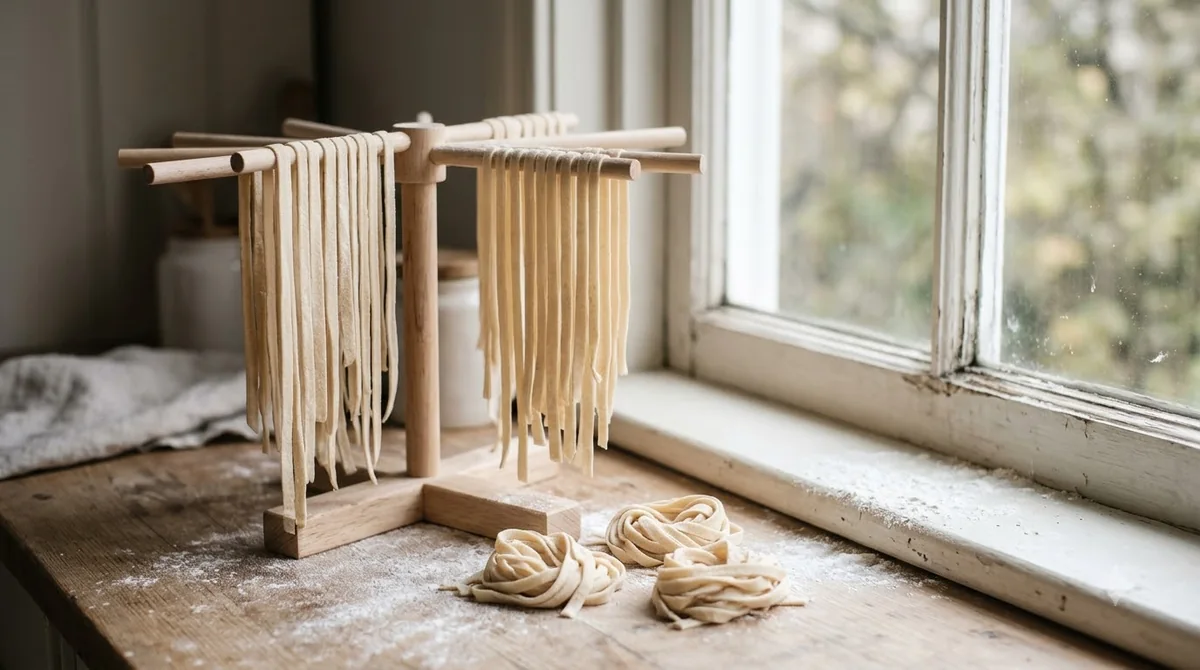

A pasta drying rack is a stand with rods or arms that holds freshly made pasta strands apart while they air-dry. Strands that touch while still moist tend to stick together, so the rack gives each piece its own space. Once fully dry, pasta is moved into an airtight container for storage.
Racks range from folding models to fixed wooden stands, and the right choice depends on how much pasta you make and how much counter space you have. A simple dowel or clothes rack can stand in for a pasta drying rack on occasional batches. For the setup, see our guide on how to use a pasta drying rack.

KitchenAid KPDR Pasta Drying Rack Attachment
Pros & ConsViewHide
Reasons to buy
- Dries up to 4 lb of fresh pasta at a time
- Folds flat for storage
- 1-year limited warranty, no tools needed to assemble
Reasons to avoid
- Takes counter space while pasta dries
- Costs more than basic plastic drying racks
- Assembly required before first use
What a Pasta Drying Rack Does
A pasta drying rack holds pasta strands in the air so that air can reach every surface while they dry. Drying is a normal step in pasta making. According to the Wikipedia article on pasta, commercial dried pasta is dried at a low temperature for several days until its moisture content is reduced to about 12%, which is what lets it be stored and shipped.
The same article says dough for shaping holds around 32 percent moisture on a wet basis, so freshly cut strands start out far wetter than a finished dried product, and it does not describe a home drying method. Home cooks do not have industrial dryers, so the goal is simpler: keep the strands from touching until they are dry enough to store. A rack does that by giving each strand its own place in the air.
The main jobs a rack does at home are:
- Keeps long strands like spaghetti and fettuccine from fusing into clumps.
- Lets air move around the whole length of each strand instead of only the bottom.
- Gives you a clear place to hang freshly cut pasta before it goes into a pot or a container.
Types of Pasta Drying Racks
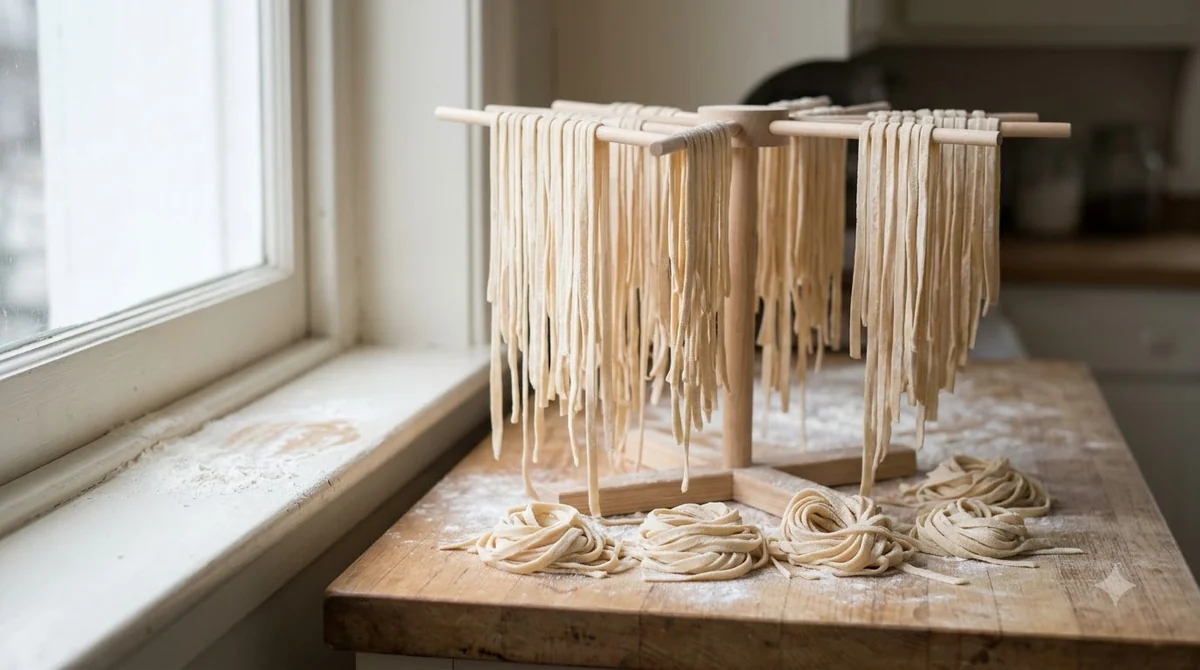
Pasta drying racks usually come in three styles: collapsible folding racks, wooden stands and fixed multi-arm frames. Each suits a different amount of counter space and batch size, so pick the style that matches how you cook.
- Collapsible racks fold flat for storage, which helps in a small kitchen.
- Wooden stands tend to be sturdier and suit a counter you can leave a rack on.
- Fixed multi-arm frames give more rods for larger batches but take up more space.
Arm counts, dimensions and capacity differ by model, and this article does not confirm figures for any specific rack. Check the listing for those numbers before you buy.

Collapsible Racks and What to Check
A collapsible pasta drying rack is the most storage-friendly option, but the listing should say how big it is when open, what it is made of and how many arms it has. The King Arthur collapsible pasta drying rack listing says it is made in Italy and keeps even spacing between strands to prevent sticking while drying.
That listing names spaghetti, fettuccine, lasagna and lo mein as examples of pasta it is meant for. It does not state the dimensions, material, number of arms or care instructions, so ask the seller or check the packaging before you buy.
Before buying any pasta drying rack, check these points:
- Open and folded size, measured against your counter or drawer.
- Material and whether it is safe for food contact in the listing.
- Number of rods or arms relative to how much pasta you make at once.
- Whether the listing says which pasta types it is designed for.
How to Use a Pasta Drying Rack
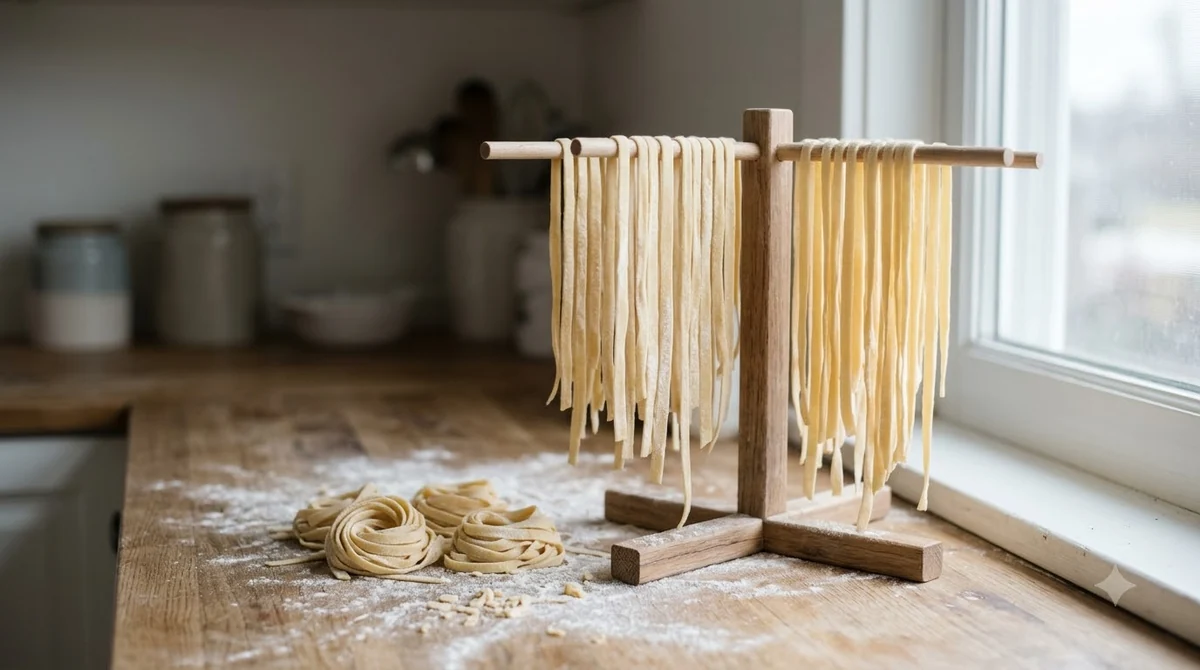
Start from a tested dough such as our fresh pasta dough recipe. To use a pasta drying rack, hang fresh strands so they do not touch and let them dry fully before storage. The King Arthur listing advises drying pasta thoroughly before storing it in an airtight container, and shaping strands into nests while they are still pliable.
- Cut the dough into strands (see how thin to roll pasta for thickness) and lift them gently so they do not clump.
- Hang the strands over the rods with space between each one.
- Check the strands for stickiness as they dry, and separate any that touch.
- Shape leftover strands into loose nests while they are still flexible.
- Let the pasta dry completely before moving it to storage.
King Arthur’s guide to drying pasta suggests drying fresh pasta overnight, or for up to 24 hours, before storing it. Timing depends on the dough and the room, so judge by feel as well as the clock. Break off a small piece: when the texture has fully hardened and the piece snaps, the pasta is ready for storage.
Humidity and Drying Conditions
Air moisture changes how a rack performs. The King Arthur drying guide notes that on a humid day fresh pasta may not dry fully, and in that case it may be better to cook it fresh. Pasta that is still soft inside can mold during storage, so the rule is simple: store only pasta that is completely hard and brittle.
Place the rack somewhere dry and away from steam from the stove or dishwasher, since moist air slows drying. Leave space between the strands and between the rack and any wall or window, so air can reach every side of each strand.
Storing Dried and Fresh Pasta
Dried pasta can be stored for about a year when it is airtight and kept in a cool, dry place, according to the Wikipedia pasta article. Fresh pasta has a much shorter life and belongs in the refrigerator. Wikipedia describes fresh pasta as usually made with eggs and all-purpose or 00 flour, more tender than dried pasta and ready in about half the cooking time, while dried pasta is mainly semolina and water, a difference our fresh pasta vs dried pasta guide explains.
- Dried pasta: airtight container, cool and dry place, up to about a year.
- Prepackaged fresh pasta: Italian rules require refrigeration at 4 °C (39 °F) or below and sale within five days of manufacture.
- Cooked pasta: refrigerate for a maximum of five days.
The Italian rule above applies to commercially packaged fresh pasta. Home-made pasta has no such label, so store it cold and use it promptly. Wikipedia adds that cooked pasta can be frozen for two or three months and that a couple of teaspoons of oil helps prevent sticking; for fresh pasta, see how to store fresh pasta.
Pasta Drying Rack or a Home Alternative
A dedicated rack is not the only option. The table compares common setups for drying pasta at home.
| Option | Best for | Main drawback |
|---|---|---|
| Pasta drying rack | Regular batches of long pasta | Takes up counter or wall space |
| Clothes or laundry rack | Occasional batches | Must be kept clean and dry |
| Back of a chair or hangers | A few strands at a time | Limited spacing and may be unstable |
| Floured board with loose nests | Shapes that do not need rods | Nests can stick together if they touch |
If you are looking at a KitchenAid pasta drying rack, read the listing closely and confirm which attachment or pasta types it is meant for. Product names alone do not show that.
Cleaning and Caring for Your Rack
Clean the rack after each batch, while dried dough is still easy to brush off. Dough that hardens onto rods or arms is harder to remove later. Wood, metal and plastic racks can need different care, so follow the maker’s instructions in the packaging or manual rather than soaking the whole rack.
Mistakes to Avoid and What Is Not Verified
The most common problem is strands touching while still moist, which causes sticking. Spacing the strands and drying them fully prevents most of it.
- Hanging strands too close together so they fuse as they dry.
- Storing pasta before it is fully dry, which can make it clump inside the container.
- Assuming any pasta drying rack suits every shape, without checking the listing.
Several details are not confirmed here: exact air-drying times for every dough, the dimensions and material of specific racks, arm counts, compatibility with any brand of pasta machine attachment, and current prices. Check the product listing and a trusted pasta-making guide for those.
Frequently Asked Questions
Can I use a clothes drying rack instead of a pasta drying rack?
A clothes rack can work for occasional batches if the strands hang without touching. Keep the rods clean and dry, and avoid anything that could leave residue on the pasta. Drying time depends on the dough and the room, so use the feel test in the how-to section.
Do I need a pasta drying rack to make fresh pasta?
No. You can dry strands in loose nests on a floured pasta board, but a pasta drying rack keeps strands separate more reliably. The choice depends on batch size and counter space.
Which pasta shapes does a pasta drying rack suit?
Long shapes like spaghetti and fettuccine are the usual use. The King Arthur listing names spaghetti, fettuccine, lasagna and lo mein as examples. Check each product listing for the shapes it names.
Should I store pasta on the rack?
No. Once the pasta is fully dry, move it into an airtight container kept in a cool, dry place. The pasta drying rack is for drying only.
How long does dried pasta last?
Dried pasta can keep about a year when it is airtight and stored cool and dry, according to the Wikipedia pasta article. Once opened, keep it sealed to protect it from moisture.
A pasta drying rack helps, but spacing the strands and drying them fully matter more than the rack itself. Choose a style that fits your counter and batch size, check the listing for the details it leaves out, and store only fully dry pasta.
 8 min readGear & PantryHow to Use a Pasta Drying Rack for Homemade PastaUpdated Nov 10, 2026
 9 min readGear & PantryPasta Drying Tray: How to Choose and Use OneUpdated Nov 17, 2026
 8 min readGear & PantryPasta Fork: How to Choose and Use One for Long PastaUpdated Nov 15, 2026
 7 min readGear & PantryPasta Board: How to Choose, Use and Care for OneUpdated Nov 15, 2026
 8 min readGear & PantryPasta Cutter Guide: 3 Types, Blades and How to Use OneUpdated Nov 10, 2026
 7 min readGear & PantryCorzetti Stamp: How to Choose the Right One for Home PastaUpdated Nov 10, 2026