
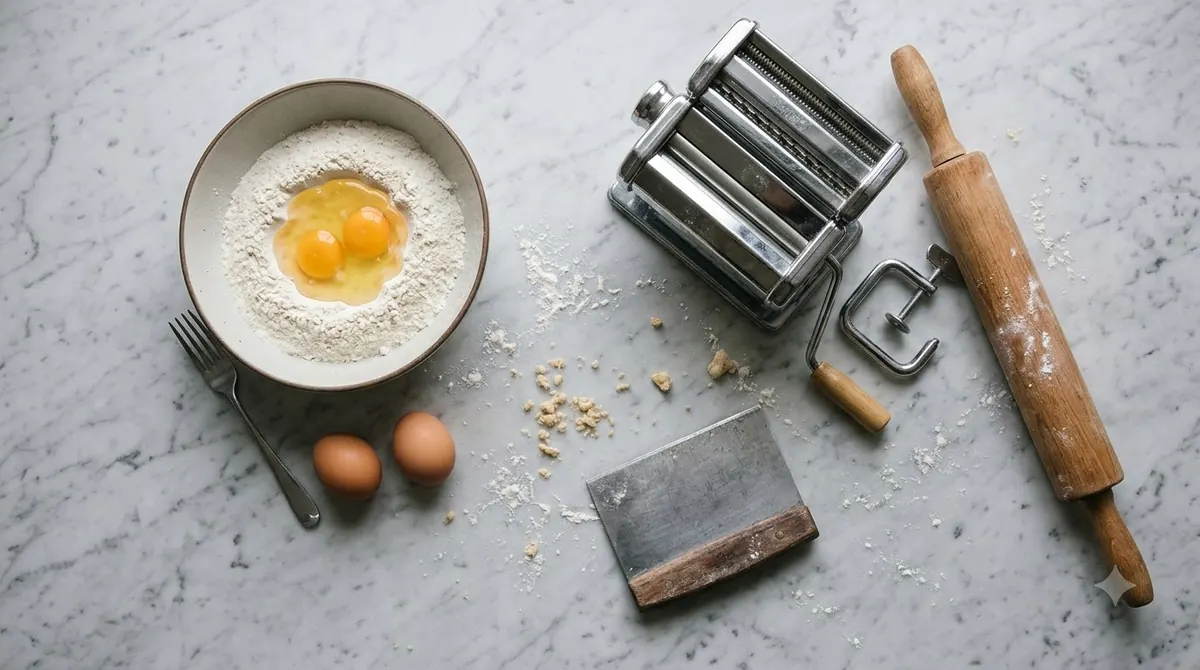

A pasta making kit is a bundle of tools for making fresh pasta at home, and it may include a roller machine, attachments, or only hand tools. Fresh pasta is usually made with eggs and all-purpose flour, so a kit has to cover mixing, rolling, and cutting. The right choice depends on whether you already own a stand mixer and which shapes you cook most often. Check the included attachments before comparing prices, since listings name the same part in different ways.
| Pick | Best for | Key fact |
|---|---|---|
| Roller machine kit | Cooks who want long ribbons and several shapes | Flat shapes come from the rollers, and cut or filled shapes depend on the attachments |
| Stand mixer roller attachment | Cooks who already own a compatible stand mixer | The mixer motor drives the roller, so no separate machine is needed |
| Hand-tool set | Cooks who prefer rolling by hand | King Arthur Baking says, “You don’t need a pasta machine to make fresh pasta.” |

MARCATO Atlas 150 Machine, Made in Italy, Red
Pros & ConsViewHide
Reasons to buy
- Made in Italy hand-crank pasta machine rolling dough in steps
- Includes a pasta cutter and hand crank
- Fits Marcato attachments and the optional motor
Reasons to avoid
- Only rolls and cuts the sheet; tortellini are still shaped by hand
- Takes more counter and storage space than a hand cutter
- Fixed to a countertop edge, so check clamp room

KitchenAid KSMPRA 3-pc Pasta Roller/Cutter Set
Pros & ConsViewHide
Reasons to buy
- Roller and cutter attachments for KitchenAid stand mixers
- Rolls even sheets without hand cranking
- 88% of 9K Amazon ratings are 5-star
Reasons to avoid
- Needs a compatible KitchenAid stand mixer
- Rolls and cuts the dough, but does not fill or fold tortellini
- One of the costlier tools in this guide

Bellemain Ravioli Mold & Press
Pros & ConsViewHide
Reasons to buy
- Metal cutting frame cuts and seals the ravioli in one press, per the listing
- Makes 12 uniform 1-inch square ravioli at a time
- 75% of the 6K+ Amazon ratings are 5-star
Reasons to avoid
- 1-inch squares are small, so fillings must be used sparingly
- Needs flour dusting and a firm press to release cleanly

Italian Hand Made Mattarello Pasta Rolling Pin
Pros & ConsViewHide
Reasons to buy
- Comes with a dough scraper, per the listing
- Handmade Italian-style mattarello shape for rolling pasta sheets
- 4.6 average from about 68 Amazon ratings
Reasons to avoid
- Only about 68 ratings, so a shorter track record
- Wood needs hand washing and oiling; do not soak it
The boxes above show tools sold on Amazon that match the three pasta making kit types: a hand-crank roller machine, a stand mixer roller attachment, a ravioli mold and a pasta rolling pin. Check each listing for what is included before you compare prices.
What a pasta making kit usually includes
King Arthur Baking’s list of essential pasta tools names a digital scale, a wooden board, a metal bench knife, a sheet pan, nesting cookie cutters, and a pasta machine. Most complete kits build on those same items.
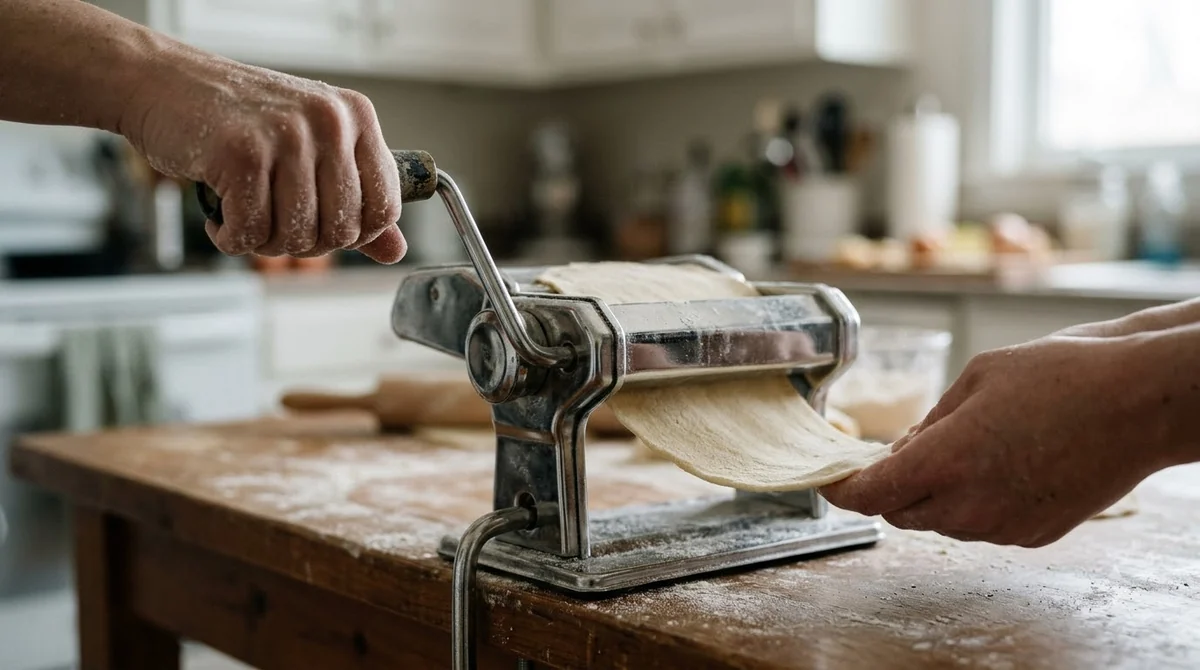
Each part of a pasta making kit has a clear job. A digital scale weighs flour and eggs so the dough stays consistent from batch to batch. King Arthur notes that a scale that switches between grams and ounces works well, and that a good scale does not need to be expensive. You can read the full list in King Arthur Baking’s pasta tools guide.
- Rolling tool: a manual pasta machine or a stand mixer roller attachment.
- Scale: a digital kitchen scale for weighing flour, eggs, and water.
- Board: an unvarnished wooden board for kneading and shaping the dough.
- Bench knife: a metal scraper that combines flour and liquid and trims the dough.
- Cutters: nesting cookie cutters for ravioli and cappelletti rounds.
The wooden board grips the dough and absorbs moisture, which helps with semolina shapes and keeps sheeted pasta from sticking. A damp cloth under the board stops it from sliding during kneading. Some pasta making kits add a gnocchi board, a ridged wooden board that gives gnocchi and semolina shapes like cavatelli their texture.
A sheet pan lets you store finished pasta. Line it with parchment, a tightly woven dishcloth, or coarse semolina, and cut it into half or quarter sizes so it fits a fridge or freezer. A pasta making kit with these pieces covers the full cycle from mixing to storage.
Machine kits or hand tools
You do not need a machine to make pasta, but King Arthur Baking says that “for most of us, a machine is well worth the investment.” The choice depends on how often you cook pasta and how many shapes you want to make.
Fresh pasta has traditionally been produced by hand, sometimes with the aid of simple machines, according to Wikipedia’s pasta article. King Arthur also says that “Plenty of delicious shapes can be made by hand, without needing to roll the dough into flat sheets at all.” A hand-tool kit is a practical choice for shapes that you cut or shape rather than roll. For the rolling step by hand, a pasta rolling pin does the job, and our pasta making tools guide helps if you would rather buy tools one at a time.
Roller machine kits
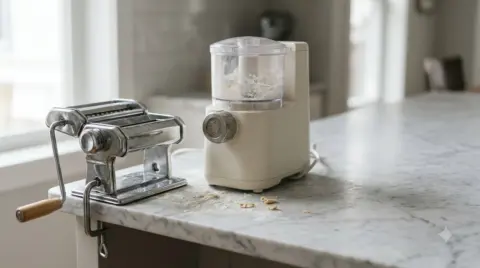
A pasta making kit built around a roller machine pairs a manual rolling machine with attachments for cutting and filled shapes. King Arthur recommends the Marcato Atlas 150 as a manual option. Flat shapes come from the rollers, while cut and filled shapes depend on the attachments in the kit. Attachment names vary by retailer, so check the manufacturer page for the exact list before you buy.
Stand mixer attachment kits
A stand mixer roller attachment uses the mixer’s motor, so you skip a separate machine. King Arthur names KitchenAid’s pasta roller as an example. The catch is compatibility. Check that the attachment fits your mixer model before you order, because a kit that fits one model may not fit another.
Kits compared
Pasta making kits fall into three groups: roller machine sets, stand mixer attachments, and hand-tool sets. Each group includes different parts and leaves different parts out.
| Kit type | Usually includes | What it leaves out | Best for |
|---|---|---|---|
| Roller machine set | Manual rolling machine, attachments, sometimes flour | A motor, so you turn the crank by hand | Long ribbons and several shapes |
| Stand mixer attachment | Roller or cutter attachment | The mixer itself, and a fit that depends on the model | Cooks who already own a compatible mixer |
| Hand-tool set | Scale, board, bench knife, cutters, sometimes a rolling pin | A rolling machine, so long sheets take more effort | Cooks who prefer rolling by hand |
Use the table as a first filter. A pasta making kit that suits one cook may not suit another, so decide which shapes you cook most often before you compare prices or bundles.
Ravioli and gnocchi starter kits
Ravioli and gnocchi starter kits focus on stamps, cutters, and boards, so they suit filled and small shapes but do not roll long sheets.
Nesting cookie cutters cut the rounds for ravioli and cappelletti. King Arthur says both fluted and smooth edges work, and that multiple sizes add flexibility. A pasta making kit built around these cutters is a good fit for a cook who mainly makes filled pasta. Our ravioli mold guide compares the options.
Scope boundary: without a roller, these kits will not make long ribbons such as fettuccine or tagliolini. If long pasta is the goal, look for a kit with a rolling tool first.
What kits usually leave out
Many kits leave out the flour and the drying rack, and King Arthur Baking says a drying rack is optional. Read the listing for what is included before you assume a set is complete.
- Flour: fresh pasta is usually made with eggs and all-purpose flour, which many kits do not include.
- Semolina: semolina flour is the ground endosperm of durum wheat, the grain used for dried pasta and many shaping tasks.
- Drying rack: King Arthur says, “You can do without a pasta drying rack.”
- Sheet pan: a pan for storing finished pasta, which many sets leave out.
Compare the total contents, not only the tools. A pasta making kit that adds flour and a sheet pan may suit a beginner better than a cheaper set of tools alone.
How to choose a pasta making kit
Choose a pasta making kit by matching its tools to the shapes you cook and to the equipment you already own. Work through the checks below before you buy.
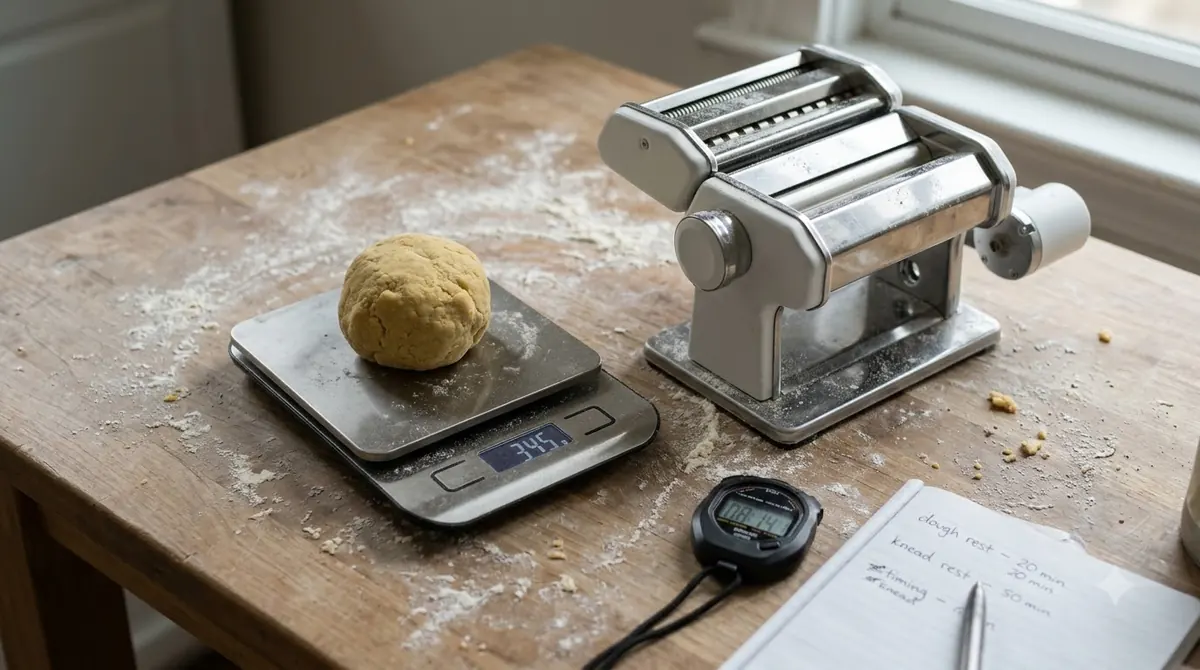
- List the shapes you cook most. Flat shapes need a roller, while filled shapes need cutters or stamps.
- Check whether you own a stand mixer and whether the attachment fits your model.
- Look for a digital scale in the kit, or plan to buy one separately.
- Check whether flour is included, and which type of flour the kit uses.
- Read the attachment names on the manufacturer page, since retailers list them differently.
Plan the batch size too. According to Wikipedia’s pasta article, 0.7 kg (1.5 lb) of fresh pasta serves four people generously, so decide how many servings you need before you roll the first sheet.

Common mistakes with pasta making kits
The most common mistake is buying attachments for shapes you never cook, or an attachment that does not fit your mixer. Avoid both by starting with your own cooking habits.
- Buying every attachment in a set when you cook only two or three shapes.
- Skipping the scale, which makes dough harder to repeat from batch to batch.
- Assuming a machine is required, when King Arthur says you do not need one.
- Forgetting that attachments are often sold separately from the machine.
Frequently Asked Questions
Do I need a pasta machine to make pasta at home?
No. King Arthur Baking says, “You don’t need a pasta machine to make fresh pasta.” A machine mainly makes rolling faster and more even, which suits cooks who make pasta often.
What is in a typical pasta making kit?
A typical kit includes a rolling tool, such as a manual machine or a stand mixer attachment, plus shaping tools like a scale, board, bench knife, and cutters. Check the listing for the exact items, since sets vary.
Does a pasta making kit include flour?
Some pasta making kits include flour and some do not. Fresh pasta is usually made with eggs and all-purpose flour, so check the listing before you buy.
Is a pasta making kit worth it for beginners?
A kit helps when it covers the basics: a scale, a board, a cutter, and a rolling tool that fits how you cook. Beginners who mainly want filled shapes can start with a smaller starter kit.
Can kids use a pasta making kit?
Kids can help with the hand tools in a pasta making kit, such as cutters and boards. Check the manufacturer’s age guidance on the package, because machines have moving parts.
How much pasta does one batch make?
According to Wikipedia’s pasta article, 0.7 kg (1.5 lb) of fresh pasta serves four people generously. Use that figure as a starting point for batch size.
Start with the shapes you cook most, then buy a pasta making kit that covers them. If you already own a stand mixer, check the attachment before you buy a separate machine. A good scale and clear dough habits matter as much as any extra attachment.
 6 min readBest PicksPizza Making Kit Gift: What to Include and How to Build OneUpdated Nov 13, 2026
 6 min readBest PicksPasta Making Gift Set: What to Include and How to Build OneUpdated Nov 13, 2026
 9 min readBest PicksBest Pasta Sheeter in 2026: Types, Widths and PricesUpdated Nov 12, 2026
 8 min readBest PicksThe Best Pasta Machines for Home Cooks in 2026Updated Nov 12, 2026
 8 min readBest PicksItalian Pasta Maker: How to Choose a Good OneUpdated Nov 12, 2026
 8 min readBest PicksBest Gifts for Pasta Lovers by Skill Level and BudgetUpdated Nov 12, 2026