
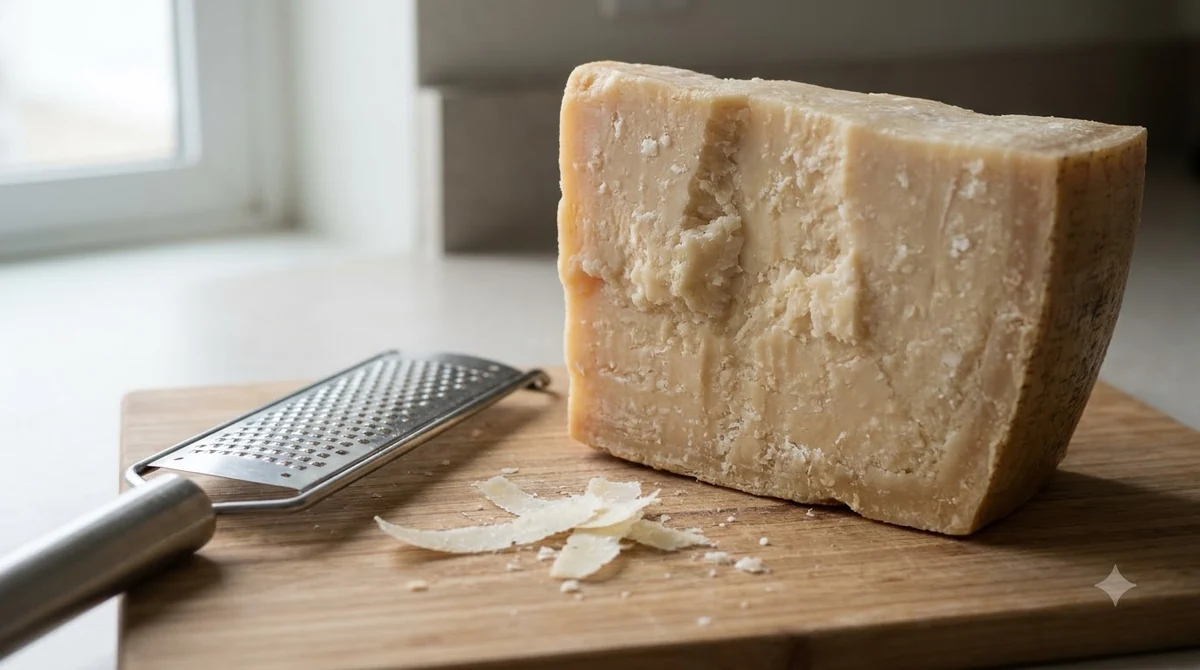

A rotary cheese grater is a hand-cranked tool with a drum of sharp, perforated blades that shreds hard cheese as you turn the handle. It suits Parmesan, Pecorino and other firm cheeses, and it is a simple way to add fresh grated cheese to pasta or pizza at home.
Choosing one comes down to a stable base, a stainless steel drum and a drum that detaches fully for cleaning. The sections below cover how it works, how to use it, which foods suit it and how to care for it.
What a Rotary Cheese Grater Is
A rotary cheese grater turns a crank that rotates a perforated drum over the food held in its hopper. The grating happens as the drum turns, so you guide the cheese with light pressure instead of pushing it across a flat surface.
Wikipedia’s cheese grater entry states that rotary graters are more efficient than other graters because of their mechanical leverage. The same article lists rotary drum graters as one grater style, alongside paddle graters and microplane or rasp graters. For the grating steps, see our guide on how to use a rotary cheese grater.
The article also calls the box grater the most common type and says rotary graters are effective for processing harder foods like nuts. Graters themselves are old: the page says the first attested ones were bronze and silver alloy, found at burial sites in Greece and Etruscan Italy from the early first millennium BCE, and the French maker François Boullier is credited with a metal grater in the 1540s. Grating slots come in different sizes, which is why one tool can prepare a range of foods. If you mostly grate Parmesan, our guide to Parmesan cheese graters compares other styles.

How the Drum and Crank Work Together
On a rotary cheese grater the crank drives the drum, and the drum’s blade size sets how fine or coarse the shreds come out.
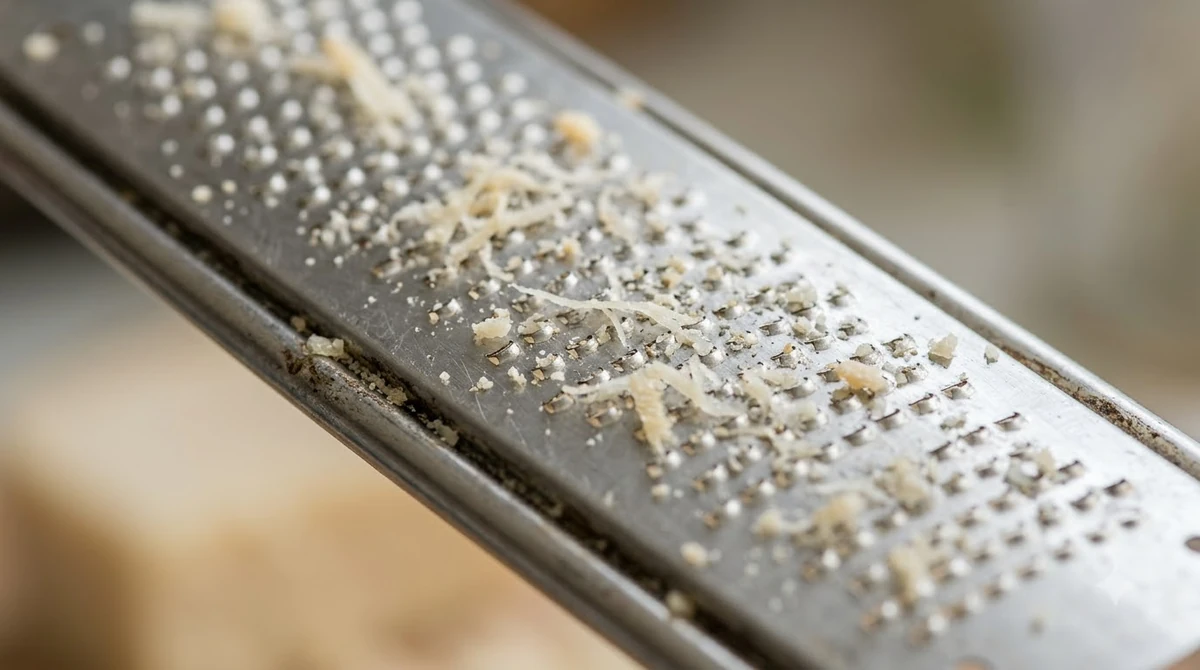
Choose the drum on your rotary cheese grater to match the job. A fine drum suits garlic and ginger once they are peeled, according to a retailer’s buying guide from Dioro. A coarser drum suits firm cheese that you want in visible flakes on pasta.
What to Look for When You Choose One
Look for a rotary cheese grater with a stainless steel drum, a stable base and a drum that detaches completely. Dioro’s buying criteria name these three points as the ones that matter most in daily use.
- Drum material: stainless steel drums resist corrosion.
- Stability: suction cup bases or non-slip feet help when you grate hard cheese.
- Handle: comfortable grips or angled designs reduce strain on your hand.
- Cleaning: a drum that detaches fully, and a small brush in the box, make upkeep easier.
- Format: a handheld model suits tableside use, while a countertop model offers more stability and capacity.
Body material ranges from all-metal to lightweight plastic, and the guide says metal bodies typically offer more stability and longevity. It describes handheld models as holding a modest amount of cheese, with a side-mounted crank, while countertop models have a larger capacity and may use a suction cup base or a weighted bottom. It adds that electric versions eliminate hand strain entirely. Budget models often cut corners on blade quality and mechanism smoothness, so check how the crank turns before you buy. Exact dimensions, weights and prices differ by model and are not covered here, so check the manufacturer’s listing for the model you plan to buy.
How to Use a Rotary Cheese Grater
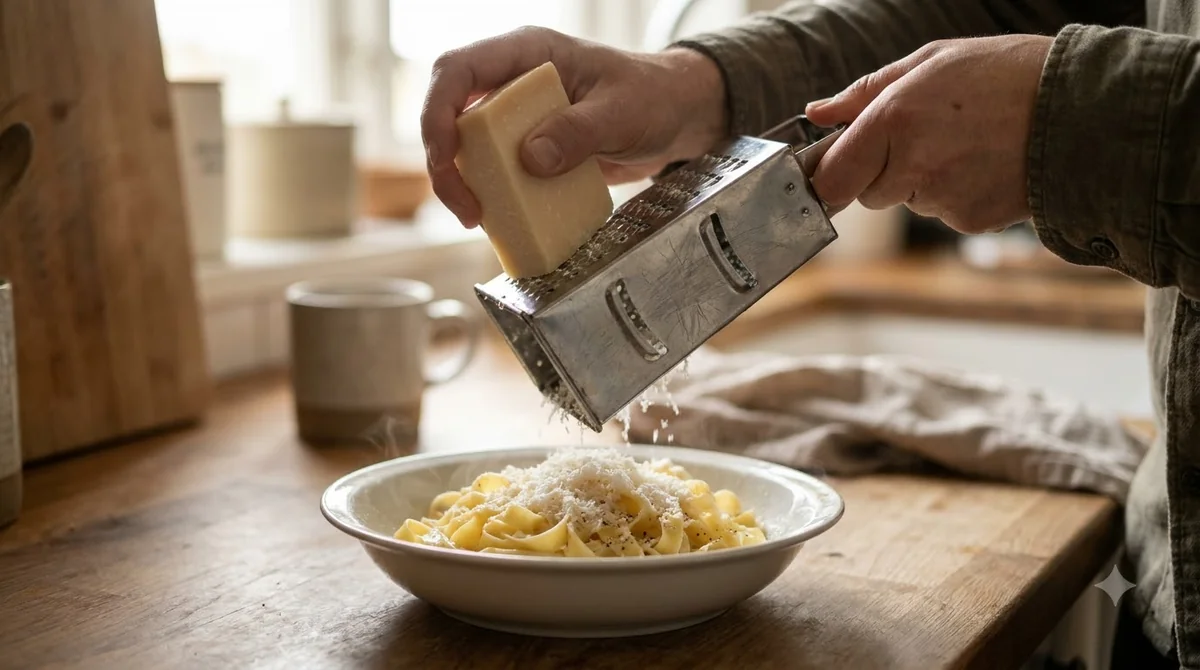
Hold the rotary cheese grater over the dish you are finishing, load firm cheese into the hopper and turn the crank at a steady pace. Grating directly over the plate or a bowl from a set of pasta bowls keeps the shreds where you want them. Hard cheese is the best match, so see Parmigiano-Reggiano vs Parmesan if you are unsure which to buy, and finish a tray of homemade lasagna the same way.
Safety is one reason people choose a rotary cheese grater. The Dioro guide says the cheese chamber acts as a buffer between your fingers and the blades, so a rotary cheese grater is gentler on fingers than a traditional grater, though it gives no specific guidance on feeding pressure. It also says interchangeable drums with different hole sizes are common, giving fine dust for delicate dishes and coarser shreds for melting.
- Set the grater on a stable surface, or hold it firmly over the dish.
- Fit the drum that suits the food, fine for dust-like shreds and coarse for flakes.
- Load the cheese so it rests against the drum, and keep the cheese away from the blade edge.
- Turn the crank with steady pressure, and keep your fingers clear of the blades.
- Empty the catch container, or grate straight onto the plate.
Which Foods Work and Which to Avoid
Hard nuts and chilled chocolate grate well, while softer nuts can clog the mechanism. The table below summarizes the food advice from Dioro’s usage tips.
| Food | Advice |
|---|---|
| Chocolate | Chill slightly before grating for cleaner shreds and less mess. |
| Almonds and hazelnuts | Work particularly well because they are hard. |
| Walnuts and other soft nuts | Avoid, because they may clog the mechanism. |
| Garlic and ginger | Peel first, then grate with the fine drum. |
| Citrus zest | Grate only the colored outer layer to avoid the bitter white pith. |
| Breadcrumbs | Let the bread dry slightly, then tear it into chunks that fit the chamber. |
How to Clean and Store Your Grater
Clean the rotary cheese grater right after use, before food dries in the perforations. Disassemble it, rinse each part under warm water and use a toothbrush for stubborn residue. Dioro notes that hand washing typically extends the lifespan of these tools, although many models are dishwasher-safe.
If you use a dishwasher, place the small components in a mesh bag so they do not get lost. Dry every part completely before you reassemble it, because trapped moisture can lead to rust or mold. For storage, keep the grater assembled with the drum slightly loosened, which reduces pressure on the mechanism, and keep spare drums together so none get lost.
Common Mistakes to Avoid
The most common errors with a rotary cheese grater are grating soft or wet foods, skipping the drying step and forcing the crank. Each one either clogs the drum or strains the mechanism over time.
- Grating soft nuts such as walnuts, which can clog the drum.
- Putting the grater back together while parts are still damp.
- Leaving food to dry in the perforations between uses.
- Pushing the crank hard instead of turning it at a steady pace.
Frequently Asked Questions
Can you grate chocolate in a rotary cheese grater?
Yes. Chill the chocolate slightly first, because Dioro says this gives cleaner shreds and less mess.
Can you grate walnuts in one?
Softer nuts such as walnuts may clog the mechanism, according to Dioro’s usage tips. Hard nuts such as almonds and hazelnuts are the better choice for this tool.
Is a rotary cheese grater dishwasher safe?
Many models are dishwasher-safe, but hand washing typically extends their lifespan, based on the same retailer guide. Check the care label for your specific model before using a dishwasher.
How soon should you clean it after use?
Clean it right after each use, before food dries in the perforations. Dried residue is harder to remove and can build up in the drum.
Should you store it assembled?
Dioro suggests keeping it assembled with the drum slightly loosened, which reduces pressure on the mechanism. Keep spare drums together so none get lost.
Choose a rotary cheese grater with a stainless steel drum, a stable base and a drum that comes apart fully, then clean it right after each use. Check the manufacturer’s manual for your model before you buy or clean it, because care instructions and blade design differ between brands.
 8 min readGear & PantryHow to Use a Rotary Cheese GraterUpdated Nov 10, 2026
 8 min readGear & PantryParmesan Cheese Grater: How to Choose, Use and Store OneUpdated Nov 17, 2026
 8 min readGear & PantryPizza Turning Peel: How It Works and How to Choose OneUpdated Nov 16, 2026
 9 min readGear & PantryPasta Drying Rack: How to Choose and Use One at HomeUpdated Nov 16, 2026
 8 min readGear & PantryGnocchi Board: How to Choose and Use OneUpdated Nov 16, 2026
 8 min readGear & PantryCavatelli Maker: What It Does and How to Choose and Use OneUpdated Nov 17, 2026