
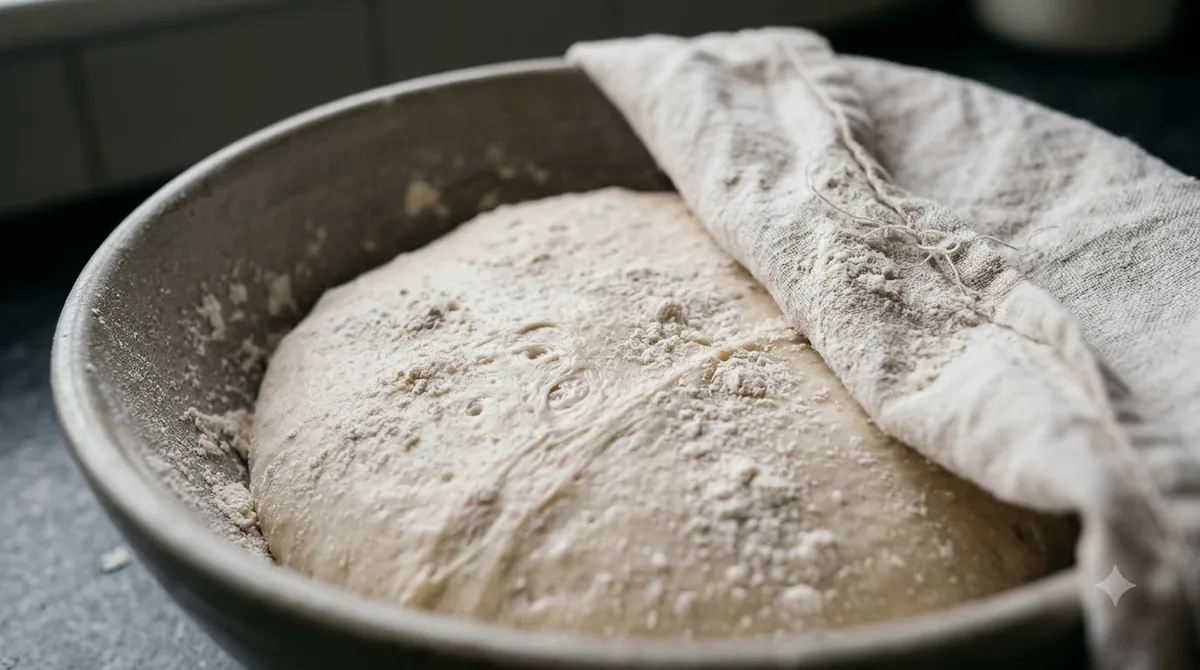

Pizza dough fermentation is the rest period in which yeast turns sugars into carbon dioxide and ethanol. The gas forms the air pockets that give the crust its structure, and the time runs from a few hours at room temperature to 24 to 72 hours in the fridge.
Timing is the main decision. Room temperature dough is ready sooner but tastes less developed, while cold dough takes longer and generally tastes better. Check the dough’s own signs during pizza dough fermentation rather than relying on a fixed clock alone.
What Happens During Pizza Dough Fermentation
During pizza dough fermentation, yeast converts some of the sugars in the flour into carbon dioxide, and the gas inflates the dough.
According to Wikipedia’s bread article, carbon dioxide and ethanol vapors produced during yeast fermentation form the air pockets in the dough. The gas is trapped in the gluten network during leavening, which gives the crumb its open structure. The same article says a longer rising time results in more flavor.
Because pizza dough fermentation depends on yeast activity, temperature changes the speed of the whole process. Cold slows the yeast down but does not stop it, so a dough in the fridge keeps fermenting, only more slowly.
Pizza dough fermentation sets much of the crumb and flavor before the dough reaches the oven, so most of the work happens while the dough rests.
Bulk Fermentation and Final Proof: The Two Stages
Bulk fermentation, the first stage of pizza dough fermentation, lasts anywhere from 2 to 24 hours, depending on the dough, and the final proof after shaping takes about 1 to 2 hours in a quick method.
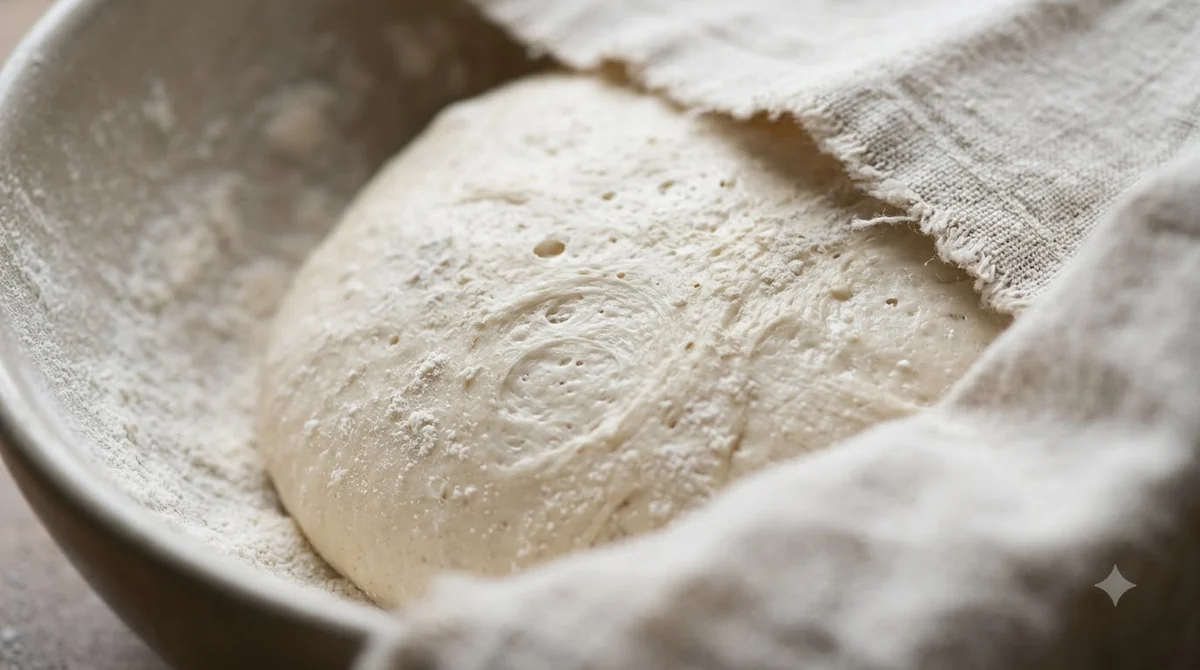
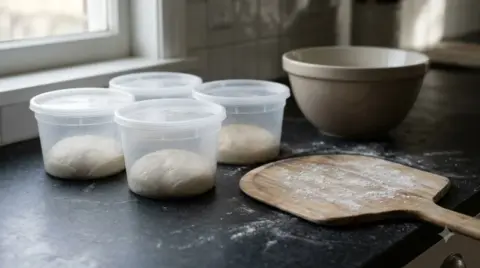
The Gozney proofing guide says to cover the dough airtight during bulk fermentation. Its quick method bulks the dough for 1 hour, divides it into balls and lets the balls rest 1 to 2 hours under upturned bowls, within a range it gives as 20°C to 38°C.
| Stage | Quick method | Cold method |
|---|---|---|
| Bulk fermentation | 1 hour, covered | Overnight, with 24 to 48 hours better |
| Ball rest | 1 to 2 hours under upturned bowls | About 2 hours to return to room temperature after portioning |
The same guide says the quick method uses more yeast and a touch of sugar, while the cold method uses less yeast and no sugar. Matching the yeast amount to the method keeps pizza dough fermentation predictable.
Room Temperature or Cold Fermentation
Room temperature pizza dough fermentation is faster, while cold fermentation in the refrigerator is slower and generally gives better flavor and texture.
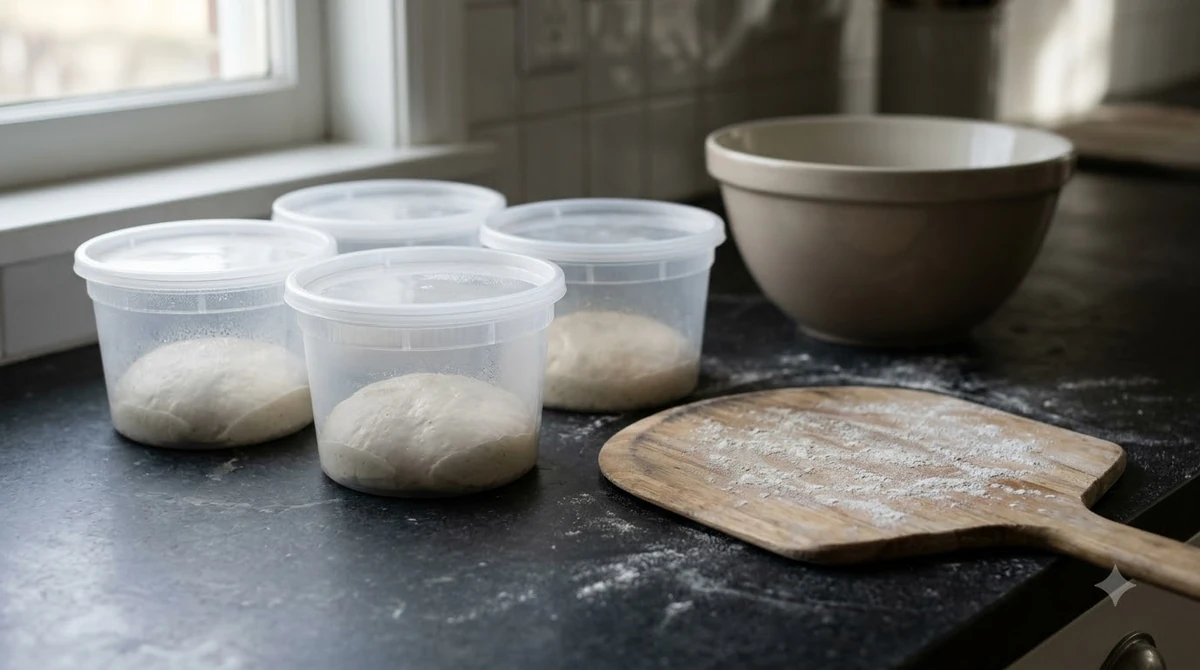
| Factor | Room temperature | Cold, in the refrigerator |
|---|---|---|
| Speed | Faster rise | Slower rise |
| Flavor | Less developed | More developed, and flavor improves over the first 2 to 3 days |
| Texture | Denser | Tender and chewy with an open, airy crumb |
| Typical time | 1 to 24 hours or more | 24 to 72 hours |
Gozney’s guide says room temperature proofing gives a faster rise but less developed flavor and a denser texture, so refrigerated proofing generally produces the better pizza. The tender, open crumb is the expert view of Serhan Ayhan, a pizza consultant at Krave It, quoted by Food Republic.
Ayhan says cold fermentation slows yeast activity and builds more complex crust flavor, and that slower fermentation allows better gluten development. For a same-day pizza, a room temperature rise is the practical choice, with the flavor trade-off in mind. A dough mixed in the morning for dinner suits a room temperature rise, while a dough made the day before suits the fridge, as the cold ferment pizza dough guide explains.
How Long to Ferment Pizza Dough
Cold pizza dough fermentation usually runs for 24 to 72 hours, with 24 hours as a practical minimum.
Ooni’s cold-proof recipe gives a cold proof of 24 to 72 hours and says three to five days is generally the longest to go, because over-proofing is possible. The same page describes slow fermentation as usually running 24 to 96 hours.
- Minimum: 24 hours, described by Gozney as a good minimum
- Overnight bulk: 24 to 48 hours is better, according to Gozney
- Optimum before deterioration: 2 to 3 days, according to Gozney
- Longest advised: 3 to 5 days, according to Ooni
The sources disagree at the top of the range. Food Republic describes three to five days as the sweet spot but attributes that view to general belief rather than a test. Cold temperatures do not kill yeast, so the clock simply runs more slowly.
How to Tell the Dough Is Ready
Dough is ready when it has roughly doubled in size and springs back slowly from a gentle poke, leaving a small indent.
- Size: the dough usually doubles in volume during proof, according to Gozney, and Ooni removes cold dough once it has roughly doubled.
- Poke test: if the dough springs back at once, it needs more time. If it springs back slowly and leaves a small indent, it is ready, according to Gozney.
- Too far: warm, long proofs can make the dough floppy and sour tasting, according to Gozney.
Use the poke test together with the clock. The same number of hours can give different results during pizza dough fermentation at different temperatures, so the dough’s response is the more reliable check. For a clock-based view, see how long to proof pizza dough.
Common Fermentation Mistakes
The most common pizza dough fermentation mistakes are leaving dough too warm or too long, leaving the bulk uncovered, and using the cold recipe’s yeast amount in a quick rise.
- Too warm and too long: warm, long proofs produce dough that is floppy and sour tasting. See overproofed pizza dough for how to spot it.
- Uncovered bulk: Gozney says to cover the dough airtight during bulk fermentation.
- Overlong cold rise: beyond three to five days, Ooni warns that over-proofing is possible.
- Wrong yeast amount: the cold method uses less yeast and no sugar, so a quick-recipe amount can push a cold rise faster than planned.
- Under-proofing: a dough that springs back at once has not risen enough and needs more time, according to Gozney’s poke test. More on underproofed pizza dough.
Neither brand guide gives a fridge temperature. Check your own refrigerator and follow the timing range in your recipe rather than a fixed number.
What a Cold Ferment Recipe Looks Like
Ooni’s cold-proof recipe uses 18 g of fine sea salt, with 4.1 g of fresh yeast, 1.6 g of active dry yeast or 1.4 g of instant dry yeast.
The same recipe divides the cold-proofed dough into three or four pieces. Ball weights are 250 g for a 12 inch pizza and 330 g for a 16 inch pizza, and the balls rest about 5 hours on the counter to reach room temperature and double in size.
Treat the cold rise as one stage of pizza dough fermentation, followed by the room temperature ball rest that the recipe describes. Ooni also says cold-proofed dough is more relaxed and easier to stretch and shape, a practical benefit for home cooks who shape by hand.
Use the full recipe for the flour quantity, since the page’s ingredient list is needed to measure the dough correctly.
Frequently Asked Questions
How long should pizza dough ferment at room temperature?
Gozney gives a room temperature final proof of 1 to 24 hours or more, and notes that warm, long proofs can make dough floppy and sour. Faster room temperature pizza dough fermentation produces less developed flavor, so a shorter rise suits a same-day pizza. The poke test shows when the dough is ready.
Does cold fermentation make pizza taste better?
Gozney says refrigerated proofing generally produces the better pizza, and flavor improves over the first two to three days. A pizza consultant quoted by Food Republic says slower yeast activity builds more complex crust flavor. Results also depend on the dough and your fridge, so test your own pizza dough fermentation schedule.
Can pizza dough ferment in the fridge for a week?
Ooni says three to five days is generally the longest to go, because over-proofing is possible. Beyond that point, the dough may turn floppy and sour tasting. Plan the cold rise to finish within the 24 to 72 hour range for the most predictable result.
Does cold fermented dough need less yeast?
Yes. Gozney says cold proof uses less yeast and no sugar, while a quick proof uses more yeast and a touch of sugar. The Ooni cold-proof recipe lists 4.1 g fresh, 1.6 g active dry or 1.4 g instant yeast, so use the amount your own recipe specifies.
Does longer fermentation change bread flavor?
Wikipedia’s bread article states that a longer rising time results in more flavor. That statement is about bread in general, and the pizza brand guides do not give a flavor rating. The cold-fermentation advice from Gozney and Ooni points in the same direction.
Choose the timing for pizza dough fermentation by the schedule you have. A same-day pizza works with a room temperature rise, while a cold rise of at least 24 hours gives the most developed flavor. Watch the dough itself, since doubling and the poke test tell you more than the clock alone. Browse more pizza and pasta guides for the next step.
 8 min readLearnBulk Fermentation Pizza Dough: How Long, How to Cover It and When It Is DoneUpdated Nov 11, 2026
 9 min readLearnHow to Tell If Pizza Dough Is ReadyUpdated Nov 11, 2026
 8 min readLearnUnderproofed Pizza Dough: Signs, Causes and How to Fix ItUpdated Nov 10, 2026
 8 min readLearnPizza Dough with 00 Flour: Recipe, Timing and TipsUpdated Nov 11, 2026
 8 min readLearnBiga Pizza Dough: Ratios, Timing and Steps for Chewier CrustUpdated Nov 6, 2026
 8 min readLearnGrandma Pizza Recipe: Ingredients by Weight, Timing and MethodUpdated Nov 10, 2026