
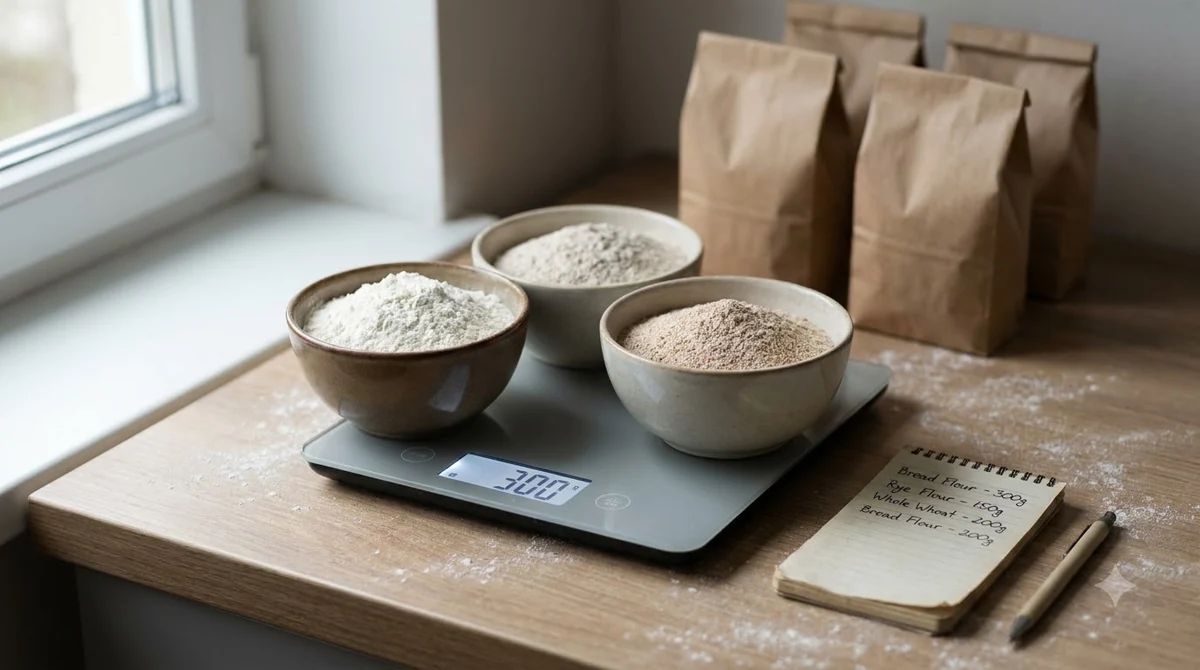

The pizza dough flour to water ratio is the weight of water divided by the weight of flour, usually 60 to 65 percent for Neapolitan and New York styles. Flour is always the 100 percent base, so every other ingredient is read as a share of it. Choose your style first, then weigh the water in grams.
What the Pizza Dough Flour to Water Ratio Means
Flour is always 100 percent in a pizza dough formula, and water is a percentage of that flour weight. In Caputo’s basic example, 1000 g of flour with 600 g of water is 60 percent hydration.
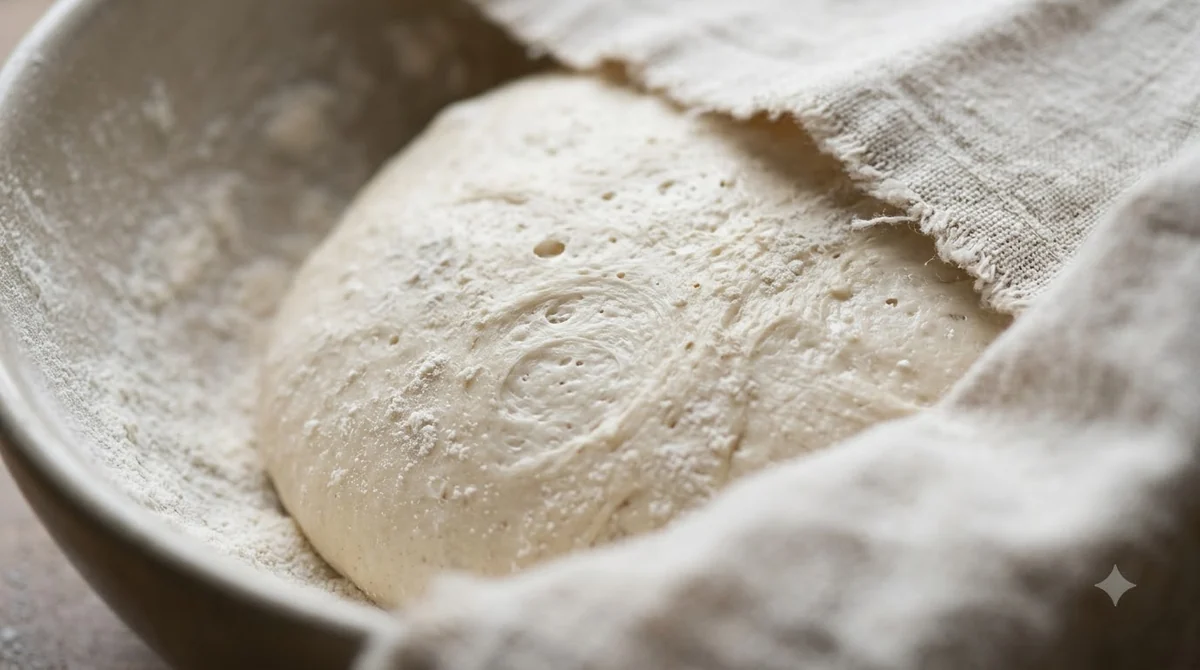
This system is called baker’s percentage, and our guide to pizza dough bakers percentages shows the full math. The flour maker’s baker’s percentage guide explains that you divide the weight of each ingredient by the weight of the flour and multiply by 100. Once you know that, any recipe can be read in the same way, whatever the batch size.
The same logic covers salt and yeast, for any pizza dough flour to water ratio you read. In that basic recipe, water is 60 percent, salt is 3 percent and yeast is 0.3 percent of the flour weight. The total comes to about 163 percent of the flour, which is why the formula reads as a table of percentages and not as a list of whole grams.
Hydration and the pizza dough flour to water ratio are the same number seen two ways. A 60 percent dough is the same thing as 600 g of water for every 1000 g of flour. Once you think in that ratio, it becomes easy to compare recipes that list their ingredients in different units. A baker who knows the pizza dough flour to water ratio of a recipe can rebuild it for any batch size, from a single pizza to a full tray. For more on the numbers, see the pizza dough hydration chart.
Write the percentages down before you mix. A short line for flour, water, salt and yeast keeps the math visible, and it makes it easy to see which number changed when a dough behaves differently from the last batch. Keep the same flour and the same ratio for a few bakes before you change anything else.

Pizza Dough Flour to Water Ratio by Style
Neapolitan dough usually uses 58 to 65 percent water, while New York dough sits near 65 percent, according to Gozney and Ooni. The table below puts the common styles side by side.
Each style has its own pizza dough flour to water ratio, so start from the style you want to bake rather than from a single generic number. The style decides the oven, the bake time and the handling, and those three factors shape which water level works best.
| Style | Water by flour weight | What the source says |
|---|---|---|
| Neapolitan | 58 to 65 percent (Gozney); 60 to 65 percent (Ooni) | Gozney bakes it about 90 seconds at 450 C in a Dome or Tread |
| New York | About 65 percent | Longer bake than Neapolitan, per Gozney |
| Detroit | About 65 percent (Gozney); 70 to 80 percent (Ooni) | The two brands disagree, so check your recipe |
| Neo-Neapolitan | 70 percent (Ooni) | Stretchy and sticky, so ball it up quickly |
| Focaccia, ciabatta, brioche | 50 to 57 percent (Ooni, lower group) | Lower water for these doughs, per Ooni’s list |
Neapolitan doughs sit in a window of 58 to 65 percent, and a number near 60 is a safe place to start. Ooni’s hydration explainer places Neapolitan at 60 to 65 percent, and Gozney’s range is slightly wider at the low end. Both figures come from oven makers, so check them against your own oven and flour. For a full formula, see the Neapolitan pizza dough recipe.
New York dough runs wetter, around 65 percent. Gozney notes that New York dough bakes longer than Neapolitan. The Detroit numbers differ between the two brands, so use the ratio from the recipe you follow.
What Changes When You Add More or Less Water
More water makes pizza dough more elastic and stretchy, and it produces a more open, lighter, softer, airier crust, according to Gozney. Adjusting the water is the fastest way to change the crumb without changing the flour.
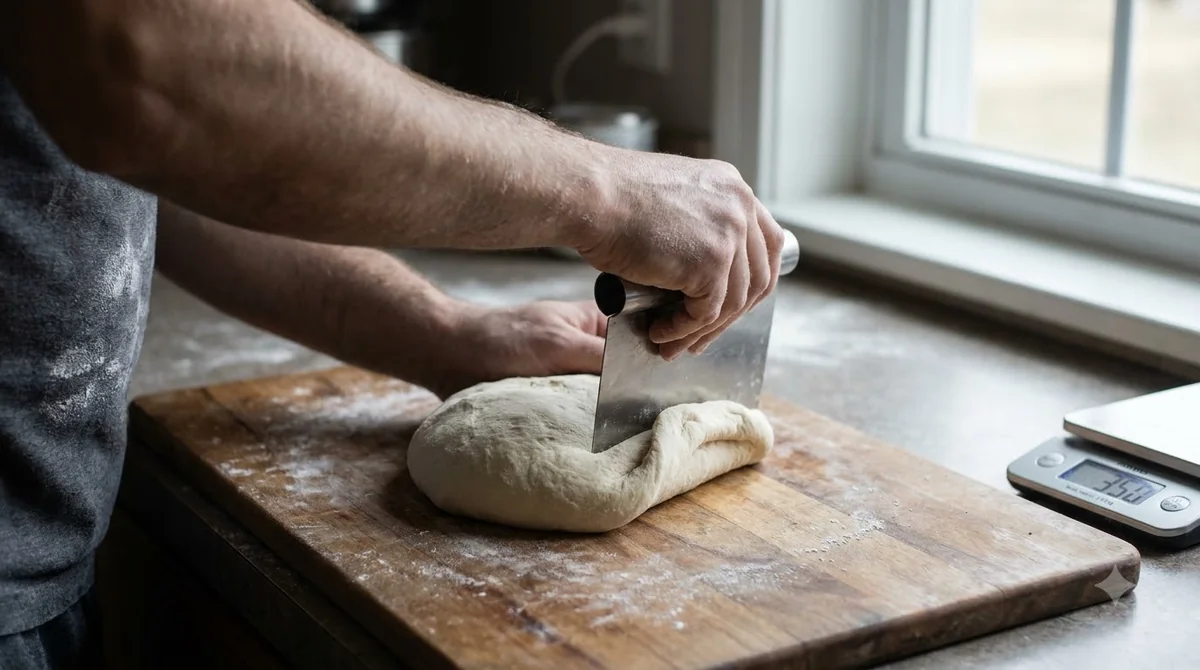
- Higher water softens the gluten strands, so the dough stretches but also loosens.
- Higher water gives a more open crumb with larger air pockets that puff in the oven.
- Ooni describes its 70 percent neo-Neapolitan dough as stretchy and sticky, so it needs quick handling.
- Ooni also notes that more water raises the yield and lightens the finished dough.
Gozney’s guide to hydration makes the same point about gluten and texture. The trade-off is handling. A wetter dough, with a higher pizza dough flour to water ratio, is harder to shape and can tear, while a drier dough is easier to work but gives a tighter crumb. If you want to try a wetter dough, read about high hydration pizza dough.
Scope matters here. The effects above describe the dough itself, and they do not promise a specific result in your oven. Oven temperature, bake time and flour type all change how the same pizza dough flour to water ratio behaves, so change one variable at a time.
A useful test is to make two small doughs that differ only in water, such as 60 percent and 65 percent, and bake them in the same oven on the same day. Compare how each one stretches, how it browns and how open the crumb looks. That comparison teaches you more about your own setup than any chart.
How to Calculate Water for a Set Amount of Flour
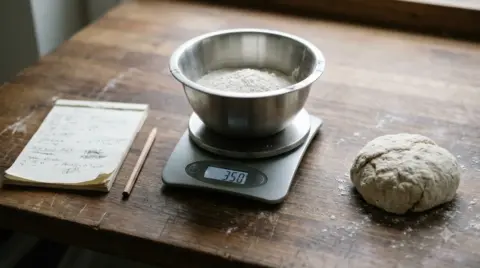
To hit a 60 percent dough, multiply the flour weight by 0.6, so 1000 g of flour takes 600 g of water. The same method works for any pizza dough flour to water ratio you choose, whether you need 58 percent or 70 percent. A pizza dough calculator can double-check the pizza dough flour to water ratio you chose.
- Weigh the flour in grams, for example 1000 g.
- Multiply by your target percentage. For 60 percent, 1000 x 0.6 gives 600 g of water.
- Add salt at its own percentage of the flour. The basic recipe uses 3 percent, which is 30 g.
- Add yeast at 0.3 percent of the flour, which is 3 g for 1000 g.
- Scale the whole recipe the same way. A 1500 g flour batch at 58 percent uses 870 g of water and 37.5 g of salt at 2.5 percent.
A poolish needs its own line in the math. The flour maker describes a poolish as 1:1 flour to water, which is 100 percent hydration. Count the poolish water first, then add the final dough water, or the total will look wetter than the recipe intends.
Common Mistakes With Pizza Dough Water
Most problems with the pizza dough flour to water ratio come from measurement, not from the math. The most common mistake is adding all the water at once, which makes the dough hard to judge. Hold back a small amount, mix, and add it only if the flour still looks dry.
- Measuring water by cup. Cup measures change with how the flour is packed, so the ratio drifts from batch to batch.
- Assuming every flour absorbs the same water. Flours can differ, so check the flour package for its guidance.
- Forgetting the poolish or biga water in the total, which makes the final dough look too wet.
- Comparing numbers across bakes. A 58 percent dough in a short, hot bake behaves differently from a 65 percent dough in a longer bake.
These ranges describe common styles. A home oven, a different flour or a longer ferment can move the right number, so treat the table as a starting point and adjust in small steps. If a wetter dough turns hard to handle, see pizza dough too sticky.
Frequently Asked Questions
What is the best pizza dough flour to water ratio for beginners?
Most beginners start at a pizza dough flour to water ratio of 60 percent, the basic ratio in Caputo’s example of 1000 g flour and 600 g water. That number sits inside the Neapolitan and New York ranges, so it is a safe place to begin before you test other percentages.
Is 65 percent water too wet for pizza dough?
No. Gozney lists about 65 percent as typical for New York and Detroit style doughs, so it is a common working range. Higher water is harder to shape, so practice with a small batch before you scale up.
Does salt count toward the water percentage?
No. Salt is its own percentage of the flour weight, so it does not change the pizza dough flour to water ratio. The basic recipe uses 3 percent salt, which is 30 g for 1000 g of flour, and it is not added to the water total.
Why do two brands give different Detroit numbers?
Gozney gives about 65 percent for Detroit style, while Ooni lists 70 to 80 percent. Both are brand sources with different recipes in mind, so follow the recipe you are using and weigh your water carefully.
Should I weigh flour or measure it with cups?
Weigh it. Cup measures change with how the flour is packed, so the pizza dough flour to water ratio can drift from batch to batch. Weight keeps the percentage the same every time you mix.
Pick your style first, then weigh flour and water in grams and set the pizza dough flour to water ratio from there. Start near 60 percent, bake a test dough, and adjust in small steps. Change one variable at a time so you know what caused the result.
 8 min readLearnDetroit Style vs Sicilian Pizza: What Sets the Two Styles ApartUpdated Nov 14, 2026
 8 min readLearnAutolyse Pizza Dough: How the Flour and Water Rest WorksUpdated Nov 10, 2026
 9 min readLearnNo Knead Pizza Dough: Flour, Water and Time Do the WorkUpdated Nov 10, 2026
 9 min readLearnNew York Style Pizza Recipe: Dough Ratios, Rise Times and Oven SettingsUpdated Nov 10, 2026
 9 min readLearnPizza Crust Types: A Practical Guide to Each StyleUpdated Nov 10, 2026
 7 min readLearnPizza Dough Hydration Chart: What Each Percentage MeansUpdated Nov 11, 2026