
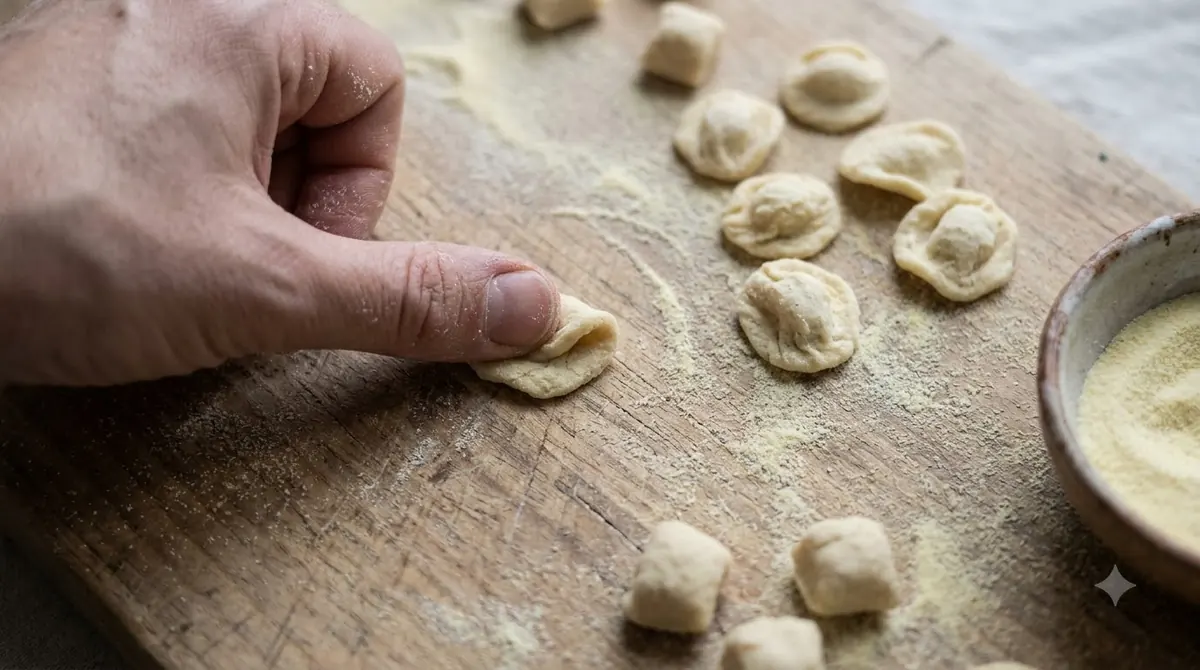

Orecchiette vs cavatelli comes down to the final shaping step. Orecchiette are concave, ear-shaped discs from Apulia, while cavatelli are small hollow shells from southern Italy. Both are hand-shaped semolina pasta, so the right pick depends on the sauce and the texture you want.
What Is Orecchiette?
Orecchiette is a small, ear-shaped pasta from Apulia, Italy, made by hand from durum semolina, water and salt. Its name means “little ears,” and it is one of the best-known shapes of the region.
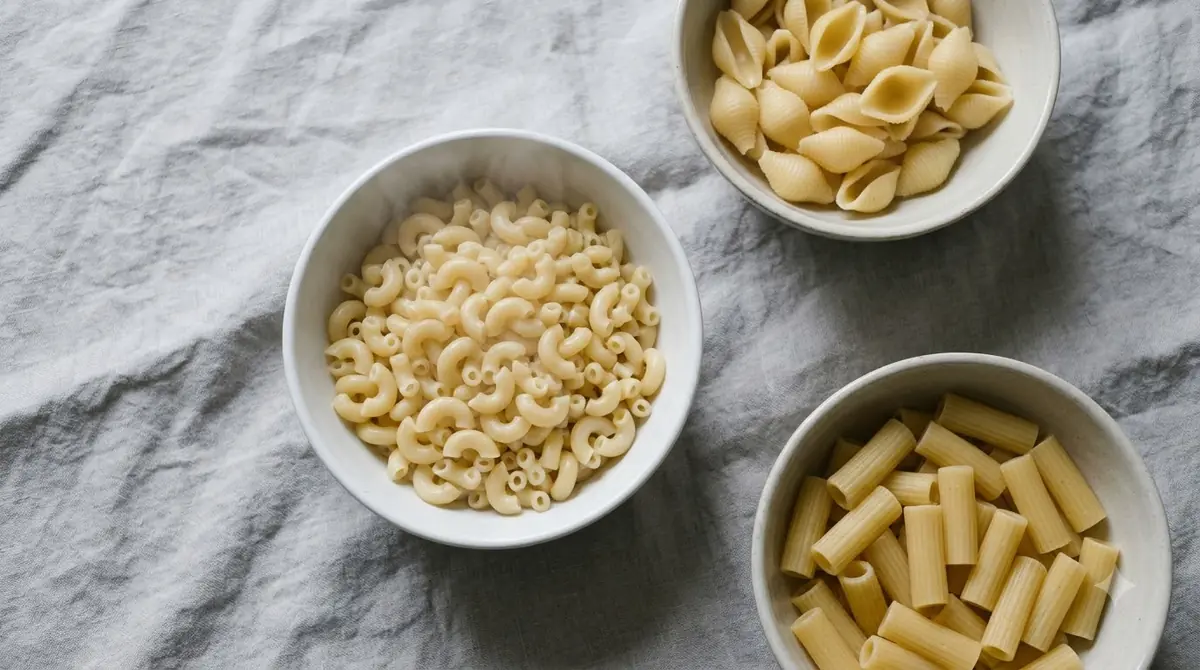
According to Wikipedia’s orecchiette entry, the pasta is documented in Apulia from at least the 12th and 13th centuries, particularly around Bari. Some historians credit local tradition, while others link it to a Provençal origin brought by the Angevin dynasty. That origin debate is still open.
In orecchiette vs cavatelli comparisons, the cup shape is the most recognizable difference. Each piece is a small dome that is thinner in the center than at the edge. The outer surface is rough, which helps it hold thick sauces. A typical piece is about one inch (2.5 cm) wide. Traditional home dough uses durum semolina, water and salt, and eggs are rarely used.
Size is one place where the orecchiette name covers more than one pasta. In Cisternino, a larger local version with deep internal ribs is served on holidays with rabbit ragù. When you compare orecchiette vs cavatelli, that local variant is larger than the standard piece, as are the related shapes strascinati and cencioni, which Wikipedia says are typically larger than orecchiette.
What Are Cavatelli?
Cavatelli are small hollow pasta shells from Abruzzo, Molise and Apulia, traditionally shaped by rolling a piece of dough with a single finger. The name means “little hollows,” which describes the cup formed on one side of each piece.
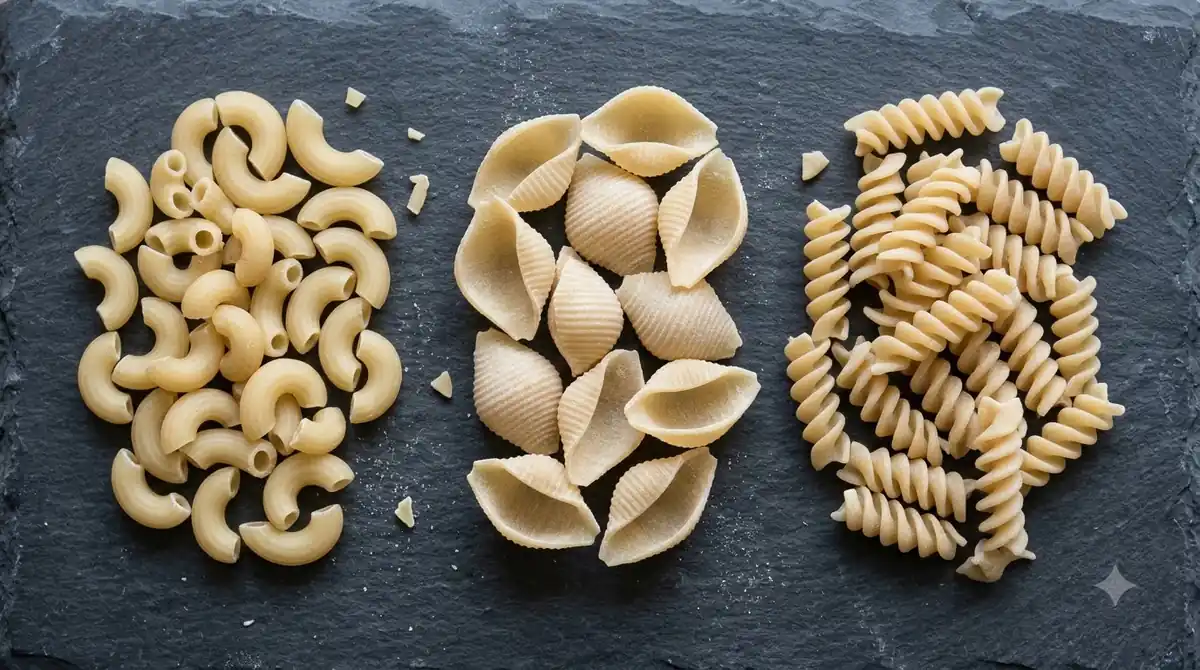
The Great Italian Chefs guide to the pastas of Puglia describes cavatelli as slightly puffier than orecchiette, with a texture that is almost gnocchi-like. The hollow is made from the side rather than by curling the dough into a concave disc.
Some cooks add ricotta to the dough, which gives a softer, richer bite. Wikipedia’s cavatelli entry also notes that boiling the water before adding it to the flour produces a softer texture. The shape is closely related to orecchiette, and in parts of Puglia the two names are used almost interchangeably. On the cavatelli side of orecchiette vs cavatelli, the defining feature is the softer, puffier hollow rather than a flat cup.
Cavatelli also vary by town. According to the same Wikipedia entry, parmitieddi from Teggiano are a flat shape rolled with three fingers, and they are larger than common cavatelli. So the cavatelli you buy or make may look quite different from one region to another, even under the same name. That variation is worth knowing before you compare orecchiette vs cavatelli on a shopping trip.
Orecchiette vs Cavatelli Side by Side
The main difference is shape: orecchiette are concave discs, while cavatelli are puffier shells with a hollow formed from the side. When you weigh orecchiette vs cavatelli, the table below compares the two on the criteria most readers use to choose.
| Feature | Orecchiette | Cavatelli |
|---|---|---|
| Main origin | Apulia, Italy | Abruzzo, Molise and Apulia |
| Name meaning | “Little ears” | “Little hollows” |
| Overall shape | Concave, dome-like disc | Small hollow shell |
| How it is formed | Pressed and dragged with a small knife, then flipped over the thumb | Rolled with a single finger |
| Texture | Rough outer surface that grips thick sauce | Slightly puffier, almost gnocchi-like |
| Size | About 1 inch (2.5 cm) wide | No measurement in the sources reviewed |
| Common sauces | Cime di rapa, tomato sauce | Garlic with broccoli or rapini, tomato |
The size row needs a caveat. Only orecchiette have a measured width in the sources reviewed, so the cavatelli entry stays open. Use the table to compare the shapes in general, then check the actual piece in your kitchen.
Sources do not always agree on how strictly the two shapes are separated. One Puglian source says the names are used almost interchangeably across the region, but notes that the two shapes are not identical. Treat the table as a practical guide to the typical versions, not a rule that applies to every kitchen.
How Each Shape Is Formed
Orecchiette are pressed and curled with a small knife, then flipped over the thumb, while cavatelli are rolled with a single finger. The orecchiette method takes more handwork, so it suits a cook who enjoys a slower process. Forming is the biggest practical difference in orecchiette vs cavatelli, because it changes both the look and the feel of each piece.
Traditional orecchiette are made in three steps:
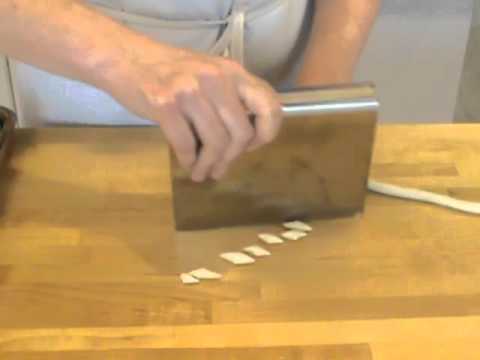
- Roll the dough into a thin rope and cut it into small cubes.
- Press each cube and drag it across the board with a small knife to curl it.
- Invert the curl over your thumb to form the concave shape.
Cavatelli have fewer steps. You roll a small piece of dough with one finger to create the hollow, and the sources describe no knife or extra shaping step. A cavatelli maker does the same rolling with a hand-cranked tool.
Which Sauces Suit Each Shape
Orecchiette hold thick, rough-textured sauces well, and cime di rapa with garlic, anchovies and chili is the classic pairing for both shapes. Cavatelli also work with the same greens, and they are often served with tomato. For orecchiette vs cavatelli at the dinner table, the sauce often decides the winner: a chunky sauce suits the concave cup, while a lighter garlic sauce suits the softer shell.
- Cime di rapa with garlic, anchovies, chili and olive oil, finished with grated cacioricotta.
- Tomato sauce, sometimes with a spoonful of ricotta, served in Capitanata and Salento.
- Garlic with broccoli or rapini, a common and simple option for cavatelli.
- Broccoli or cauliflower as a substitute when rapini is out of season.
Outside Apulia, orecchiette are sometimes served with meat, capers and a crisp white wine. That versatility is one reason orecchiette vs cavatelli is worth comparing by sauce rather than by name alone.
Which One Should You Choose?
Choose orecchiette for a rustic Apulian plate with a sauce that needs something to cling to, and cavatelli for a softer, gnocchi-like bite. Both are good starting points if you are new to hand-shaped pasta.
If you are deciding between orecchiette vs cavatelli for a specific meal, start with the sauce and the texture you want, then pick the shape. A cime di rapa dish works with either shape, so you can test both on the same night and compare the bite side by side.
Treat orecchiette vs cavatelli as a choice about texture as much as shape. The orecchiette rough surface holds on to thick sauce, and the cavatelli puffier hollow gives a softer bite that pairs well with garlic and greens. In orecchiette vs cavatelli, neither is the better pasta in general, only the better match for a given plate.
- Pick orecchiette when you want a concave cup for chunky sauce.
- Pick cavatelli when you want a puffier, softer texture.
- Pick either one for a cime di rapa dish, since both traditions use it.
Frequently Asked Questions
Are orecchiette and cavatelli interchangeable?
In a home kitchen, often yes, since both are small semolina shapes served with similar sauces. Their shapes differ, though, so the texture of the finished dish will differ too. Orecchiette have a concave cup, while cavatelli are puffier with a side hollow.
Is cavatelli just orecchiette turned inside out?
Not exactly, but they are close relatives. Wikipedia says cavatelli and similar shapes are made by the same dragging technique as orecchiette but without the final step that forms the concave shape, while Great Italian Chefs says the two are used almost interchangeably across Puglia even though the shapes differ slightly. The answer depends on the local tradition.
Which shape is easier to make by hand?
Cavatelli have fewer steps because they are rolled with one finger. Orecchiette need a small knife and a thumb, which adds a step to the process.
Do orecchiette vs cavatelli come in different sizes?
Yes. Standard orecchiette are about one inch (2.5 cm) wide, while some local versions are larger. Across the orecchiette vs cavatelli pair, size is the least consistent point of comparison. Cavatelli-like shapes such as strascinati and cencioni are typically larger than orecchiette, and parmitieddi from Teggiano are larger than common cavatelli. Check the shape and size before you compare them.
How long do orecchiette and cavatelli take to cook?
The sources reviewed for this comparison do not give cooking times. Check the package for the time on dried pasta, or test a piece near the end of the suggested time to judge doneness, as described in our how to cook pasta al dente guide. If you want to shape your own, start with how to cook fresh pasta so the pieces do not fall apart in the pot.
Whichever side of orecchiette vs cavatelli you land on, match the shape to the sauce first. Orecchiette suit chunky, rough-textured sauces, while cavatelli are a good fit for a softer, simpler dish. Try both with cime di rapa to see the difference for yourself.
 8 min readLearnWhat Is Scamorza? A Guide to This Southern Italian CheeseUpdated Nov 11, 2026
 6 min readLearnItalian Cream Cake Recipe: Southern Classic With Pecans and CoconutUpdated Nov 13, 2026
 8 min readLearnDetroit Style vs Sicilian Pizza: What Sets the Two Styles ApartUpdated Nov 14, 2026
 9 min readLearnHow to Tell If Pizza Dough Is ReadyUpdated Nov 11, 2026
 8 min readLearnHow to Tell If Olive Oil Is Real: Label, Grade, and Taste ChecksUpdated Nov 11, 2026
 8 min readLearnHow Long to Bake Pizza at 500 F and How to Tell When It Is DoneUpdated Nov 11, 2026