

Farfalline pasta is the miniature version of farfalle, the bow-tie shape that comes from northern Italy. Its name is the diminutive of farfalle, which means “butterflies” in Italian. It is the small end of the bow-tie family, with farfalloni as the large end.
What Is Farfalline Pasta?
Farfalline pasta is the smallest common size of the farfalle family. Wikipedia describes it as the miniature version of farfalle, while farfalloni is the larger version. Farfalle itself dates to the 16th century and is associated with Lombardy and Emilia-Romagna, according to the same reference.
Because the shape is a small bow with a pinched center, farfalline pasta keeps the same basic look as the standard shape at a much smaller scale. Sources that describe the size range agree on the two ends: small ones are called farfalline pasta, and larger ones are called farfalloni or, in some retailer and blog pages, farfallone. The Italian word itself points to the same idea of “little butterflies” that sits behind the whole family. In Emilia-Romagna, Wikipedia adds, farfalle are known locally as strichetti, a word for bow ties.
If you want to make bows at home, The Pasta Project gives the dough for four people as 400 g of durum wheat semolina, a pinch of salt and about 220 ml of room-temperature water, adjusted as needed. Some cooks use eggs instead of water at roughly 100 g of flour and one egg per person. Cut small rectangles with a zig-zag wheel and pinch the center; a smaller rectangle gives you a farfalline-sized bow.
Standard farfalle bow-tie pasta is usually sold under that name in the United States, and it is the reference size most shoppers picture first. When you see farfalline pasta on a shelf, expect the same shape with a shorter span. The ridged version, farfalle rigate, is a separate variant that you may also see in the same aisle.
The shape is built from simple parts. DeLallo explains that farfalle dough is made from durum wheat semolina and water, rolled into a sheet and cut into small rectangles with a zig-zag cutter, then pinched in the middle. That pinch makes folds in the dough and gives the center a chewier texture than the wings, which also helps the pasta catch sauce and small ingredients.
Farfalle also come in colors. Wikipedia notes that beetroot can tint the dough red, spinach green and cuttlefish ink black, and that green, white and red packs are often sold together in the colors of the Italian flag. The Pasta Project also repeats a story that Emilian housewives first made farfalle from leftover cappelletti dough, but the author says only that she has read this, so treat it as folklore rather than documented history.
Farfalline vs Farfalle vs Farfalloni
The three bow sizes differ in scale, and the names on the box are not always the same across brands. Compare the size name on the label before you assume which bow you are buying.
| Size | Name used | Note |
|---|---|---|
| Small | Farfalline | Miniature bow; named in Wikipedia and in the Pasta Project and DeLallo pages |
| Standard | Farfalle | The reference bow-tie size; the base of the family |
| Large | Farfalloni or farfallone | The naming differs by source; check the label |
| Ridged | Farfalle rigate | A ridged surface, a separate variant rather than a size |
The Pasta Project and DeLallo both name the small size farfalline pasta, which is the same naming used in this article (The Pasta Project; DeLallo). The exact measurements of farfalline pasta were not confirmed on a page we could read in this run, so this article does not give a size in centimeters or inches for the small shape. A brand’s own product page is the best place to confirm the dimensions of a specific box.
Best Ways to Use Farfalline
Farfalline pasta works best where a full bow would look too big, such as small-portion dishes and brothy soups. DeLallo says bow tie pasta suits Italian-inspired soups, and the smaller size fits more easily on a spoon, though no source we could read names a specific soup for farfalline pasta itself.
DeLallo pairs standard bow ties with creamy Alfredo, marinara and lighter sauces, and with small mix-ins such as diced pancetta, green peas and garlic. It also lists colorful pasta salads with chickpeas, cubed cheese and olives. In Italy, it adds, farfalle come with a buttery sage sauce called farfalle Cremasca and with chunky summer tomato sauces called farfalle alla primavera. The same logic applies to the smaller shape, though the amount of sauce should be scaled down. Practical ways to serve farfalline pasta include:
- Small-portion soups and broths, where the bow fits a spoon.
- Light tomato sauce with olive oil, or a few peas and diced pancetta, for a simple plate.
- Light pasta salads with a dressing that coats evenly.
- Simple plates with butter, olive oil, and a little grated cheese.
Treat these as serving ideas rather than tested rules. For other tiny soup shapes, compare our guides to pastina pasta for soup and stelline star pasta. The shape itself does not change the cooking method, so the same basic approach applies to any dried bow.
Cooking Farfalline Without Overcooking It
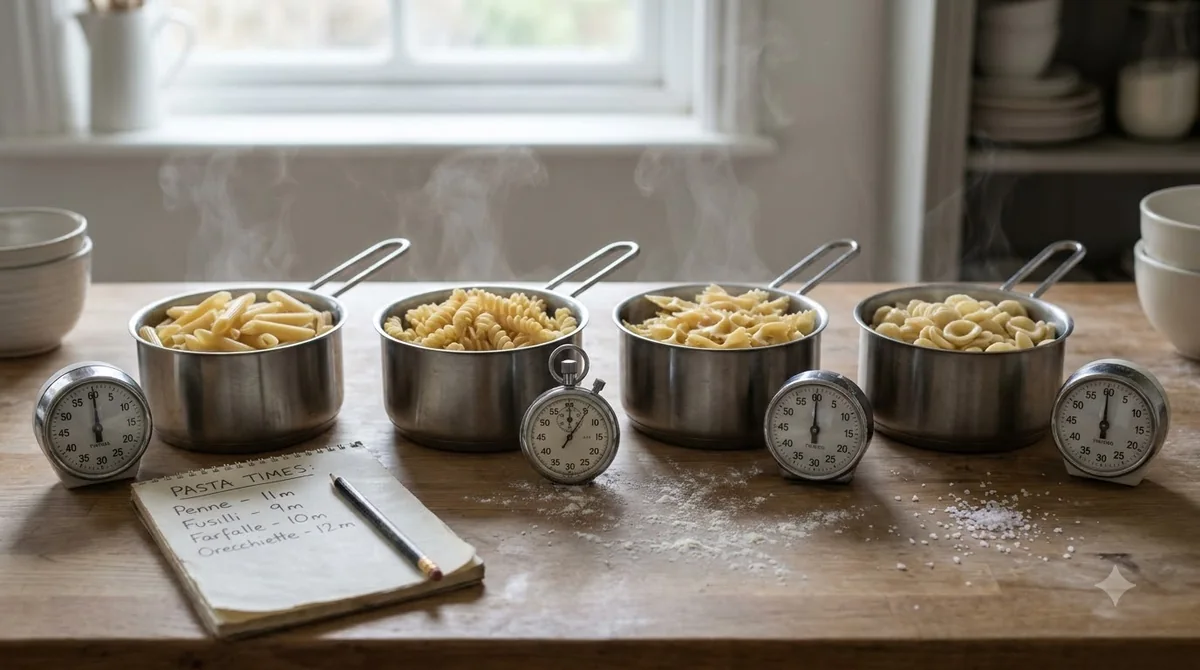
Cook farfalline pasta in plenty of boiling salted water, and follow the time printed on the package. We could not read a cooking time for farfalline pasta specifically, so the numbers below come from the standard bow tie.
DeLallo gives 10 to 12 minutes for standard farfalle at a rolling boil, with the pasta stirred once and tested by cooling one bow on a slotted spoon before tasting. It recommends 1/4 cup of salt per 5 quarts of water, which is a generous seasoning, so cut it back if you prefer less salt. DeLallo also notes that the larger farfalloni take longer to cook, which is a good reason to start tasting a small bow early.
- Bring a large pot of water to a rolling boil and add salt.
- Add the pasta and stir once so the pieces do not stick together.
- Start tasting at the lower end of the package time, because small shapes can finish sooner than a standard bow.
- Drain when the bite is tender, and add it to the sauce or soup straight away.
Texture matters more than the clock. Pasta that is cooked just until tender holds its shape in the sauce, while overcooked pasta turns soft and loses its bite. The pinched center is the thickest part of a bow tie, so it is the spot to bite when you test for doneness, as our guide to cooking pasta al dente explains.
How to Buy and Store Farfalline
Check the size name on the box, and read the ingredient list, cooking time, and serving size on the back. Brands use different names for the same family of shapes, so the box is the most reliable guide. More shape explainers are collected in our pasta shape guides.
- Confirm the size name: farfalline pasta, farfalle, or farfalloni.
- Compare the cooking time on the package with the time in your recipe.
- Store dry pasta in a sealed container, away from heat and moisture.
- Use the box’s own serving size as your starting point for portions.
A specific brand, such as the De Cecco farfalline pasta listed in retailer catalogs, should be checked on its own label for its size and time. We did not confirm those details from the brand’s own page in this run.
Frequently Asked Questions
Is farfalline pasta the same as farfalloni?
No. Farfalline pasta is the small size, and farfalloni, which some sources call farfallone, is the large size. The names are used differently across brands, so check the label.
What does farfalline mean?
Farfalline is the diminutive of farfalle, the Italian word for butterflies, so it reads as “little butterflies.” Wikipedia and DeLallo both confirm that farfalle means butterflies; the “little” comes from the diminutive ending.
Can you use farfalline pasta in soup?
DeLallo suggests bow tie pasta for Italian-inspired soups, and the small size suits a spoon. Add it near the end of cooking and follow the package time, since soup cooks the pasta further.
How long does farfalline take to cook?
Follow the cooking time on the package. We did not find a verified time for farfalline pasta on a page we could read, so the box is the reliable source. Taste a piece a minute or two before the printed time.
Is farfalline made from the same dough as farfalle?
Both are shaped from the same kind of dough, since DeLallo describes farfalle as durum wheat semolina and water, and Wikipedia lists durum wheat as the main ingredient. Colored or whole-wheat packs differ, so check the ingredient list on your box.
Farfalline pasta is a simple way to get the bow-tie look in a smaller shape. Choose it for soups and small plates, confirm the size on the label, and let the package time guide your cooking.
 6 min readLearnHow to Make Farfalle by Hand: Shaping Bow-Tie Pasta at HomeUpdated Nov 13, 2026
 7 min readLearnBow Tie Pasta vs Farfalle: Same Shape, Two NamesUpdated Nov 14, 2026
 6 min readLearnHomemade Farfalle: Cutting and Pinching Bow TiesUpdated Nov 13, 2026
 8 min readLearnTajarin Pasta: What It Is, How It Is Made and How to Serve ItUpdated Nov 11, 2026
 8 min readLearnWhat Is Fileja Pasta? A Calabrian Shape ExplainedUpdated Nov 11, 2026
 8 min readLearnPipe Rigate Pasta: What It Is and How to Cook ItUpdated Nov 11, 2026