
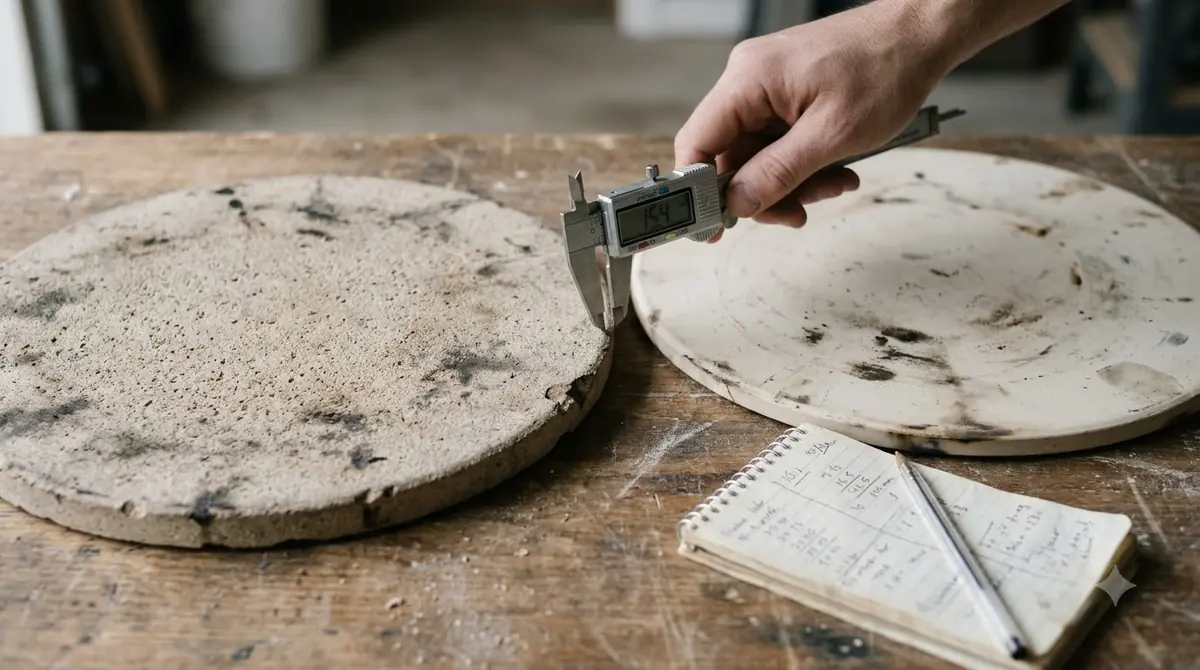

How to choose a baking steel thickness comes down to heat storage versus preheat time. A thicker steel stores more heat, which helps when you bake several pizzas in a row. A thinner steel gets hot faster and is easier to wait for. Most home buyers compare two sizes, 1/4 inch and 3/8 inch.
What a baking steel thickness changes
Thickness sets how much heat the steel can hold, and the amount of heat it holds is what drives the crust. A denser, heavier slab stores more heat, so it can keep the bottom of a pizza hot while the dough cooks. A thinner plate holds less heat, so it recovers less between bakes but reaches temperature sooner.
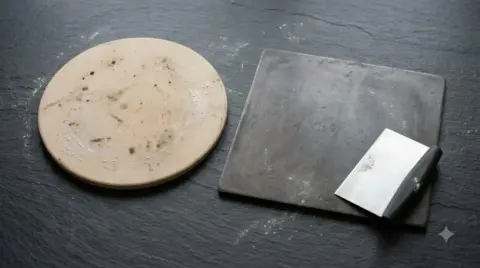
Steel also moves heat quickly. The Baking Steel science page states that steel is roughly 18 times more conductive than ceramic, which is why steel gives a sharper bottom crust than a stone of similar size, as covered in pizza stone vs pizza steel. That conductivity figure is the manufacturer’s own claim, but it explains why a steel responds faster to the oven than a stone does. The thickness decision is about how much stored heat you want on hand, not about whether steel works better than stone.
Two rules hold no matter which thickness you pick. The steel needs a long preheat so the whole slab is hot, and the surface needs time to recover after each pizza goes in and the door opens. The sections below explain how to choose a baking steel thickness by looking at both.
How to choose a baking steel thickness: 1/4 or 3/8 inch
For most home cooks who bake one or two pizzas per session, the 1/4 inch Baking Steel Original is the simpler choice. For a cook who bakes several pizzas back to back, the 3/8 inch Baking Steel Pro (sold as the MC Edition in the test data) holds more heat between bakes. Baking Steel describes the thicker model as giving slightly faster rebound time between bakes, so the difference shows up mostly in the second and third pizza.
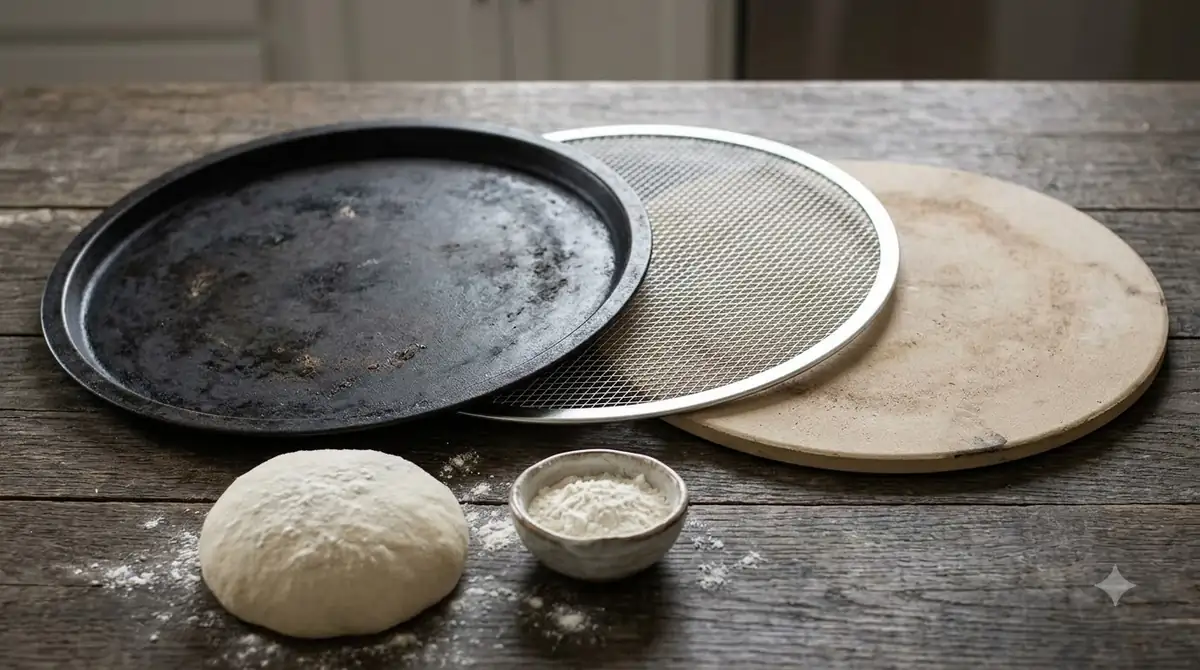
| Factor | 1/4 inch steel | 3/8 inch steel |
|---|---|---|
| Heat storage | Lower | Higher |
| Time to heat up | Shorter | Longer |
| Best for | One or two pizzas at a time | Several pizzas in one session |
The table above is a simple way to start. Your oven matters as much as the steel. A small oven with a short preheat window may suit the thinner plate, while a larger oven you run for a long session can make the extra heat storage worth the wait.
A quick decision rule
Use this rule to decide how to choose a baking steel thickness for your own bakes. Pick 1/4 inch if you usually bake one pizza, want to start cooking within an hour, or prefer a lighter plate to move. Pick 3/8 inch if you host pizza nights and bake four or more pizzas in a row. If you cannot decide, start with the thinner steel, because you can always preheat it longer and it costs less time to learn on.
How thickness changes preheat time
A thicker steel takes longer to reach baking temperature, because it has more mass to heat. In the Baking Steel preheat test in a 550 F electric oven, the 1/4 inch Original reached a surface temperature of 597 F after about 45 minutes, while the 3/8 inch MC Edition needed the full hour to cross 550 F. The source gives this as its own test, so treat the exact minutes as a reference point, not a guarantee for your oven.
Pizza steel guidance is consistent on the minimum. King Arthur Baking advises preheating a steel or stone for at least an hour with the steel in place, and to look for a surface of at least 500 F before baking. Use one hour as the floor for a 3/8 inch plate, and keep the steel in the oven the whole time. Our how to use a pizza steel guide and the pizza steel buying guide cover the rest.
- Place the steel in the oven and start the preheat before you prepare the dough.
- Wait at least 45 minutes for a 1/4 inch steel, and a full hour for a 3/8 inch steel.
- Check the surface with an infrared thermometer if you have one, and aim for at least 500 F.
- Bake the first pizza only after the steel reaches temperature, not when the oven signal beeps.
Why the oven beep can mislead
The oven’s end-of-preheat signal reads the air, not the steel. Baking Steel reports that its MC Edition was at 531 F when the oven beeped at about 35 minutes, and needed about 13 more minutes to reach 550 F. The gap is larger for thicker steel, so a thicker plate needs more patience than the beep suggests.
Recovery between pizzas
Recovery is how fast the steel regains heat after a pizza goes in and the oven door opens. King Arthur advises at least five minutes between pizzas so the steel can reabsorb heat, and that is a good minimum to plan around. Thickness changes how quickly the recovery happens, and the decision that matters here is how often the door opens.
In Baking Steel’s test, with the door open for one minute at 550 F, the 1/4 inch Original was back to 550 F about 10 seconds after the door closed and close to its starting temperature after about five minutes. The 3/8 inch MC Edition was back over 550 F within 30 seconds and returned to its starting temperature in about three minutes. These figures are from the manufacturer, and a home oven with a different seal or dial will change the numbers.
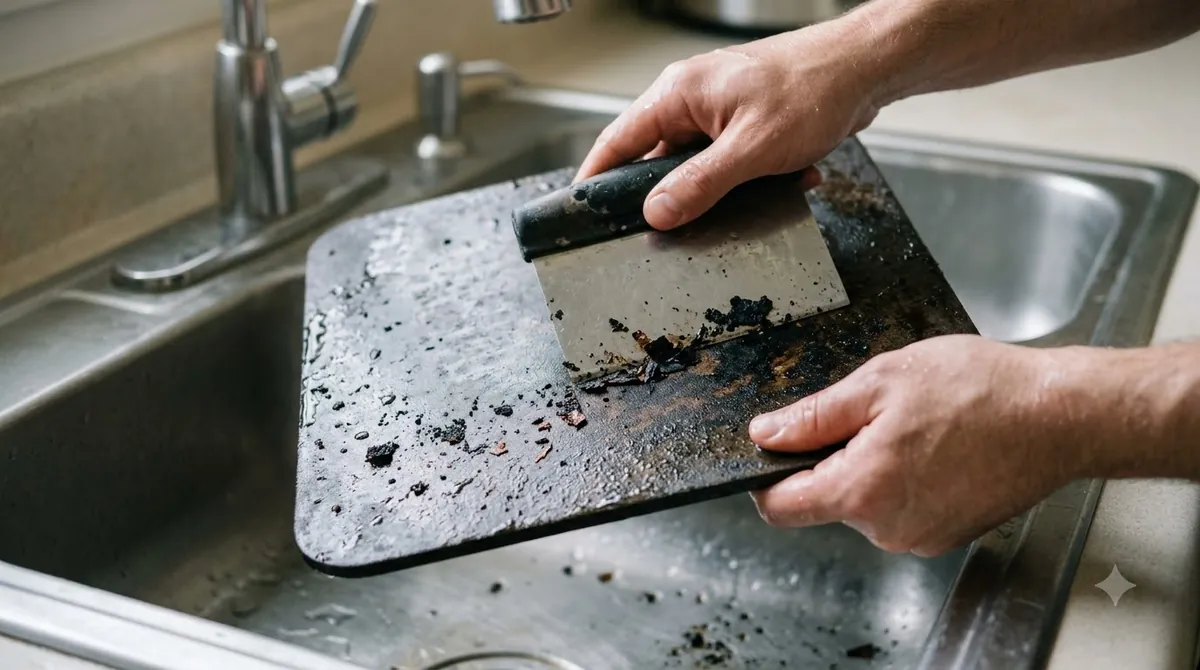
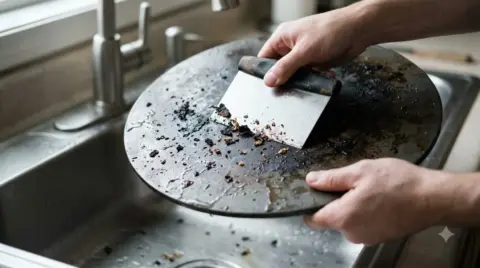
Between bakes, keep the surface clean. Once the steel has cooled, scrape off baked-on bits with a metal scraper so they do not burn onto the next pizza, and see how to clean a baking steel for the full routine. Keep the next pizza topped and ready before you open the door, so the steel recovers while you prepare it rather than during a long pause.
Matching thickness to your oven and space
The steel should be as large as fits in your oven, and King Arthur Baking’s guidance recommends a rectangular shape rather than a circle. Size matters because a steel that covers more of the oven floor absorbs and gives back more heat. Measure the inside of the oven before choosing a thickness; this is the last check in how to choose a baking steel thickness. Then pick the largest plate that fits with room to turn the peel.
- Measure the inside width, depth and height of the oven.
- Leave space at the back for air and at the sides for the peel.
- Check the product’s weight and size in the manufacturer’s spec sheet before you buy, because the sources read for this article do not list steel weight.
A thicker steel is heavier, so think about lifting it in and out of the oven. Ask the seller for exact dimensions in inches or millimeters before you buy, because the listed size may differ from the usable baking area. If you will move it often, a lighter steel may be easier on your back even if the heat storage is smaller. Check the current price on the manufacturer’s page, because price changes often and this article does not list it.
Frequently Asked Questions
Is 1/4 inch or 3/8 inch better for a home oven?
Neither thickness is better for every cook, so how to choose a baking steel thickness depends on your bakes. Choose 1/4 inch if you bake one pizza at a time and want a faster preheat. Choose 3/8 inch if you bake several pizzas in a row and can accept a full-hour preheat. Your oven size and how often you cook decide the answer more than the steel itself.
How long should I preheat a baking steel?
King Arthur Baking advises preheating for at least an hour, with the steel at 500 F or hotter. Baking Steel reports about 45 minutes for its 1/4 inch Original and a full hour for its 3/8 inch model in a 550 F electric oven. Use the longer time when you are unsure, since the surface heats more slowly than the air.
How long should I wait between pizzas?
King Arthur Baking suggests at least five minutes between pizzas so the steel can reabsorb heat. Baking Steel’s test shows the thicker model recovering within about three minutes, but that is the manufacturer’s result. Keeping the door closed as much as possible speeds recovery for any thickness.
Does a thicker steel always make a better crust?
No. A thicker steel stores more heat, which helps during repeat bakes, but it does not change the dough or the technique. Good results also depend on a fully preheated steel, a well-topped pizza, and a peel that lets the pizza slide. Use the thickness as one factor among these.
What information is still unverified?
The sources read here do not give the weight of each steel, a thickness in millimeters for every model, or current prices. Check the manufacturer’s spec sheet for weight and size, and confirm the steel fits your oven before you buy.
To sum up how to choose a baking steel thickness, choose 1/4 inch for speed and light weight, or 3/8 inch for more heat between several pizzas. Measure your oven first, plan at least an hour of preheat, and give the steel at least five minutes to recover between bakes.
 9 min readGear & PantryHow to Clean a Baking Steel: Scrape, Dry, and Re-SeasonUpdated Nov 11, 2026
 9 min readGear & PantryHow to Use a Baking Steel in a Home OvenUpdated Nov 10, 2026
 7 min readGear & PantryBaking Steel vs Pizza Stone: Which Gives Better Crust?Updated Nov 15, 2026
 9 min readGear & PantryMetal Pizza Peel: How to Choose Aluminum or SteelUpdated Nov 17, 2026
 8 min readGear & PantryPizza Steel: How to Choose, Preheat and Care for One at HomeUpdated Nov 16, 2026
 8 min readGear & PantryHow to Use a Digital Kitchen Scale for Accurate BakingUpdated Nov 10, 2026