
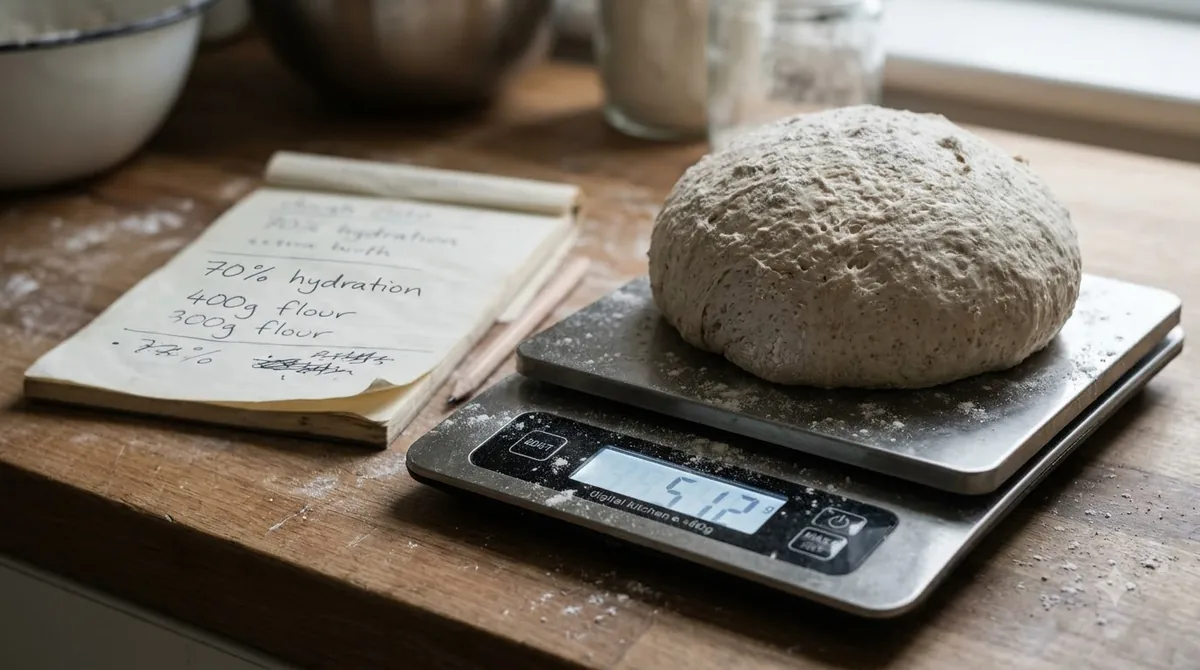

Learning how to use a digital kitchen scale takes about a minute: place a bowl on the platform, press tare to zero it, and add each ingredient until the display matches the recipe. Most scales read in grams, the unit that gives the most consistent results in baking and cooking.
Once you know how to use a digital kitchen scale, grams beat cup measures for flour and liquids because every reading is exact. A scale that reads to 0.1 gram also helps with small amounts such as salt and yeast.
What You Need Before You Start
Before you weigh anything, set the scale on a level, stable surface and choose grams, since standard models usually read in 1-gram steps. Any clean, dry bowl or container works as long as it fits the platform. Getting the setup right is the first part of learning how to use a digital kitchen scale well.
Small amounts matter more than they look. King Arthur Baking’s example uses 500 grams of flour with 2% salt and 1.5% instant yeast, which works out to 10 grams of salt and 7.5 grams of yeast. Weighing in grams makes those amounts easy to hit, and our pizza dough calculator works from the same kind of percentages.
Check the capacity before you buy or learn how to use a digital kitchen scale for your baking. King Arthur Baking describes 10 to 15 pounds as typical for home use and over 30 pounds for large batches, so a home scale may not suit very large doughs.
Older scales that step in 5-gram increments are too coarse for small amounts. King Arthur Baking gives about 6 grams for a teaspoon of table salt, which a 5-gram scale cannot show closely.
How to Use a Digital Kitchen Scale, Step by Step
When you learn how to use a digital kitchen scale for a recipe with several ingredients, zero the scale before each addition so the display shows only the weight of what you just added.
- Turn on the scale and select grams.
- Place the empty bowl on the platform, then press tare until the display reads 0 g.
- Add the first ingredient until the display shows the amount the recipe calls for.
- Press tare again so the bowl and the first ingredient read as zero.
- Add the next ingredient to the same bowl and repeat until the recipe is complete.
Ooni’s own guide on how to use a digital kitchen scale suggests placing the container on the scale before you switch it on, so the display starts at zero. The same guide advises weighing each ingredient in its own container when a recipe needs separate additions, which keeps the order of steps simple. Ooni’s digital scale guide also explains that pressing tare again lets you weigh something without its container, or whenever you switch containers.
Liquids follow the same pattern. King Arthur Baking suggests returning the milk carton or molasses jar to the scale between additions, so the reading always shows only what you have poured in.
How to Weigh Flour, Water and Other Ingredients in One Bowl
Weigh flour straight from its container instead of scooping it, because the scoop-and-level method can use up to 25% more flour than a recipe intends.
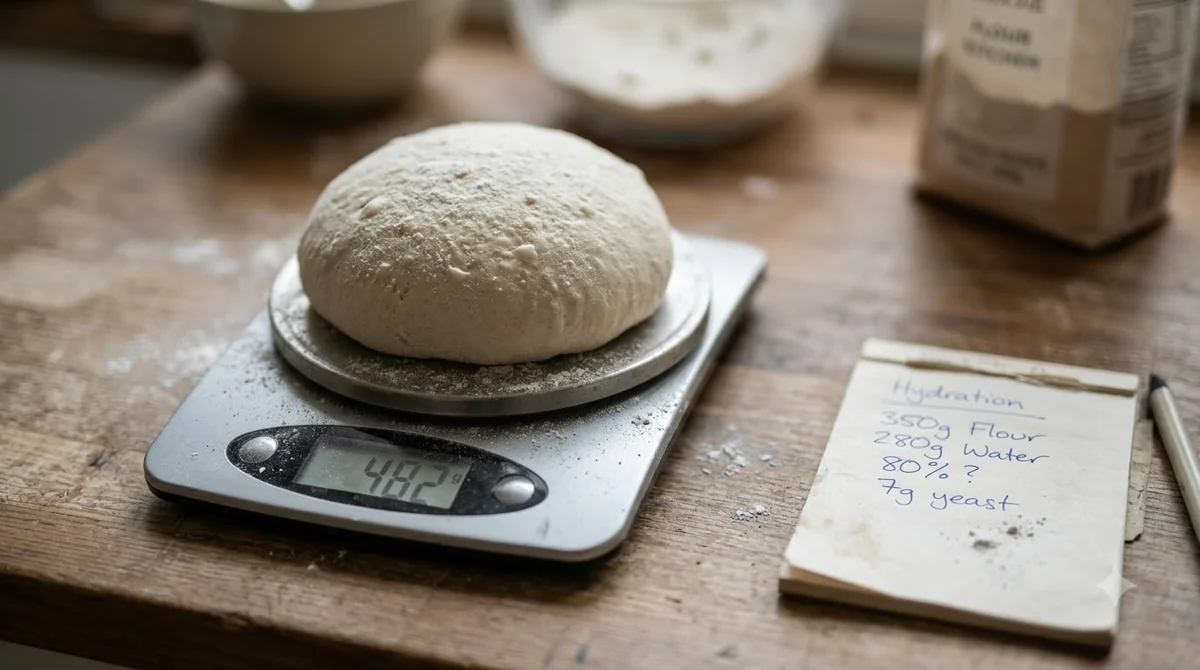
Learning how to use a digital kitchen scale for flour removes most of the guesswork, and the habit pays off when you make pizza dough in a stand mixer. The warning comes from King Arthur’s scale baking guide, which says that dipping the measuring cup into the canister and sweeping it level can add far more flour than the recipe developer intended. A weight of 360 grams for three cups of flour, as used in that guide’s example, is the same whether the flour is packed or loose.
Reverse tare works for ingredients you add gradually, such as sugar for a meringue. Place the sugar container on the scale, press tare, and spoon sugar into the bowl until the display reads the target weight. King Arthur’s example stops at 99 grams for half a cup of sugar, and the display can also show that amount as a negative number.
Some older scales do not show negative weights, so reverse tare will not work on them. Use the normal method of adding each ingredient to the bowl instead.
Water needs the same care. Ooni warns that adding too much water to flour can force you to restart the dough, so weigh the water in its own container and add it once the amount is exact.
Choosing Units and Precision
Grams give finer steps than ounces, and a platform that reads to 0.1 gram is the better choice for yeast and salt. One gram equals about 0.04 ounces, so a recipe written in grams loses detail when converted to ounces. If you are still learning how to use a digital kitchen scale, pick grams and stay with them.
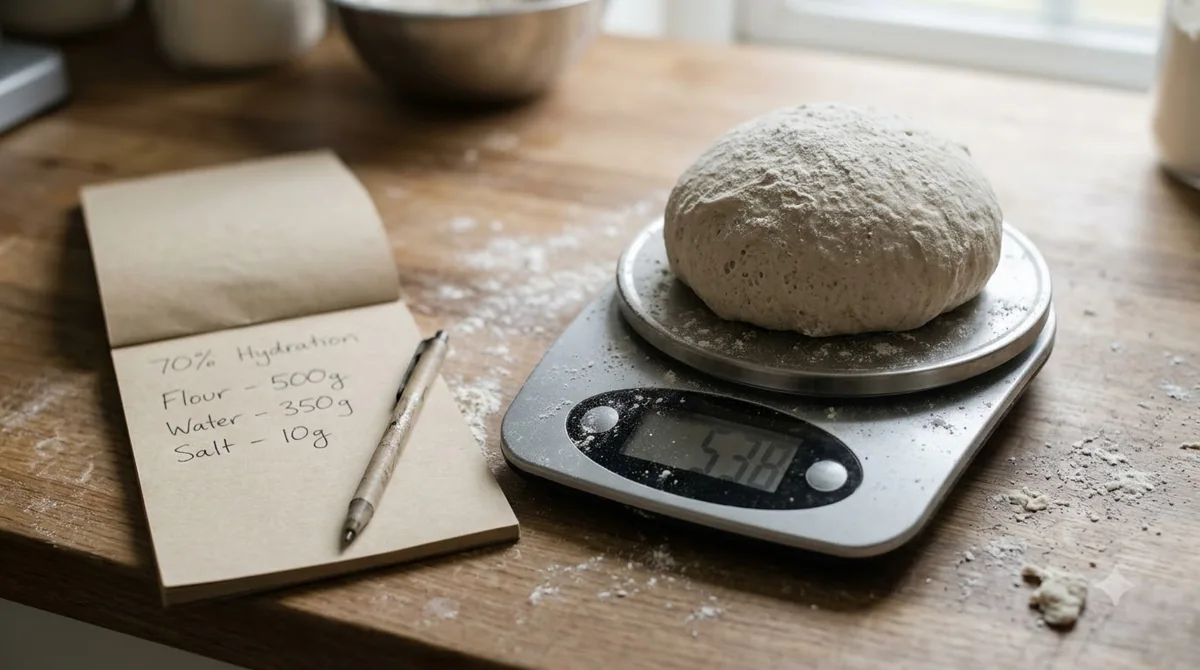
The table below compares the settings and platform types most home cooks will see.
| Setting | Best for | What to know |
|---|---|---|
| Grams, 1 g steps | Flour, water, sugar and most recipes | Standard scales typically read in 1-gram increments. |
| 0.1 g platform | Yeast, salt and spices | Ooni’s dual platform scale includes one platform that measures to a tenth of a gram. |
| Ounces | Recipes written only in ounces | Convert the whole recipe to grams first so every ingredient uses the same unit. |
| 5 g steps | Not recommended for small amounts | Too coarse for a teaspoon of table salt, which weighs about 6 grams. |
Common Mistakes to Avoid
The most common error is skipping tare after an ingredient, because the next reading then includes everything already in the bowl. Most wrong weights come from the same few habits.
Each habit below is easy to fix once you see it. Reviewing this list before each recipe helps you avoid most reruns, especially while you are learning how to use a digital kitchen scale.
- Forgetting to tare the empty bowl, which adds the container weight to every ingredient.
- Scooping flour into the cup and leveling it, which can use up to 25% more flour than intended.
- Weighing on an uneven or unstable surface.
- Relying on a poorly made scale for amounts under about 28 grams, where King Arthur Baking says readings may be unreliable.
- Setting the unit to ounces when the recipe is written in grams.
Checking Accuracy and Caring for Your Scale
A US nickel weighs 5 grams, so placing one on the platform is a quick way to check whether your scale reads correctly.
King Arthur Baking gives two more checks: a dollar bill weighs 1 gram, and six nickels should come close to 30 grams. If the readings are far off, zero the scale again on a flat surface and repeat the check before you decide the scale is faulty.
Before you trust any reading, run the nickel check on the platform you plan to use. Knowing how to use a digital kitchen scale is not enough without a quick accuracy check. A few seconds of checking tells you whether your technique and your scale agree.
Battery replacement and cleaning steps vary by model, so check the manual that came with your scale. Those details are not covered in the sources used for this guide, so the manual is the reliable reference.
Frequently Asked Questions
Do I need to tare before every ingredient?
Yes, when you weigh several ingredients in one bowl. If you are still learning how to use a digital kitchen scale, practice this step first. Tare resets the display to zero, so each new reading shows only the ingredient you just added. Skipping it adds the earlier weights to the next reading.
Why does my scale show a negative number?
A negative reading means weight was removed after the scale was zeroed. King Arthur Baking uses this on purpose in its reverse tare method, where you spoon an ingredient until the display reads the target weight or its negative. Some older scales cannot show negative numbers.
Should I weigh in grams or ounces?
Grams are the better choice because the steps are finer, and one gram is about 0.04 ounces. Anyone learning how to use a digital kitchen scale for the first time should start with grams. Use the unit your recipe is written in, and convert the whole recipe rather than mixing units.
Why do two flour cup measures differ?
Ooni points out that two published flour cup recipes can differ by 20 grams for the same cup measure. Weighing flour avoids that gap, because a gram weight is the same however the flour is packed.
How to use a digital kitchen scale for very small amounts?
Accuracy depends on the scale. King Arthur Baking notes that poorly made scales may be unreliable below about 28 grams. For yeast and salt, use a platform that reads to 0.1 gram, and check the specifications of your model before you rely on it.
Can I weigh liquids on a digital kitchen scale?
Yes. Learning how to use a digital kitchen scale for liquids is simple: put the container on the platform, press tare, and pour the liquid in. King Arthur Baking recommends returning the container to the scale between additions, so each reading stays accurate.
Learning how to use a digital kitchen scale comes down to zeroing the bowl before each ingredient, weighing in grams, and running the nickel check whenever your readings look wrong. If your recipes often call for small amounts, a scale with a 0.1 gram platform will save the most trouble. Our guide to the best digital kitchen scales compares models, and you can find more tool guides in our Gear & Pantry guides.
 8 min readGear & PantryDigital Kitchen Scale: What It Does and How to Choose OneUpdated Nov 16, 2026
 8 min readGear & PantryHow to Use an Infrared Thermometer for Accurate Readings at HomeUpdated Nov 10, 2026
 9 min readGear & PantryHow to Use a Baking Steel in a Home OvenUpdated Nov 10, 2026
 9 min readGear & PantryHow to Clean a Baking Steel: Scrape, Dry, and Re-SeasonUpdated Nov 11, 2026
 8 min readGear & PantryHow to Choose a Baking Steel ThicknessUpdated Nov 11, 2026
 7 min readGear & PantryBaking Steel vs Pizza Stone: Which Gives Better Crust?Updated Nov 15, 2026