
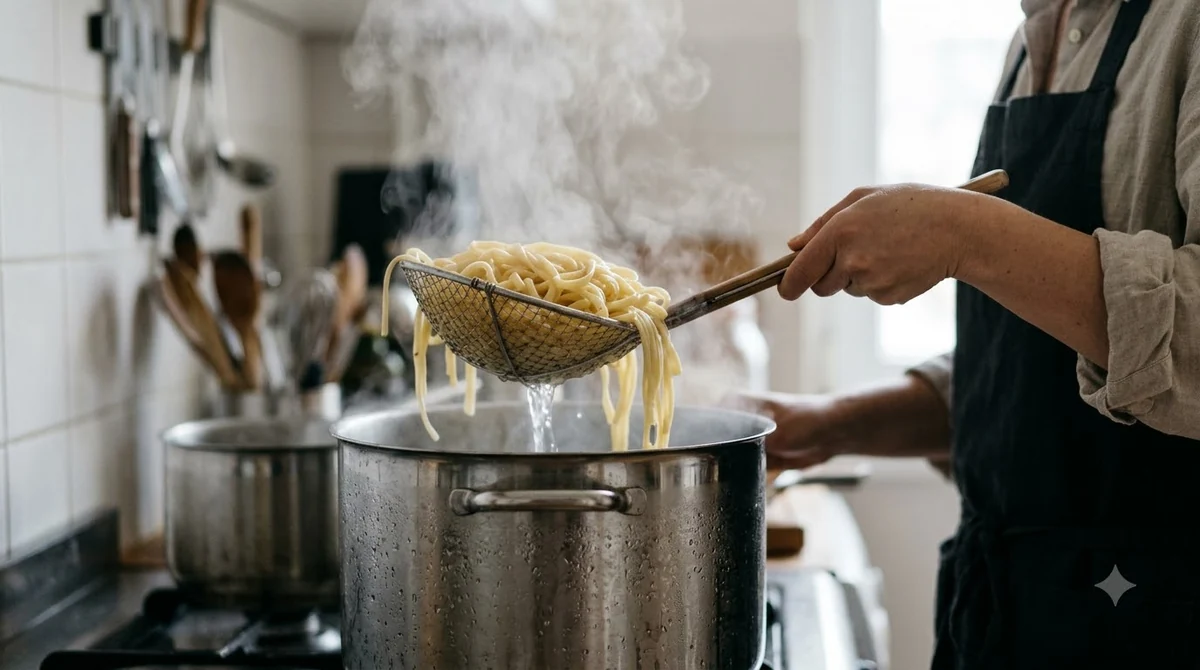

Learning how to finish pasta in the sauce means draining it while still firm, then cooking it for the last stretch in a simmering pan. The noodles take on the sauce’s flavor, and the sauce clings better to them. This method needs only one extra pan and a cup of cooking water.
The method of how to finish pasta in the sauce suits simmered sauces and dried pasta best. Fresh homemade pasta needs a different timing, and some creamy or raw sauces need a different approach.
Why finishing pasta in the sauce works
Finishing pasta in the sauce lets the noodles absorb flavor while starch from the cooking water helps the sauce cling to them.
Pasta keeps cooking after it leaves the water. When it joins a pan of sauce, the noodles keep softening for the last stretch and take on the sauce’s flavor. That is why how to finish pasta in the sauce is a technique for texture as well as flavor. According to Blue Apron’s finishing guide, the starch in the cooking water thickens the sauce so it clings to the pasta instead of pooling at the bottom of the pan.
Timing at the moment you drain matters in how to finish pasta in the sauce. Pasta that is fully soft before it reaches the pan turns mushy during the final toss. A slightly firm center gives the noodles room to finish without falling apart. A simple bite test helps, as in how to cook pasta al dente: pick up one strand and bite it. It should still have a firm core rather than a soft one.
The sauce has to be ready too. A cold sauce does not bind well, and the noodles sit in it without picking up much flavor. Start the sauce early enough that it is simmering when the pasta comes off the heat; a simple marinara sauce works well here. Getting the sauce right is part of learning how to finish pasta in the sauce well, because a cold pan turns the last minutes into guesswork.
Step-by-step method for how to finish pasta in the sauce
Drain the pasta when it is about 90 percent cooked, then finish it in a simmering sauce with a little reserved pasta water.
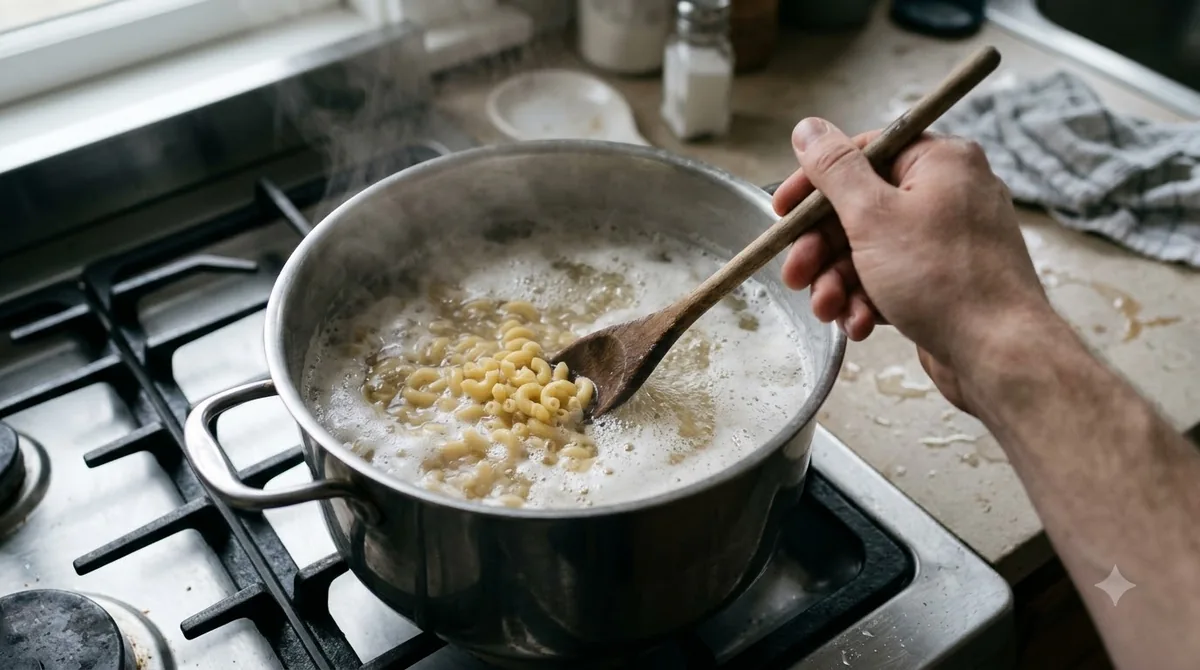
The Blue Apron finishing method sets the process in three preparations: pull the pasta at 90 percent cooked, save at least 1 cup of the cooking water, and keep the sauce simmering in a separate pan. Do those three things before you drain, and the rest of how to finish pasta in the sauce falls into place.
Reserve the pasta water first
Set a heatproof cup or small bowl beside the stove before the pasta goes in. The water is salty and starchy, so it works as an ingredient rather than waste; see starchy pasta water for sauce for more. Keep at least 1 cup, because a sauce that tightens as it cooks often needs a splash to loosen it again.
Move the pasta into the sauce
Lift the partly cooked pasta with tongs or a spider strainer and move it straight into the simmering sauce. Keep the heat moderate so the sauce bubbles gently rather than boiling hard. Toss the noodles in the pan for the last stretch and add reserved water a splash at a time. When you practice how to finish pasta in the sauce, watch the pan rather than the clock. The noodles should look glossy, and the sauce should cling without pooling at the bottom.
- Cook the pasta until it is about 90 percent done.
- Save at least 1 cup of the cooking water before you drain.
- Keep the sauce at a gentle simmer in a separate pan.
- Move the pasta into the sauce with a splash of reserved water.
- Toss until the sauce coats each strand evenly.
Which sauces and pastas suit this method
Simmered sauces that are loose enough to coat the noodles suit this method best, while fresh homemade pasta and raw sauces such as pesto need a different approach.
| Sauce or pasta | Fits this method | Why |
|---|---|---|
| Simmered tomato sauce | Yes | A gentle simmer lets the noodles take on flavor and accept the reserved water. |
| Slow-cooked meat sauce | Yes | Rich sauces coat well when the pasta is tossed in them at the end. |
| Olive oil and garlic | Yes, with reserved water | A thin sauce needs the water to bind it to the noodles. |
| Thick cream sauce | Use with care | It can turn heavy, so add water sparingly and keep the heat low. |
| Pesto | Not a simmered sauce | Pesto is usually stirred in off the heat, so follow a recipe written for it. |
| Fresh homemade pasta | Different timing | Chowhound notes it cannot be cooked to al dente, so it needs a brief boil first. |
Shape matters as much as the sauce when you learn how to finish pasta in the sauce. Short tubes and twists hold chunky sauce well, while long strands need a looser sauce to coat evenly. Check the package for its cooking time when planning how to finish pasta in the sauce, and treat that number as a starting point rather than a rule.
Carbonara is a different case, and most recipes for it handle the eggs and cheese separately from a simmering sauce. Use a dedicated carbonara recipe rather than this method, and do the same for a pesto Genovese recipe. For that reason, a recipe written for the specific dish is a safer guide than any general rule for how to finish pasta in the sauce.
Common mistakes and how to fix them
The most common mistakes in how to finish pasta in the sauce are rinsing the pasta, cooking it through before it reaches the sauce, and letting the sauce tighten before the pasta joins it.
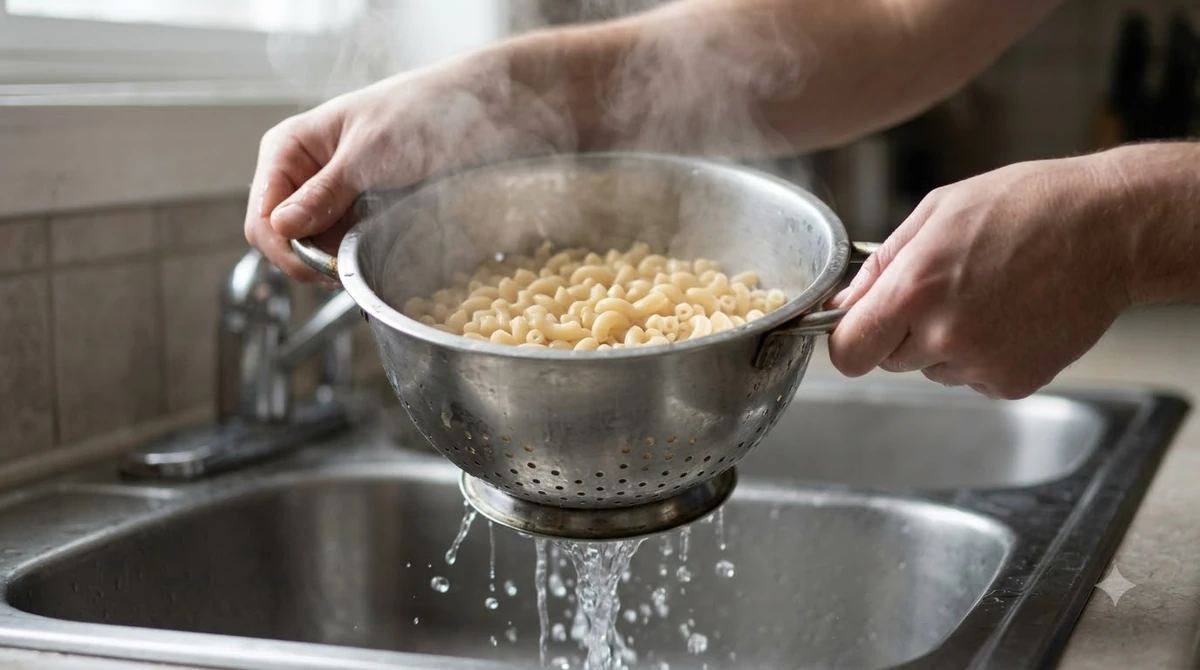
Rinsing is the first mistake to avoid. Chowhound’s finishing guide advises moving the pasta straight from the pot without rinsing, so the cooking water travels with it. Rinsing washes away the surface starch that helps the sauce cling.
- Cooking the pasta fully before it reaches the sauce, which leaves it soft by the time you serve.
- Letting the sauce boil hard, which can break it apart and cook the noodles unevenly.
- Forgetting the reserved water, so the sauce stays dry and tight around the noodles.
- Using a timing built for dried pasta on fresh homemade pasta.
- Skipping the toss, so the sauce sits on top instead of coating each strand.
In how to finish pasta in the sauce, a watery sauce usually means too much water went in at once. Add the reserved water in small splashes, and stop once the sauce coats the noodles.
Timing the sauce is the other common slip. If the pan sits off the heat for a long stretch before the pasta arrives, the sauce can tighten and stop coating well. Plan so the sauce reaches a simmer as the pasta comes off the heat, since that timing is the most useful habit in how to finish pasta in the sauce.
Frequently Asked Questions
Can you finish fresh pasta in the sauce?
Not in the same way. Chowhound notes that fresh homemade pasta cannot be cooked to al dente, so it needs only a brief boil before it moves to the sauce. Dough thickness and shape change the timing, so check a recipe written for fresh pasta.
How much pasta water should you add?
Save at least 1 cup before draining, as Blue Apron recommends. Saving that water is the first step in how to finish pasta in the sauce. Add it a splash at a time while tossing, and stop when the sauce coats the pasta. Adding too much at once thins the sauce and makes it watery.
Should you rinse the pasta first?
No. Rinsing removes the surface starch that helps the sauce cling, and skipping it is the simplest rule in how to finish pasta in the sauce. Move the pasta straight from the pot into the pan so the cooking water comes with it, as Chowhound also advises.
Does this method work with every sauce?
No. It suits simmered sauces that can coat the noodles. Pesto and carbonara are usually handled differently, so follow a recipe written for those sauces. Cream sauces need gentle heat and only a little water.
Why does the sauce separate when you add the pasta?
Boiling too hard can make a sauce separate, which is the main risk in how to finish pasta in the sauce. Keep the pan at a gentle simmer, and add a little reserved water while tossing to help the sauce come back together.
Knowing how to finish pasta in the sauce comes down to three habits: pasta that is firm when it leaves the water, a sauce already at a gentle simmer, and a cup of pasta water set aside. Those three habits matter more than any special tool. For fresh pasta or a creamy sauce, follow a recipe written for that dish instead.
 6 min readLearnHow to Make Chicken Parmesan in the Oven with a Crispy CoatingUpdated Nov 13, 2026
 8 min readLearnSame Day Pizza Dough: How to Make It Start to FinishUpdated Nov 10, 2026
 5 min readLearnWhy Is Italian Pasta Better? Durum, Bronze Dies and Drying ExplainedUpdated Nov 13, 2026
 8 min readLearnSemolina vs Cornmeal for Pizza Peel: Which Works BetterUpdated Nov 10, 2026
 9 min readLearnBread Flour vs All Purpose Flour for Pizza: Which Gives a Better CrustUpdated Nov 10, 2026
 8 min readLearn24 Hour Pizza Dough: A Simple Timeline for Better FlavorUpdated Nov 10, 2026