
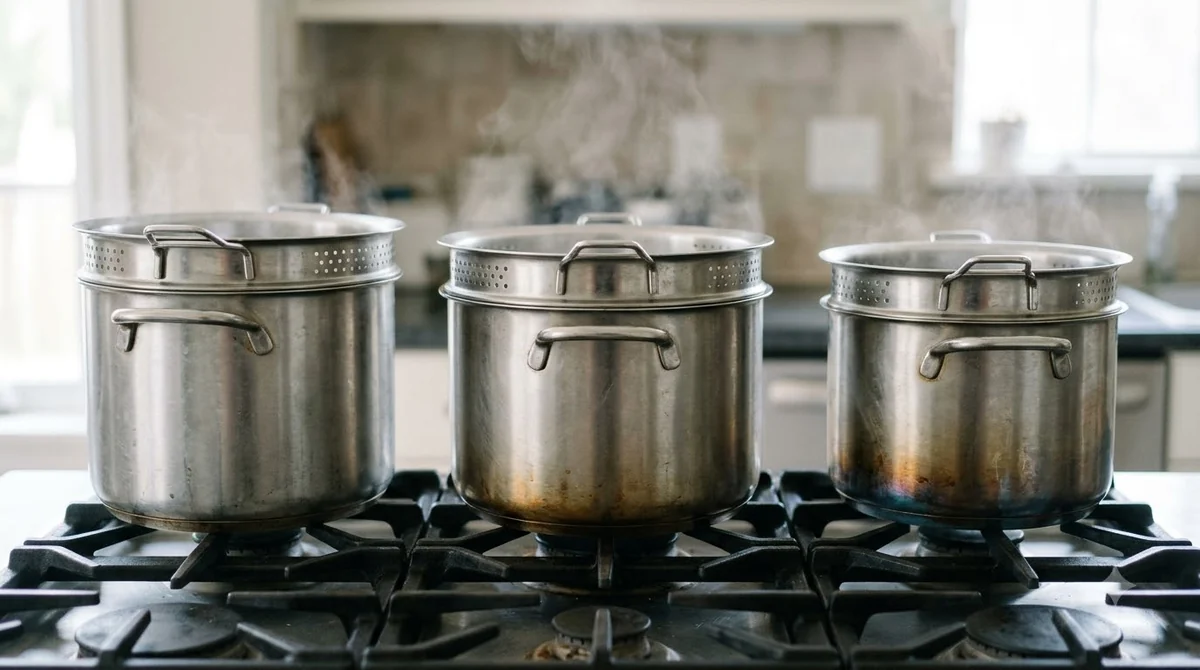

Learning how to cook pasta for a crowd comes down to one large pot, salt measured against the water, and frequent stirring. Cooking pasta for a group is mostly about water volume, timing, and holding the cooked pasta well. The methods below show how to cook pasta for a crowd using two widely read guides, which differ on a few amounts, so the article points out where.
Start from the sources, then check the package for cooking time and adjust by taste. Most of the steps for how to cook pasta for a crowd work the same whether you cook two pounds or ten.
Choose the Right Pot and Water
A pot large enough to hold the full volume of water is the first step, because the pasta needs room to move and the water must return to a boil quickly.
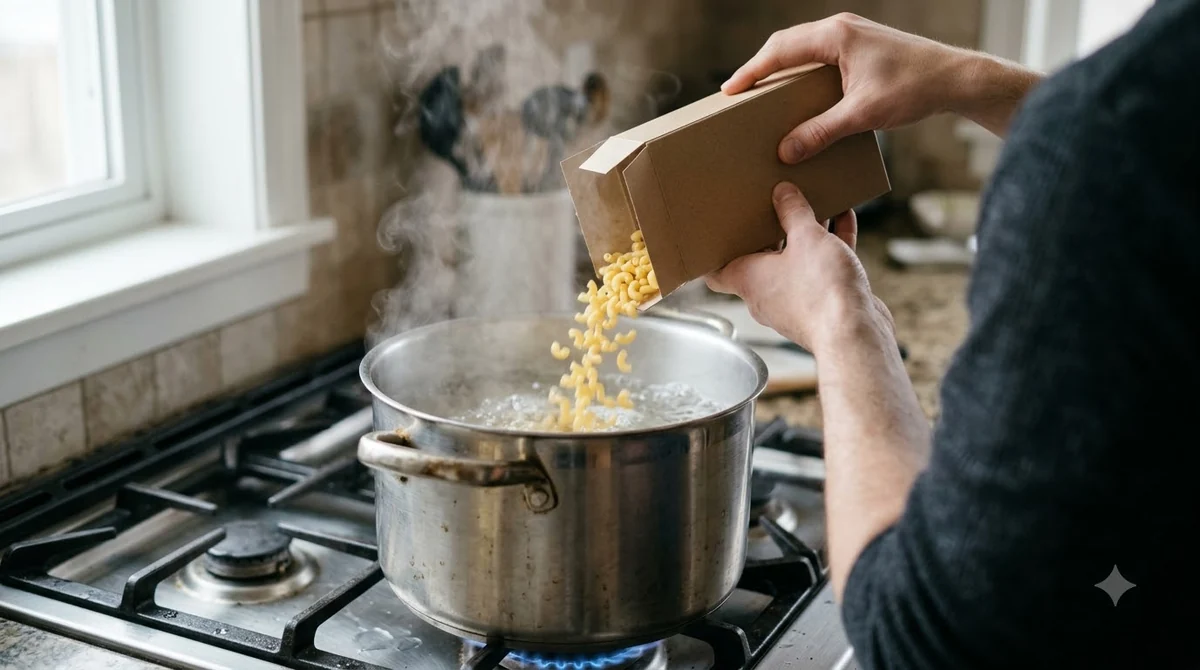
Taste of Home recommends using the largest pot you have. It calls for 1 gallon of water per pound of dried pasta, and warns that a pot that is too small can boil over, which is also a safety concern. If your pot is too small, see our picks for the best pasta pots.
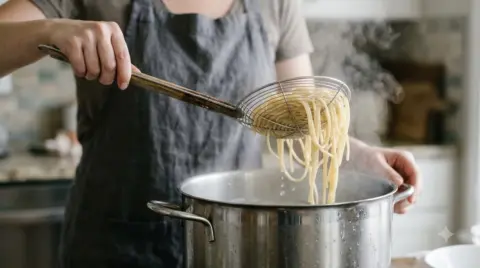
America’s Test Kitchen takes a different approach for a big batch. Its method cooks 2 pounds of pasta together in a 6-quart Dutch oven, using the same 4 quarts of water you would use for 1 pound. The page says to stir constantly once the pasta goes in, so the water needs to stay at a strong boil. Both approaches rest on the same idea for how to cook pasta for a crowd: plenty of water and a strong boil.
Plan Portions and Water for Your Guests
Plan water and salt by the pound of pasta, then divide the total across pots or batches so each one fits the pot you have.
| Dried pasta | Water | Salt | Source |
|---|---|---|---|
| 1 pound | 1 gallon | 1½ tablespoons kosher salt | Taste of Home |
| 2 pounds | 4 quarts, the same as for 1 pound | 1 tablespoon, measured against the water | America’s Test Kitchen |
When you plan how to cook pasta for a crowd, note that the two sources differ on salt. Taste of Home uses more kosher salt per gallon, and ATK measures the salt by the water, not the pasta. Taste of Home’s editor reports that some Italian cooks want the water as salty as the sea, which is a useful goal if you want the pasta seasoned from the inside. Measure with the ratio you trust, then taste the water before the pasta goes in.
To size a batch for how to cook pasta for a crowd, use the serving size printed on the package as your starting point; this guide to how much pasta per person covers the basics. Multiply by your guest count, then add a little extra if you expect second helpings. The sources read for this article do not give one universal serving size, so the package is the safest reference.
How to Cook Pasta for a Crowd in One Pot or Batches
Use one big pot when it holds the water you need for the full amount, and cook in batches when it does not, since this choice is central to how to cook pasta for a crowd. Taste of Home says to use the largest pot you have, or to cook in several batches if necessary.
- Bring the full pot of water to a rolling boil before anything else.
- Add the salt once the water boils, so it dissolves fully, and measure it against the water.
- Add the pasta and stir right away so the pieces separate and everything sits under the water.
- Keep the water at a boil and stir every few minutes, including for short shapes.
- For a second batch, let the water return to a full boil before the next pasta goes in, so cooking time stays predictable.
If you can, cook a test batch the day before the event. A practice run of how to cook pasta for a crowd shows how your pot and burner handle the volume, and how long your pasta takes to reach the texture you want.
Stir, Test, and Drain at the Right Time
Testing early is part of how to cook pasta for a crowd: pull a piece of pasta from the pot about 1 to 2 minutes before the time printed on the box, and bite it. The goal is al dente, which means still slightly chewy at the center.
In how to cook pasta for a crowd, large batches can take longer to return to a boil, so the first test may come later than the box suggests. Check more often than you think you need to, because pasta keeps cooking in the hot water until you drain it.
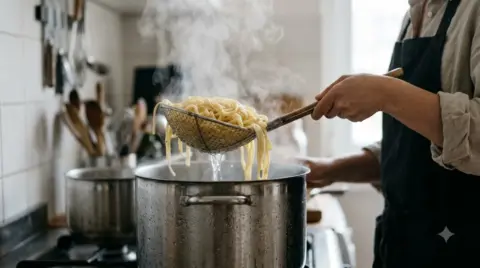
Before you drain, reserve about a cup of the starchy cooking water. You can use it to loosen a thick sauce or help the pasta bind to the sauce. Drain well in a colander, and use the reserved water only where you need it.
Taste of Home advises against rinsing pasta for a hot dish, because the surface starch helps sauce cling. Rinsing is for pasta that will be served cold.
Plan the Timing Around Your Meal
Work backward from the time you plan to serve, since timing decides how to cook pasta for a crowd without overcooking it. Start the water when the sauce is nearly ready, and aim to drain the pasta as the sauce is coming together, so the pasta reaches the table hot.
For a multi-course meal, put the pasta last among the hot dishes. Keep the sauce warm in a pan with a lid while the batches finish, and combine the pasta and sauce just before serving. That order keeps the pasta from sitting in the water for long, which the al dente test is meant to prevent.
If you cook in several batches, keep each finished batch separate and covered, and do not stack hot pasta in one pile for a long wait. The sources read for this article do not give holding temperatures or maximum wait times, so plan a short window.
Make Ahead and Hold Pasta Safely
You can cook pasta ahead for a crowd if you toss it with oil, cool it, and store it in an airtight container. Taste of Home says the pasta can be refrigerated for up to 2 days.
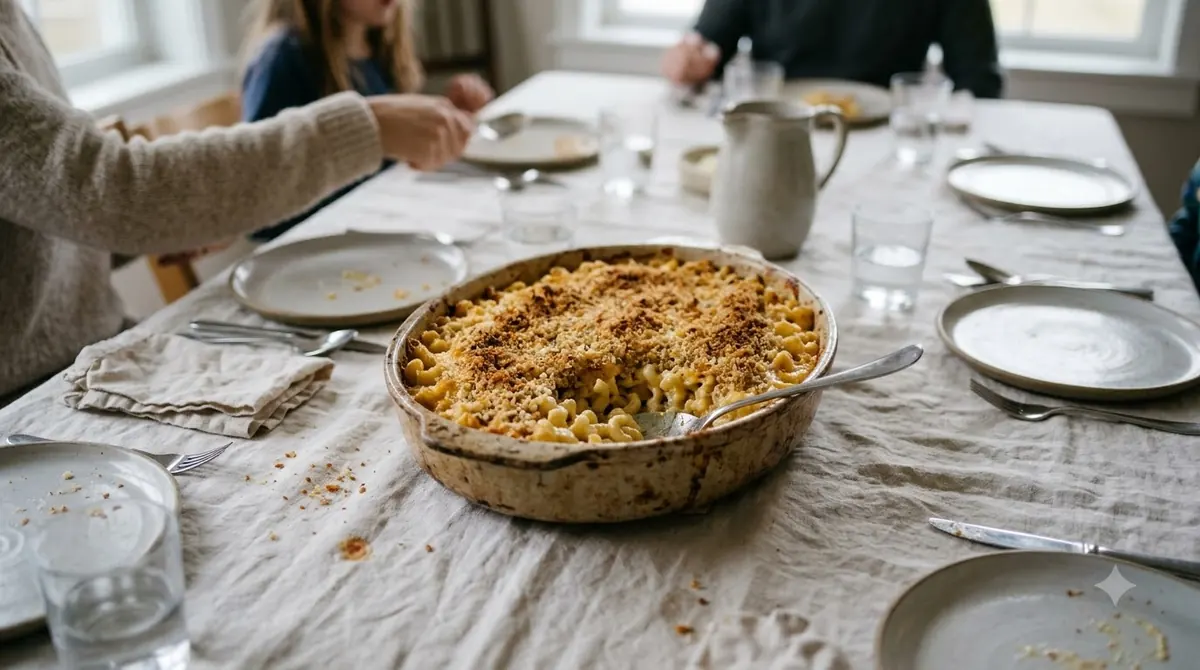
Taste of Home recommends tossing warm, drained pasta with a few tablespoons of olive oil, letting it cool, and storing it in an airtight container. The oil keeps the strands from clumping while they cool. Make-ahead is a useful part of how to cook pasta for a crowd, because it takes pressure off the stove.
To reheat, add the cold pasta to boiling salted water for 30 to 45 seconds. That step removes most of the oil so the sauce can cling; our guide on how to reheat pasta has more options. Drain it well, then toss it with hot sauce.
The sources read for this article do not give holding temperatures for pasta on a buffet or warming tray. For food safety on cooked food, including how long it can sit out and how to store leftovers, check the current USDA guidance and follow it for your event.
Match the Sauce to a Big Batch
Use the starchy pasta water in small amounts to thin a sauce that has tightened once the pasta is in the bowl.
America’s Test Kitchen notes that the cooking water is very starchy, so add it in small increments when thinning a sauce. If the sauce does not thin, switch to hot water.
Large amounts of sauce also need time to heat through, so plan the sauce as part of how to cook pasta for a crowd. Warm the sauce in a wide pan or in batches, then combine it with the pasta just before serving, so the dish stays hot from the first bowl to the last.
Common Mistakes in How to Cook Pasta for a Crowd
Most problems with how to cook pasta for a crowd come from too little water, salting by the amount of pasta, or cooking too early without a plan for the wait.
- Using too little water. Taste of Home says without enough water, the pasta cannot release its starches and turns sticky.
- Salting by the pasta instead of the water. ATK’s method measures salt against the water, not the pasta.
- Adding salt before the water boils, when it may not dissolve fully.
- Rinsing pasta for a hot dish, which washes away the starch that helps sauce cling.
- Skipping the test, so the pasta is either firm or soft when it reaches the table.
- Cooking every batch at once and holding it for a long wait without a plan.
Frequently Asked Questions
How much pasta do I need per person?
For how to cook pasta for a crowd, use the serving size printed on the package as your starting point, then multiply by your guest count. Add a little extra if guests often come back for seconds. The sources read for this article do not give one universal number, so the package is the most reliable reference.
Can I use a regular stockpot to cook pasta for a crowd?
Yes, if the pot holds the water you need. Taste of Home says to plan about 1 gallon of water per pound of dried pasta, so a small pot should be used for smaller batches. Cook in batches when the full amount will not fit.
Should I rinse the pasta after draining?
Not for a hot dish. Taste of Home advises against rinsing because the surface starch helps sauce cling. Rinse only when the pasta will be served cold.
How far ahead can I cook pasta for a party?
Taste of Home says pasta tossed with a little oil, cooled, and stored in an airtight container can be refrigerated for up to 2 days. Reheat it in boiling salted water for 30 to 45 seconds before you add the sauce.
Why does the salt ratio matter?
The water is what seasons the pasta as it cooks, so the salt ratio is central to how to cook pasta for a crowd. America’s Test Kitchen measures salt against the water, not the pasta, so the amount stays consistent as you scale up. Taste the water before the pasta goes in.
How do I keep cooked pasta hot for guests?
The sources read for this article do not give warming times or holding temperatures for pasta. Plan a short wait, keep the sauce warm in a covered pan, and check current USDA guidance on keeping cooked food hot and safe.
Learning how to cook pasta for a crowd starts with one pot that holds the full water volume, salted by volume, and an early test. Plan the batches and the wait before the day of the event, and follow current food safety guidance for holding and storing cooked pasta.
 9 min readLearnPizza Party Ideas for Hosting a Crowd at HomeUpdated Nov 10, 2026
 9 min readLearnDo You Put Oil in Pasta Water? No, and Here Is WhyUpdated Nov 10, 2026
 9 min readLearnWhy Is My Pasta Sticky? Causes and Easy FixesUpdated Nov 10, 2026
 8 min readLearnFideo Pasta: What It Is, How to Toast It and SubstitutesUpdated Nov 10, 2026
 7 min readLearnSpaghettoni Pasta: What It Is, How Thick It Is and How to Cook ItUpdated Nov 10, 2026
 8 min readLearnGigli Pasta: The Ruffled Lily-Shaped Pasta ExplainedUpdated Nov 10, 2026