

How to use a bench scraper comes down to three habits: hold the flat blade against the work surface, press or scoop with its edge, and wipe it clean between tasks. The tool is a rigid stainless steel blade with a handle, and it covers jobs a knife does poorly, such as dividing dough and clearing flour. Used with the right angle and a few habits, it saves time and keeps your dough intact.
What a bench scraper is and what it is for
A bench scraper is a small, rigid, flat blade that is mainly used in baking to pick up, turn and portion dough. According to Wikipedia’s entry on the bench scraper, the tool is also known as a dough scraper, and a typical blade measures about 8 cm by 13 cm (3.1 in by 5.1 in).
Most blades are stainless steel. The handle is usually wood or plastic, although newer models use nylon or silicone. If you are choosing a new one, our roundup of the best bench scrapers compares popular models. The same reference notes that bakers use the blade to slice dough and to scrape dried dough bits off the kneading surface, and it can also move sliced or diced food from a cutting board to a pan.
Because the edge is wide and stiff, it works in three ways: as a scraper, as a shovel for food and as a short knife for dough. Knowing which of these you need before you start makes the rest of the technique easier to follow.
- Scraping: clear flour, dough scraps and crumbs from the counter.
- Shoveling: slide chopped vegetables, herbs or garlic into a bowl or pan.
- Cutting: portion bread, pizza or biscuit dough into even pieces.
How to hold and angle the scraper
Hold the handle firmly and keep the blade flat or upright, depending on the task, because the angle decides whether the blade scrapes, cuts or smooths. Cook’s Illustrated notes that a thin handle helps you keep the blade flat against the surface, as described in America’s Test Kitchen’s guide to using a bench scraper.
Keep your grip relaxed. Let the weight of the blade do the work, and avoid leaning on the handle, which can tilt the edge and leave a gouge in the dough.
The angle changes with the job:
- For cutting and scraping the counter, hold the blade flat and close to the surface.
- For smoothing frosting on a cake turned on a turntable, hold the blade at 90 degrees to the frosting and turn the plate slowly, according to America’s Test Kitchen.
- For cake smoothing, a retailer guide from Dioro advises holding the blade at about 45 degrees while turning the turntable in one continuous motion.
How to use a bench scraper to divide dough
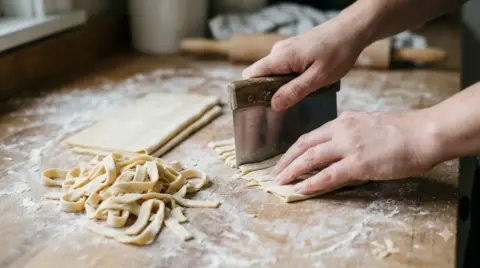
To divide dough, flour the blade lightly, set it perpendicular to the work surface and press straight down through the dough. Sawing back and forth tears the gluten network, so one firm downward press per cut gives cleaner edges.
If you are learning how to use a bench scraper for portioning, Dioro’s guide lists the same steps and adds that you should wipe the blade clean between cuts so the dough does not stick to it. Dough that clings to the blade drags as you cut, which pulls on the piece you are portioning.
- Lightly flour the blade and the surface, so the dough does not grip.
- Place the blade perpendicular to the board, with the edge over the line you want to cut.
- Press straight down in one motion. Do not hesitate partway through, because a stop-start cut leaves ragged edges.
- Wipe the blade with a dry cloth or lightly floured fingers before the next cut.
- Repeat until the dough is in the portions you need.
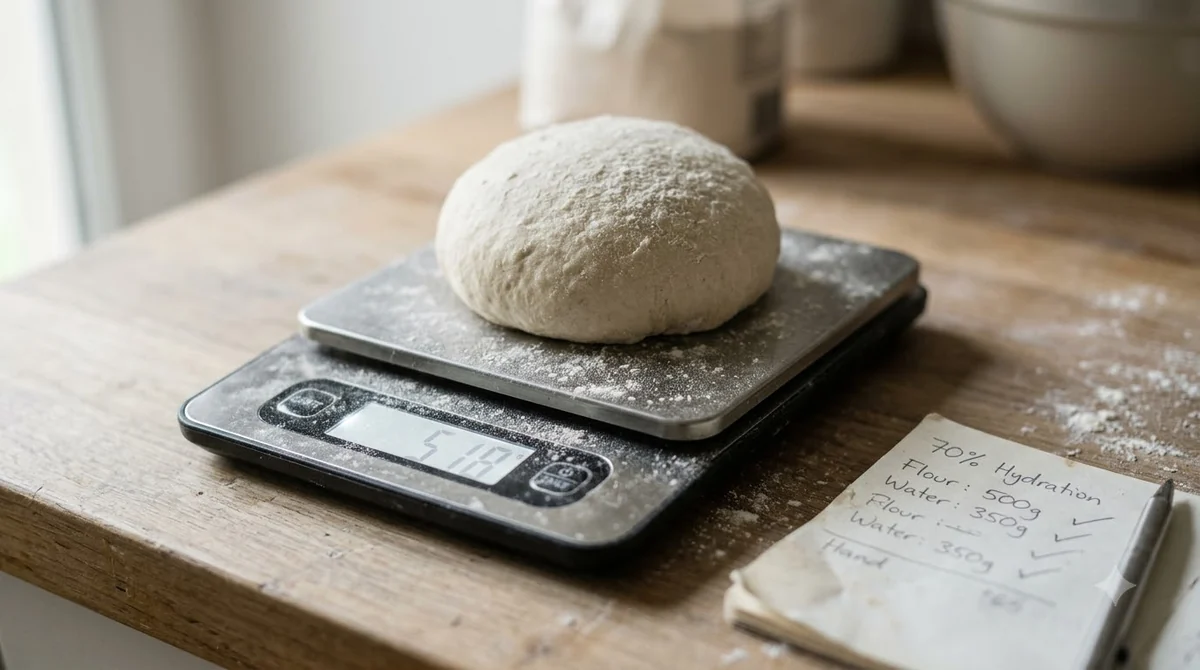
If you want equal portions, weigh the dough rather than guessing by eye. Dioro suggests dividing dough “into equal portions by weighing,” and a digital kitchen scale makes that step quick. The guide does not give target weights, so set your own weight based on the recipe you are following.
Shaping works the same way. Wikipedia notes that bakers use the blade to pick up, turn and portion dough, so you can slide it under a piece to lift it without tearing. For long shapes, America’s Test Kitchen describes moving the scraper along the length of the dough to create smooth, even cylinders.
How to move chopped food and clear the work surface
To move chopped food, push the pieces into a neat pile on the board, then slide the blade under the pile and lift it into a bowl or pan. America’s Test Kitchen gives the same method for ingredients on a cutting board.
Learning how to use a bench scraper for transfers keeps the knife out of the way and protects the cutting edge. A retailer guide from Field Company says the flat, wide edge slides under ingredients without damaging delicate edges, and that the blade is also good for collecting bits of dough or flour after kneading.
- Chop the ingredients and gather them into a rough pile in the middle of the board.
- Slide the blade under the pile at a low angle.
- Lift and tilt the blade over a bowl or pan, and let the food slide off.
- Sweep flour, dough and crumbs toward one corner before you start the next task.
Cleaning as you go keeps the work surface tidy. Dioro recommends sweeping flour and residue from the board during prep rather than waiting until the end.
The scraper also lifts sticky residue. For sticky spills such as caramel or honey, Dioro notes that the firm edge removes residue without spreading it further.
How to measure flour and use the blade on other foods
To measure flour with a bench scraper, scoop the flour into a measuring cup and level the top with the flat edge. America’s Test Kitchen describes dipping the cup into the container of flour, sugar or another dry ingredient and then levelling it with the scraper.
When you learn how to use a bench scraper for measuring, levelling is the step that keeps the amount accurate. Packed flour weighs more than loose flour, so tapping or pressing the cup can throw off a recipe. Use a scale when the recipe lists weights.
The blade can also spread thick batters and frostings. Hold it flat, draw it across the surface in one pass, and wipe it between passes so the finish stays smooth.
Common mistakes to avoid
When people learn how to use a bench scraper, the most common mistakes are sawing through dough, pausing in the middle of a cut and using a chef’s knife to scoop food. Each one damages the dough or the knife, and each is easy to avoid once you know the reason.
- Sawing: back-and-forth motions can tear delicate gluten. Press straight down instead.
- Hesitating: a stop partway through a cut leaves ragged edges, according to Dioro.
- Scooping with a knife: the same guide warns that a chef’s knife edge dulls and can be unsafe when used this way.
- Skipping cleanup: dough left on the blade sticks on the next cut and drags the portion.
- Leaning on the handle: this tilts the edge and gouges the surface you are working on.
Another habit that causes problems is working on a board that is too small. Give the dough room to be turned and cut, and keep the bench clear of tools you do not need for the task.
How to clean and care for a bench scraper
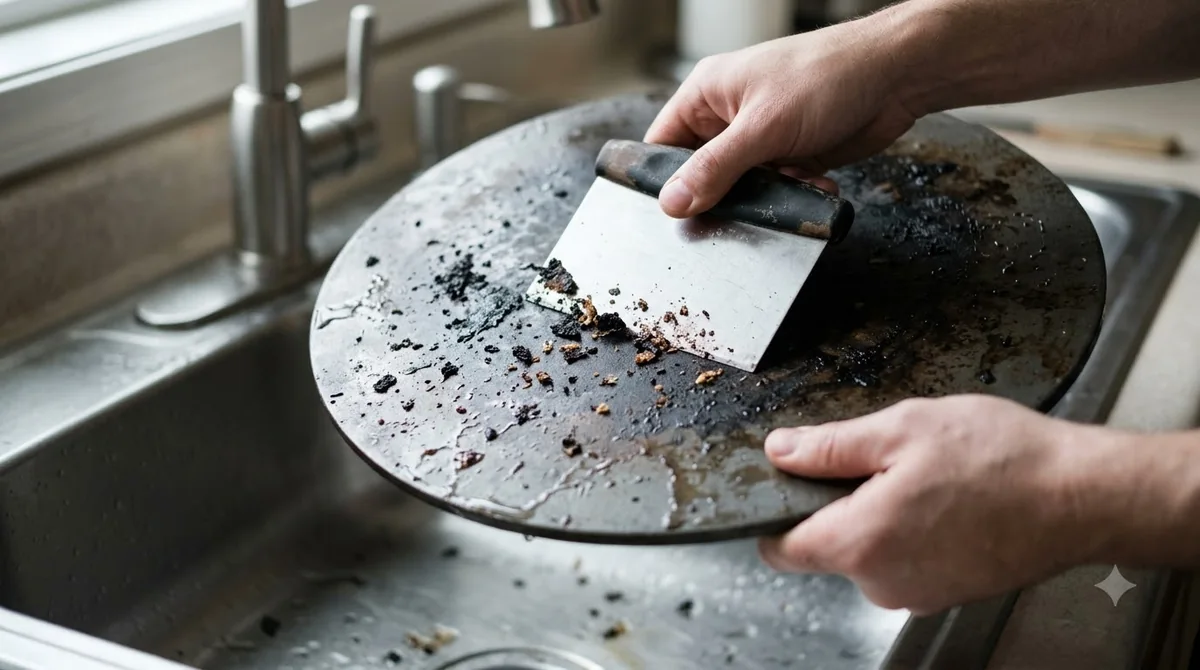
Wipe the blade after each task, then wash it with your other tools using the care instructions from the manufacturer. Dried dough bits are easiest to remove while they are still soft, so wipe the blade before the dough sets.
Wood cutting boards need extra care. Field Company’s guide says a board does not need a soak, and it recommends using minimal water, because excess water can cause warping and cracks. Use the scraper to remove stuck-on bits and crumbs first, then wipe the board dry.
Dishwasher safety depends on the model. A retailer page advertises dishwasher compatibility, but handle materials and blade finishes differ by model, and no official care guidance was confirmed for this article. Check your model’s care label before putting it in the machine, and dry the blade fully before storing it.
Frequently Asked Questions
Can you learn how to use a bench scraper on pizza dough?
Yes. The same flour, press-straight-down method works for pizza dough, and the blade is useful for dividing the dough into pizza dough balls and clearing flour from the bench afterward. Weigh each portion if you want them to match in size and cook evenly.
Does a bench scraper cut cold butter?
A retailer guide from Field Company says its blade cuts chilled butter and pastry more easily than a knife. That claim is from a product seller, and no independent test was read for this article, so treat it as a practical starting point rather than a guarantee.
How do you clean a bench scraper?
Wipe the blade after each use to remove dough and flour, then wash it according to the manufacturer’s care instructions. Dry it fully before you store it so the handle and blade do not trap moisture.
Can you use it on a wooden board?
Yes, for scraping crumbs and stuck-on bits. Use only a little water, do not soak the board, and dry it promptly, since soaking a wood board can cause warping and cracks.
Is a bench scraper the same as a dough scraper?
In most kitchens, yes. Wikipedia lists dough scraper among the common names for the same flat blade.
Why should you not use a knife to scoop food?
Scooping with a chef’s knife can dull the edge, and it puts your fingers closer to the blade. The bench scraper is designed for this job, so it protects the knife and gives you a cleaner transfer.
Practice how to use a bench scraper on a simple dough before you rely on it for a recipe that matters. Once the wrist motion feels natural, the scraper becomes one of the fastest tools on the bench. You can find more tool guides in our Gear & Pantry guides.
 8 min readGear & PantryBench Scraper Guide: What It Is and How to Choose OneUpdated Nov 16, 2026
 8 min readGear & PantryHow to Use a Dough ScraperUpdated Nov 10, 2026
 8 min readGear & PantryDough Scraper: Types, Uses and What to Look ForUpdated Nov 16, 2026
 8 min readGear & PantryHow to Use a Digital Kitchen Scale for Accurate BakingUpdated Nov 10, 2026
 9 min readGear & PantryHow to Use a Baking Steel in a Home OvenUpdated Nov 10, 2026
 9 min readGear & PantryHow to Use a Ravioli Mold: Step-by-Step GuideUpdated Nov 10, 2026