
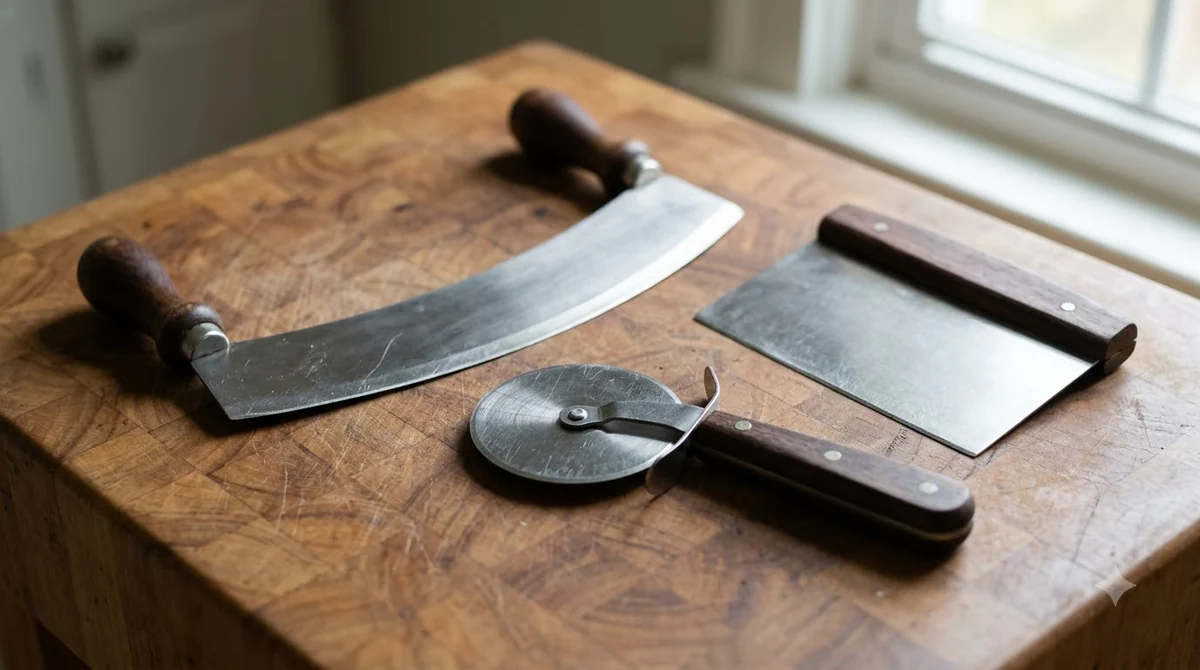

To learn how to use a dough scraper, start with its three main jobs: dividing dough, lifting it, and cleaning the work surface. A dough scraper, also called a bench scraper, is a rigid tool that bakers use to move dough and clean surfaces where dough was worked. Pick a metal or plastic blade first, then match the technique to the task.
How to use a dough scraper: what the tool is for
A dough scraper is a rigid, roughly rectangular blade, about 8 by 13 cm, used to manipulate dough and clean the surfaces where dough was worked.
The Wikipedia entry on kitchen scrapers defines the tool as one bakers use to manipulate dough and to clean surfaces on which dough has been worked. The same tool is also sold as a bench scraper, and the two names refer to one item. Its main uses are dividing dough, lifting and turning it, scraping dried dough off the counter, and moving diced food from a board to a pan.
Construction varies. A traditional scraper is usually a small sheet of stainless steel with a handle of wood or plastic. Some models have a rolled steel edge along one long side, which adds grip and stiffness. Knowing these parts helps you judge how the blade will behave when you press on dough or drag it across a board.
If you are learning how to use a dough scraper for the first time, begin with the cleaning and scooping tasks. They involve little pressure on the dough, so you can get a feel for the angle of the blade. Move on to dividing once the motion feels steady, because cutting is where a tilted blade can squash a piece you wanted to keep whole.
Dividing dough with a dough scraper
To divide dough, press the blade straight down through the dough, then lift the pieces apart. The edge is the working part, so when you practice how to use a dough scraper for dividing, keep it flat and move it in one clean motion.
- Lightly flour the bench so the dough does not stick to the blade.
- Hold the scraper by its handle with the blade flat against the dough.
- Press straight down through the dough in one firm motion.
- Lift each piece with the blade and move it to a tray or scale.
The blade is also good at cutting. America’s Test Kitchen describes a wide, flat blade with a deeply beveled edge that cuts through pizza and bread dough quickly. That makes the scraper useful for splitting a large ball of pizza dough into smaller portions before you shape the dough balls.
A straight-edged scraper can also portion fresh pasta dough. Cut the sheet across its width to the length you need for linguine or lasagna. Use a metal blade for this, since a flexible plastic scraper is built for scraping rather than slicing.
Lifting, scooping and shaping dough
Slide the blade under sticky dough to lift it, which is easier than peeling dough off the surface with your fingers.
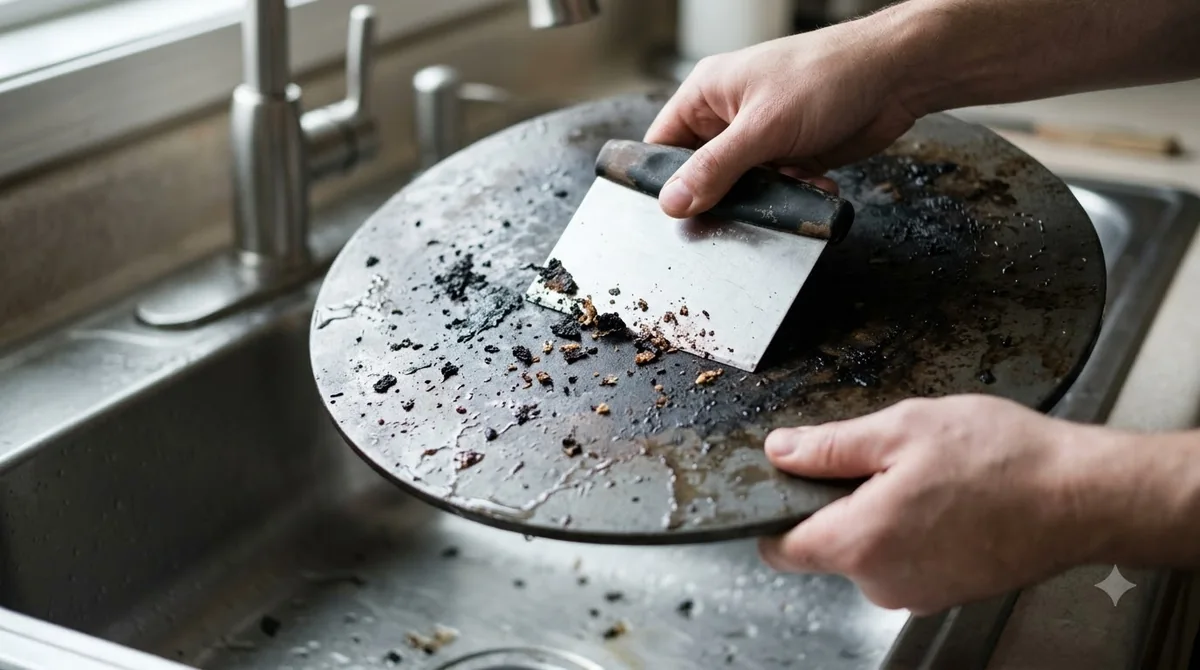
The handle affects how you lift. America’s Test Kitchen describes a thin, textured polypropylene handle that helps you keep the blade flat against the work surface while you scoop and scrape. A thin grip also makes it easier to keep the edge low and level while you work. Cooks Info adds that the same blade can scoop up pieces of dough or ingredients such as diced onion, so it doubles as a board tool during prep.
Three techniques cover most lifting and shaping jobs:
- Scooping: push loose bits on the board into a pile, then scoop them up with the blade.
- Shaping a log: roll the dough into a log, then move the scraper along its length to form an even cylinder.
- Cutting straight lines: press the blade down in a straight line to portion dough into even pieces, the same method used for bar-style doughs.
Cleaning the work surface after dough
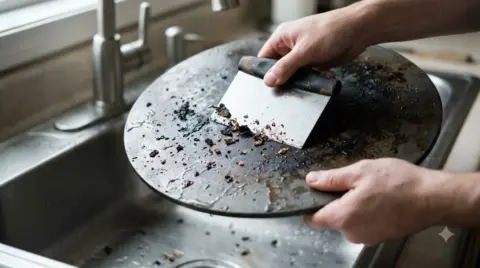
Use the flat side of the scraper to lift dried dough and flour off the bench, then wipe what remains. Dried dough left on a counter can flake into the next batch, so clear it before you start again.
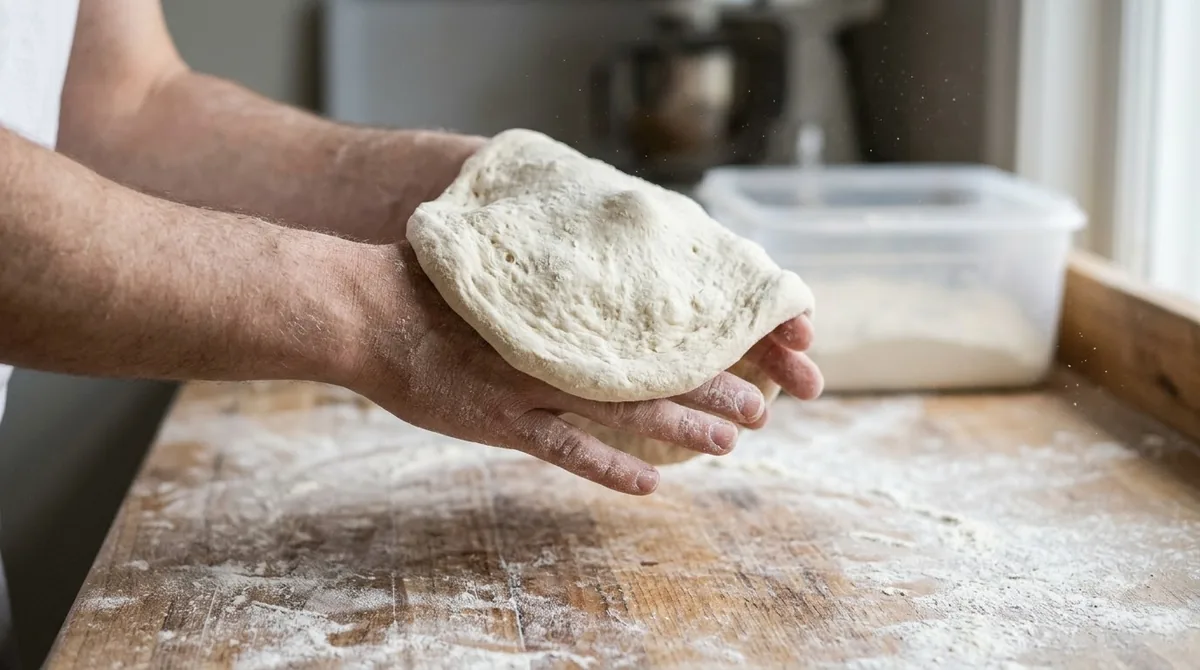
Cleaning is the easiest place to practice how to use a dough scraper. Work in short strokes, sliding the blade low and flat so you lift the residue instead of pushing it across the surface. Cooks Info describes the scraper as a tool for cleaning surfaces of dough and flour, and notes that it can also clean rolling pins.
- Gather loose flour into a pile with the flat side.
- Lift dried dough in short strokes, moving the residue toward the edge of the bench.
- Wipe the bench with a damp cloth to finish.
Other uses: folding, leveling and mixing
The edge can fold dough over itself during kneading, and the flat side can level dry ingredients or batter. These are smaller jobs, but they keep your hands cleaner and your measurements accurate.
- Folding: use the edge to fold dough over itself, which keeps hands cleaner during kneading.
- Mixing: use the flat side to scrape surrounding flour into the dough so it does not spill onto the counter.
- Leveling flour: dip a measuring cup into flour, then level it with the scraper.
- Leveling batter: use the flat side to level batter in a baking tray.
- Emptying a bowl: use the fine edge to pick up the dough left behind.
Metal or plastic: which dough scraper to choose
A stainless steel scraper with a straight edge suits cutting and lifting, while a one-piece plastic scraper suits bowls because it flexes.
| Type | Best for | Key trait |
|---|---|---|
| Traditional stainless steel, about 13 by 8 cm | Dividing, cutting and cleaning the bench | Wide, straight edge; handle may be wood, plastic or matching metal |
| Steel blade with a rolled edge along one side | Lifting and turning sticky dough | Rolled edge adds grip and stiffness |
| One-piece plastic | Scraping dough from bowls | Flexible; straight at the bottom and rounded at the top |
Cooks Info notes that the one-piece plastic type is more flexible, which suits scraping dough from bowls where dough has risen. Cooks Info adds that some people with expensive countertops prefer the plastic ones on their countertops, so the surface itself is part of the choice. Our roundup of the best dough scrapers compares popular blades. A larger blade gives more surface for each pass, which helps when you clean a big bench or cut a large batch.
Care and common mistakes to avoid
Most dough scrapers are dishwasher safe, so cleanup takes little effort after a batch. The main mistakes come from using the wrong blade for the job and from letting dough dry on the tool.
- Cutting with a flexible plastic scraper, which is built for scraping rather than slicing.
- Skipping flour on a sticky bench, so the dough grabs the blade and tears.
- Leaving dried dough on the blade or handle, which makes the next cleanup harder.
- Pressing down hard on the blade when you only need to scrape, which wastes effort and can mark the surface.
Check the care label on the handle before you put the tool in the dishwasher, since wood and some finishes need hand washing. Dry a steel blade before you store it.
Frequently Asked Questions
What is the difference between a dough scraper and a bench scraper?
They are the same tool. Wikipedia lists bench scraper as an alternate name for the dough scraper, so the two terms describe one blade used for moving dough and cleaning surfaces.
Can a dough scraper cut pizza dough?
Yes. A wide, flat blade with a deeply beveled edge cuts through pizza and bread dough quickly, according to America’s Test Kitchen. Use it to divide a large batch before you shape each piece.
Can you clean a dough scraper in the dishwasher?
Most dough scrapers are dishwasher safe, according to Cooks Info. Check the care label first, because a wooden handle may need hand washing.
Does a dough scraper replace a knife?
No. A dough scraper is best for dividing, lifting and cleaning. A knife is better for precise slicing and trimming, so keep both in the kitchen.
What size dough scraper should you buy?
A traditional stainless steel scraper is about 13 by 8 cm, according to Cooks Info. A larger scraper gives more surface for cleaning and cutting larger pieces of dough.
Start with one scraper and practice the three main jobs on your next batch of dough, dividing, lifting and cleaning. Once you know how to use a dough scraper for each job, the folding and leveling tasks will feel natural, and more tool guides are in our Gear & Pantry guides. Add folding and leveling once those feel easy. A metal blade for cutting and a plastic one for bowls covers the tasks in this guide.
 8 min readGear & PantryDough Scraper: Types, Uses and What to Look ForUpdated Nov 16, 2026
 9 min readGear & PantryHow to Use a Bench Scraper: Techniques, Cleaning and Common MistakesUpdated Nov 10, 2026
 9 min readGear & PantryHow to Use a Ravioli Maker: Step-by-Step for Dough and FillingUpdated Nov 10, 2026
 8 min readGear & PantryPizza Dough Proofing Box: What It Does and How to Use OneUpdated Nov 10, 2026
 9 min readGear & PantryHow to Use a Pizza Dough RollerUpdated Nov 11, 2026
 9 min readGear & PantryHow to Use a Pizza Dough DockerUpdated Nov 11, 2026