
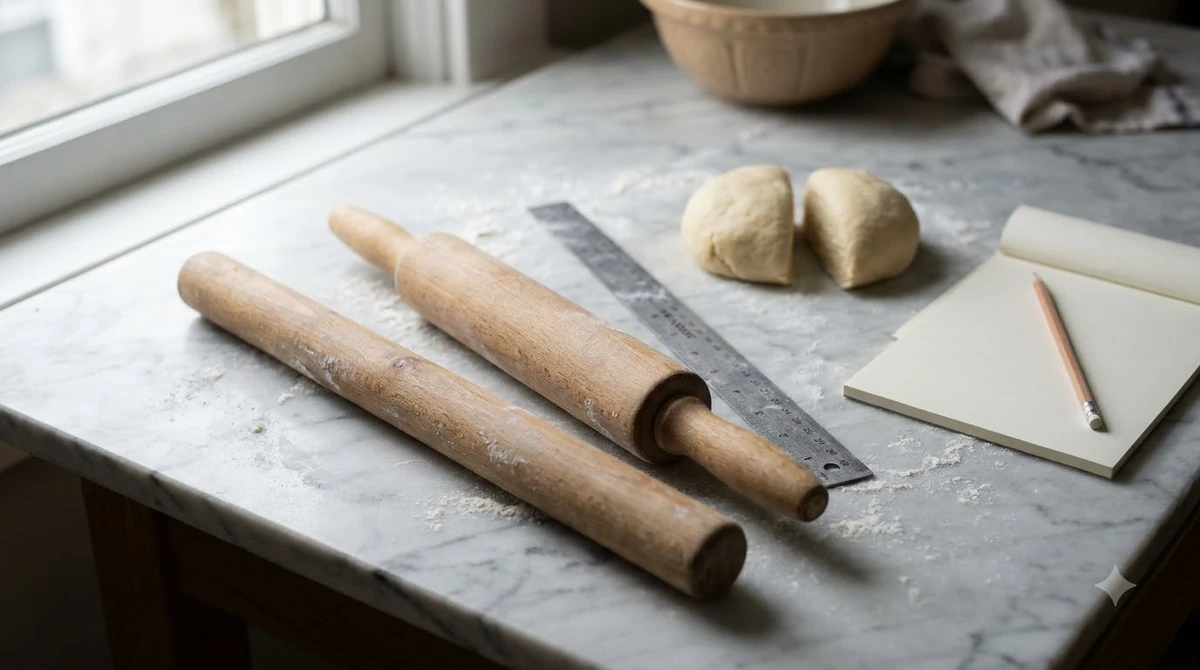

Learning how to use a pasta rolling pin means flattening rested fresh pasta dough into thin sheets by hand. You roll from the center outward on a lightly floured surface. You need only flour, eggs, a rested dough and a long straight pin, and the method works without a pasta machine.
Once you know how to use a pasta rolling pin, a good sheet is about 1 mm thick and lets light through. The seven steps below cover prep, rolling and the fixes for dough that tears.
What You Need Before You Start
A long, straight, non-tapered French rolling pin is the best shape for hand-rolled pasta, according to King Arthur Baking. Pair it with a clean work surface and a basic dough.
Knowing how to use a pasta rolling pin starts with the right tools. GialloZafferano’s base recipe uses 400 g of Type 00 flour and 4 eggs of about 70 g each, which makes 700 g of fresh pasta. Keep these items within reach before you start:
- A long, straight rolling pin with no taper
- Type 00 flour for dusting and for the dough
- Four eggs, about 70 g each
- A clean wooden or floured work surface
- Plastic wrap and a floured cloth for resting and storing
A shorter or tapered pin still works, but it makes it harder to keep the sheet even. Divide the dough into smaller pieces and expect more folds. A pasta machine is the other option if you already own one, but the hand method does not need one, as our guide to making pasta without a machine explains. If you are shopping, see the best pasta rolling pins.
Prepare and Rest the Dough
Knead the dough for 8 to 10 minutes until it is smooth and elastic, then rest it for at least 30 minutes so it rolls without tearing.
Good dough is the first part of how to use a pasta rolling pin well. GialloZafferano’s dough guide wraps the dough in plastic wrap and leaves it in a cool place for at least 30 minutes. King Arthur Baking also suggests resting it about 30 minutes after kneading. Shukette gives a range of 30 minutes to an hour at room temperature, covered.
Shukette’s test is simple: pinch off a small piece and stretch it thin. If it snaps easily, the dough needs more kneading or more rest. A dough that looks smooth can still crack at the edges if it is too dry.
If the dough is dry, mist your hands lightly with water, work the moisture in gently, and rest it for another 10 minutes. Add water a little at a time, because a wet dough sticks to everything and is hard to control.
Flour the Surface, Never the Pin
Dust only the dough and the work surface with flour, because flour on the rolling pin makes the dough stick to it, according to GialloZafferano. Flour is the second habit to learn when you study how to use a pasta rolling pin.
Shukette advises a light dusting on a clean wooden board, since too much flour dries the dough and makes it tough. King Arthur Baking takes the opposite view on the board: dust it generously so the dough does not stick, because most of that flour comes off while the pasta boils. If the dough gets sticky while you roll, add a little flour without making the dough hard.
- Keep the pin dry, with no flour on it
- Dust the board before you start
- Add a pinch of flour only when the dough sticks
How to Use a Pasta Rolling Pin: Step by Step
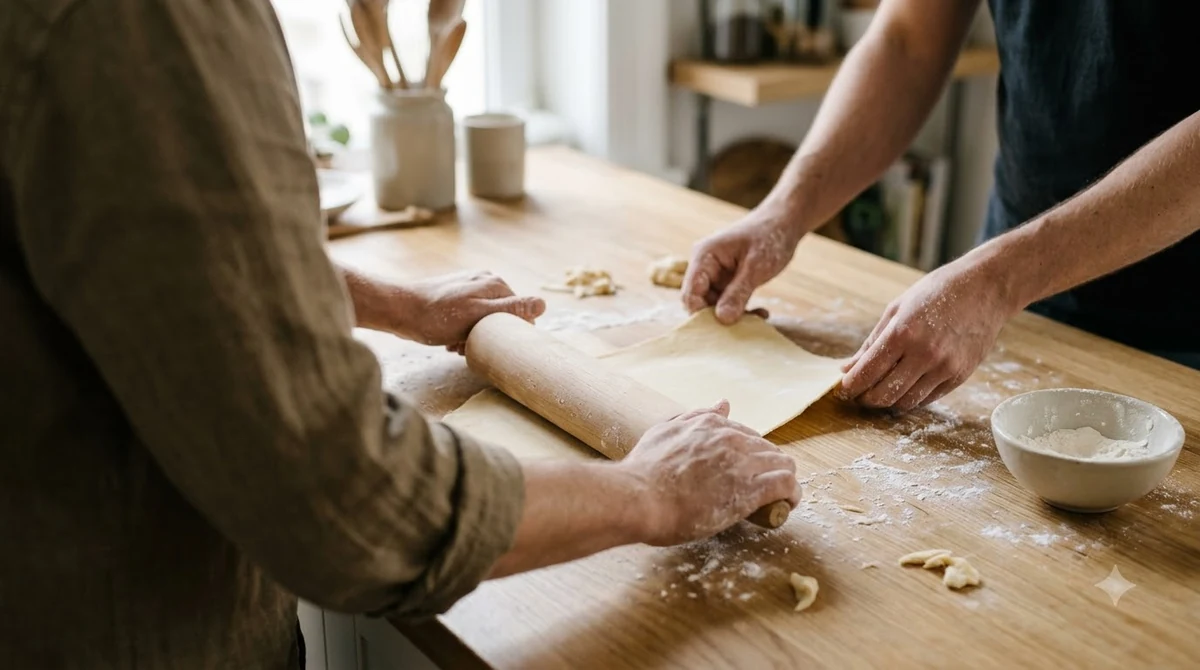
Start at the center of the disc and push outward with even pressure, then turn the dough a quarter turn after each pass. Here is how to use a pasta rolling pin one portion at a time.
- Divide the rested dough into four equal portions and cover the pieces you are not rolling, as Shukette recommends.
- Press one portion with your palm into a flat disc to create a starting shape.
- Place the pin in the center and press outward with both hands parallel, letting the pin slide while your palms press.
- Roll away from you, return the pin to the middle, then roll toward you. Reach the edge each time so the sheet stays even, according to King Arthur Baking.
- Turn the dough a quarter turn clockwise after each pass or every few rolls, as GialloZafferano describes.
- Fold the dough a few times at the start to make a cleaner rectangle, and keep it evenly thick with each fold.
- When the sheet has thinned, ease off the pressure so it does not tear.
Work quickly and firmly at first to keep the dough from drying out. Once the sheet is thin, slow down, because the thin areas tear first. Most beginners who learn how to use a pasta rolling pin find the rhythm after a few sheets.
The two sources describe slightly different patterns, and both work. Pick the one that keeps the sheet even, and check the edges every few passes. Either way, the goal in how to use a pasta rolling pin is an even sheet, not a fast one.
How Thin Should the Sheet Be?
Aim for about 1 mm for most pasta, which King Arthur Baking’s pasta guide calls an approximate target. GialloZafferano says a very thin sheet should be no more than 0.5 mm.
The thickness target matters most once you know how to use a pasta rolling pin on your own dough. The sources give different numbers, so choose by the shape you want. King Arthur suggests a sheet about the thickness of a quarter for a chewier noodle, and notes that very thin dough cooks fast.
| Check | What it tells you |
|---|---|
| Blow on the dough at the table edge | If it ruffles, it is thin enough. If it does not move, roll it thinner. If it moves a lot, it is very thin and will cook fast (King Arthur Baking) |
| Hold it up to light | A slightly translucent sheet shows your hand’s shadow, but should still hold together without tearing under its own weight (Shukette) |
| Maximum thickness | No more than 0.5 mm for very thin dough (GialloZafferano) |
| Approximate target | About 1 mm for most pasta (King Arthur Baking) |
| Chewier noodle | About the thickness of a quarter, as King Arthur describes it |
The table is a guide to how to use a pasta rolling pin by feel, not a measurement for every shape. If you want a number, measure a test piece with a ruler, and roll the rest of the dough to match its feel. Knowing how to use a pasta rolling pin also means knowing when to stop rolling.
Fix Common Problems
Dough that springs back usually needs a short rest, and cracked edges usually need a little water on your hands, according to King Arthur Baking and Shukette.
| Problem | Fix |
|---|---|
| Dough sticks to the surface | Add a little flour to the dough or the surface, not the pin (GialloZafferano) |
| Dough springs back | Cover it and rest 5 to 10 minutes, then roll again (King Arthur Baking) |
| Dough keeps tearing | Add more folds while rolling, and consider some durum flour (King Arthur Baking) |
| Dry, cracking edges | Mist your hands lightly with water, work it in, and rest 10 minutes (Shukette) |
| Sheet shrinks back | Cover it and wait 5 to 10 minutes so the gluten relaxes (Shukette) |
Most tearing comes from skipping the basics of how to use a pasta rolling pin, such as resting the dough or pulling it instead of rolling it. Shukette lists aggressive stretching as a cause of cracks, so roll gently and let the pin do the work.
Cut, Dry and Store the Pasta
Cut the sheet into strips once it is ready, and keep the cut pasta on a well-floured cloth until you cook it, according to GialloZafferano. Cutting is the last part of how to use a pasta rolling pin for noodles, and our guide on how to use a pasta cutter covers clean strips.
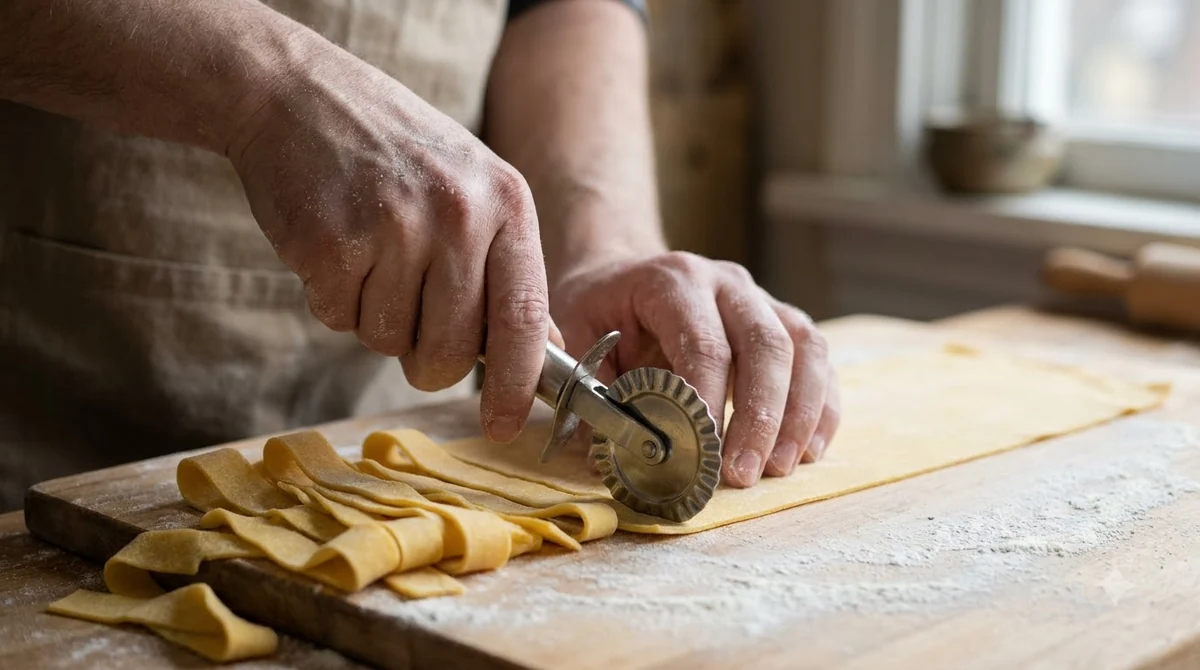
King Arthur Baking rolls the dough into a long sheet, cuts it into strips with a sharp knife, and lightly coats the top of each strip with flour before rolling it up. Semolina flour is the preferred coating for this step.
Thin hand-rolled pasta cooks fast, so start checking it early. Cooking times depend on thickness, so follow the instructions for the pasta you make rather than a fixed number. To store the strips for later, read how to dry fresh pasta, or browse more pasta gear guides.
Frequently Asked Questions
Can I use a regular rolling pin for pasta?
Yes, and the basic method for how to use a pasta rolling pin stays the same. King Arthur Baking recommends a long, straight, non-tapered French pin, and a shorter pin means working with smaller pieces of dough, which fits the four-portion method Shukette describes.
How much dough should I roll at once?
Shukette divides the rested dough into four equal portions and keeps the unused pieces covered. Rolling one portion at a time keeps the rest from drying out, which matters most while you are still learning how to use a pasta rolling pin.
Do I need a pasta machine?
No. The steps for how to use a pasta rolling pin described by King Arthur Baking work without a machine. A machine can be faster for large batches, but a rolling pin produces a sheet that is just as usable once you have practiced the technique.
What amounts make enough pasta for a meal?
GialloZafferano’s base recipe uses 400 g of Type 00 flour and 4 eggs of about 70 g each, which makes 700 g of fresh pasta. Scale the recipe up or down by weight and keep the same ratio of eggs to flour.
How long should dough rest if it keeps springing back?
Cover the dough and rest it 5 to 10 minutes, as King Arthur Baking suggests, then roll again. Shukette recommends 10 to 15 more minutes if the dough still springs back hard.
Start with a simple dough, roll slowly from the center, and check the thickness with the blow test before you cut. Practice how to use a pasta rolling pin on one batch first, then repeat it with the shape you want. With a few batches, the rhythm becomes easy and the sheets come out more even.
 9 min readGear & PantryPasta Rolling Pin: What to Look For Before You BuyUpdated Nov 15, 2026
 9 min readGear & PantryHow to Use a Pasta Pot with Strainer, Step by StepUpdated Nov 11, 2026
 9 min readGear & PantryHow to Use a Pasta Extruder: Step-by-Step GuideUpdated Nov 11, 2026
 8 min readGear & PantryHow to Use a Spaghetti Spoon: Step-by-Step GuideUpdated Nov 11, 2026
 9 min readGear & PantryHow to Use a Ravioli Maker: Step-by-Step for Dough and FillingUpdated Nov 10, 2026
 8 min readGear & PantryHow to Use a Wooden Pizza Peel: Step-by-Step GuideUpdated Nov 10, 2026