
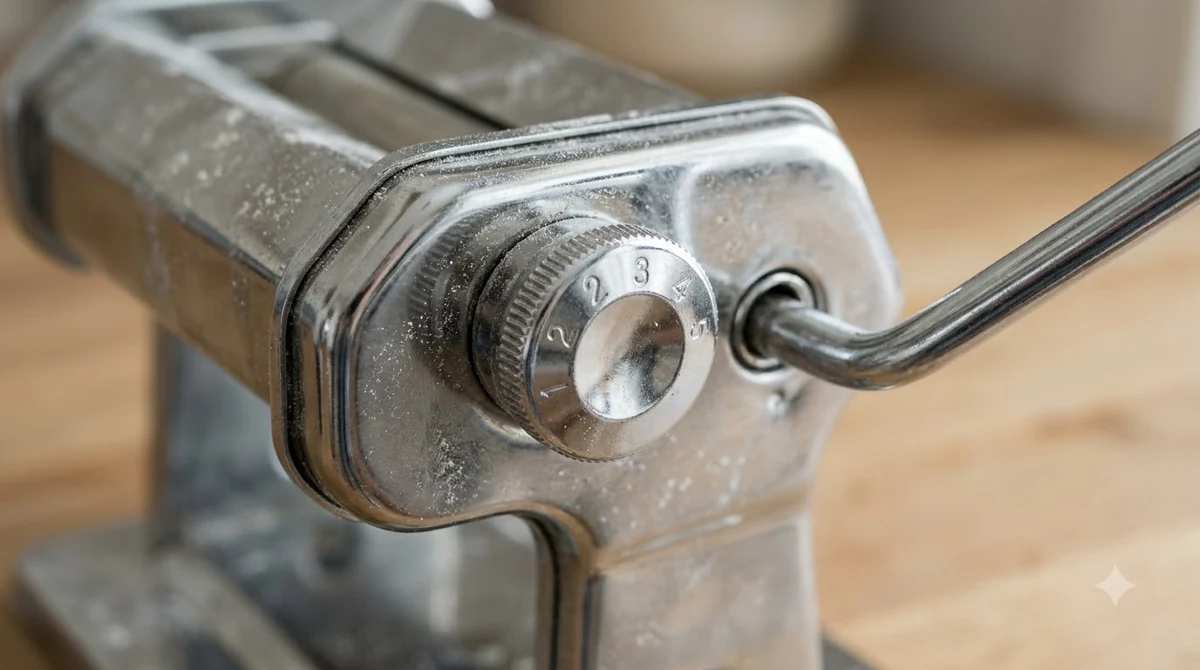

A pasta machine for egg noodles should roll a firm egg dough evenly, offer the cutter widths you need, and stay easy to clean. Egg noodles are made from egg and flour, so the dough is more tender than dried pasta. See semolina pasta vs egg pasta for how the two doughs differ.

MARCATO Atlas 150 Machine, Made in Italy, Red
Pros & ConsViewHide
Reasons to buy
- Made in Italy hand-crank pasta machine rolling dough in steps
- Includes a pasta cutter and hand crank
- Fits Marcato attachments and the optional motor
Reasons to avoid
- Only rolls and cuts the sheet; tortellini are still shaped by hand
- Takes more counter and storage space than a hand cutter
- Fixed to a countertop edge, so check clamp room

Imperia IPasta Classic Pasta Maker
Pros & ConsViewHide
Reasons to buy
- Made in Italy with chromed steel cutting rollers
- Makes 150 mm sheets, 6.5 mm fettuccine and 2 mm tagliolini
- Six roller thickness settings from 0.5 mm to 5 mm
- Clamp slot accepts a separate motor
Reasons to avoid
- Manual crank, so you turn it for every pass
- Only three cut widths in the box
- Motor is a separate purchase

Philips 7000 Series Pasta Maker
Pros & ConsViewHide
Reasons to buy
- Mixes, kneads and extrudes automatically, ready in under 10 minutes per the listing
- Makes up to 8 portions in one go
- Comes with 8 shaping discs
- Parts are listed as dishwasher-safe
Reasons to avoid
- Costs far more than a manual roller
- Needs permanent counter space
- 11% of ratings are 1-star
Choosing a Pasta Machine for Egg Noodles Starts With the Dough
Egg noodle dough is more tender than dried pasta, so the machine has to roll it smoothly without tearing it.
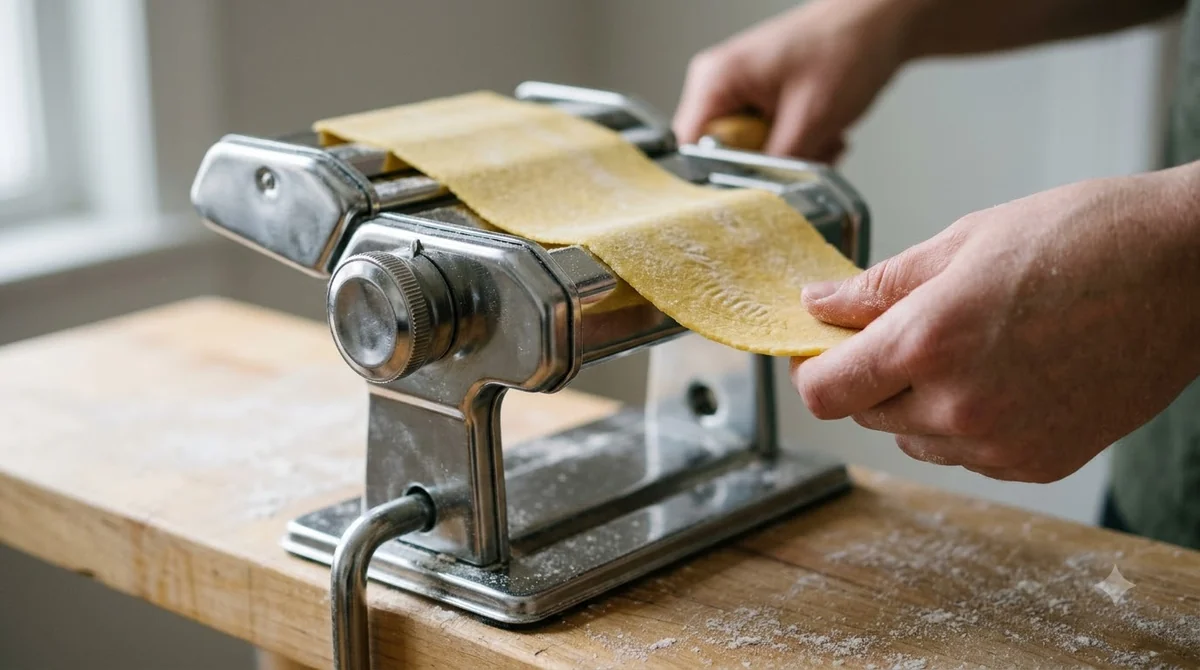
The egg noodle entry on Wikipedia describes the dough as egg and flour, and lists tagliatelle, fettuccine and pappardelle among egg-based long pastas. Those flat shapes need a pasta machine for egg noodles that thins the sheet in several passes, so check that the rollers can reach the thickness you want.
Decide early whether you plan to cut ribbons or extrude shapes. That choice changes which features matter most in a pasta machine for egg noodles, from roller control to the parts that come in the box.
Rollers Versus Extrusion Dies for Noodle Shapes
A roller machine flattens dough into a sheet that you cut into ribbons, while an extrusion die pushes dough through a shaped opening.
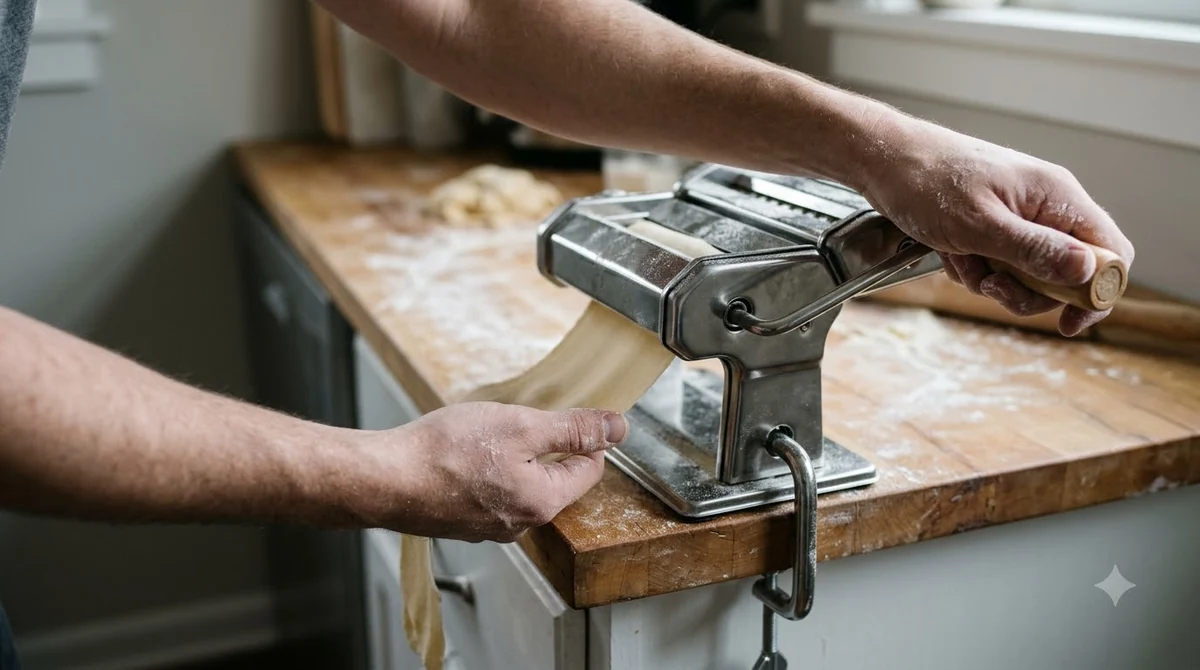
Flat egg noodles such as fettuccine and pappardelle come from a rolled sheet, so the cutter attachment decides their width. Extrusion works in the opposite order, because the die sets the shape as the dough comes out of the machine.
America’s Test Kitchen’s electric egg pasta recipe calls for a pasta rolling machine die that is installed according to the manufacturer’s directions, with the machine set to extrusion mode. An extruder is therefore a separate setup from a roller, and the die must fit the pasta machine for egg noodles you own.
- Roller machine: flattens the sheet, then a cutter sets the width
- Extrusion die: sets the shape as the dough comes out
- Check whether the die or cutter is included or sold as an extra
- Confirm which parts fit your specific model before buying
Dough Texture and Resting Time for Egg Noodles
Egg noodle dough should form soft, pea-sized crumbs during mixing, then rest for 30 minutes before it goes through the machine.
The America’s Test Kitchen egg pasta recipe makes 1 pound from 3 cups of sifted unbleached all-purpose flour, 3 large eggs, 1 1/2 teaspoons of olive oil, and enough water to bring the eggs and oil to 3/4 cup of liquid. Mix until the dough forms soft, pea-sized crumbs, which takes about 2 to 3 minutes.
If the dough seems too dry, add the remaining egg mixture 1 tablespoon at a time rather than all at once. The table below lists each stage and the limit the recipe gives.
| Stage | What to look for | What the recipe says |
|---|---|---|
| Mixing | Soft, pea-sized crumbs | Mix about 2 to 3 minutes |
| Too dry | Dough does not hold together | Add the remaining egg mixture 1 tablespoon at a time |
| Resting | Dough set aside before rolling | Rest 30 minutes on towels |
| Storage | Dough kept before use | 2 hours at room temperature, 12 hours refrigerated, or 1 month frozen |
The recipe also notes that resting for at least 30 minutes helps relax the gluten before cooking. Treat the rest as part of the method, not an optional step.
Cutter Attachments and Noodle Widths
The cutter attachment sets the width of each noodle, so check which cutters ship with a machine before you buy. Write down the noodle widths you cook most often before you compare models.
Fettuccine and pappardelle are both flat, long egg noodles that differ in width, so they usually need different cutters. Our tagliatelle vs pappardelle comparison shows how much width changes the dish. A pasta machine for egg noodles that includes several cutters lets you switch shapes without buying extra parts.
Thickness settings add control to any pasta machine for egg noodles. A thinner setting gives a more delicate sheet, and a thicker setting gives a sturdier noodle before cutting. How many settings a machine offers, and the thickness each one produces, depends on the model.
As one worked example, Marcato’s instruction booklet for the Atlas and Ampia machines lists thickness settings 0 to 9, from about 4.8 mm at setting 0 down to about 0.5 mm at setting 9. It gives fettuccine as a 6.5 mm cutter used at setting 6 and tagliolini as a 1.5 mm cutter used at settings 8 to 9, and it lists 12 extra cutting accessories. That booklet covers several models, so check the chart against your exact machine, and see our Marcato Atlas 150 manual guide for the setup steps.
The roller widths, thickness settings and included cutters for other machines are not confirmed in this article, because the manufacturer pages could not be read during research. Check the manufacturer’s specification page or manual before you buy.
- Cutter widths listed for the model
- Number of thickness settings and the range they cover
- Whether extra cutters or dies are sold separately
- Spare parts available for the brand
Manual or Electric for Egg Dough
A manual pasta machine for egg noodles gives hands-on control over each pass, while an electric model with a die suits shaped noodles and reduces the cranking needed per batch.
The Wikipedia pasta article describes the hand crank as rolling the pasta to thin it incrementally, which suits cooks who want to watch each sheet take shape. Electric models with a die need more set-up on a pasta machine for egg noodles, because the die must be installed correctly and the machine must run in the right mode.
- Manual: more control over thickness, more cranking per batch
- Electric with a die: less cranking, more set-up before the first batch
- Either type: the dough stages in the table above stay the same
Cooking and Storing Fresh Egg Noodles
Fresh egg pasta takes about half the time of dried pasta to cook, according to Wikipedia’s pasta article, so start checking early.
Fresh egg pasta does not expand after cooking, the same article notes. It gives about 0.7 kg (1.5 lb) for four generous servings, compared with about 0.5 kg (1 lb) of dried pasta, so plan the batch size around your meal rather than the box weight. For a general buying framework, read how to choose a pasta maker and our fresh pasta dough recipe.
Store leftover dough by the time limits in the recipe, since room temperature, refrigeration and freezing each have a different limit. Noting the time you made the dough makes those limits easier to follow.
Frequently Asked Questions
What is the best pasta machine for egg noodles?
This article does not name a single best pasta machine for egg noodles, because the confirmed facts cover dough, cutters and machine types rather than brand rankings. Choose a pasta machine for egg noodles by cutter widths, thickness settings and whether you want manual or electric rolling.
Can any pasta machine make egg noodles?
A pasta machine for egg noodles can work with egg dough when its rollers handle a soft dough that still holds together and its cutters match the width you want. Check the manufacturer’s page for included cutters and any dough guidance before buying.
How long should egg noodle dough rest?
The America’s Test Kitchen egg pasta recipe calls for at least 30 minutes of rest on towels before you use the dough. The same source says the rest helps relax the gluten before cooking.
How long can egg noodle dough be stored?
The same recipe lists 2 hours at room temperature, 12 hours refrigerated, or 1 month frozen. Follow those limits and note when the dough was made.
Does fresh egg pasta cook faster than dried?
Yes, according to Wikipedia’s pasta article, fresh pasta with eggs takes about half the time of dried pasta to cook. The article gives no minute values, so taste a noodle early in the expected range and adjust from there.
Start with the shapes you cook most, then choose a pasta machine for egg noodles by comparing cutter widths, thickness settings and whether you want manual or electric rolling. If a spec is missing from the product page, check the manual or ask the seller before you buy. Make a small batch first to learn how your dough feels in the pasta machine for egg noodles you chose before you commit to a full recipe.
 8 min readBy Use & ModelPasta Machine for Ramen Noodles: What to Check Before You BuyUpdated Nov 10, 2026
 9 min readBy Use & ModelPasta Machine for Fresh Pasta: What to Check Before You BuyUpdated Nov 17, 2026
 8 min readBy Use & ModelPasta Machine for Rigatoni: 6 Simple Checks Before You BuyUpdated Nov 16, 2026
 8 min readBy Use & ModelPasta Machine for Ravioli: What to Look For Before You BuyUpdated Nov 10, 2026
 8 min readBy Use & ModelPizza Oven for Beginners: What to Check Before You BuyUpdated Nov 16, 2026
 8 min readBy Use & ModelPizza Oven for Indoor Use: What to Check Before You BuyUpdated Nov 16, 2026