
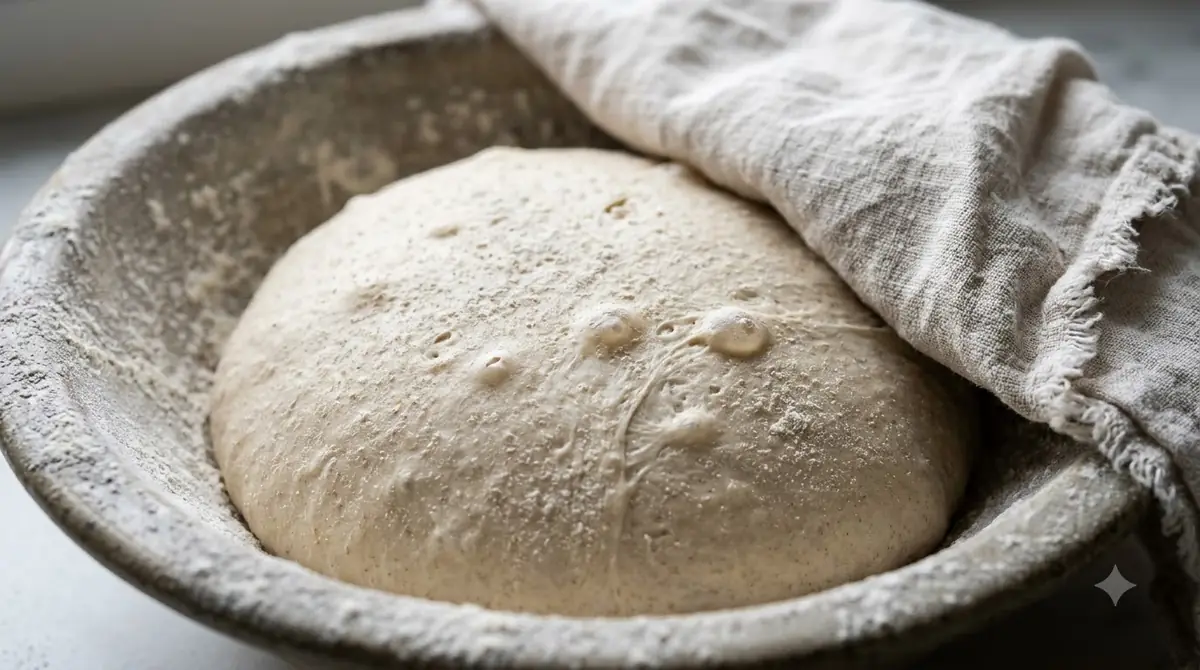

Knowing how to tell if pizza dough is ready comes down to three checks: size, a poke test and texture. Pizza dough is ready when it has roughly doubled, springs back slowly after a light press and feels airy and easy to stretch. Use these checks before you shape the dough, not just the clock on the timer.
Dough that springs back at once needs more time, and dough that turns floppy has gone too far. The checks below on how to tell if pizza dough is ready work for room-temperature dough and cold-fermented dough alike, so you can use them whichever method your recipe calls for.
How to Tell If Pizza Dough Is Ready: The Main Signs
Ready dough has roughly doubled in volume, shows small bubbles through the dough and stretches without snapping back, because yeast gas has filled the gluten network. Most doughs double when fully proofed, according to Gozney’s proofing guide.
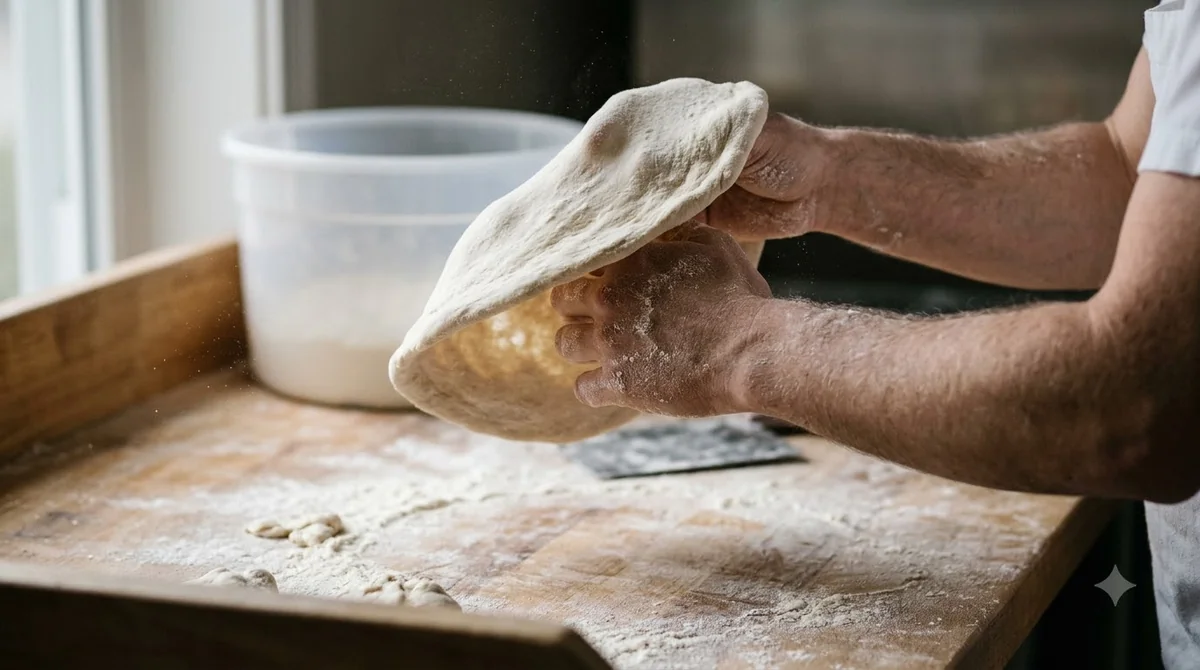
When you check how to tell if pizza dough is ready, look for these four signs together rather than relying on just one:
- Size: the dough has grown to about double its starting volume.
- Bubbles: small bubbles are spread through the dough, not just near the surface.
- Spring: a light poke leaves a dent that comes back slowly.
- Stretch: the dough is easier to stretch out than it was when it went into the bowl.
The Poke Test
The poke test is the quickest way to learn how to tell if pizza dough is ready. Press gently and watch what the dough does in the next few seconds, because the speed of the spring-back tells you how much gas and structure the dough has built.
- Dust a fingertip lightly with flour so it does not stick.
- Press it gently into the dough, about halfway in.
- Lift your finger and watch the dent for a few seconds.
If the dent springs back slowly and leaves a small indent, the dough is ready to shape. Gozney describes this slow return as the sign that proofing is complete. If the dough springs back right away, it needs more time, so cover it again and let it rest in a warm spot before you test a second time.
Keep the poke gentle. Pressing hard knocks out the gas you have just built, and repeated pokes in the same place can leave a flat, uneven patch. One test at a time is enough, and you can repeat it after a short rest if the first result was unclear. That habit makes it easier to learn how to tell if pizza dough is ready by feel.
The Doubling Check
Most doughs roughly double in volume when they are fully proofed, so comparing the dough with its starting size is a useful part of how to tell if pizza dough is ready. The easiest way to measure is to note the starting size before you cover the dough, then compare the two.
Eyeballing the rise is easy to get wrong. A dough that domes on top can look bigger than it really is, and a wide, shallow bowl makes the change harder to see. A measuring jar or a clear container with straight sides gives you a clearer view of how much the dough has grown.
Doubling is one sign of how to tell if pizza dough is ready, not the only one. A dough can look close to doubled and still feel tight when you poke it, so pair the size check with the poke test before you shape. If the dough has doubled but springs back immediately, give it more time at room temperature.

The Float Test
The float test is a simple home method for how to tell if pizza dough is ready. It drops a small piece of dough into a glass of water. A piece that floats has trapped enough gas to be ready, while a piece that sinks needs more time to rise.
- Fill a glass partway with water at room temperature.
- Pinch off a small piece of dough from the batch.
- Drop the piece into the water and watch what it does.
If the piece sinks, the dough is not sufficiently proofed, so let it rise longer and test again. If it floats, the dough is ready. Tasting Table’s explanation of the water test says yeast gives off carbon dioxide, which gets trapped in small bubbles and makes the dough expand, and that is why a well-risen piece can float.
The float test is a home check, not a measurement, so treat it as one part of how to tell if pizza dough is ready, alongside other signs. A piece that floats early can still come from a dough that has not doubled, which is why the size check and the poke test still matter before you shape the full batch.
Underproofed and Overproofed Dough
Underproofed dough springs back at once and feels tight, while overproofed dough turns floppy and tastes sour, so ready dough sits between those two points. Our guides to underproofed pizza dough and overproofed pizza dough cover each extreme. Knowing how to tell if pizza dough is ready means avoiding both extremes. The table below compares the signs side by side.
| Sign | Underproofed | Ready | Overproofed |
|---|---|---|---|
| Poke test | Springs back right away | Springs back slowly, small indent | Soft and loose |
| Size | Little change from the start | Roughly doubled | Past double, may sag |
| Texture | Tight, hard to stretch | Bubbles throughout, easy to stretch | Floppy, loses its shape |
| Flavor | Not yet developed | Ready to shape | Sour tasting |
If the dough has gone past the ready point, shape it gently and bake it sooner, or shorten the next proof so it does not reach that stage. If the dough is underproofed, give it more time at room temperature and test again rather than forcing it into shape, because a tight dough tears and fights back when you stretch it.
How Long Proofing Takes by Method
Timing depends on the method. A quick warm proof at 20C to 38C takes about an hour before you divide the dough, then one to two hours for the balls, while a room-temperature final proof can run from 1 to 24 hours or more.
| Method | Typical time | Notes |
|---|---|---|
| Quick warm proof | About 1 hour, then 1 to 2 hours for the balls | Use a warm spot between 20C and 38C |
| Room-temperature final proof | 1 to 24 hours or more | Depends on the recipe and the room |
| Cold fermentation | 24 to 48 hours in the fridge, then about 2 hours to warm | Best window is about 2 to 3 days |
Gozney notes that cold-proofed dough begins to decline after about two to three days, so plan to bake within that window. Bulk fermentation, the first rise in the bowl, can run anywhere from 2 to 24 hours depending on the dough, so the clock alone is a weak guide. See bulk fermentation pizza dough for that first rise and how long to proof pizza dough for the final proof.
Use the time in the table as a starting point, then check how to tell if pizza dough is ready with the poke test and the size check when the clock says it should be close. Room temperature changes proofing speed a lot, so a dough in a cool kitchen may need far longer than the same dough in a warm one.
Checking Dough Before You Shape It
Before you shape, make one final check of how to tell if pizza dough is ready. Dough that stretches thin without tearing or snapping back is ready, while dough that tears or pulls back at once needs more rest.
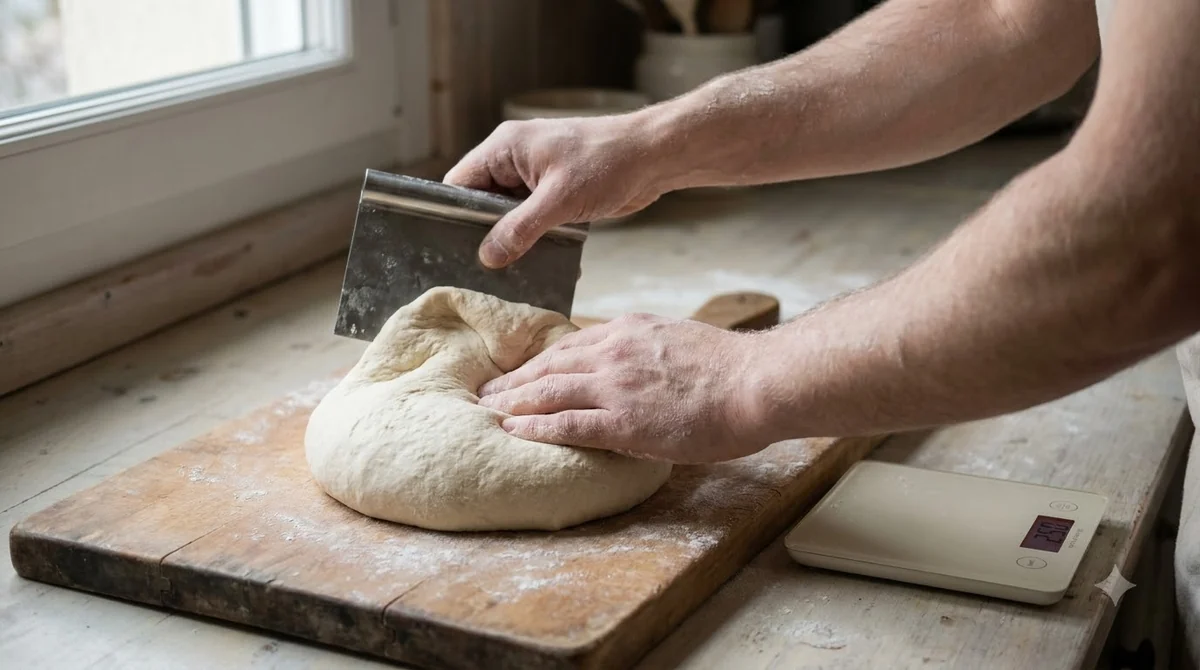
- Size: roughly doubled, or clearly larger than when you started.
- Poke: a slow spring-back with a small indent.
- Surface: bubbles visible, with no sagging edges.
- Stretch: the dough opens into a thin round without tearing.
If the dough tears, it may need more rest or more kneading rather than more proofing. The windowpane test checks gluten strength in more detail, and it is a separate check you can use if the dough keeps tearing.
Frequently Asked Questions
How do I know if pizza dough is overproofed?
Overproofed dough feels floppy, loses its shape and tastes sour, according to Gozney’s proofing guidance. Shape it gently and bake it sooner, or shorten the next proof so the dough does not reach that stage.
Can I use dough that floats too early?
A float test that passes early usually means the dough has trapped enough gas, but it is only one part of how to tell if pizza dough is ready, so check it with the poke test and the size check too. The float test is a home check rather than a measurement, so treat it as one sign among several.
Is there one sure way to tell if pizza dough is ready?
No single check is enough. Most doughs roughly double when fully proofed, but recipes differ, so use size alongside the poke test and the stretch test before you shape the dough.
How long can cold pizza dough stay in the fridge?
Gozney says cold-proofed dough begins to decline after about two to three days. Check your own recipe for the exact limit, bring the dough out to room temperature, and recheck how to tell if pizza dough is ready before you shape it.
Is the poke test bad for the dough?
A light poke is a standard home check for how to tell if pizza dough is ready. Pressing hard knocks out gas, so use a gentle touch and avoid poking the same spot again and again, which can leave the dough flat in that area.
Knowing how to tell if pizza dough is ready gets easier with practice. Use two checks together before you shape: the poke test and a size check cover most doughs. Keep a note of how long your dough takes in your own kitchen, because room temperature changes proofing time more than most recipes admit.
 8 min readLearnHow to Tell If Olive Oil Is Real: Label, Grade, and Taste ChecksUpdated Nov 11, 2026
 8 min readLearnPizza Dough Fermentation: Stages, Timing and Signs It Is ReadyUpdated Nov 11, 2026
 8 min readLearnHow Long to Bake Pizza at 500 F and How to Tell When It Is DoneUpdated Nov 11, 2026
 8 min readLearnOrecchiette vs Cavatelli: How to Tell These Southern Italian Shapes ApartUpdated Nov 11, 2026
 9 min readLearnWhy Pizza Dough Smells Like Alcohol and What to Do About ItUpdated Nov 11, 2026
 8 min readLearnBulk Fermentation Pizza Dough: How Long, How to Cover It and When It Is DoneUpdated Nov 11, 2026