
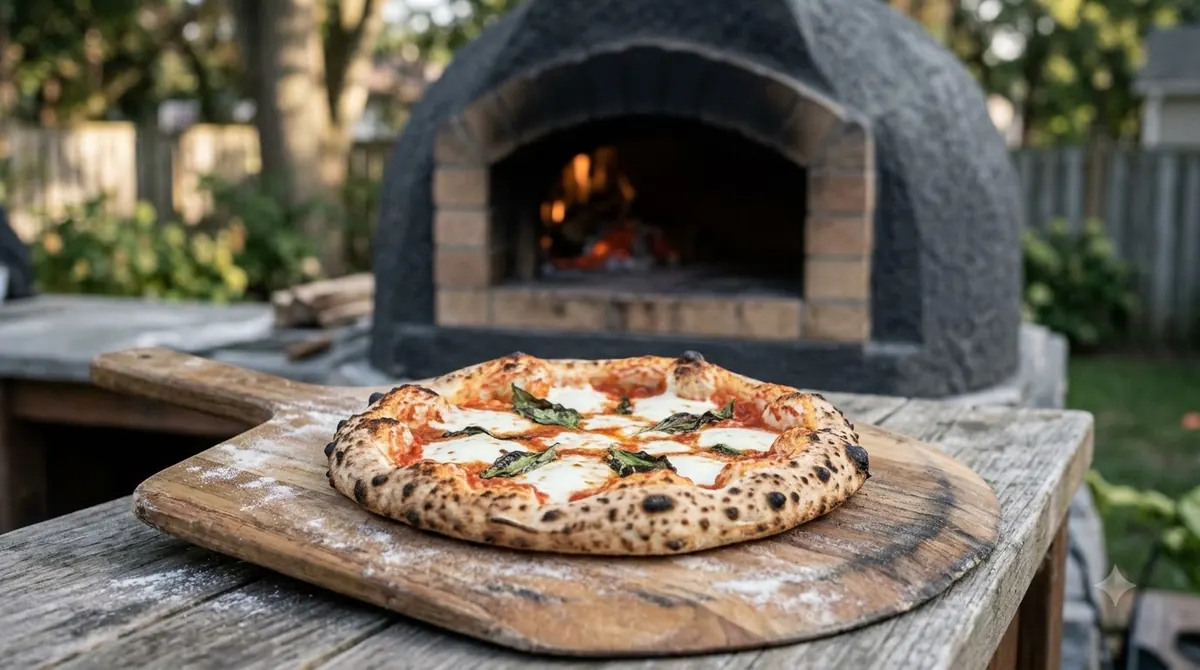

The answer to what is cornicione is simple: it is the raised outer rim of a pizza crust. Pizza makers use the word for the ring of dough that stands above the sauce and cheese. Once you know the term, pizza menus and recipes make more sense.
The rim affects texture, chew and how easily you can hold a slice. Some styles build a large, puffy edge on purpose, while others keep it thin and crisp.
What Is Cornicione? The Outer Edge of a Pizza
The cornicione is the outer edge of a pizza base, the part of the crust that rises above the toppings. Wikipedia’s pizza article notes that the outer edge is sometimes called the cornicione, so the word describes a specific zone rather than the whole crust.
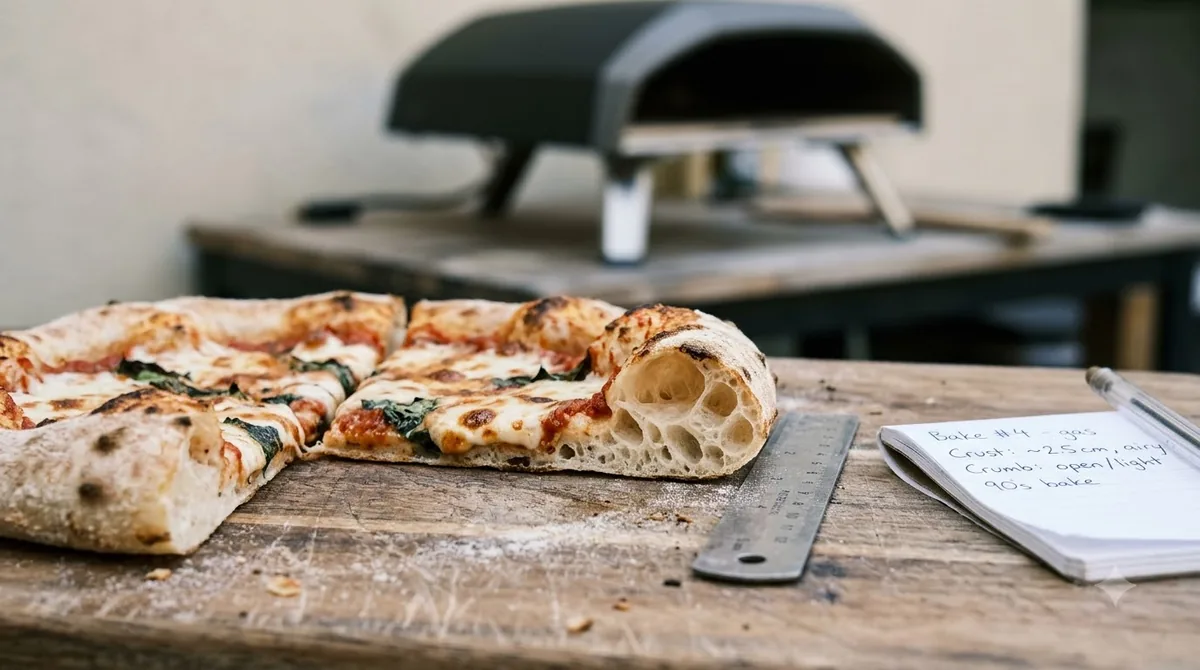
The center of a classic round pizza is usually thin, so the rim stands out. Anyone asking what is cornicione is usually picturing exactly this raised ring. That contrast is what most people picture when they hear the word. A pizza can have a thin base and a rim that looks very different from the middle, and the rim is the part you pick up first.
Neapolitan pizza is the style most often linked with the question of what is cornicione. According to Wikipedia’s Neapolitan pizza article, the style is built on a soft, thin dough with high edges. The high edge is part of the style’s identity, not an accident of shaping.
How the Cornicione Forms During Shaping and Baking
The cornicione forms when the outer ring of dough is handled and then puffs in the oven while the center stays thin. Shaping decides how the rim starts, and heat decides how it finishes. Those two steps explain most of what is cornicione in a finished pizza.
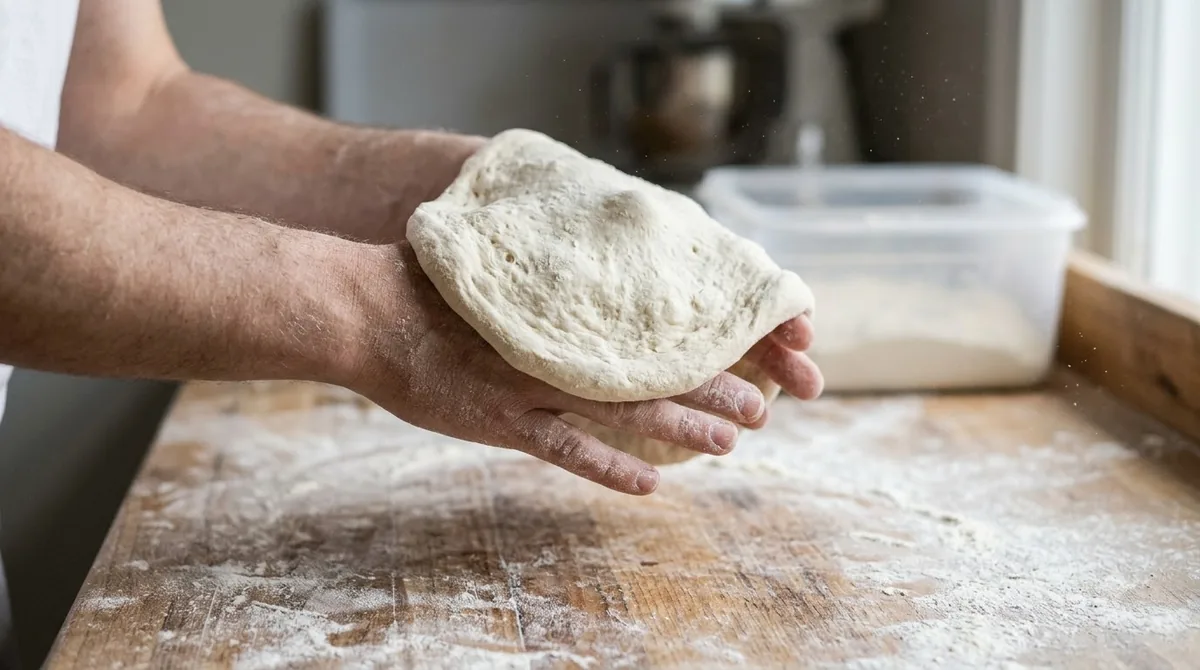
For Neapolitan pizza, the dough must be formed by hand. The same article states that it must be shaped “without the help of a rolling pin or other machine.” A rolling pin flattens the whole disc, including the rim, so hand stretching is how the edge stays high.
Flour also shapes the rim. The same Wikipedia article says the Neapolitan rules call for finely ground medium-strength flour with a W value of 250 to 320, which it equates to 11 to 13.5 percent protein, and no more than 20 percent strong flour with a W value above 350. That is part of what is cornicione in a classic Neapolitan pie: a soft edge built from a specific flour, not just from shaping. Wikipedia’s article also says the dough is kneaded by hand or with a low-speed mixer.
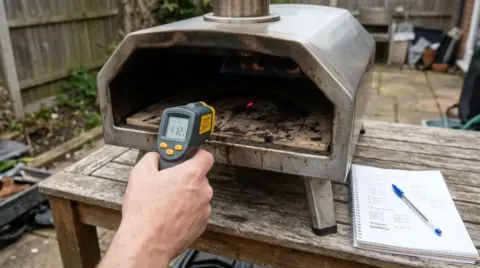
Baking is fast, and for a home cook the oven matters too, as the guide to a pizza oven for Neapolitan pizza explains. The Neapolitan rules cited on Wikipedia describe baking for 60 to 90 seconds at 485 °C (905 °F) in a wood-fired oven. That short, hot bake is one reason the rim can puff and char while the middle cooks through. These figures apply to the style as a whole, not to the rim alone, and home ovens usually run cooler.
- Press the dough out from the center, leaving the outer ring thicker.
- Stretch by hand rather than with a rolling pin.
- Bake hot so the edge puffs before the center dries out.
The sources checked for this guide do not give a rim height, dough weight or proof time for the cornicione itself. Treat any specific number you find elsewhere as a starting point and check it against a trusted recipe.
Cornicione Across Pizza Styles
The cornicione looks different from one style to the next, and in some styles the pan sets the shape more than the dough does. The table below shows what is cornicione in five common styles, using what the sources describe.
| Style | What the edge looks like | What makes it |
|---|---|---|
| Neapolitan | Soft, with high edges | Hand-formed dough, fast bake in a wood-fired oven |
| Detroit-style | Lacy and crispy | Cheese caramelizes against high-sided pan walls |
| Chicago deep-dish | A tall edge that holds a thick layer of toppings | The high edge of the baking pan |
| New York-style | A thin, foldable crust | A Neapolitan-derived dough, as Wikipedia describes it |
| Sicilian | A thick, focaccia-like edge | Baking in a pan rather than directly on oven bricks |
In Neapolitan pizza, what is cornicione is simply dough shaped by hand. In Detroit-style and Chicago deep-dish, the pan does much of the shaping, so the edge is set by the pan walls rather than by how you handle the dough. Wikipedia adds that crust thickness runs from thin, like a typical hand-tossed Neapolitan pizza, to thick, like Chicago-style deep-dish, so what is cornicione in one style may look quite different in another. For a thick-edged example, see this Sicilian pizza recipe, and for a thinner one, this New York-style pizza recipe.
Cornicione and Crust: What Is the Difference?
The crust is the whole base of the pizza, while the cornicione is only its outer rim. Think of the crust as the full surface and the cornicione as the border you can see from above.
When people ask what is cornicione versus crust, the difference is scope. A thick rim gives chew and something to hold, but it leaves less room for toppings and can make the center soggy if the dough is underbaked. A thin rim crisps faster and suits a flatter, more even bite. Neither choice is wrong, and the right one depends on the style you want. If you are asking what is cornicione compared with other crust parts, our guide to pizza crust types shows how the edge changes from one style to the next.
This explanation covers round pizza with a dough rim. Pan-baked styles follow the pan’s shape, so the rim is set by the pan rather than by the dough.
How to Judge a Good Cornicione
A good cornicione is evenly risen, golden in most places, and light enough to tear without collapsing. Once you know what is cornicione, you can check these points when you look at a slice.
- The rim rises evenly all the way around, with no flat or lopsided side.
- The color is golden with some darker spots, which points to a hot bake.
- The inside is open and airy rather than dense and bready.
- The rim holds its shape when you lift the slice.
A very dense rim usually means the dough was handled too much or did not have enough rise. A rim that is flat and pale often points to a bake that was too cool or too short. These are general baking signs rather than figures from a single source. Dark blistered spots on the rim have their own name, and leopard spotting on pizza explains what they mean.
Common Mistakes With the Cornicione
The most common mistake for anyone learning what is cornicione is flattening the rim while shaping. Pressing the dough with a rolling pin pushes out the air that gives the edge its height, which is why Neapolitan rules ban it.
Another mistake is pressing toppings toward the edge. Heavy sauce or cheese on the rim weighs it down and can stop it from puffing. Keep the outer ring light so the edge can rise in the oven.
Handling the dough too much also works against you. Repeated stretching and reshaping can tighten the gluten and leave the rim tough. Shape it gently and let it rest when it resists.
Frequently Asked Questions
What is cornicione in simple terms?
It is the raised outer edge of a pizza, the ring of crust that stands above the sauce and cheese. Wikipedia’s pizza article uses the same description for the outer edge of the pizza.
Is the cornicione the same as the crust?
No. The crust is the whole base, while the cornicione is only the outer rim. The rim is part of the crust, so every cornicione is crust, but not every crust is a cornicione.
Does every pizza have a cornicione?
Most round pizzas with a dough base have some kind of outer rim, though it may be small. Styles like Neapolitan are known for a high edge, while very thin pizzas keep the rim low and crisp.
Can you eat the cornicione?
Yes. It is cooked dough like the rest of the pizza. Many people eat it, while others leave it, and either choice is fine. A puffy rim can be a good place to start a slice.
Does deep-dish pizza have a cornicione?
Deep-dish pizza has a high edge, and on what is cornicione there, the pan shapes it. Sources describe Chicago deep-dish as baked in a pan with a high edge that holds a thick layer of toppings, so the edge comes from the pan walls.
Knowing what is cornicione helps you judge a pizza before the first bite. Look at the rim first, because it shows how the dough was shaped and baked. If you want a soft, airy edge, favor styles that are hand-formed and baked hot. If you want something crisp and easy to pick up, a thinner rim or a pan style may suit you better.
 8 min readLearnDetroit Style Pizza Recipe: Crispy Edges at HomeUpdated Nov 7, 2026
 8 min readLearnHow to Cook Pizza on a Pizza Stone in the OvenUpdated Nov 10, 2026
 7 min readLearnHow to Make Pizza Dough in a Stand MixerUpdated Nov 10, 2026
 8 min readLearnHow Long to Preheat a Pizza Stone in Your OvenUpdated Nov 10, 2026
 8 min readLearnSemolina vs Cornmeal for Pizza Peel: Which Works BetterUpdated Nov 10, 2026
 8 min readLearnCan You Use Parchment Paper in a Pizza Oven?Updated Nov 10, 2026