
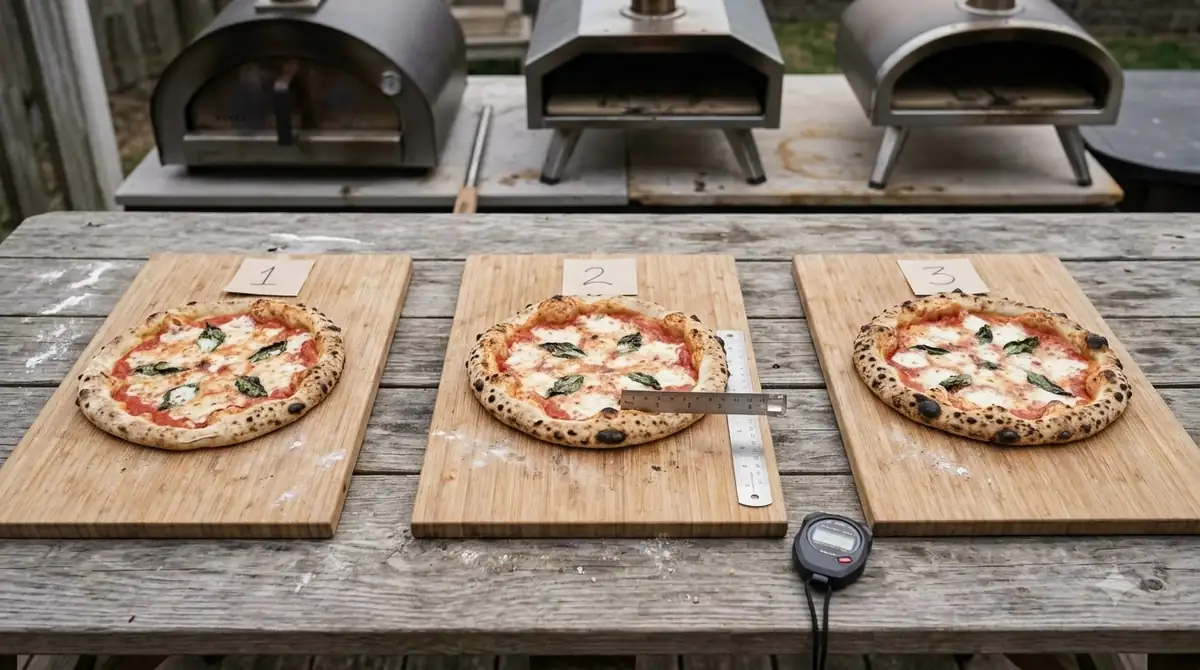

Leopard spotting pizza refers to the black, charred spots on the raised outer rim of the crust. The spots form when very high heat meets a well-fermented dough, according to home bakers and forum posters. Sources on the exact causes are thin, so verified figures are kept apart from user reports.
A wood-fired oven and a home oven reach very different temperatures, so the same spots can take very different routes. Knowing the numbers helps you judge what your own oven can do.
What Leopard Spotting Looks Like on Pizza
Leopard spotting pizza is the black, charred pattern on the cornicione, the raised edge of the crust that sits above the sauce and cheese. A history of the term on barrypopik.com says Serious Eats’ Slice blog popularized it in early August 2009, and that the spots appear on the rim.
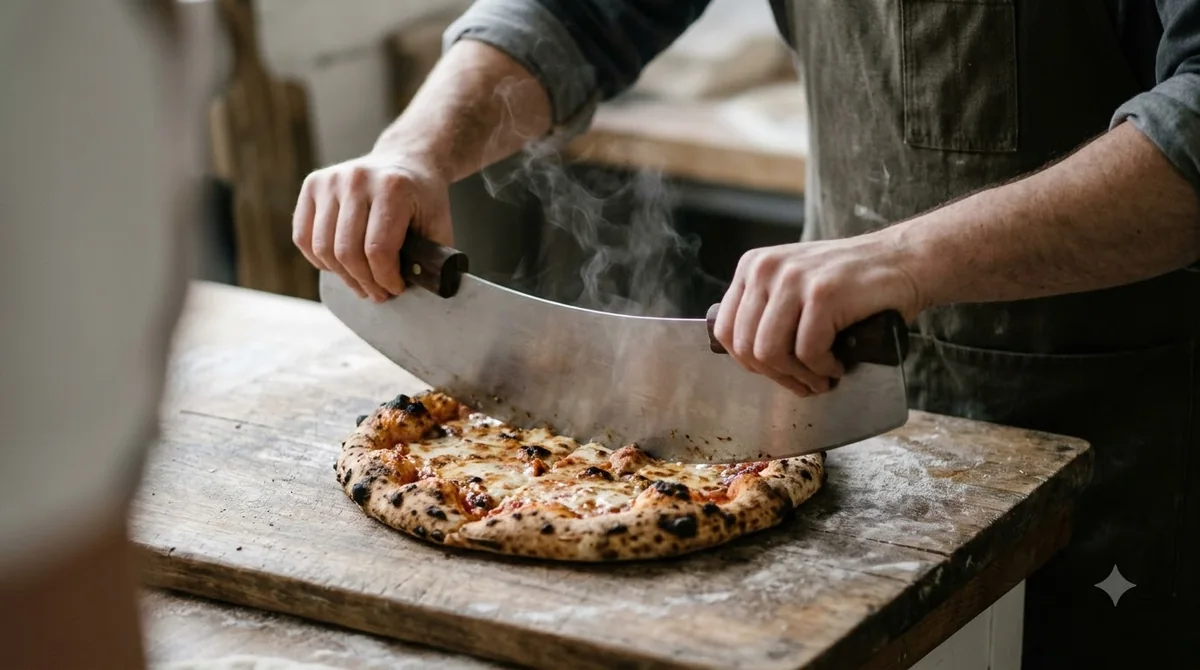
Forum posters most often link the look to Neapolitan pizza, which Wikipedia describes as having soft, thin dough with high edges. That link is a forum habit, not a measured rule for leopard spotting pizza. For a side-by-side look at that style, read Neapolitan vs New York style pizza.
The bottom of the crust is a separate matter. Barrypopik.com notes that some people use the term for the bottom crust too, but that the bottom is better called char. If the base burns before the rim spots, see pizza burning on the bottom.
Leopard Spotting Pizza: Why the Spots Form on the Crust
Forum posters often describe leopard spotting pizza as needing two things together: well-fermented dough and very high heat. These are user reports, not tested findings.
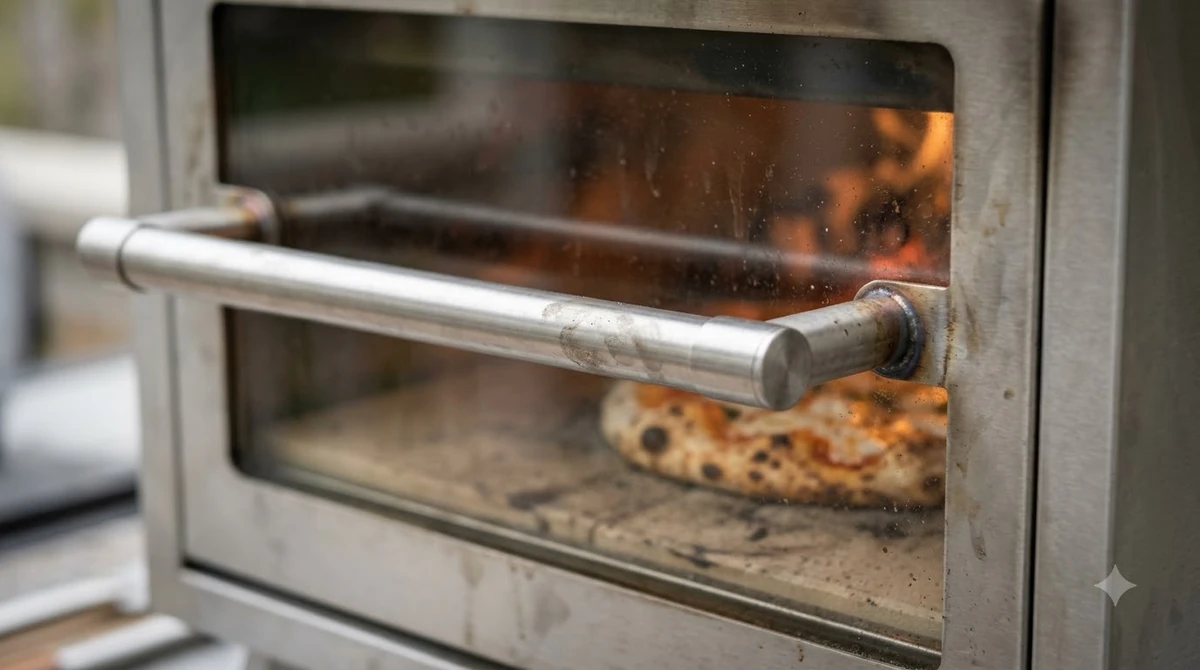
The explanation posters give most often is gas. Pockets of gas inside the rim expand fast when radiant heat hits the surface, which chars the outside quickly. That is a user explanation, not a measured result.
Caramelization and the Maillard reaction are also cited, though those sources are weaker. The Maillard reaction article says the reaction proceeds rapidly from about 140 to 165 °C (280 to 330 °F), and it links the reaction to browning, not to blistering. That makes it a weak explanation for the spots themselves.
Oven Temperatures Behind Leopard Spots
The best-documented oven figure for leopard spotting pizza is 485 °C (905 °F) for a wood-fired Neapolitan oven, with a bake of 60 to 90 seconds, according to Wikipedia. The table below sets that figure beside the browning range and the other numbers the sources give.
| Reference point | Reported value | Source |
|---|---|---|
| Wood-fired Neapolitan oven | 485 °C (905 °F) | Wikipedia, Neapolitan pizza |
| Neapolitan bake time | 60 to 90 seconds | Wikipedia, Neapolitan pizza |
| Maillard browning onset | 140 to 165 °C (280 to 330 °F) | Wikipedia, Maillard reaction |
No source read for this article gives a verified temperature that produces leopard spotting pizza in a home oven. The 485 °C figure describes a wood-fired Neapolitan oven, and the Maillard range describes browning in general. Use the two together as a guide, not as a target for your kitchen, and see how to get a pizza oven hotter for ways to raise your own oven’s heat.
How to Get Leopard Spots in a Home Oven
For leopard spotting pizza at home, heat the stone well before the first bake, because a stone should warm in a cold oven for at least 45 minutes to avoid thermal shock. Then follow these steps.
- Preheat the stone at the highest setting your oven allows, and give it at least 45 minutes before the first bake.
- Ferment the dough fully, since posters tie the spots to well-fermented dough.
- Stretch the dough gently and keep the rim high, which matches the high-edged shape described for Neapolitan pizza. Wikipedia says Neapolitan dough is shaped by hand.
- Watch the first bake closely, because posters report that the rim can char quickly at high heat.
A steel plate is one alternative. The pizza stone article on Wikipedia notes that a 1/4 inch steel plate conducts heat better than stone, but that it gives off too much heat for bread, cookies and croissants.
None of these steps guarantees spots. Dough, heat and oven type all interact, so change one variable at a time and compare the rims.
Dough Fermentation and Hydration Claims
Fermentation and hydration are the two dough factors people argue about most. No source read for this article gives a verified fermentation time for leopard spotting pizza, so the figures below are forum claims rather than tested rules.
One forum thread argues that spots are hard to get with less than 24 hours at room temperature, or 48 hours of cold fermentation. Another poster links high hydration and long dough balls to the look. Both are user experience rather than controlled tests, so run your own comparison by changing only the fermentation time for your leopard spotting pizza.
Leopard Spots in Home Ovens
Some home bakers report leopard spots in home ovens, but forum threads mostly discuss wood-fired and gas ovens. Leopard spotting pizza is therefore a less reliable sign of success in a standard kitchen oven.
One forum reply argues that if leopard spotting pizza does not appear at home, the dough proofing is often the problem rather than the oven. That is one user’s opinion, so test it by changing only the proofing time. Our guide to underproofed pizza dough shows what a dough that needs more time looks like.
The sources read for this article did not give a verified result for electric ovens, so test with your own oven before changing the recipe.
Neapolitan Rules and What They Mean for Your Oven
Neapolitan pizza has strict rules, and they shape how the look is judged. Wikipedia’s pizza oven article says EU regulation 97/2010 allows Neapolitan pizza only from wood-fired brick ovens. The Associazione Verace Pizza Napoletana permits gas or electric ovens when a wood-fired one is impractical.
That matters for leopard spotting pizza at home. The look is most often linked to Neapolitan-style crusts, but the regulation covers the traditional method rather than the spots themselves. A home oven can still produce a similar rim if the dough and heat line up, so treat the rules as background rather than a checklist.
Common Mistakes When Chasing Leopard Spots
Most disappointing bakes when you chase leopard spotting pizza come from a few habits. Check this list before you change the recipe, since each habit can hide the effect of the others.
- Preheating only the air. Wikipedia’s pizza stone article says a stone should warm in a cold oven for at least 45 minutes to avoid thermal shock.
- Changing several things at once. Dough, heat and stretching all interact, so change one variable per bake to see what actually works.
- Flattening the rim. Forum posters say a high rim helps, which matches the high-edged shape described for Neapolitan pizza. That is a user view, so compare two bakes before you trust it.
- Judging a single pizza. Spot patterns vary from bake to bake, so compare several rims before you decide the method failed for leopard spotting pizza.
Leopard Spotting Versus Char
Leopard spotting describes the rim, while char describes the darker color on the bottom of the crust, according to barrypopik.com. Purists treat the two as different things, so judge the rim and the base of the crust separately.
Some enthusiasts read leopard spotting pizza as a sign of good dough. The spots look appealing, but they do not prove the dough is good.
Frequently Asked Questions
Do leopard spots make pizza better?
Not on their own. Some enthusiasts treat the spots as a sign of good dough, but that is a user view, not a tested rule. Judge the pizza by crust texture, flavor and how evenly it bakes.
What oven temperature gives leopard spots?
Wikipedia reports 485 °C (905 °F) for a wood-fired Neapolitan oven, with a bake of 60 to 90 seconds. Most home ovens cannot match that, so spots at home depend on stone heat, dough and your oven type.
Does dough hydration cause leopard spotting?
Sources disagree. One page links higher water content to the spots, while a Substack commenter reports that a well-known pizza maker says the opposite. Treat hydration as a variable to test rather than a settled cause.
Can you get leopard spots in an electric oven?
Some home bakers report spots in home ovens, but the forum threads cited mostly discuss wood-fired and gas ovens. The sources did not give a verified result for electric ovens, so test with your own oven.
How long should dough ferment for leopard spots?
No source gives a verified fermentation time for spots. One forum poster offered a personal estimate of 18 to 20 hours for significant blistering, which is not an established rule. Follow your recipe’s fermentation time and adjust from there, or try cold ferment pizza dough if you want a longer rest.
Who first described leopard spotting?
A history on barrypopik.com says Serious Eats’ Slice blog popularized the term in early August 2009. The same history says the term describes the rim, while the bottom crust is better called char.
Does a steel plate give leopard spots?
The Wikipedia pizza stone article says a 1/4 inch steel plate conducts heat better than stone. No source read for this article ties steel to spotting, so test it in your own oven before you judge the result.
If you want leopard spotting pizza, preheat your stone fully, ferment the dough well and keep the rim high when you stretch it. If the spots do not appear, the pizza can still be excellent, so judge the crust by texture and taste rather than by appearance alone.
 8 min readLearnWhy Is My Pizza Crust Hard? Causes and FixesUpdated Nov 10, 2026
 8 min readLearnWhat Is Pizza Hydration and Why It Changes Your CrustUpdated Nov 10, 2026
 10 min readLearnWhy Is My Pizza Crust Gummy? Causes and FixesUpdated Nov 10, 2026
 9 min readLearnOverproofed Pizza Dough: How to Spot It, Rescue It and Use ItUpdated Nov 6, 2026
 7 min readLearnWhy Is My Pizza Burning on the Bottom?Updated Nov 6, 2026
 8 min readLearnPizza Stone Turned Black? Why It Happens and When to WorryUpdated Nov 6, 2026