


The main pizza crust types differ mainly in flour, water content, thickness and the pan or oven used to bake them. Six styles cover most menus and home kitchens: Neapolitan, New York, Detroit, Chicago deep-dish, Sicilian and Roman pizza al taglio. Each of these pizza crust types needs a different approach to dough and heat.
Choose among pizza crust types by the pan or oven you own, not only by taste. The comparison table near the end shows the core differences between the pizza crust types in one place.
Pizza Crust Types: What Sets Each Style Apart
Flour strength, hydration, thickness and the baking vessel decide how each of the pizza crust types turns out. Hydration means the weight of water compared with the weight of flour, and it changes how open and chewy the crumb becomes.
Wikipedia’s Detroit-style pizza article gives a typical hydration of 70 percent or higher for that style. The Neapolitan article does not state a hydration figure, so for that style you should take the number from a tested recipe.
Neapolitan Crust: Thin, Hand-Shaped and Fast-Baked
Neapolitan crust is a thin, hand-shaped base made from medium-strength flour and baked for 60 to 90 seconds at 485 °C (905 °F) in a wood-fired oven.
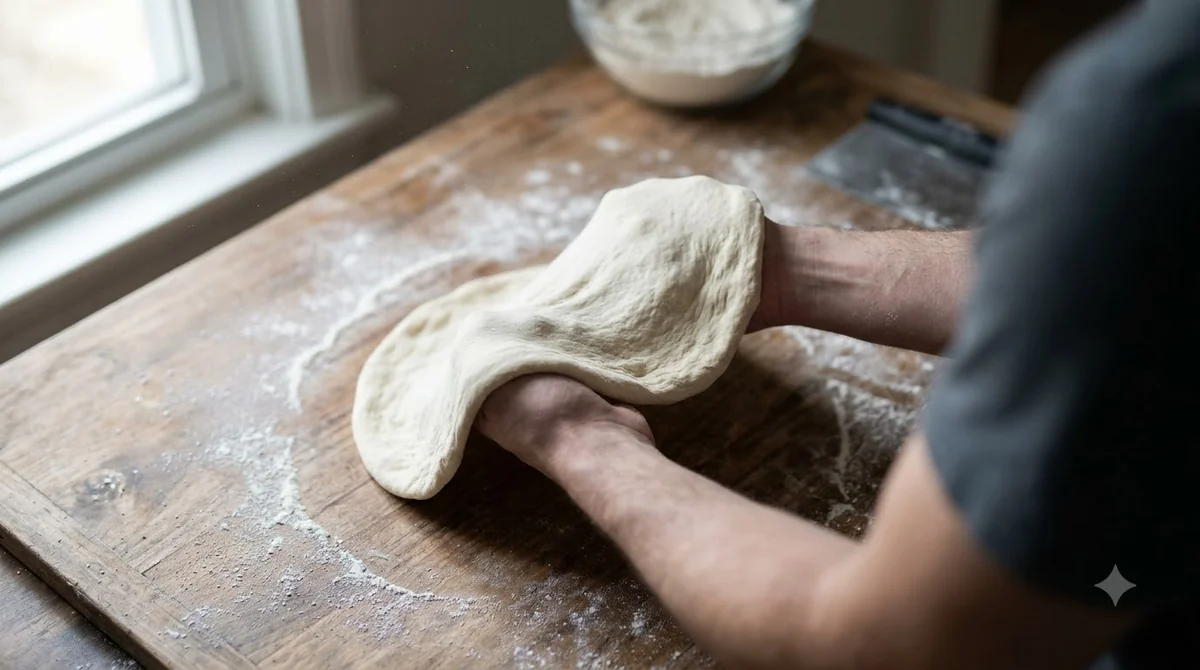
Under the AVPN guidelines summarized on Wikipedia’s Neapolitan pizza page, the dough uses wheat flour, natural or brewer’s yeast, salt and water. It contains no fat and no sugar. The flour should be medium-strength and finely ground, with a W value of 250 to 320, which is about 11 to 13.5 percent protein.
The main rules for the style are these:
- Flour: medium-strength, with a W value of 250 to 320.
- Shaping: by hand, without a rolling pin or machine.
- Height: no more than 0.25 cm after rising.
- Bake: 60 to 90 seconds in a wood-fired oven at 485 °C (905 °F).
The EU has recognized pizza napoletana as a Traditional Speciality Guaranteed product since 5 February 2010, a status that requires consistent raw materials and methods over time. Among pizza crust types, it has the tightest written rules in the sources checked. Because the bake lasts only about a minute and a half, oven temperature is the key variable. The source does not give a home-oven equivalent, so home cooks should check their oven manual before trying the method.
New York-Style Crust: Foldable and Sturdy
New York-style crust is hand-tossed from high-gluten bread flour and typically measures 18 to 24 inches (45 to 60 cm) across, cut into eight slices.
The crust is thick and crisp only along its edge, yet soft and pliable beneath the toppings. That softness is why a slice can be folded to eat it. Wikipedia’s New York-style pizza article credits the high-gluten bread flour for the distinctive texture, and it notes that minerals in New York City’s tap water are believed to add to the metro-area dough’s flavor and texture.
Among pizza crust types, New York is defined more by flour and handling than by a fixed measurement. The article does not give a numeric thickness for the crust, so no measurement is quoted here. If you want the style at home, start with high-gluten bread flour and hand-tossing, the two points the source names.
Detroit-Style Crust: Thick, Airy and Crispy at the Edge
Detroit-style crust is a high-hydration dough, typically 70 percent or higher, pressed into a high-sided steel pan so the cheese crisps against the walls.
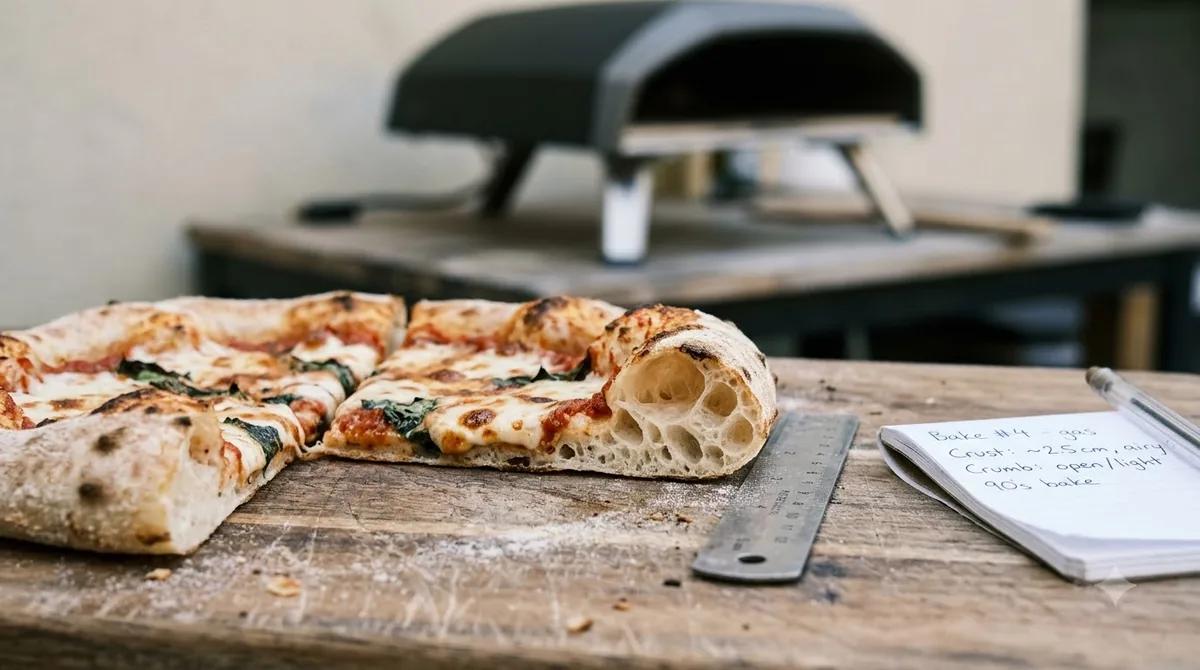
The style began in 1946 at Buddy’s Rendezvous, a former speakeasy at Six Mile Road and Conant Street in Detroit. Early cooks used blue steel pans from local auto suppliers, because standard bakeware of the era did not suit the dish. The article notes that these trays were first made as automotive drip pans or for holding small factory parts.
Pan and Bake Details
The dough is double-proofed and hand-stretched to the corners of the pan. Mozzarella or Wisconsin brick cheese is spread to the edges, where it caramelizes against the pan walls into a crispy, lacy border called frico. Brick cheese tolerates high oven heat because of its high butterfat content. Of all the pizza crust types covered here, Detroit is the one most tied to its pan, so see our best Detroit-style pizza pans if you want to try it.
Oven settings vary by shop. One example in the article bakes for 13 minutes at 440 °F (225 °C), and another bakes at 700 °F (370 °C). Seasoning a new steel pan means dry-baking 10 to 18 ounces (280 to 510 grams) of dough in it first. The article quotes Randazzo, who says a true Detroit crust should be about 1.5 inches (40 mm) thick.
Chicago Deep-Dish Crust: Tall, Layered and Built to Hold
Chicago deep-dish crust rises up the sides of a deep pan, and its layers are built in reverse order, with cheese and toppings under a ladle of crushed tomatoes.
Riccardo’s 1945 recipe, described in Wikipedia’s Chicago-style pizza article, was cooked in a pie pan or cake tin. The original dough used scalded milk, butter and sugar. Later versions switched to water and olive oil, and the crust is sometimes made with cornmeal and may be parbaked. In the 1960s and 1970s the dough grew to line the full sides of the pan and carried more fat.
The layer order is the main thing that separates deep-dish from other pizza crust types:
- The dough lines the pan and rises up the sides.
- Mozzarella and any meats or vegetables go on the bottom.
- Crushed tomatoes go on top, so the sauce sits on the cheese.
The article does not give a bake time, oven temperature or thickness, so check the recipe you follow for those figures.
Sicilian and Roman Pizza al Taglio Crusts
Sicilian crust is thick and often rectangular, while Roman pizza al taglio is baked in large rectangular trays and sold by weight.
The American Sicilian style has dough over one inch thick, with a crunchy base and an airy interior. Traditional Sicilian pizza is often rectangular, though it can also be round. Palermo’s sfincione uses more dough than Neapolitan pizza, and its sauce is sometimes placed over the toppings so it does not soak into the thick dough.
Roman pizza al taglio is one of the pizza crust types sold by weight. Shops price it per kilogram or per 100 grams, and the shape makes it easy to cut to the amount the buyer wants. The key facts for these two pizza crust types are below. For a closer look at how they compare with other styles, see Neapolitan vs Roman pizza and Detroit-style vs Sicilian pizza:
- American Sicilian: dough over one inch thick.
- Pizza al taglio: baked in trays and sold by weight.
- Hydration and rise time for both: not stated in the sources checked.
How to Choose the Right Pizza Crust Type
Choose from the pizza crust types that match your pan or oven, because a steel pan, a rectangular tray and a wood-fired oven each suit a different dough.
| Crust type | Thickness | Pan or tray | Oven or bake | Dough note |
|---|---|---|---|---|
| Neapolitan | Max 0.25 cm after rising | None, hand-shaped | Wood-fired, 485 °C, 60 to 90 seconds | Medium-strength flour, W 250 to 320 |
| New York | Not stated in source | None, hand-tossed | Not stated in source | High-gluten bread flour |
| Detroit | About 1.5 in (40 mm) | High-sided blue steel pan | 440 °F or 700 °F in shop examples | Hydration 70 percent or higher |
| Chicago deep-dish | Tall, rises up the sides | Pie pan or cake tin | Not stated in source | Sometimes cornmeal, may be parbaked |
| Sicilian (American) | Over 1 inch | Often rectangular | Not stated in source | Crunchy base, airy interior |
| Roman pizza al taglio | Not stated in source | Large rectangular tray | Not stated in source | Sold by weight |
If you own a steel pan, Detroit-style is the crust the sources describe in the most practical detail, including the seasoning step. Of the pizza crust types here, it is the only one that depends on a specific pan. The sources here do not give a home-oven setting for Neapolitan or New York crust, so check your oven manual and a tested recipe before you bake. If you want a side-by-side of two classics, read New York-style vs Detroit-style pizza.
Frequently Asked Questions
Which pizza crust type is the thinnest?
Among pizza crust types, Neapolitan has the clearest thin-crust rule in the sources checked, with a maximum height of 0.25 cm after rising. The sources give no thickness number for New York crust, so the two styles cannot be compared by measurement. For a direct comparison, read Neapolitan vs New York-style pizza.
Does Detroit-style pizza need a special pan?
Yes, the style is traditionally made in a high-sided blue steel pan. Early cooks used trays from local auto suppliers, and some pans from the 1930s and 1940s are still in use. A new steel pan needs seasoning by dry-baking 10 to 18 ounces of dough first.
What is the difference between New York and Sicilian crust?
New York crust is hand-tossed from high-gluten bread flour and is foldable. American Sicilian crust is over one inch thick, with a crunchy base and an airy interior. The two differ in thickness and texture, and the sources give no shared measurement for these pizza crust types.
Can I make Neapolitan crust in a home oven?
The sources give a 485 °C wood-fired bake, which a standard home oven may not reach. They do not give a home-oven method, so follow your oven manual and a tested recipe.
What is pizza al taglio?
Among pizza crust types, pizza al taglio is a Roman style baked in large rectangular trays and sold by weight. Shops price it per kilogram or per 100 grams, so you can pick the amount you want.
Which pizza crust types suit a beginner?
Start with the pizza crust type that matches your equipment. Detroit-style has the most detailed method in the sources, but it needs a steel pan. Neapolitan depends on very high heat, which most home ovens cannot provide without a specialized setup.
Start with the pan and oven you already own, then pick from the pizza crust types that suit them. Where the sources gave no figure, such as Neapolitan hydration or Chicago bake time, treat a tested recipe as the authority and follow its numbers exactly.
 8 min readLearnPizza Dough Flour to Water Ratio: How to Set It for Each StyleUpdated Nov 11, 2026
 8 min readLearnSt Louis Style Pizza Recipe: Cracker Crust, Provel and Party CutsUpdated Nov 11, 2026
 8 min readLearnNew York Style vs Sicilian Pizza: Crust, Shape and Cheese ComparedUpdated Nov 7, 2026
 8 min readLearnHow Much Dough for a 12 Inch Pizza by Crust StyleUpdated Nov 10, 2026
 8 min readLearnHow Much Sauce on Pizza? A Practical Guide for Home OvensUpdated Nov 11, 2026
 5 min readLearnHow Long to Cook Pizza at 700 Degrees: A Practical GuideUpdated Nov 13, 2026