
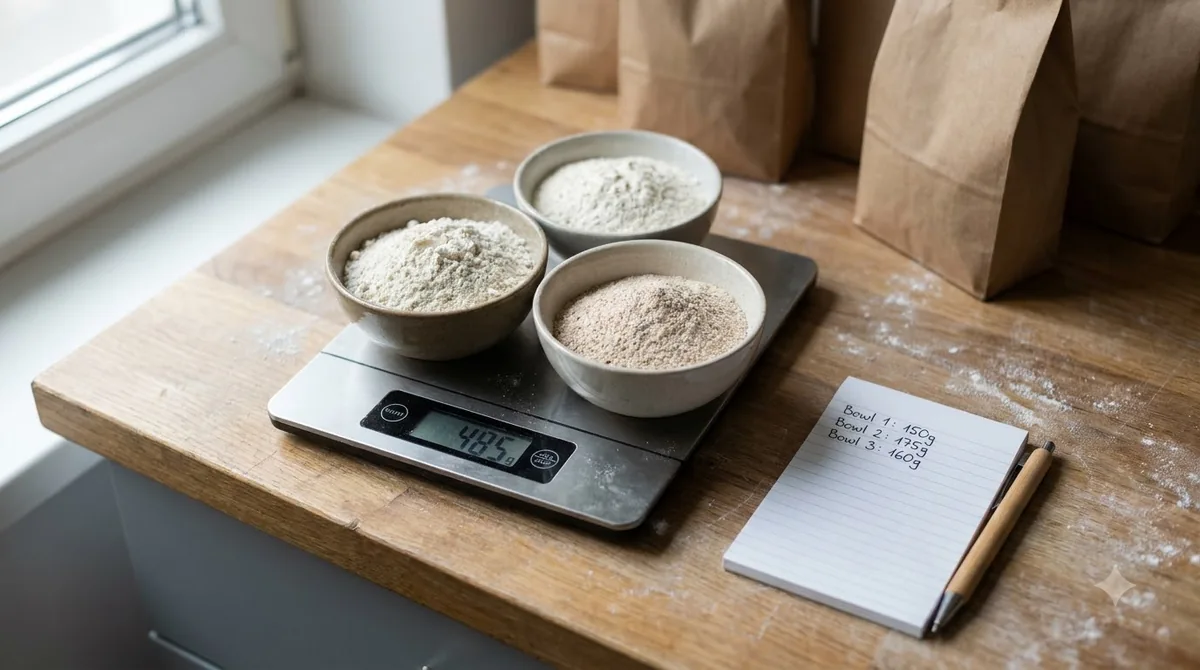

The short answer to what is Manitoba flour is a strong wheat flour named after the area where its wheat originally grew. In practice, the name describes strength more than origin, so check the W rating and stated use on the bag before you assume it fits your recipe.
What Is Manitoba Flour, Exactly?
Manitoba flour is a strong flour defined by its W rating, a strength measure taken with a Chopin alveograph. The label describes how the dough behaves, not a fixed recipe or mill.
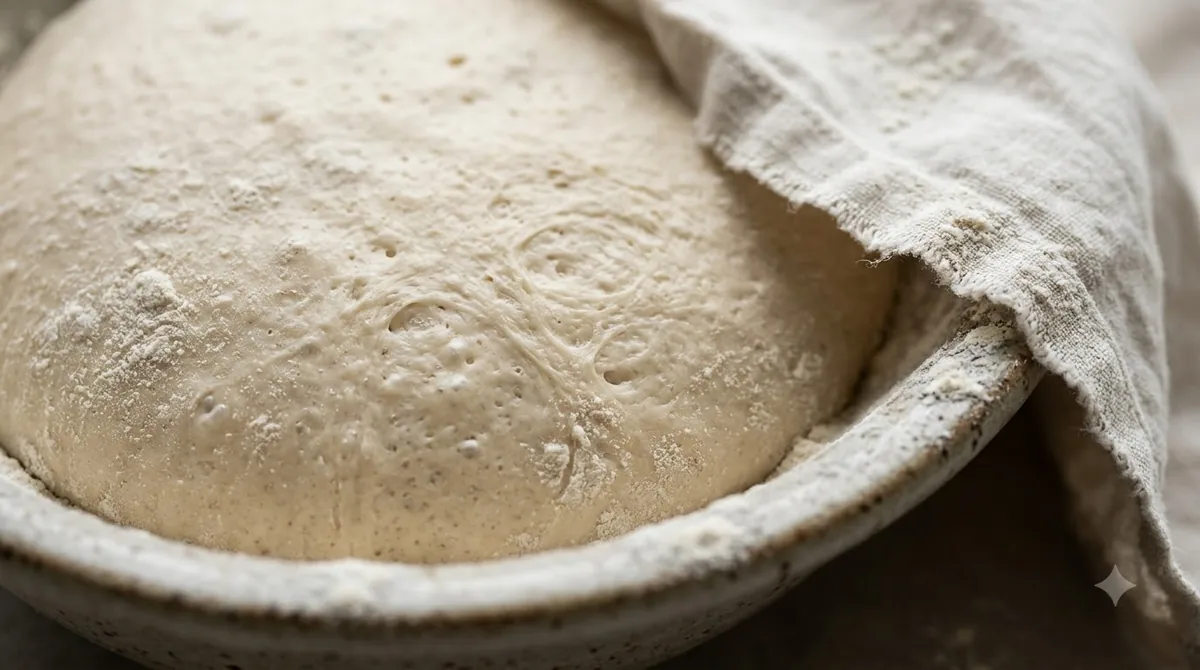
According to the Wikipedia article on Manitoba flour, the name comes from the production area where a strong, cold-resistant wheat originally grew. The flour’s main characteristic is a large quantity of insoluble proteins, glutenin and gliadin, which form gluten when kneaded with water.
Because the name now describes strength, flour made elsewhere can carry it too. The same article states that all flours with a W above 350 are defined as manitoba, whatever the production area.
The same article traces the province’s name to Manitou, a spiritual life force among Algonquian groups. That history explains the label: it points to a place and a wheat type, not to a single mill or recipe.

How the W Rating Works
The W rating measures the strength of a dough, and the threshold used for manitoba flour is a W above 350. A higher W points to a stronger flour, but the number is one clue among several.
Mills use strong flour to raise the total W of weaker flours in a blend. The sources read for this article give the 350 threshold but no other W values, so compare the number on your bag with the producer’s stated use rather than a universal table.
The W rating is a strength measure, so it does not state the protein percentage printed on a nutrition panel. Read both before you decide.
The Wikipedia article calls W deformation energy and uses the Chopin alveograph to separate strong flours from weaker ones. Its only numeric threshold in the sources read is the 350 line, so treat any other W figure with care until the producer confirms it.
Where the Flour Comes From
Most wheat grown in Manitoba is Canada Western Red Spring, which the Manitoba government describes as a class known for high protein content and quality.
The province puts spring wheat protein at about 13 to 14 percent, and says the wheat is used to produce a wide range of products, including breads and noodles.
Keep in mind that the name is a strength label. Because any flour with a W above 350 can be called manitoba, the name on a bag does not confirm where the wheat was grown.
What Is Manitoba Flour Used For: Pizza and Bread
Some Italians prefer Manitoba flour for Neapolitan pizza, where the dough rises slowly over a long period. If you want to compare other pizza options first, see our guide to the best pizza flour.
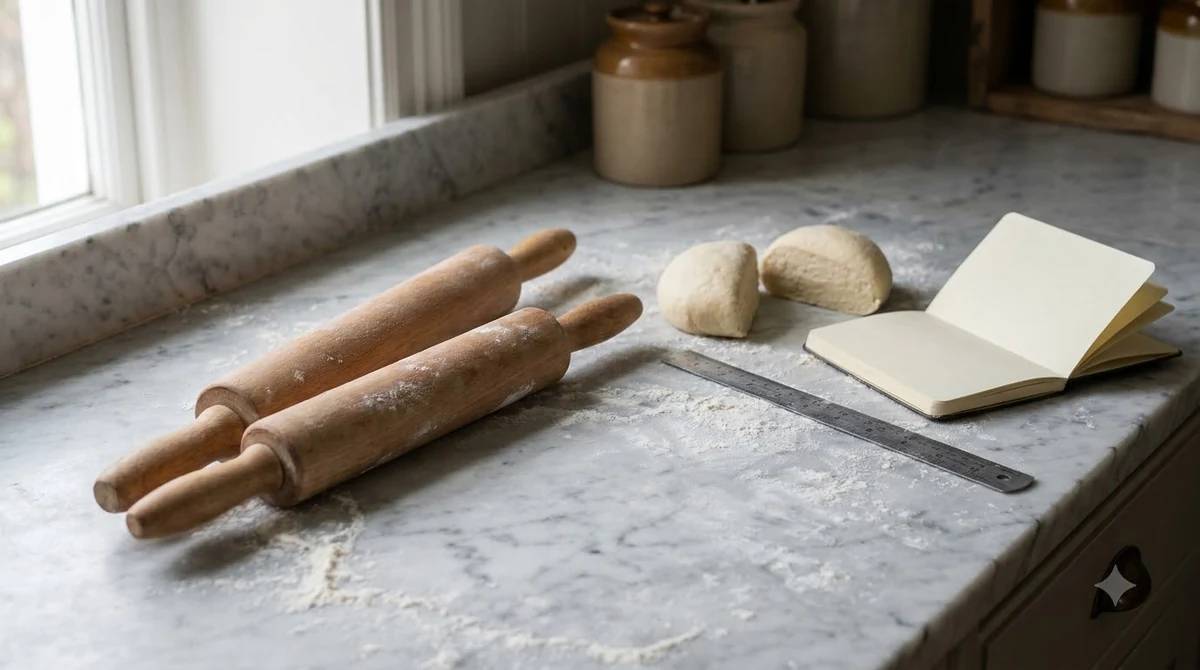
The Wikipedia article lists long-leavened pizza, panettone, pandoro, focaccia genovese and baguette among its uses. That range covers savory and sweet doughs, so the flour is not limited to one style.
Some uses are less obvious. The article notes that the flour is used in egg pasta production in some countries, and it names chapati, croissants, doughnuts and seitan among its wider uses. Strength is the common thread across those uses, so a bag that states a W rating helps you match it to a dough that rises slowly, which is the same idea behind pizza dough fermentation.
- Pizza: use it for doughs that rise slowly, the style the sources describe for Neapolitan pizza.
- Panettone and pandoro: the article names both the sweet and savory versions.
- Bread: baguette is named, and the flour suits bread doughs that need a long rise.
- Blends: mills raise the total W of weaker flours with strong flour, but the sources give no home ratio, so test a small batch first.
Manitoba Flour vs Bread Flour
When you ask what is Manitoba flour compared with bread flour, start with what each label measures. Bread flour is usually described by protein, while Manitoba flour is defined by its W rating, so the two are not measured on the same scale. Our comparison of bread flour vs all-purpose flour for pizza covers the protein side in more detail.
| Criterion | Manitoba flour | Bread flour |
|---|---|---|
| Defining measure | W rating above 350 on the alveograph | Protein percentage |
| Origin | Named for the wheat area; the name can apply to imported flour | Typically made from hard red winter wheat, according to the Wikipedia flour article |
| Protein | Not stated in the sources read; check the nutrition panel | 11.5 to 13.5 percent for hard wheat, per the same article |
| Typical use | Long-rising pizza, panettone, pandoro, focaccia | Everyday yeast breads that need a chewy crumb |
Canadian figures help place spring wheat on that scale. The Canadian Grain Commission reported a mean protein of 12.7 percent for No. 1 Canada Prairie Spring Red wheat in western Canada for the 2023 crop, which sits inside the bread flour range. The 11.5 to 13.5 percent range comes from the Wikipedia flour article.
Wikipedia explains why strength matters. The flour is rich in gluten and poor in starch, and the gluten forms a tenacious net that holds the gases of leavening, so the dough can rise considerably during baking. It also says Manitoba flour reached Italy as part of the Marshall Plan after World War II, which is why some Italians still prefer it for Neapolitan pizza. These are descriptions of the flour class, not figures printed on a bag, so use them as context rather than as a product spec.
How to Choose a Bag
Check the W rating and the intended use on the bag, because the name Manitoba alone does not confirm strength, origin or protein.
A common mistake is treating the Manitoba name as a quality guarantee. The name only places the flour in the strength class the Wikipedia article describes, while the bag’s stated use and W rating say more about how it will behave in your dough.
- Look for a stated W rating and a named use, such as pizza or panettone.
- Read the nutrition panel for protein, since the W rating does not give it.
- Note the milling country if the label shows it, because imported bags are common.
- Match the bag to the recipe: a slow pizza dough and a quick loaf call for different flours.
Frequently Asked Questions
Is Manitoba flour the same as 00 flour?
Not necessarily. Our guide to what is 00 flour covers the 00 grade, while Manitoba is a strength label, defined by a W above 350 in the sources read, so check the rating and stated use on the bag rather than the name alone. The sources read here do not compare Manitoba with 00 directly, so do not assume they are interchangeable.
Is Manitoba flour Canadian?
Not always. The name refers to the production area of strong, cold-resistant wheat, and Wikipedia says any flour with a W above 350 is called manitoba whatever its origin. Most wheat grown in Manitoba is Canada Western Red Spring.
What W rating should I use for pizza?
The sources read here do not give one number for pizza. Follow the stated use on the bag, and treat the Neapolitan pizza preference in the Wikipedia article as a starting point rather than a rule.
Can I use Manitoba flour for bread?
Yes. Wikipedia lists baguette among its uses, and the flour works for bread doughs that need a long rise. If a recipe names a specific strength, check the bag’s stated use before you substitute.
Does Manitoba flour have more protein than all-purpose flour?
The sources read here do not give a protein figure for Manitoba flour, so the question cannot be answered from them. Check the nutrition panel on the bag and compare it with the bread flour range above.
What is Manitoba flour made from?
The Wikipedia article says it is made from common wheat, Triticum aestivum. It names no single variety beyond the strong, cold-resistant wheat that originally grew in Manitoba, so the name alone does not confirm the wheat type on a specific bag.
Why is it called Manitoba flour?
The name comes from the production area where strong, cold-resistant wheat originally grew, which is the province of Manitoba. The sources read here name no other origin for the label, and any flour with a W above 350 can carry it.
Does Manitoba flour need a long rise?
Wikipedia links it with long-leavened doughs, including long-rising pizza and panettone, and notes that other countries also use it in egg pasta (see what is semolina flour for the durum side). Follow the timing in your recipe, because the flour’s name does not set the fermentation schedule for you.
If a recipe calls for Manitoba flour, buy a bag that states its W rating and intended use. Read the nutrition panel for protein, and treat the name as a clue to strength rather than a guarantee of origin.
 9 min readLearnBread Flour vs All Purpose Flour for Pizza: Which Gives a Better CrustUpdated Nov 10, 2026
 8 min readLearnPizza Dough With Bread Flour: How to Make a Chewy Crust at HomeUpdated Nov 6, 2026
 8 min readLearnPizza Dough in a Bread Machine: A Simple Step-by-Step MethodUpdated Nov 10, 2026
 8 min readLearnPizza Dough Flour to Water Ratio: How to Set It for Each StyleUpdated Nov 11, 2026
 9 min readLearnPizza Dough with All Purpose Flour: A Home Recipe That WorksUpdated Nov 11, 2026
 8 min readLearnPizza Dough with 00 Flour: Recipe, Timing and TipsUpdated Nov 11, 2026