
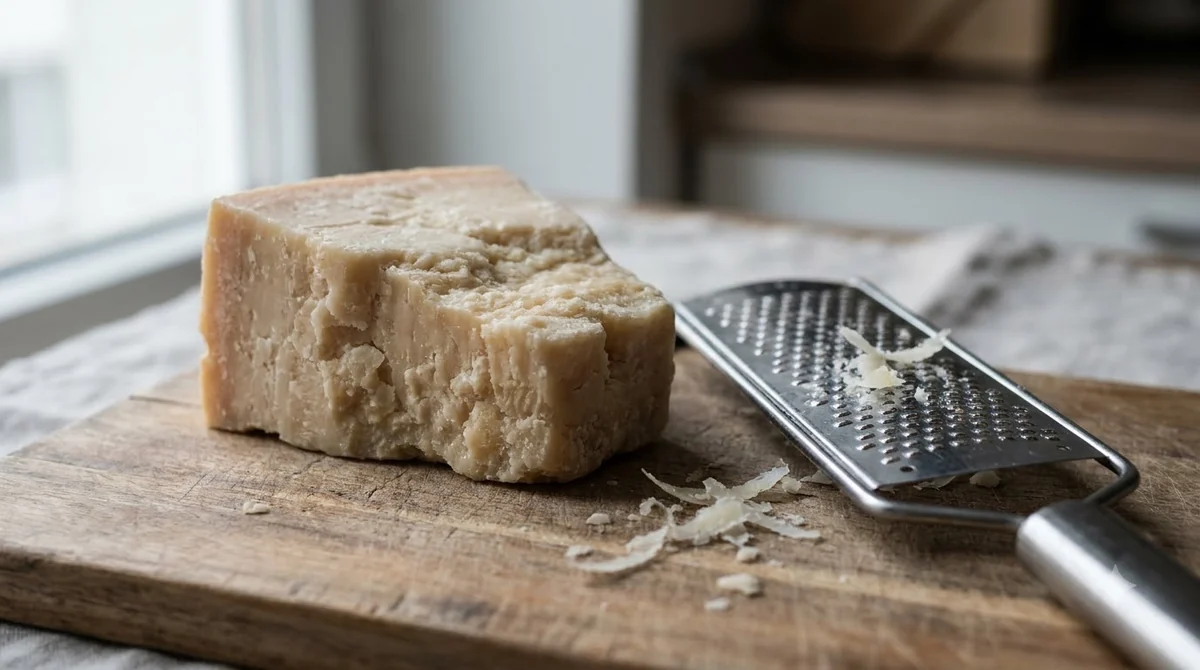

The main difference in parmigiano reggiano vs pecorino romano is the milk: Parmigiano Reggiano is made from cow’s milk, while Pecorino Romano is made only from sheep’s milk. Both are hard, aged Italian grating cheeses with protected names under EU law, but they come from different regions and taste different in a dish.
Parmigiano Reggiano is savory and granular, and Pecorino Romano is salty and crumbly, so swapping one for the other changes the flavor of the finished dish.
Where Each Cheese Is Made
Parmigiano Reggiano is made in a defined area of northern Italy, and Pecorino Romano is made in Lazio, Sardinia and the province of Grosseto in Tuscany.
When you compare parmigiano reggiano vs pecorino romano by origin, geography is the first thing to check, because each cheese is tied to its protected area.
Parmigiano Reggiano is produced in the provinces of Parma, Reggio Emilia and Modena, in the part of Bologna west of the River Reno, and in the part of the Mantua province south of the River Po. The Parmigiano Reggiano consortium describes this setting as the land its protected designation covers, on its official site.
Pecorino Romano has a different geography. Under its EU protection, all manufacturing must take place in Sardinia, Lazio or the province of Grosseto, and most production has moved to Sardinia from its original home in Lazio.
Both names are protected designations of origin (PDO) in the EU. Wikipedia lists two different years for the Pecorino Romano recognition, 1996 in its infobox and 2002 in its history section, so check the consortium site before you cite a date.
Parmigiano Reggiano vs Pecorino Romano: Side-by-Side Comparison
Parmigiano Reggiano uses cow’s milk and is aged at least 12 months, while Pecorino Romano uses sheep’s milk and is aged at least 5 months.
| Criterion | Parmigiano Reggiano | Pecorino Romano |
|---|---|---|
| Milk | Unpasteurized cow’s milk | Sheep’s milk only |
| Protected area | Parma, Reggio Emilia, Modena, part of Bologna and part of Mantua | Sardinia, Lazio and the province of Grosseto |
| Minimum aging | 12 months, with an average of about two years | 5 months or more |
| Texture | Hard and granular | Hard and very crumbly |
| Flavor | Savory, sharp and aromatic | Salty, aromatic and intense; the consortium says it varies with aging |
The table shows the five differences that our sources confirm. Salt content and nutrition figures are not covered in the sources used here, so check the package label for those.
How the Two Cheeses Started
Parmigiano Reggiano is traced to the Middle Ages near Bibbiano, in the province of Reggio Emilia, while Pecorino Romano was described by Roman writers about 2,000 years ago.
The Bibbiano account is a legend, according to Wikipedia, so treat the exact birthplace as a traditional story rather than a documented fact about parmigiano reggiano vs pecorino romano.
According to Wikipedia, Latin authors such as Varro and Pliny the Elder wrote about making the cheese in the countryside around Rome. Legionaries received a daily ration of about 27 grams alongside bread and farro soup, which the history section describes as an easily digested, high-energy food.
The history of parmigiano reggiano vs pecorino romano splits at this point, because Pecorino Romano production was centered in Lazio until the late 19th century. Rising demand then pushed producers to expand into Sardinia, which is why most of the cheese is made there today.
How They Taste and Feel
For parmigiano reggiano vs pecorino romano, Parmigiano Reggiano tastes savory and granular, while Pecorino Romano tastes salty and crumbles easily when you break it.
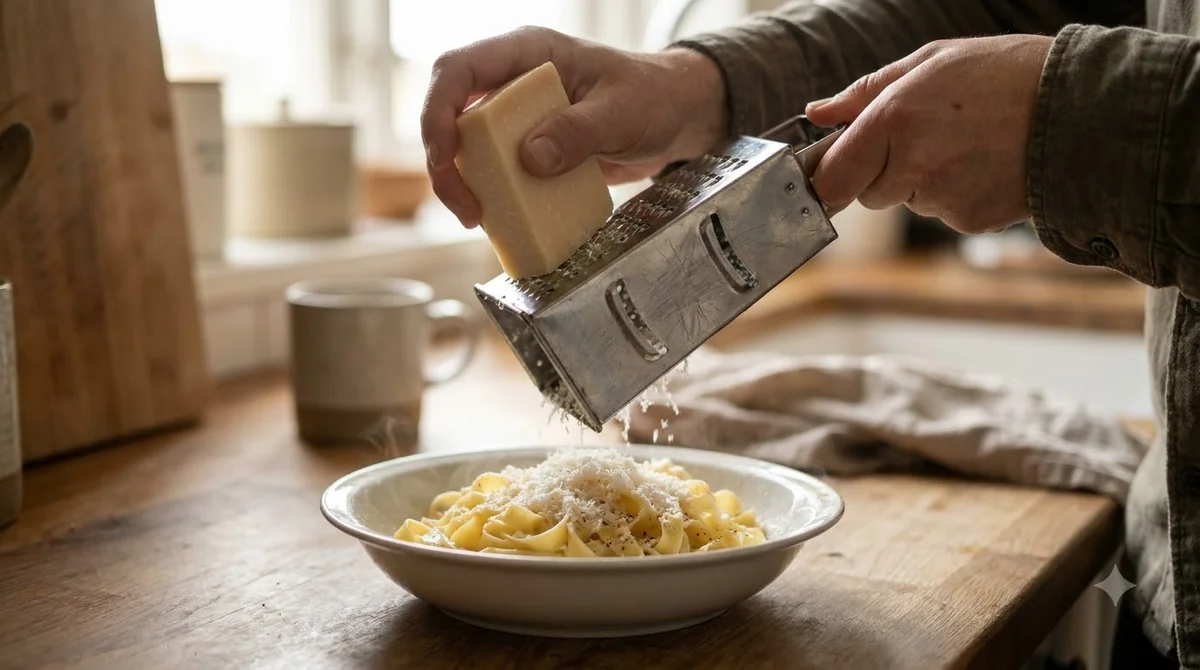
Wikipedia describes Parmigiano Reggiano as a hard, granular cheese whose key traits are sharpness, aroma, saltiness and savoriness. Its strong umami taste comes from glutamate, which the cheese contains at up to 1.2 g per 100 g according to Wikipedia’s components section.
Salt is the only additive allowed in Parmigiano Reggiano. The wheels soak in brine tanks made with Mediterranean sea salt, and sources give a range of about 20 to 25 days for that step.
Pecorino Romano is described as hard and very crumbly, and as salty. The Pecorino Romano consortium describes its flavor as aromatic, intense and spicy, and says it depends on how long the cheese has aged, on its official site.
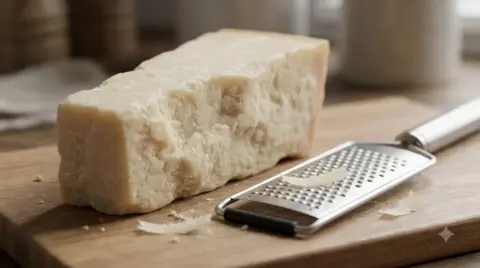
For flavor, the gap in parmigiano reggiano vs pecorino romano comes from the milk and from how each cheese is salted and aged. When you grate either cheese, use a fine cheese grater for a light, even finish. The crumbly texture of Pecorino Romano breaks into fine shards, so check the grater holes before you grate a large amount.
How Aging Changes Each Cheese
Parmigiano Reggiano ages at least 12 months, while Pecorino Romano ages at least 5 months, and the age printed on the wheel or wedge tells you which stage you have. Aging is also the quickest way to read parmigiano reggiano vs pecorino romano on a label.
Wikipedia lists age categories for Parmigiano Reggiano, which are named by stage:
- Parmigiano Reggiano: minimum of 12 months
- Vecchio: about 18 to 24 months
- Stravecchio: about 24 to 36 months
- Pecorino Romano: 5 months or more
The Vecchio and Stravecchio stages are defined by how long the wheel has aged, and the Pecorino Romano consortium ties its flavor to aging as well. The full production rules for each stage are in the producers’ specifications, which we could not read in full for this article.
Which One to Choose and How to Use It
Choose Parmigiano Reggiano for a savory finish and Pecorino Romano when you want a salty, sharp bite that stands up to strong flavors. Picking between parmigiano reggiano vs pecorino romano comes down to the dish, not a single rule.
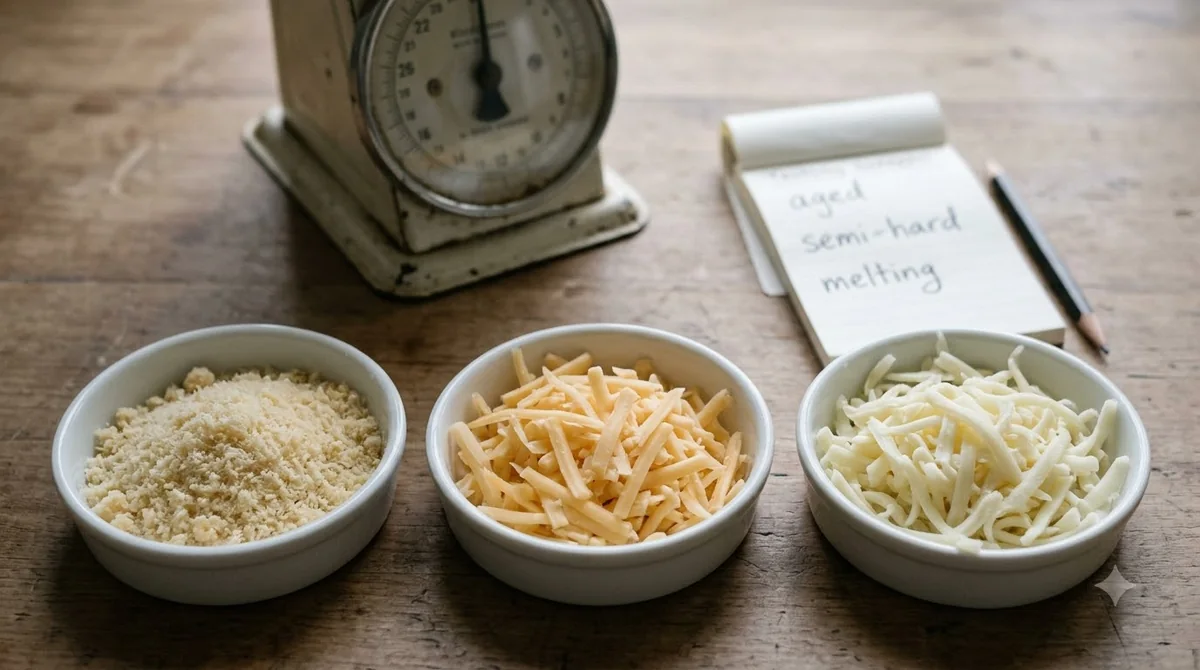
Pecorino Romano is often grated over pasta, as in cacio e pepe, according to Wikipedia. Because it is salty, a sauce made with it may need less added salt. These points help you decide:
- Pick Parmigiano Reggiano when the dish is delicate and you want a savory, granular finish.
- Pick Pecorino Romano when the dish needs a salty, sharp cheese to stand up to strong flavors.
- Taste the sauce before adding more salt, especially when you switch cheeses.
For parmigiano reggiano vs pecorino romano, swapping one for the other works in many grated uses, but the result will taste different. Start with a smaller amount of Pecorino Romano, then add more after tasting.

Common Mistakes When Buying
Shoppers often mix up parmigiano reggiano vs pecorino romano because both are hard grating cheeses. The protected name Parmigiano Reggiano is a PDO term in the EU, so look for it on the label rather than a generic Parmesan name.
A common mistake with parmigiano reggiano vs pecorino romano is treating Pecorino Romano as a milder version of Parmigiano Reggiano. Its sheep’s milk, protected area and salty profile make it a different cheese, not a weaker copy.
Pecorino Romano is also not suitable for vegetarians, because its rennet must come from sheep raised in the production area, according to Wikipedia. Check the label if you cook for vegetarians.
Buy a wedge when you can and grate it at home. Store the cheese as the package instructs.
What We Could Not Verify
Salt content, calorie counts and current prices for parmigiano reggiano vs pecorino romano were not confirmed from the sources used here, so this article leaves them out.
Because the full production specifications were not available to us, this article describes each cheese at a general level rather than giving a complete rulebook for either one.
Check the package or the producer’s nutrition panel for salt, fat and protein per serving. For the exact PDO recognition year of Pecorino Romano, check the consortium site, because the sources used here give two different dates.
Sources also differ on the brine time for Parmigiano Reggiano, with about 20 days in one place and 20 to 25 days in another. This article gives the range rather than choosing one.
Frequently Asked Questions
What is the main difference between parmigiano reggiano vs pecorino romano?
The main difference in parmigiano reggiano vs pecorino romano is the milk, since Parmigiano Reggiano uses cow’s milk and Pecorino Romano uses sheep’s milk only. The protected areas and aging times also differ, with a 12 month minimum for Parmigiano Reggiano and 5 months or more for Pecorino Romano.
Is Parmigiano Reggiano made from cow’s milk?
Yes. Parmigiano Reggiano is made from unpasteurized cow’s milk, and its cows are traditionally fed only grass or hay, according to Wikipedia. Its protected name is tied to the production area in northern Italy.
Is Pecorino Romano made from sheep’s milk?
Yes. Pecorino Romano is produced exclusively from sheep’s milk, and the Pecorino Romano consortium describes its sheep as grazing in the countryside of Lazio and Sardinia. That difference in milk is the main reason the two cheeses taste different.
Can Pecorino Romano replace Parmigiano Reggiano?
In parmigiano reggiano vs pecorino romano comparisons, the answer is often yes in grated uses such as pasta, but taste first. Pecorino Romano is salty and crumbly, so reduce any added salt and adjust the amount to your taste.
How long must each cheese age?
Parmigiano Reggiano must age at least 12 months, and Pecorino Romano at least 5 months, according to Wikipedia. Check the age printed on the package for the exact stage of your cheese.
Is Pecorino Romano suitable for vegetarians?
No. Its rennet must come from sheep raised in the production area, which makes the cheese unsuitable for vegetarians, according to Wikipedia. Check the label before you buy if you cook for vegetarians.
When you decide on parmigiano reggiano vs pecorino romano, choose by the dish and the flavor you want, and check the label for the milk type and the protected name before you buy. If a recipe names one of them, follow it first, then try the other once you know how each one tastes.
 8 min readLearnWhat Is Parmigiano Reggiano and Where It Is MadeUpdated Nov 11, 2026
 8 min readLearnWhat Is Pecorino Romano? A Sheep’s Milk Cheese GuideUpdated Nov 10, 2026
 10 min readLearnTomato Paste vs Tomato Puree: Key Differences and When to Use EachUpdated Nov 10, 2026
 9 min readLearnPaccheri vs Rigatoni: Key Differences and Which Sauce FitsUpdated Nov 6, 2026
 8 min readLearnAmatriciana Sauce Recipe: Guanciale, Pecorino and TomatoUpdated Nov 10, 2026
 8 min readLearnPasta alla Gricia Recipe: Guanciale, Pecorino and Black PepperUpdated Nov 10, 2026