
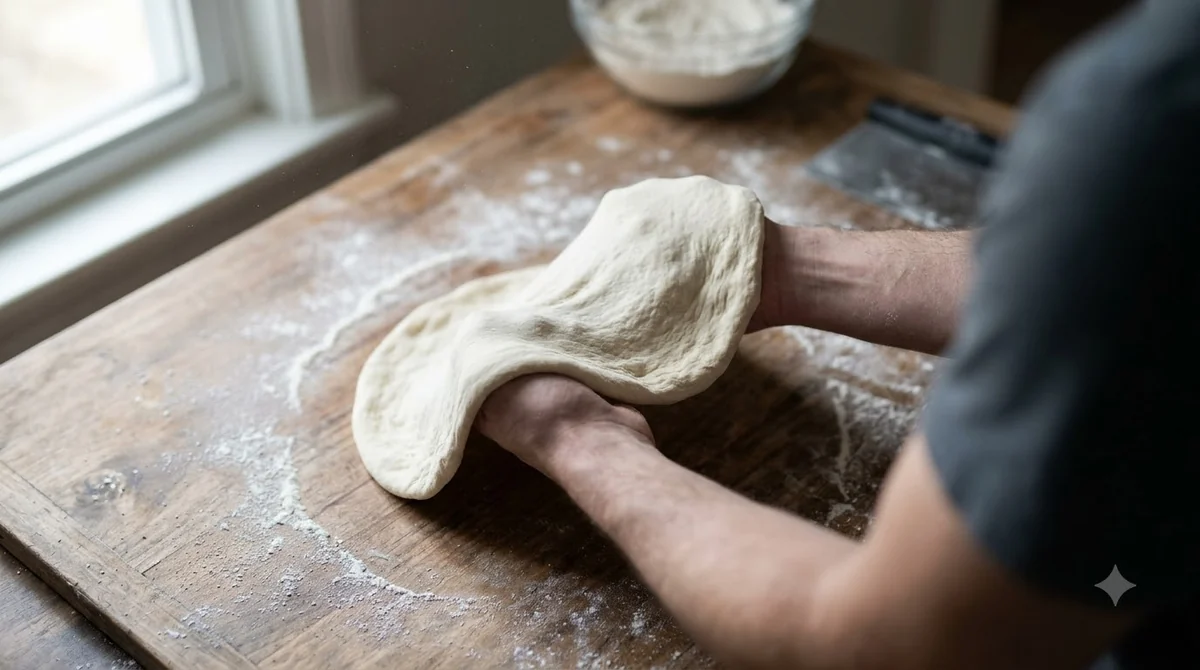

Autolyse pizza dough is a short rest for flour and water before the yeast and salt go in. Bakers use it to let the flour hydrate and start building gluten with almost no kneading. The idea is simple, but timing matters more for pizza than for most bread.
Pizza dough usually rests for less time than a loaf, and very long rests can make it slack and sticky. Knowing when to skip the step is as useful as knowing how to do it.
What an Autolyse Does to Pizza Dough
An autolyse is gentle mixing of flour and water followed by a rest, and King Arthur Baking gives a range of 20 to 60 minutes for bread. The same basic process applies to autolyse pizza dough, though pizza usually gets a shorter rest.
During the rest, the flour takes up water completely. The bran softens, which reduces its drag on gluten development. According to King Arthur Baking’s autolyse guide, gluten bonds begin forming with no effort from the baker, so the dough becomes more extensible and needs less kneading.
Enzymes also work during the rest. Protease breaks down some protein, which adds to the stretch. Amylase converts starch into sugars that the yeast can use later in the bulk fermentation. For autolyse pizza dough, the practical result is a dough that stretches thinner without snapping back as much.
Autolyse pizza dough is not a required step. The Perfect Loaf describes it as a tool, and its benefits depend on the whole formula and process. A dough made with a high share of whole wheat or a long fermentation may gain more from it than a simple dough with a short rest.
Think of the rest as a head start rather than a shortcut. The flour has already begun building gluten before you knead, so part of the stretch you feel later comes from the rest itself. That is why the same kneading time can feel different after a rest.
How to Autolyse Pizza Dough Step by Step
Weigh the flour and water, mix only those two until no dry flour remains, then cover the bowl and let it rest before adding the salt and yeast. Weighing both ingredients keeps the hydration consistent when you make autolyse pizza dough from batch to batch.
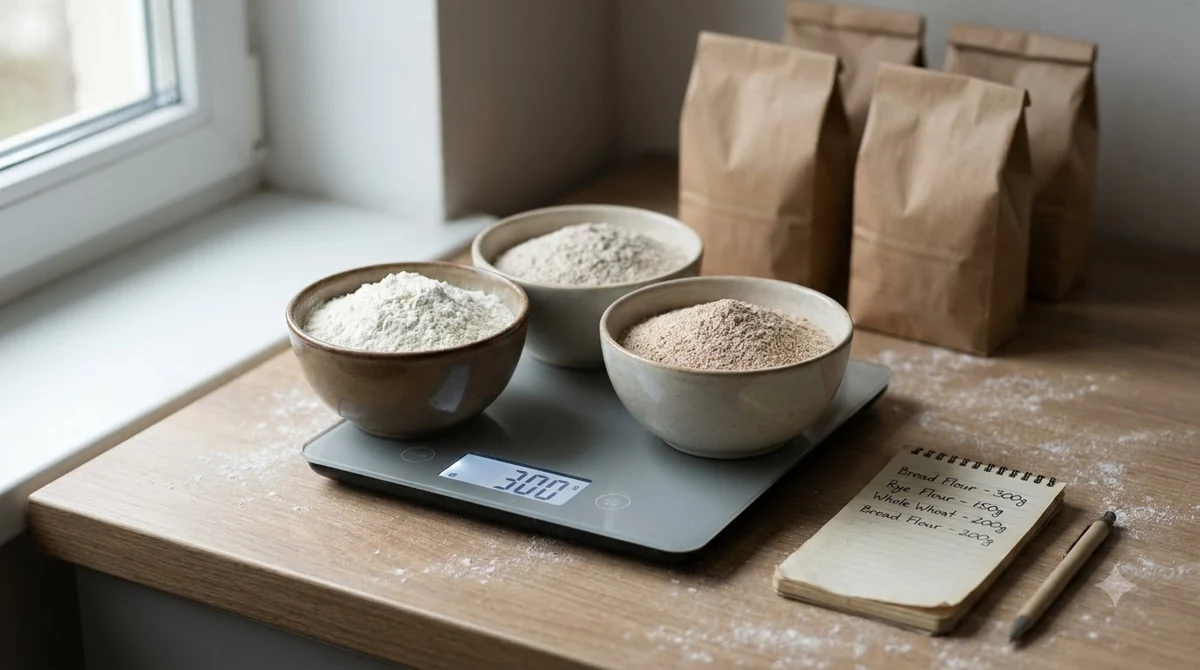
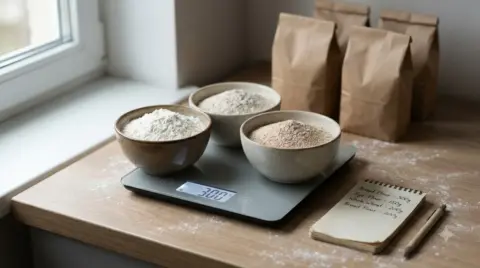
- Weigh the flour and water on a digital kitchen scale. The ratio decides how the rest behaves.
- Mix until every bit of flour is moistened. King Arthur Baking says all the flour should be fully moistened before the rest starts.
- Cover the bowl so the surface does not dry out during the rest.
- Rest for the time you chose. The next section covers how long to aim for.
- Add the yeast and salt once the rest is done. Salt tightens gluten, so it waits.
- Knead or fold as your recipe says, using the timing in how long to knead pizza dough as a guide. Elasticity develops during this stage.
The strict version of autolyse pizza dough uses only flour and water. Liquid starters and preferments are the exception, because they are often included in the rest when a dough needs more water to mix. Once a preferment such as biga or poolish goes in, fermentation begins, so count that time in your schedule.
If a true autolyse does not fit your schedule, King Arthur Baking suggests a 30 minute rest after mixing all the ingredients, before kneading. That is a shortcut, not a true autolyse, but it still gives the flour time to hydrate.
How Long to Rest Pizza Dough in an Autolyse
For autolyse pizza dough, a rest of 10 to 20 minutes is the usual range, according to The Perfect Loaf, which suggests starting bread doughs at 15 to 30 minutes and keeping pizza rests shorter.
One Practical Kitchen pizza recipe uses 500 g of all-purpose flour and 310 g of water, rests the mix for 10 minutes, and reports that the rest adds flavor and makes the dough stretchier. That is one author’s report, so treat it as a starting point rather than a rule.
Flour type also changes the timing. The Perfect Loaf author notes that a high share of aged whole wheat may need a longer rest, sometimes 2 hours or more, depending on how the dough feels. That guidance is written for bread, so pizza doughs with a small share of whole wheat usually need less. See whole wheat pizza dough for a full recipe.
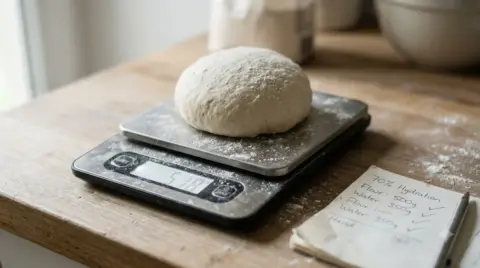
Start at the short end with autolyse pizza dough and adjust on the next batch. Write down the rest time and how the dough stretched, so you can compare one batch with the next. Change one variable at a time, such as the rest length, before changing the flour.
When an Autolyse Helps and When to Skip It
An autolyse helps most with bread flour and doughs that need more stretch, and it adds little when the flour is already very extensible or fresh milled. The table below sums up the main cases.
| Dough or flour | Autolyse? | Why |
|---|---|---|
| Bread flour pizza dough | Yes, short rest | Flour hydrates and gluten starts forming before salt tightens it |
| High share of aged whole wheat | Yes, possibly longer | Bran takes up water more slowly, so the rest needs more time |
| Spelt | No | Already very extensible, so the rest adds little |
| Freshly milled flour | Usually no | Long rests can weaken the dough and make it sticky |
| Sourdough rye bread | No | King Arthur Baking advises against using an autolyse |
| Low water dough with a liquid levain | Yes, a short one | The levain is included so there is enough water to mix |
The Perfect Loaf guide is the source for the spelt and freshly milled cases, and it recommends caution with long rests on these flours. If you are not sure how fresh your flour is, check the bag date or ask the miller before you commit to a long autolyse pizza dough rest.
So should every batch of autolyse pizza dough get a rest? No. Use the step when the dough needs more stretch and the flour is a standard bread flour. Skip it when the flour is already very extensible, or when your schedule cannot support a planned rest.
Common Mistakes With Autolyse Pizza Dough
Adding salt or yeast too early works against autolyse pizza dough, because salt tightens the gluten that the rest is meant to loosen. Most problems come from timing, not from the flour itself.
- Adding salt during the rest. Salt waits until the rest is finished, as King Arthur Baking explains.
- Leaving dry flour in the bowl. Every particle needs water before the rest starts.
- Resting too long. The Perfect Loaf author says going too far makes the dough slacken, and that is hard to reverse.
- Forgetting the preferment clock. Once a preferment or levain goes in, fermentation begins.
- Treating every flour the same. Spelt and freshly milled flour respond differently from standard bread flour.
If the dough turns sticky and loses its shape after a rest, shorten the autolyse on the next batch and check the flour and water weights. Keep the salt and yeast timing the same so you can see the effect of the rest alone.
Keep notes on one variable at a time. Change the rest length first, then the flour, so you can tell which change made the difference. A dough that is hard to stretch may need a longer rest, while one that goes slack and sticky usually needs a shorter one. Your notes will show which pattern your flour follows.
Frequently Asked Questions
Does an autolyse work for every pizza dough?
No. Autolyse pizza dough benefits most when the dough needs more extensibility and the flour can take up water fully. Spelt is already very extensible, so the step adds little there. King Arthur Baking also warns against an autolyse for sourdough rye bread.
Can I autolyse pizza dough overnight?
Long rests are possible in some high whole wheat bread doughs, but they can slacken the dough, and that is hard to reverse. For pizza, a rest of 10 to 20 minutes is the usual range. Test any longer rest on a small batch before you use it for a full schedule.
Should I add the yeast during the autolyse?
No. For autolyse pizza dough, the strict method holds back the yeast along with the salt and adds both after the rest. Preferments and liquid levain are the exception when they are needed to bring the dough to a workable hydration.
Does an autolyse replace kneading?
No. An autolyse reduces the kneading you need because gluten starts forming during the rest. According to King Arthur Baking, elasticity develops once kneading begins, so the dough still needs to be developed.
Is a 30 minute rest after mixing the same as an autolyse?
Not quite. King Arthur Baking describes a 30 minute rest after mixing all the ingredients as a shortcut for when a true autolyse is inconvenient. The flour still hydrates during that rest, but the salt and yeast are already in the dough.
If your pizza dough already works well, you do not need to change it. Try a short autolyse pizza dough batch of 10 to 20 minutes, write down the rest time and how the dough stretched, and keep the method only if the dough is easier to shape.
 9 min readLearnNo Knead Pizza Dough: Flour, Water and Time Do the WorkUpdated Nov 10, 2026
 8 min readLearnPizza Dough Flour to Water Ratio: How to Set It for Each StyleUpdated Nov 11, 2026
 6 min readLearnFix Sticky Pasta Dough: Flour, Rest and RollUpdated Nov 13, 2026
 9 min readLearnPizza Dough with All Purpose Flour: A Home Recipe That WorksUpdated Nov 11, 2026
 8 min readLearn70 Hydration Pizza Dough Recipe: What 70% Water Does to Your CrustUpdated Nov 10, 2026
 5 min readLearnHomemade Spaghetti: Dough Ratio, Rest and Cook TimeUpdated Nov 13, 2026