
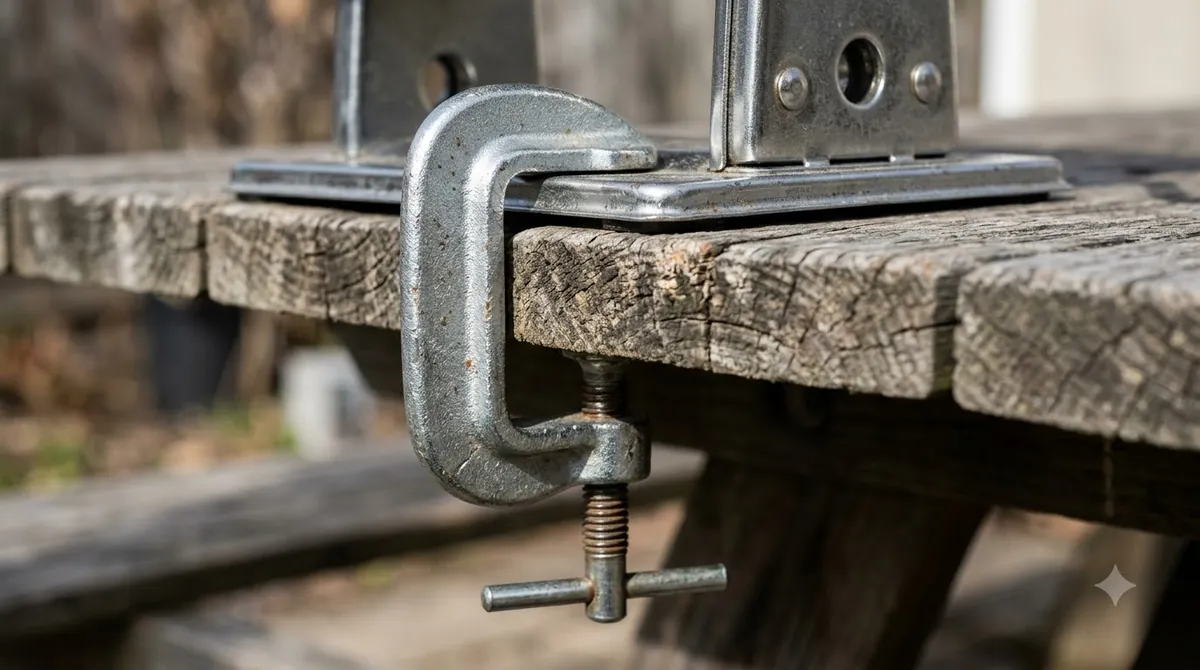

A cavatelli maker is a hand-cranked tool that clamps or suctions to a flat surface and presses dough strands into small curled shells. It turns a job that takes time by hand into a steady, repeatable step. Whether it is worth buying depends on how often you make this shape and what mount your counter can take.
Choose a model by its mount, roller material, the shapes it makes and its warranty. Then follow a simple dough and cooking routine, which is covered below.
What a cavatelli maker does
A cavatelli maker is a small hand-cranked device that presses a dough strand through rollers to form the curled shell shape of cavatelli.
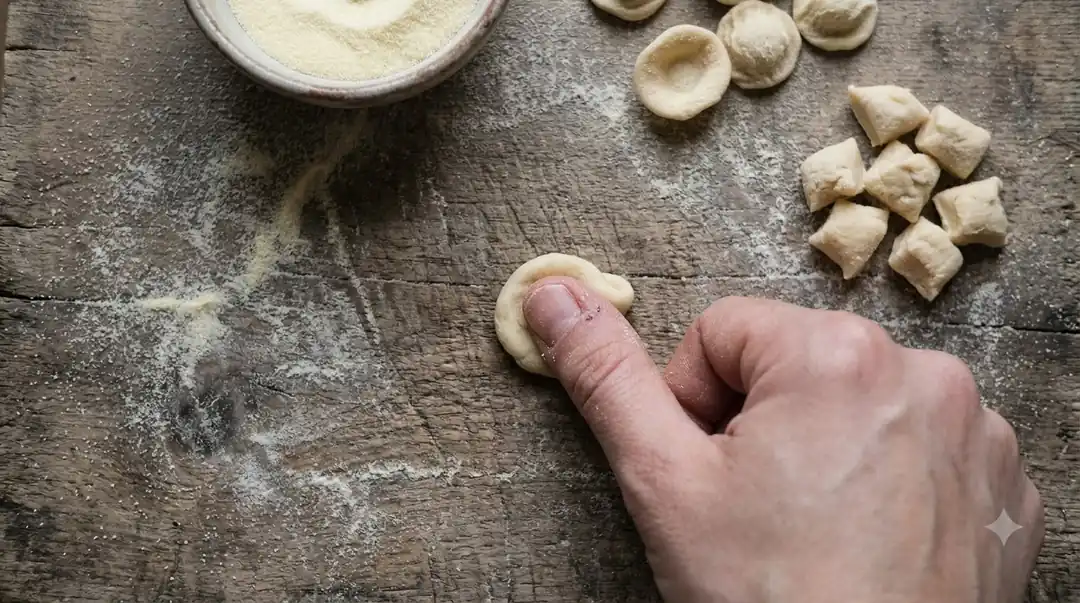
Cavatelli are small pasta shells made from semolina or other flour dough. According to Wikipedia’s cavatelli entry, the shape is associated with Italy and lists Abruzzo, Molise and Apulia among its regions. The shell is formed by rolling the dough with a finger, which works well for a small batch but slows down when you need a full meal’s worth. Our guide to cavatelli pasta covers the shape in more detail. For the feeding and cranking steps, see our guide on how to use a cavatelli maker.
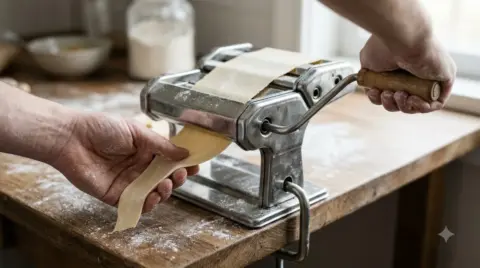
A maker handles that repetitive step. You feed a rolled strip into the rollers, turn the crank, and the shaped pasta comes out. Because the same rollers shape every piece, the shells tend to look alike, which helps when you want a uniform plate for guests.
Before you buy a cavatelli maker, picture the finished shape. The Demetra listing describes the result as curled dough with a hollow center, so a model that produces this shape gives you a clear target for every batch.
How to choose a cavatelli maker
Choose by mount, roller material, shapes and warranty, because these decide how steady the machine stays on your counter and how easily it cleans.
| Attribute | What to check | Example from a source read |
|---|---|---|
| Mount | Suction base or clamp | Demetra uses a 4.5 in suction base for flat, smooth surfaces. Paderno clamps to worktops up to 1-3/8 in thick. |
| Body | Metal and plastic parts | Demetra: heavy duty steel and nylon. Paderno: aluminum body. |
| Rollers | Roller material | Demetra: nylon rollers with steel patterns underneath. Paderno: ABS plastic rollers. |
| Cutting | How strands are cut | Paderno lists stainless steel blades. |
| Shapes | Which shapes the maker produces | Demetra makes cavatelli, gnochetti and orecchiette, with the shape set by one of three strand positions. |
| Warranty | Length and scope | Demetra: 1-year residential, not for commercial use. Paderno: one-year limited warranty. |
| Size | Footprint and weight | Demetra: 8 in high, 5.2 in wide, 4.8 in deep, over 3.5 lb. |
Mount and stability
A suction base only holds on a flat, smooth surface, so test the spot on your counter before you buy. A clamp model needs a worktop edge that falls within its range. The Paderno listing gives that range as up to 1-3/8 in thick, so measure your counter or board first. Neither mount is a fix for a wobbly table.
Materials and shapes
Nylon and plastic rollers are both common in these listings, and the material affects how the dough feels against the parts. Demetra pairs nylon rollers with a steel pattern on the underside, and it says the same maker can produce cavatelli, gnochetti and orecchiette. Check the shape list before buying, because a model that only makes one shape may not suit a cook who wants variety. Our guide to orecchiette pasta explains how that shape is made.
Two checks help before you buy: the footprint in the table against your counter space, and the warranty length against how you plan to use the maker. A cavatelli maker is a single-purpose tool, so the decision depends on how often the shape will appear on your table.
How to use a cavatelli maker step by step
Make a stiff dough, rest it, roll it to about 1/3 inch, cut 1/2 to 3/4 inch strips, feed them through the maker, then boil the shapes for about 5 minutes.
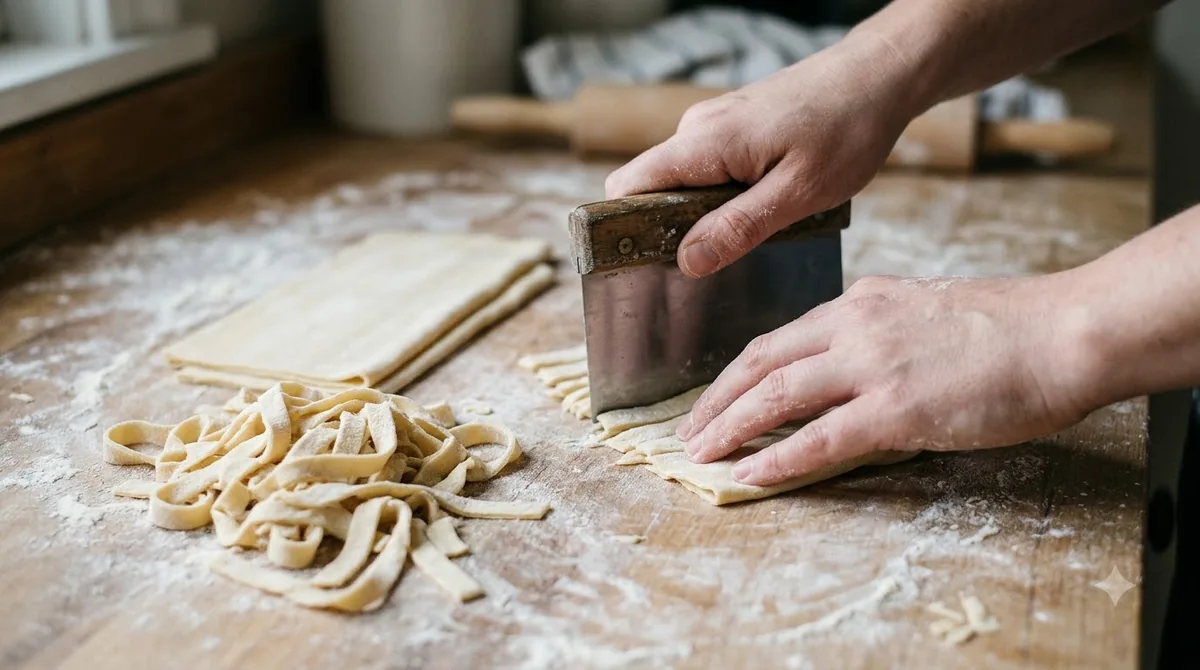
The routine below follows a ricotta cavatelli dough from Italian Food Forever’s step-by-step guide. That recipe serves four and uses 4 cups all-purpose flour, or 2 cups tipo 00 plus 2 cups tipo 0, with one egg, 1 pound full-fat ricotta, 1 teaspoon salt and 1/3 cup heavy cream. A semolina dough also works for the same shape, so use the flour your recipe calls for. For a basic egg dough, see our fresh pasta dough recipe.
- Mix the dough and knead it by hand for 2 to 3 minutes until smooth.
- Rest the dough for 15 minutes, or refrigerate it wrapped in plastic until you are ready.
- Roll the dough to about 1/3 inch thick on a lightly floured surface.
- Cut strips about 1/2 to 3/4 inch wide, keeping them a similar width.
- Flour each strip well, then feed it through the rollers while you turn the crank with the other hand.
- Toss the finished shapes in flour and set them on a baking sheet.
- Cook them in a large pot of boiling salted water for about 5 minutes, until they rise to the surface.
The source does not give a drying time for machine-made shapes. It only says to cook them right away or refrigerate them until you need them. According to Wikipedia, cavatelli are commonly cooked with garlic and broccoli or rapini, or simply with tomato sauce.

Why dough sticks and how to clean the maker
Dough sticks when the strips are not floured enough, so flour every strip and keep flour on the rollers, then clean the maker with a cloth or brush only.
- Flour each strip before it goes through the rollers, since the method says to keep strips well floured to prevent sticking.
- Flour the shapes again after they come out, so they do not stick together on the tray.
- Never immerse the maker in water.
- Remove leftover dough and flour with a cloth or brush, not by rinsing the parts.
A cavatelli maker that shifts on the counter makes each strand harder to feed, so check the mount before every batch. Keep a small bowl of flour within reach so each strip can be dusted before it goes in.
Who should buy a cavatelli maker and who can skip it
A cavatelli maker suits cooks who make this shape often and want even shells, while occasional cooks can skip it and shape by hand.
Hand shaping is the traditional method, so a cavatelli maker saves time rather than being required. A 2017 trade article on the Paderno model says it can make large batches in a fraction of the time, though it gives no figures to compare against hand work. Warranty matters if you plan to use the maker in a business, because the Demetra warranty excludes commercial use.
If you make cavatelli only now and then, hand shaping needs no tools, so a cavatelli maker is a matter of convenience. The question is how often you will reach for it, and whether the saved time is worth the counter space and the purchase price.
- Buy one if you make fresh pasta often and want consistent shells.
- Skip it if you cook this shape only a few times a year.
- Measure your counter before buying, since the mount type decides where the maker can go.
Frequently Asked Questions
Can a cavatelli maker make other shapes?
The Demetra model makes cavatelli, gnochetti and orecchiette, with the shape set by moving the strand to one of three positions. Other models may differ, so check the manual for the shapes your maker supports before you buy it for a specific shape.
Do cavatelli makers need electricity?
No. The Paderno model is hand-cranked and needs no electricity. Confirm the power type of any model you consider, since the sources covered here were not all for the same design.
Is a cavatelli maker the same as a gnocchi tool?
Not always. A cavatelli maker is built around one family of shells, and the Demetra model also lists gnochetti and orecchiette among its shapes. Check the shape list of any model, because a cavatelli maker that only produces one shape may not suit a cook who wants variety. For a hand tool that makes ridged shapes, see our guide to gnocchi boards.
Can I wash a cavatelli maker in water?
No. The recipe source says never to immerse the maker in water. Clean it with a cloth or brush to remove dough and flour, then keep it dry.
How long do homemade cavatelli take to cook?
Cook them in a large pot of boiling salted water for about 5 minutes. They are done when they rise to the surface, and then you can drain them and add your sauce.
Is a warranty included with a cavatelli maker?
Warranty terms vary. The Demetra maker lists a 1-year residential warranty and says it is not warranted for commercial use. The Paderno listing states a one-year limited warranty. Check the terms that come with the model you choose.
Choose the maker by its mount and roller material first, then check the shapes and the warranty. Keep the dough floured and the rollers dry, and clean the maker with a cloth or brush only, as the recipe source advises.
 9 min readGear & PantryHow to Use a Cavatelli Maker at HomeUpdated Nov 10, 2026
 8 min readGear & PantryPizza Dough Proofing Box: What It Does and How to Use OneUpdated Nov 10, 2026
 8 min readGear & PantryDigital Kitchen Scale: What It Does and How to Choose OneUpdated Nov 16, 2026
 8 min readGear & PantryPizza Peel: What It Does and How to Choose OneUpdated Nov 16, 2026
 9 min readGear & PantryHow to Use a Ravioli Maker: Step-by-Step for Dough and FillingUpdated Nov 10, 2026
 8 min readGear & PantryParmesan Cheese Grater: How to Choose, Use and Store OneUpdated Nov 17, 2026